12 Quiet Signs Your Liver May Need Attention
Your body works nonstop to remove waste, process nutrients, and keep essential systems in balance. Much of that effort depends on your liver. When this organ begins to struggle, the symptoms are often subtle and easy to dismiss as stress, poor sleep, or a busy lifestyle.
Ongoing tiredness after a full night’s rest, changes in skin color, or even unusual differences in your hands may not seem important at first. Still, these small shifts can sometimes signal a deeper issue that should not be ignored. The encouraging part is that recognizing these clues early can help you make smarter health decisions and seek medical advice before problems worsen.
By the end of this article, you will also learn a simple everyday habit many people use to support liver health naturally.
Why Liver Health Deserves More Attention
The liver is one of the hardest-working organs in the body, performing more than 500 essential functions every day. It helps digest fats, stores energy, processes nutrients, and filters harmful substances from the blood.
Because liver problems often develop gradually, the warning signs may remain unnoticed for a long time. Medical organizations such as the Mayo Clinic have noted that chronic liver conditions can stay quiet until significant damage has already occurred. That is why awareness matters so much. Paying attention to early changes in your body can help you respond with confidence instead of fear.
12 Silent Signs That May Point to Liver Problems
Below are 12 commonly reported early signs associated with liver concerns. These are general health observations, not a diagnosis. Only a qualified healthcare professional can determine what your symptoms truly mean.
1. Ongoing Fatigue
Feeling unusually drained, even after adequate rest, can be one of the earliest signs. Since the liver plays a major role in energy regulation and toxin removal, reduced function may leave you feeling persistently low on energy. Many people describe this as a heavy, unexplained exhaustion that does not improve with caffeine or rest.
2. Loss of Appetite or Unexplained Weight Changes
You may notice that foods you normally enjoy suddenly seem unappealing. Some people also lose weight without trying. A stressed liver can affect digestion and how the body handles nutrients, which may lead to reduced hunger and gradual changes on the scale.
3. Nausea or Mild Digestive Issues
Frequent nausea, especially after eating, or occasional vomiting may also occur. The liver supports fat digestion, so when it is not working efficiently, the digestive system can feel off balance. According to experts such as those at Cleveland Clinic, digestive discomfort can be linked to this disruption.
4. Pain or Pressure in the Upper Right Abdomen
A dull ache, tenderness, or sensation of fullness beneath the ribs on the right side should not be overlooked. That area is where the liver sits, and inflammation or enlargement can cause subtle discomfort that many people initially ignore.

5. Persistent Itchy Skin
Ongoing itching without a clear rash can sometimes be connected to liver dysfunction. This may affect the hands, feet, or larger areas of the body. When bile is not processed properly, certain substances can build up and irritate the skin, leading to constant itchiness.
6. Dark Urine
Urine that suddenly appears dark amber, brownish, or tea-colored can be a warning sign. Normally, the liver helps process bilirubin. If that process is impaired, bilirubin may end up being excreted in the urine instead, causing a darker color.
7. Pale or Clay-Colored Stools
Bowel movements that appear unusually light, gray, or clay-colored may suggest reduced bile flow. Bile is what gives stool its normal brown color, so a noticeable change here can be important, especially when combined with other symptoms.
8. Yellowing of the Skin or Eyes
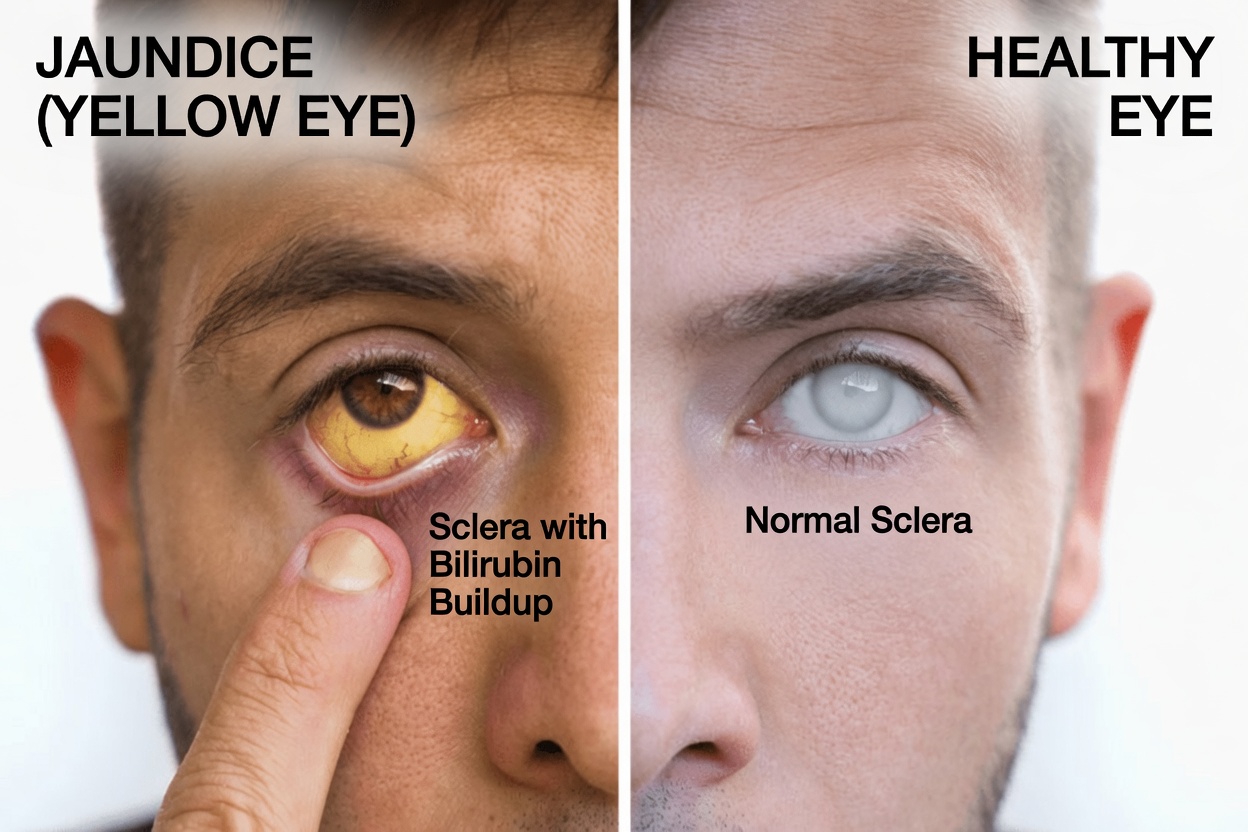
A yellow tint in the skin or the whites of the eyes is one of the more recognizable signs of liver trouble. This condition, called jaundice, happens when bilirubin builds up because the liver is no longer clearing it efficiently.
9. Bruising or Bleeding More Easily
If small bumps leave larger bruises than usual, or if your gums seem to bleed more often, your liver could be involved. The liver produces proteins needed for normal blood clotting, so impaired function may make bleeding and bruising more noticeable.
10. Swelling in the Legs, Ankles, or Abdomen
Fluid retention can show up as swollen ankles, puffy legs, or a bloated abdomen. Although this is more common in advanced liver disease, it can begin gradually. This type of swelling may result from changes in circulation and reduced protein production.
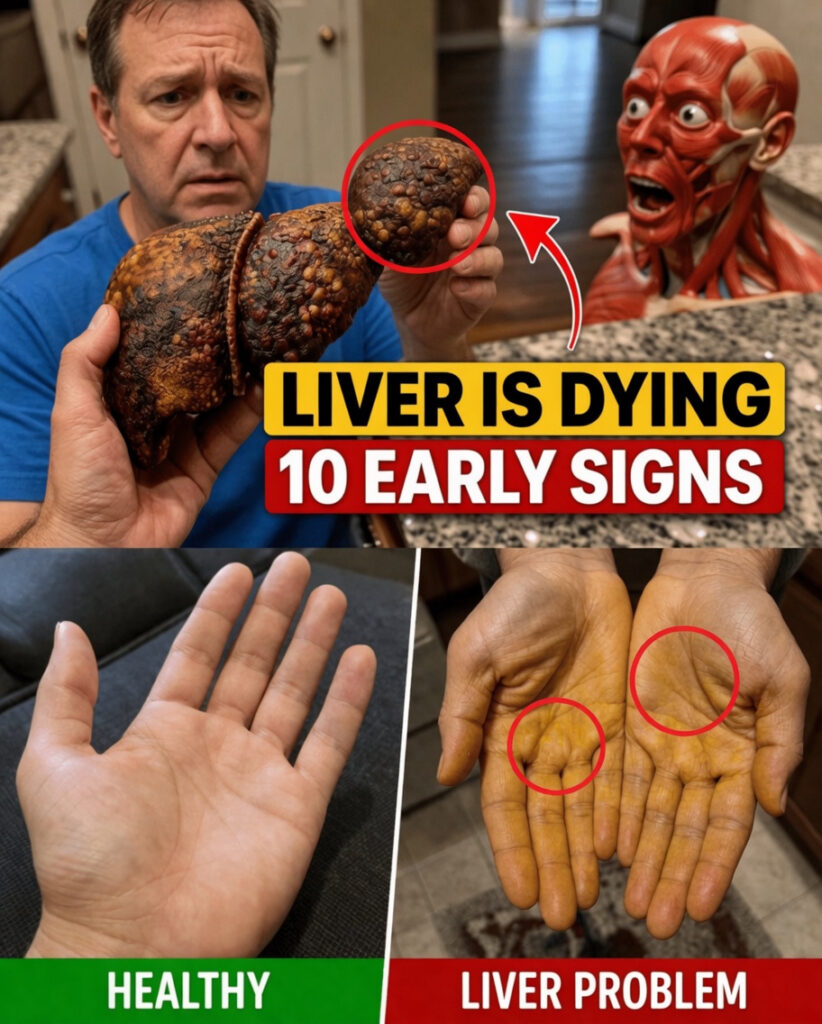
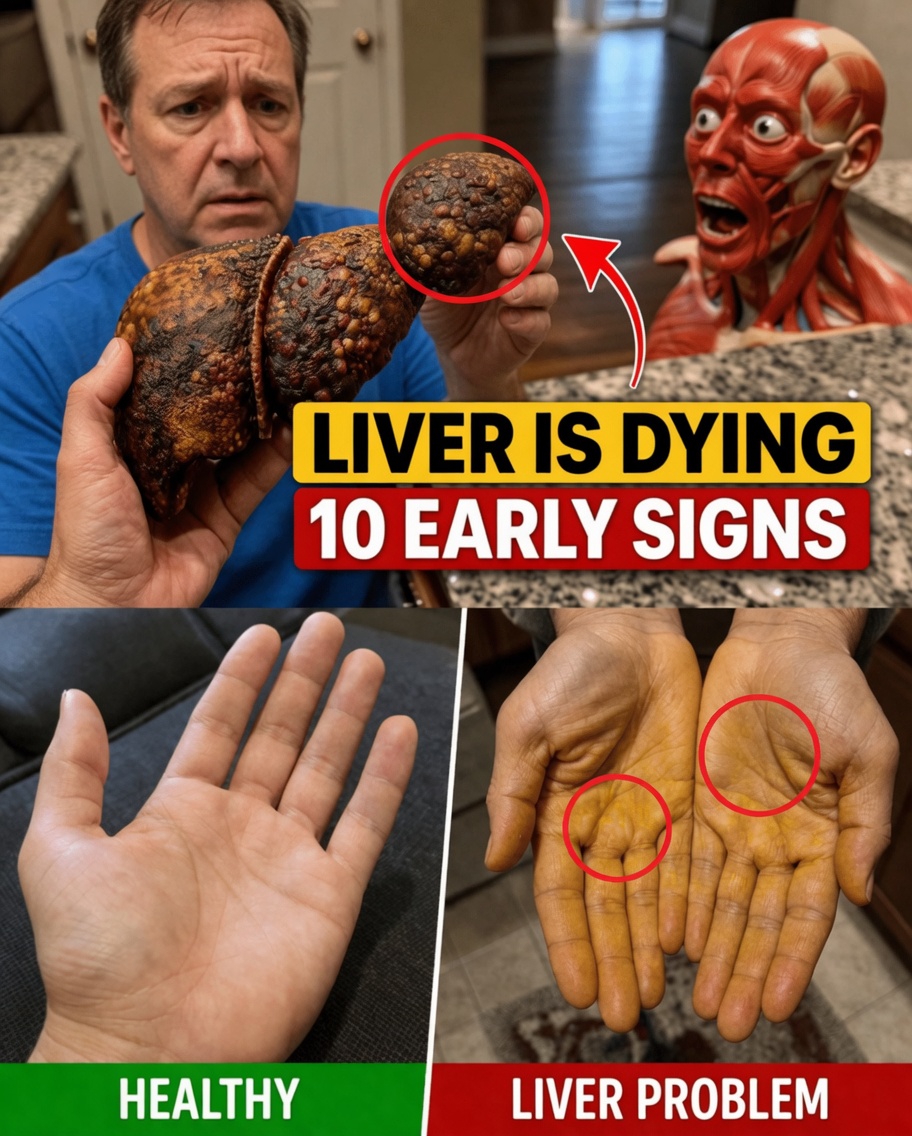
11. Red Palms
One visible clue many people can spot themselves is unusual redness in the palms, especially near the base of the thumbs and little fingers while the center remains lighter. This condition, known as palmar erythema, is associated with changes in circulation and hormone balance linked to liver function.
12. Noticeable Nail Changes
The fingernails may also reveal important clues. Some people develop nails that appear whiter than normal with a darker pink or brown band near the tip, often referred to as Terry’s nails. Others may notice rounded fingertips or clubbing. These visible changes can reflect altered protein balance or circulation issues connected to liver health.
These signs do not always occur alone. In many cases, it is the presence of several symptoms together that raises concern.
How These Symptoms Can Appear in Daily Life
Sometimes these changes are easy to overlook until you notice them unexpectedly. You might glance at your hands and realize your palms look redder than usual, or see that your nails have turned unusually pale. You may also connect unexplained itching, low energy, and digestive discomfort only after they have been happening for weeks.
Health illustrations often show how closely the liver is connected to the rest of the body, including digestion, skin appearance, and circulation. Some studies suggest external signs may appear even before standard blood tests detect a serious issue, which is why visible changes should not be dismissed.
Simple Ways to Support Your Liver Starting Today
Taking care of your liver does not have to be complicated. Small, steady habits can make a meaningful difference over time.
1. Drink Enough Water
Aim for at least eight glasses of water per day. Good hydration helps your body carry out natural detoxification processes more efficiently.
2. Eat More Liver-Friendly Foods
Focus on nutrient-dense foods that support overall wellness, such as:
- Leafy greens
- Berries
- Cruciferous vegetables like broccoli and cauliflower
These foods provide antioxidants and plant compounds that support healthy body function.
3. Stay Physically Active
Regular movement can improve circulation and help maintain a healthy weight. Even a 20-minute walk on most days can be beneficial.
4. Cut Back on Alcohol and Ultra-Processed Foods
Reducing alcohol intake and limiting heavily processed foods can ease some of the burden placed on the liver over time.
5. Keep Up With Routine Check-Ups
Regular medical visits and simple blood tests can help detect changes early, often before symptoms become severe.
Foods Worth Adding More Often
If you want to build a more liver-supportive routine, consider including these foods more regularly:
- Turmeric and garlic for their natural anti-inflammatory properties
- Green tea for antioxidant support
- Walnuts and avocados for healthy fats that support overall function
One Everyday Habit Many People Use for Liver Support
One of the simplest daily habits for supporting liver health is staying consistently hydrated. Thousands of people focus on drinking enough water throughout the day to help the body process waste and maintain normal metabolic function. While water is not a cure or treatment, it is an easy and practical step that supports overall liver wellness.
Final Thoughts: Pay Attention to What Your Body Is Telling You
Noticing one or more of these 12 signs does not automatically mean you have liver disease. It does mean your body may be asking for closer attention. Staying aware of these changes and discussing them with a trusted healthcare professional can help you take action early.
The liver has a remarkable ability to recover and adapt when given proper support. Consistent healthy habits, combined with medical guidance when needed, can go a long way toward protecting your long-term health.
FAQ
What are the earliest signs of liver problems?
Many people first notice persistent fatigue, changes in appetite, mild digestive upset, itching, or visible skin and hand changes such as red palms.
Can nail changes or red palms really be related to liver health?
Yes. Signs like palmar erythema and certain nail patterns are recognized in medical literature and may appear along with other symptoms of liver dysfunction.
When should I see a doctor?
If you notice several of these symptoms at the same time, or if they continue for more than a few weeks, it is a good idea to schedule a medical appointment. Early evaluation can provide clarity and peace of mind.
Disclaimer
This article is for informational purposes only and should not be considered medical advice, diagnosis, or treatment. Always consult a qualified healthcare professional for guidance tailored to your personal health situation.