
When a “Small” Change May Mean More Than Aging
Picture yourself walking from the kitchen into the living room. Nothing dramatic happens. You do not fall, and your speech sounds normal. But for a few steps, your right foot feels strangely heavy. Then the sensation disappears.
Most people would dismiss it. Maybe it is fatigue. Maybe stress. Maybe just age catching up.
Yet brief, subtle changes like this can sometimes be early signs of a lacunar stroke—a small stroke that happens deep inside the brain. These events may seem minor at first, but over time they can affect movement, sensation, balance, and mental sharpness.
The encouraging part is this: recognizing unusual patterns early and discussing them with a doctor may help you respond before symptoms worsen. And one of the most commonly ignored signs may completely change the way you think about everyday clumsiness.
Why Lacunar Strokes Often Go Unnoticed
Lacunar strokes develop when tiny arteries deep in the brain become blocked. These small vessels supply important structures such as the basal ganglia, thalamus, and internal capsule.
Because these strokes are small, they do not always cause the classic warning signs people expect. Instead of dramatic collapse or obvious facial drooping, symptoms may be mild, brief, or easy to explain away. Many older adults assume they are dealing with arthritis, tiredness, anxiety, or normal aging.
Research suggests that repeated small-vessel events can gradually build up, affecting:
- Movement
- Sensation
- Walking ability
- Thinking speed
Another reason they are missed is that symptoms may improve quickly. When an episode passes, people often feel relieved rather than alarmed.
A good rule to remember: any sudden, unusual, or one-sided change in how your body or mind functions deserves medical attention.
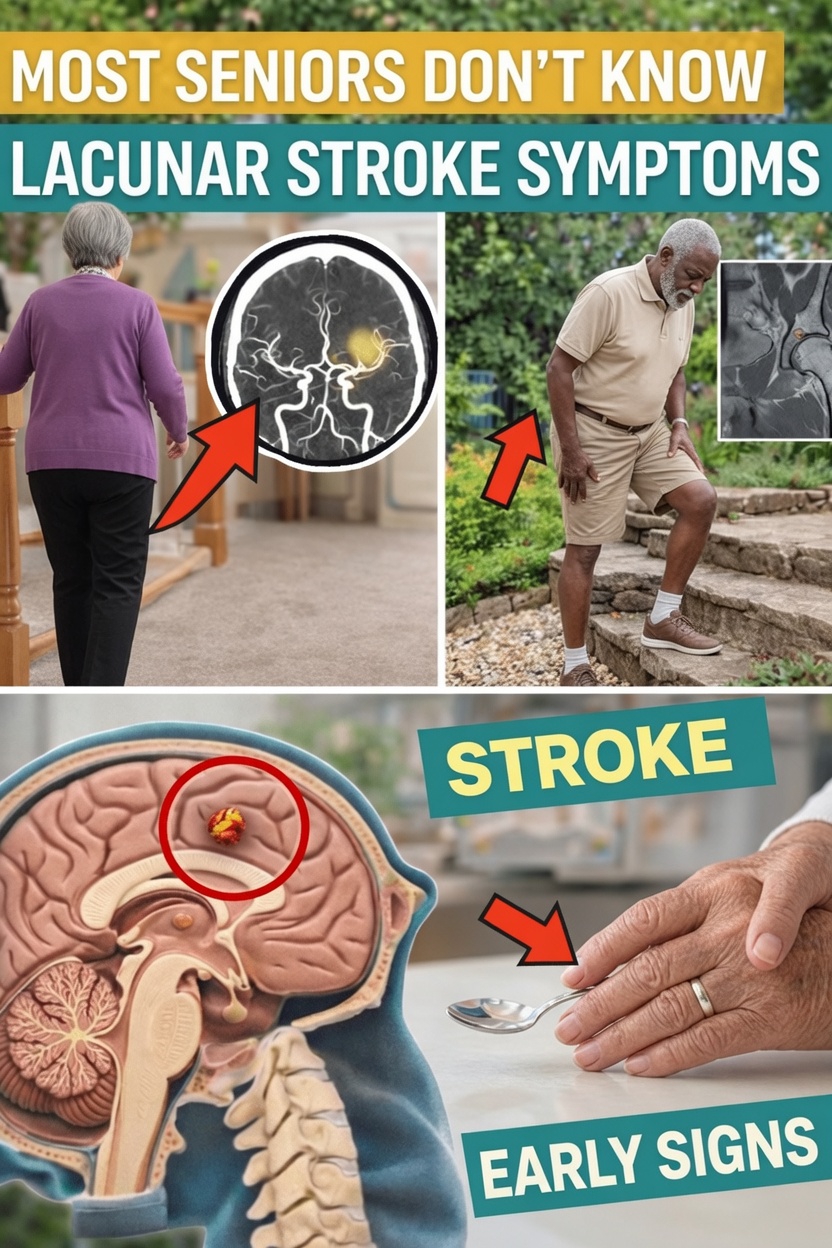
7 Commonly Overlooked Warning Signs After 60
These signs are not meant for self-diagnosis. They are warning patterns that should be discussed with a healthcare professional as soon as possible.
1. Sudden Burning, Stabbing, or Electric-Like Pain on One Side
A sharp burning feeling in one foot or leg, especially without injury, can be confusing. Some people describe it as:
- an electric shock
- stabbing pain
- extreme sensitivity to touch
This may be related to disturbances in the brain’s sensory pathways caused by small-vessel changes. It often appears suddenly and may not resemble more familiar problems such as neuropathy.
If the pain is new, strong, and mainly affects one side, bring it up with your doctor.
2. Severe Abdominal or Flank Pain Despite Normal Test Results
Intense pain in the side or abdomen, especially when paired with nausea or sweating, often leads to multiple medical tests. Sometimes those tests come back normal.
While abdominal pain has many possible causes, there are cases in which the brain’s processing of sensory signals may play a role, particularly when small vessel disease is present. Common medical causes should always be ruled out first.
Still, unexplained episodes like this should not be ignored.
3. Sudden Clumsiness or Weakness in One Arm or Leg
If you suddenly drop objects, feel one arm become awkward, or notice one leg turning heavy for a short time, it may reflect a temporary interruption in blood flow. This is often associated with a TIA (transient ischemic attack).
Lacunar events frequently produce pure motor symptoms on one side of the body, even without the facial droop many people associate with stroke.
If this happens:
- Note the exact time it began.
- Pay attention to which side was affected.
- Seek medical evaluation quickly.
What often surprises families is that the next warning sign may be visible before the person experiencing it notices anything is wrong.
4. Gradually Worsening Balance Problems, Shuffling, or Unexplained Falls
Shorter steps. Difficulty turning. A feeling that your feet are stuck to the floor. More stumbles than before.
These walking changes can be linked to small vessel disease interfering with the brain’s motor circuits. Too often, people write them off as “just getting older,” or mistake them for another age-related condition.
Ask yourself:
- Are you taking smaller steps than a few months ago?
- Do you avoid certain floors or outdoor surfaces?
- Have you had more near-falls or unexplained falls lately?
This is one of the most important signs to watch, especially because it often appears early.

5. New Urinary Urgency, Frequency, or Accidents
A sudden need to urinate more often—or feeling unable to hold it—can be uncomfortable and embarrassing to talk about. But bladder control depends in part on brain pathways. When these are affected by vascular changes, urinary symptoms may appear along with walking or thinking problems.
Tell your doctor if you notice:
- more frequent bathroom trips
- urgent need to urinate
- new leakage or accidents
These details matter even more if they appear together with balance or memory changes.
6. Step-Wise Changes in Thinking, Focus, or Motivation
Vascular-related cognitive changes do not always happen slowly. Sometimes they occur in steps. A person may seem stable for a while, then suddenly become less focused, slower at processing information, or less interested in daily activities.
Family members often describe it as:
- “They seem different lately.”
- “They’re not quite themselves.”
- “They’re slower to think than before.”
Watch for noticeable changes in:
- concentration
- planning
- multitasking
- motivation
A pattern of decline that happens in stages can be an important clue.
7. Brief Episodes of Confusion or Mental Fog That Resolve Quickly
Short spells of disconnection, mental fuzziness, or an unreal feeling in the room—followed by quick recovery—should not be brushed aside.
These temporary episodes may reflect brief interruptions in blood flow. Even if they pass within minutes, repeated incidents deserve prompt medical review.
What to Do If You Notice These Signs
Any new or sudden symptom should be taken seriously. Many health organizations recommend treating possible stroke symptoms as an emergency.
Take these steps right away if symptoms appear suddenly:
- Call emergency services immediately for sudden weakness, numbness, confusion, speech difficulty, or balance trouble
- Write down the exact time the symptoms started
- Prepare a list of medications and current health conditions
- Ask about stroke evaluation if the symptoms match this pattern
For symptoms that are more gradual, arrange a medical appointment soon and bring a clear timeline of what has changed.
Quick Action Guide
| Situation | What to do now | Why it matters |
|---|---|---|
| Sudden one-sided weakness or numbness | Call emergency services | Stroke evaluation is time-sensitive |
| Worsening walking or balance problems | Schedule a medical assessment | Early attention may help reduce further risk |
| New memory, focus, or urinary changes | Track symptoms and discuss them with your doctor | Patterns can offer valuable diagnostic clues |
Lifestyle Factors That May Help Lower Risk
Protecting the brain’s small blood vessels often starts with managing everyday health factors. Doctors commonly focus on:
- Keeping blood pressure in a healthy range
- Managing cholesterol
- Controlling blood sugar if you have diabetes
- Staying physically active
- Doing balance-focused exercise
- Avoiding smoking
No single habit can completely prevent lacunar strokes. But steady attention to these areas, together with guidance from your healthcare team, may help reduce risk.
Small daily choices often matter more than people realize.

Lacunar Stroke Signs vs. Typical Aging
Use the comparison below as a discussion tool with your doctor—not as a way to diagnose yourself.
| Feature | Possible lacunar pattern | Typical aging |
|---|---|---|
| Onset | Sudden or step-wise | Slow, gradual change |
| Weakness | Often abrupt and one-sided | General slowing or reduced strength |
| Walking | Shuffling, freezing, more falls | Mild caution or slower pace |
| Thinking | Slower processing, drop-offs in steps | Mild forgetfulness |
| Urinary symptoms | May appear with gait or thinking changes | Often linked to other non-brain-related causes |
Frequently Asked Questions
What is a lacunar stroke?
A lacunar stroke is a small infarct caused by blockage in a tiny artery deep within the brain. Although the affected area may be small, repeated events can contribute to larger problems with movement, cognition, and overall brain health.
How can someone lower the risk of these strokes?
The most common prevention strategies include working with a doctor to manage:
- blood pressure
- cholesterol
- diabetes
- physical activity levels
These are standard recommendations in many medical guidelines.
When should I see a doctor?
You should seek medical attention promptly for:
- any new symptom
- any sudden symptom
- any one-sided symptom
- gradual changes that begin affecting daily life
When stroke is a possibility, waiting is never the safer choice.
The Bottom Line
Lacunar strokes may be subtle, but their impact can build over time. Among the warning signs, changes in balance and walking deserve special attention because they often show up early and can strongly affect daily life.
Staying observant, tracking unusual symptoms, and speaking with your healthcare provider early can make a real difference. Check your blood pressure regularly, and do not ignore even small changes that seem out of character.
If this sounds familiar for you or someone you care about, sharing the information may help start an important conversation early—when action can matter most.