8 Unexpected Signs Your Body May Need More Vitamin B12
Have you ever slept a full night and still woken up exhausted? Or noticed a strange tingling in your hands or feet for no obvious reason? Small symptoms like these can build up quickly, making normal daily activities feel harder than they should. In many cases, your body may be signaling a shortage of an essential nutrient that supports both nerve function and energy production: vitamin B12.
The challenge is that the warning signs are often easy to overlook. They may seem unrelated at first, which is why many people do not connect them to a possible nutrient deficiency until symptoms become more noticeable.
Why Vitamin B12 Is So Important
Vitamin B12 is crucial for several major functions in the body. It helps keep nerves protected, supports the formation of healthy red blood cells, and plays a role in maintaining stable energy levels. According to health authorities such as the National Institutes of Health, this vitamin is also involved in preserving the protective covering around nerves and supporting normal blood production.
When B12 levels begin to fall, the body may respond in subtle ways long before severe fatigue or more obvious problems appear. That is why recognizing early symptoms matters.
8 Strange Signs of Low Vitamin B12
Many people are surprised to learn that vitamin B12 deficiency symptoms can show up in unexpected forms. Below are eight signs worth paying attention to.
1. Tingling or “Pins and Needles” in the Hands and Feet
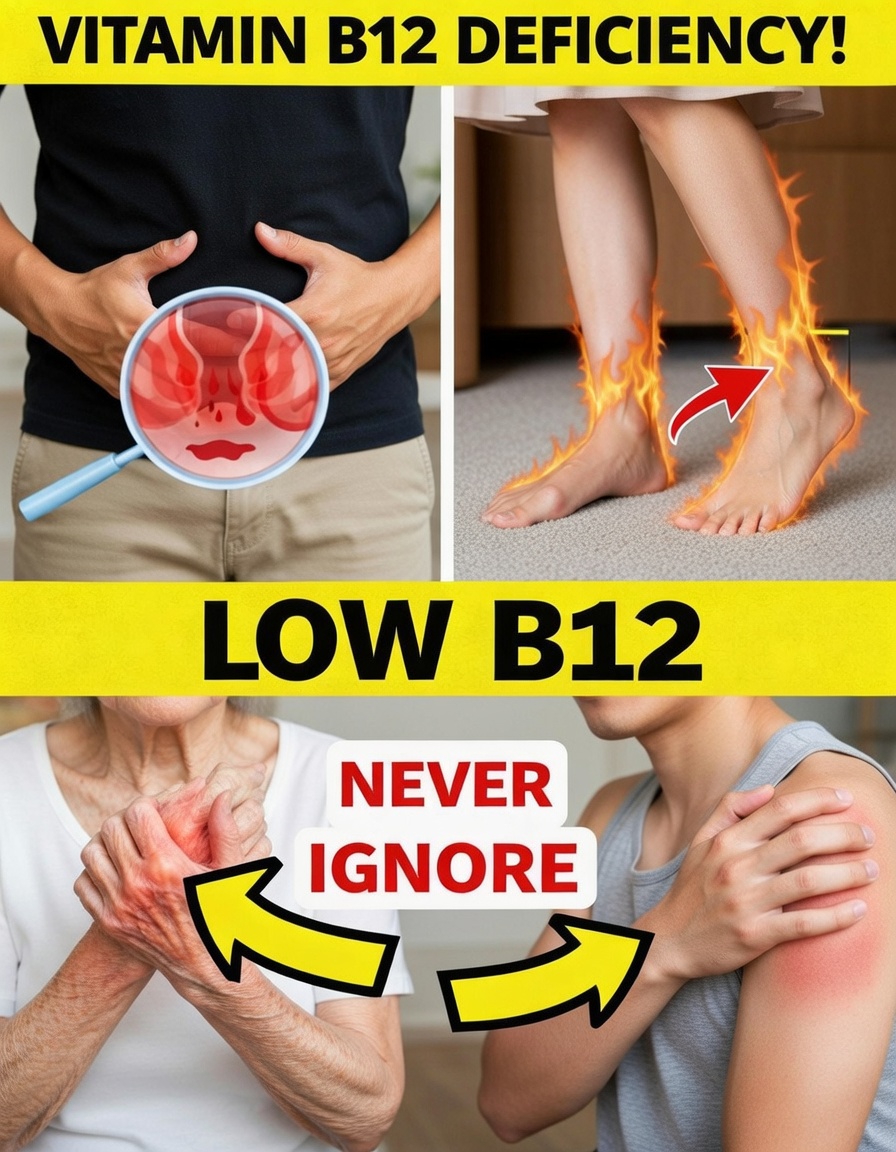
If your fingers or toes often feel numb, prickly, or like they have “fallen asleep” without a clear reason, low B12 could be part of the issue. This happens because inadequate vitamin B12 may affect the myelin sheath, the protective layer surrounding nerves.
This symptom, known as paresthesia, is often one of the earliest neurological clues. Because it may come and go, many people dismiss it as poor posture, sitting too long, or cold temperatures.
2. Burning Feelings in the Legs or Feet
A warm, burning sensation in the feet or lower legs can also point to nerve irritation linked to low B12. Some people describe it as feeling like their feet are overheated even when the environment is cool.
This sign can be mistaken for other conditions, but it may improve once the underlying nutritional issue is addressed. For many, the discomfort is worse at night, which can interfere with sleep and make daytime fatigue even worse.
3. Unexplained Lower Back or Hip Discomfort
Persistent discomfort in the lower back, hips, or lower spine area is not always caused by muscle strain or aging. In some cases, nerve-related changes associated with low vitamin B12 can create vague aching or unusual sensations in these areas.
Because the symptom is not as widely recognized, it is often ignored. However, when it appears together with tingling or burning in the limbs, it may be part of a broader pattern.
4. Red, Itchy, or Irritated Skin Patches
Skin changes can sometimes accompany low B12 status. You may notice red, irritated, or itchy patches on the hands, shoulders, or other parts of the body. In medical literature, changes such as inflammation or altered pigmentation have been associated with low vitamin B12 in some individuals.
While this is less common than nerve-related symptoms, it can still be a useful clue, especially if the skin irritation appears alongside numbness or tingling.

5. Feeling Colder Than the People Around You
Do your hands and feet stay unusually cold even when everyone else seems comfortable? One reason may be that low B12 can reduce the body’s ability to make enough healthy red blood cells. That can affect oxygen delivery throughout the body and make you feel chilled more easily.
This cold sensitivity often appears most strongly in the extremities, which are also common areas for tingling and burning sensations.
6. A Sore, Smooth, or Red Tongue
Changes in the tongue are another possible sign of vitamin B12 deficiency. Some people develop a tongue that looks smoother than usual, appears red, or feels sore during meals. This condition, often called glossitis, can also affect how food tastes.
You might also notice:
- A metallic taste
- Increased sensitivity when eating
- Mouth ulcers or irritation
Because B12 helps support the cells lining the mouth, a deficiency can make everyday eating less pleasant.
7. Brain Fog, Forgetfulness, or Mood Changes
Vitamin B12 is not only about physical energy. It also plays an important role in brain and nerve health. Low levels may contribute to trouble focusing, memory lapses, mental fog, or changes in mood.
You may find yourself:
- Misplacing things more often
- Struggling to concentrate
- Feeling more irritable than usual
- Experiencing low mood without a clear cause
These mental and emotional shifts are often blamed on stress or lack of sleep, which is why they can be easy to miss.
8. Balance Problems or Difficulty Walking Normally
If you feel unsteady, stumble more often, or notice a change in the way you walk, this could be related to nerve function as well. Low B12 may affect coordination and balance, creating an ataxia-like sensation.
This symptom should not be ignored, especially if it occurs together with numbness, tingling, or burning in the legs and feet. Early attention can make a meaningful difference.
How All of These Symptoms Are Connected
The common link behind these signs is simple: vitamin B12 helps maintain healthy nerves and supports red blood cells that carry oxygen throughout the body. When levels are too low, different systems begin to react in different ways.
That is why deficiency symptoms may seem unrelated at first. One person may notice fatigue and brain fog, while another may first experience cold hands, skin irritation, or balance issues. The body does not always send one obvious signal. Instead, it often sends several quiet ones.

Simple Daily Habits to Support Healthy Vitamin B12 Levels
The good news is that small, practical changes can help support healthy vitamin B12 intake. For many people, a food-first approach is a smart place to begin.
Helpful everyday habits
- Eat B12-rich animal foods such as eggs, dairy products, fish, and lean meats several times a week.
- If you follow a vegetarian or vegan diet, choose foods fortified with B12, such as breakfast cereals or plant-based milks.
- Build balanced meals that include a variety of nutrients and healthy fats to support overall nutrition.
- Pay attention to recurring symptoms instead of brushing them off as random annoyances.
- Speak with a healthcare professional before making major dietary changes or using supplements, especially if you may have absorption problems.
Consistent dietary attention helps many adults maintain healthy vitamin B12 levels, though individual needs can vary.
Who Is More Likely to Notice Vitamin B12 Deficiency Symptoms?
Some groups are more likely to develop low B12 or notice symptoms earlier than others.
Higher-risk groups include:
- Adults over age 50, because absorption often declines with age
- People eating strict plant-based diets without fortified foods
- Individuals with digestive disorders that affect nutrient absorption
- Those who use acid-reducing medications long term
If you fall into one of these categories, it is especially important to pay attention to the signs listed above.
Final Thoughts: Pay Attention to Early Clues
These eight unusual symptoms do not automatically mean you have a vitamin B12 deficiency. However, they may be your body’s way of asking for closer attention. The earlier you notice patterns, the easier it is to take action and seek the right guidance.
Listening to subtle changes, making supportive daily choices, and consulting a healthcare provider when needed can help you protect your energy, nerve health, and overall well-being.
FAQ
What causes vitamin B12 levels to drop?
Common causes include low dietary intake, reduced absorption with age, digestive conditions, and certain medications that interfere with how the body absorbs or uses vitamin B12.
Can food alone improve low vitamin B12?
In many cases, people improve their intake by regularly eating more B12-rich or fortified foods. However, blood testing is the best way to understand your actual levels, so medical advice is important.
When should I talk to a doctor?
If several of these symptoms continue for more than a couple of weeks or begin affecting your daily life, it is a good idea to speak with a healthcare professional. A simple blood test may help clarify what is going on.
Disclaimer
This article is for informational purposes only and is not a substitute for professional medical advice, diagnosis, or treatment. Always consult a qualified healthcare provider for personalized guidance about your health.