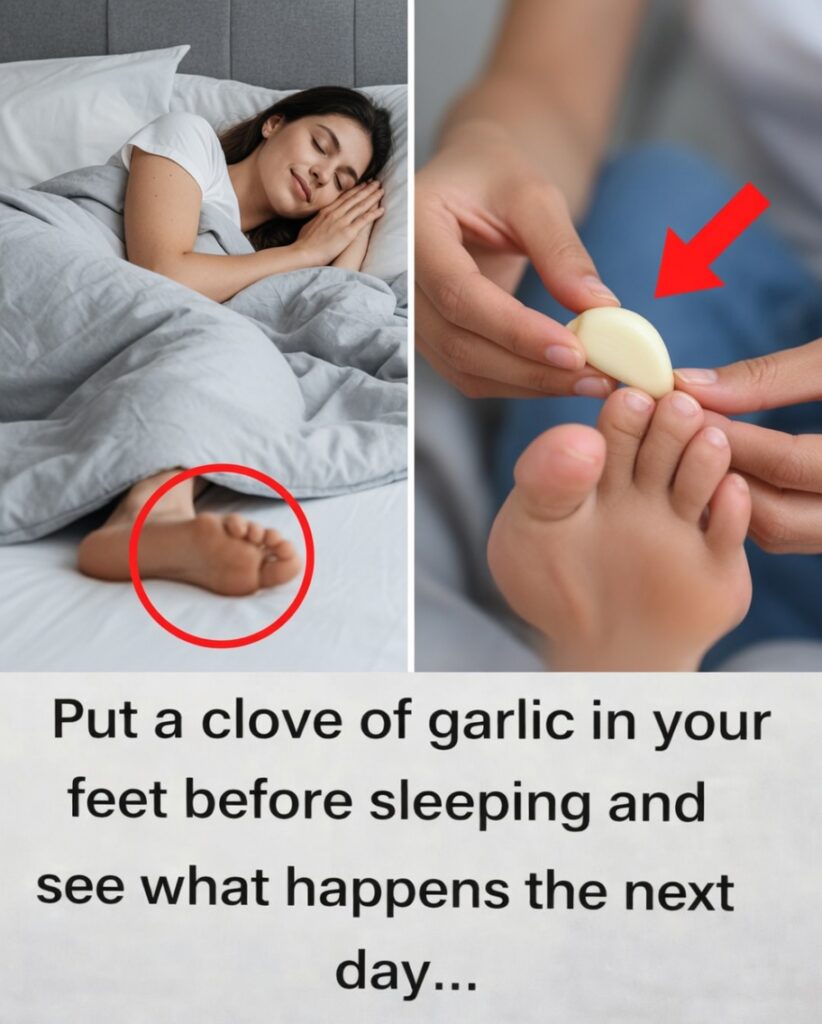
Natural remedies are appealing because they feel simple and accessible—but some viral hacks sound almost unbelievable. One popular trend suggests taping a clove of garlic to the bottom of your foot before sleep, claiming you’ll notice results by morning. Plenty of people insist it works, but the real questions are: does it actually do anything meaningful, and is it safe?
Garlic has been used in traditional medicine for generations thanks to its antimicrobial and anti-inflammatory reputation. Still, before trying this overnight “garlic on feet” ritual, it’s worth separating what garlic is known to do from what this trend promises.
Why Garlic Has Been a Trusted Natural Remedy for Centuries
Garlic (Allium sativum) has been part of healing traditions in many regions, including ancient Egypt, Greece, China, and India. Historically, it was used to help manage infections, support stamina, and promote healthy blood flow.
Modern science has identified several sulfur-containing compounds in garlic. The best-known is allicin, which forms when garlic is chopped or crushed. These active compounds are associated with antibacterial, anti-inflammatory, and antioxidant activity—properties often linked to:
- Immune support
- Defense against certain bacteria and fungi
- Healthier circulation
- Reduced inflammation
Most evidence for these benefits comes from eating garlic, but the viral trend suggests you can also get effects through skin contact.
The Viral Method: Putting Garlic on the Soles of Your Feet
The routine promoted online is straightforward:
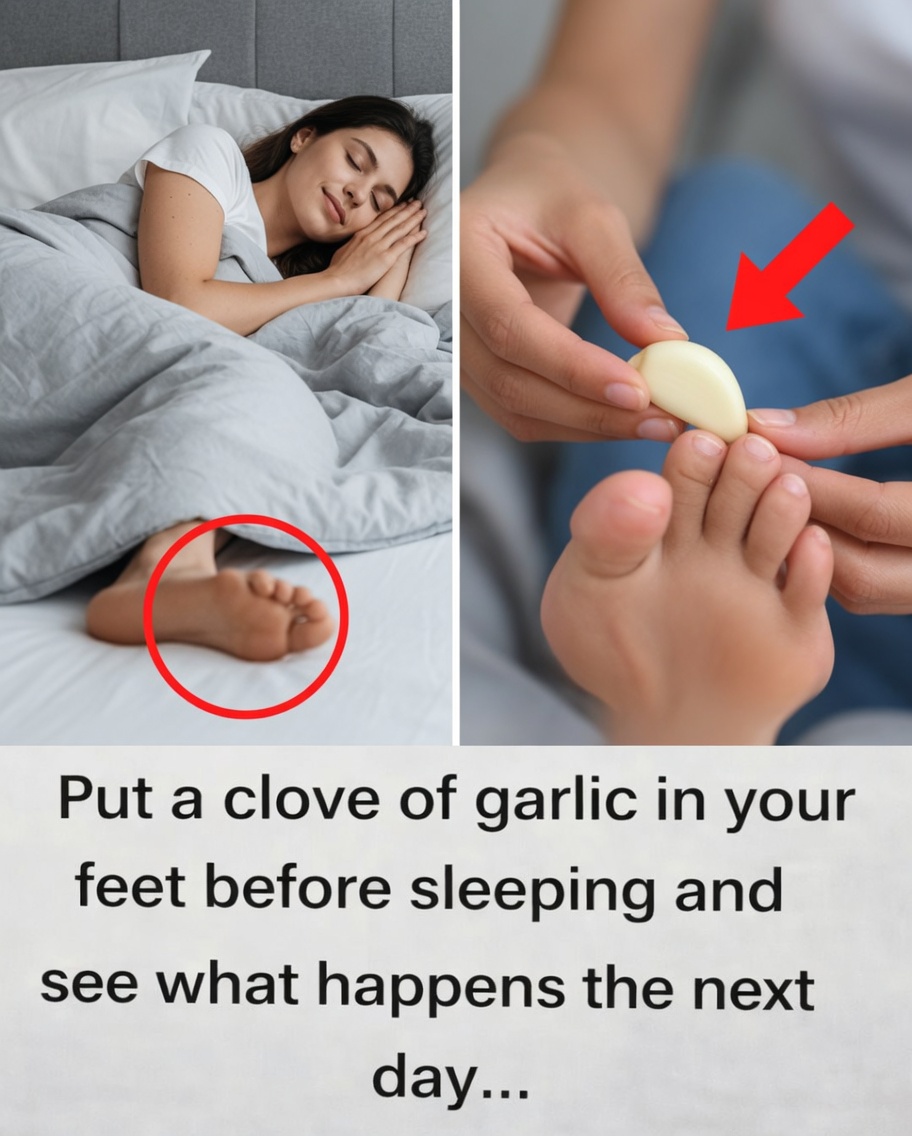
- Choose one fresh garlic clove.
- Lightly crush or slice it to release juices.
- Place it on the sole of your foot.
- Put on socks to hold it in place overnight.
Supporters claim you may wake up noticing things like:
- Less nasal congestion
- Reduced foot odor
- A “boost” in circulation
- A garlic-like taste or smell on your breath
It sounds bizarre—yet one part of it may have a plausible explanation.

Can You Really “Taste” Garlic After Putting It on Your Feet?
Some people report a garlic taste or odor in their mouth after doing this. Your feet aren’t tasting anything—but garlic’s volatile sulfur compounds may be absorbed in small amounts through the skin. If those compounds enter circulation, they can eventually be released through the lungs and detected as garlic breath.
This can help explain why the taste/smell happens for some individuals. However, noticing garlic on your breath is not proof that meaningful health benefits are being delivered through the skin.
Claimed Benefits: What People Say Garlic on Feet Can Do
Even without strong clinical evidence, the trend persists because it overlaps with known properties of garlic. Common claims include:
1. Helping With Foot Fungus
Garlic is widely known for antifungal activity in lab settings. Because athlete’s foot is a fungal issue that commonly affects the feet, people assume topical garlic might help.
2. “Detoxing” Through the Feet
Some wellness communities believe the soles of the feet absorb substances efficiently due to sweat glands and blood flow. This idea also fuels interest in foot patches, essential oil rubs, and similar practices. The concept of “detoxing through feet” is highly debated, but it remains popular in alternative health circles.
3. General Antimicrobial Effects
In laboratory research, garlic compounds can inhibit certain bacteria and fungi. Historically, garlic was applied to wounds and skin problems—so some people experiment with it topically hoping to replicate those antimicrobial effects at home.
What the Science Actually Supports (and What It Doesn’t)
Health professionals are generally cautious about this trend. At this time, there is no strong scientific evidence that placing garlic on your feet:
- Treats systemic infections
- Boosts immunity overnight
- Cures illnesses
- Produces reliable whole-body benefits
Most well-known garlic research focuses on dietary intake, not prolonged skin exposure. Dermatology experts also emphasize an important issue: raw garlic is extremely potent and can irritate or damage skin.

Risks and Side Effects You Should Know Before Trying It
Applying raw garlic directly to your skin—especially overnight—comes with real risks.
Skin Irritation
Crushed garlic can trigger redness, itching, stinging, or a burning sensation.
Chemical Burns
There are documented cases of blisters and chemical burns after extended contact with raw garlic.
Allergic Reactions
Some people develop contact dermatitis or an allergic response to garlic on the skin.
Because these reactions can occur even in otherwise healthy people, many experts advise against leaving raw garlic on skin for long periods.
A Safer Way to Get Garlic’s Proven Benefits
If your goal is to benefit from garlic, the safest and most evidence-based option is simple: eat it.
Garlic in your diet may help support:
- Heart health
- Antioxidant defenses
- Natural antimicrobial activity
- Immune function
To maximize allicin formation, crush or chop garlic and let it sit briefly before cooking. This allows the beneficial compounds to activate more effectively.
The Bottom Line
The “garlic on feet overnight” hack continues to go viral because garlic is a powerful natural ingredient and the method feels easy. While it may explain why some people notice garlic breath, there’s little scientific support that this practice delivers meaningful health improvements.
More importantly, keeping raw garlic against the skin can cause irritation or even chemical burns. Garlic is best used where it’s most proven and safest: in your diet, not in your socks.
FAQ
1. Can garlic be absorbed through the skin?
Some garlic compounds may penetrate the skin in small amounts, but there’s no strong evidence that topical absorption provides major health benefits.
2. Is it safe to put garlic on my feet overnight?
Generally, no. Raw garlic can cause irritation, contact dermatitis, or chemical burns—especially with prolonged exposure.
3. What are the real benefits of garlic?
The most reliable benefits come from eating garlic. Research links dietary garlic to support for heart health, antioxidant activity, antimicrobial effects, and immune function.