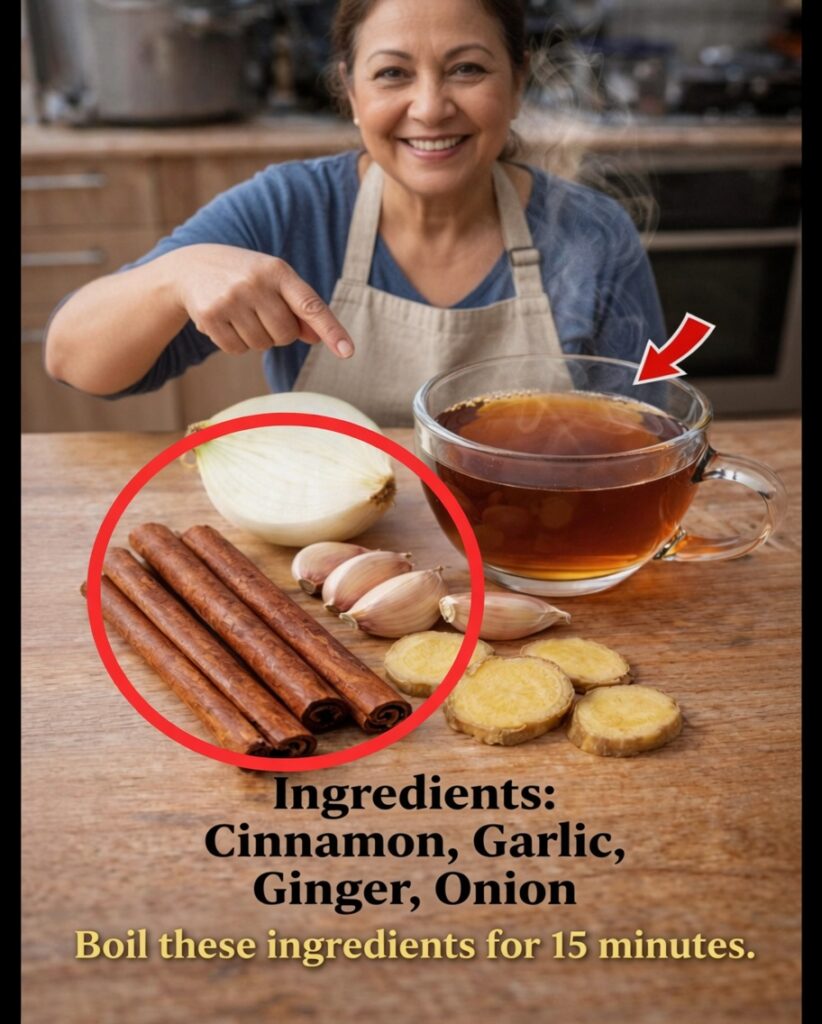
The “Miracle Drink” Moment: Why This Trend Needs Clear, Evidence-Based Context
You’ve probably experienced it: a family gathering, a well-meaning relative, and a “miracle drink” they insist you should try. Last Thanksgiving, Mrs. Johnson brought one to the table—a pungent brew she simmered every morning for 15 minutes and credited for “supporting her wellness.” Privately, she felt conflicted because her doctor had warned her not to depend on vague social-media remedies—yet the habit stuck.
That impulse is understandable. People want to feel proactive about their health. So let’s unpack this trend calmly and clearly: no medical promises, no scare tactics—just practical, research-informed context. By the end, you’ll know what the cinnamon–garlic–ginger–onion boil actually is, what science suggests (and does not suggest) about these ingredients, and how to use them in a safe, realistic way—plus one overlooked detail that can prevent wasted effort and disappointment.
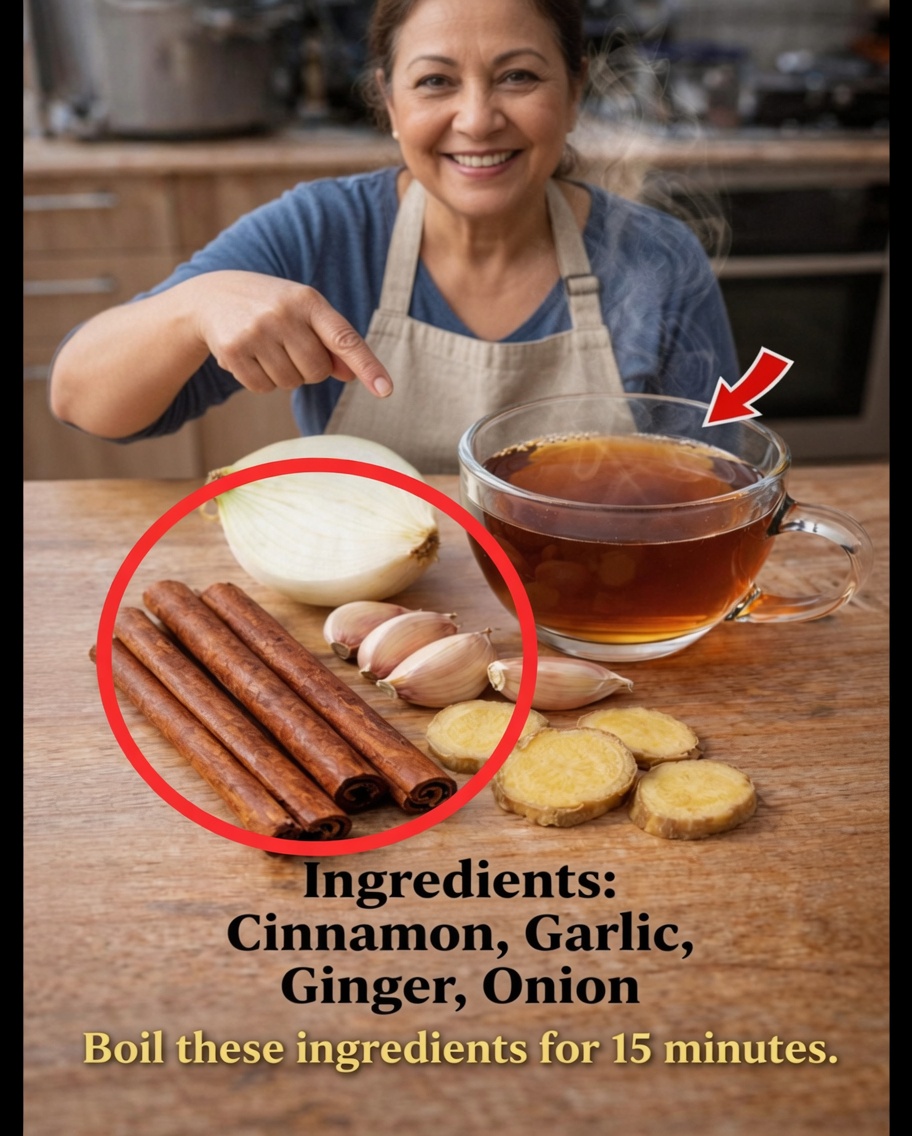
What Is the Cinnamon–Garlic–Ginger–Onion Boil?
This popular “tonic” is simply water boiled or simmered with common kitchen ingredients—typically cinnamon sticks, garlic cloves, ginger, and onion. Some versions add lemon or cloves for extra flavor. The result is a warm, savory-spiced infusion that people sip over the day.
The issue isn’t the drink itself—it’s the exaggerated claims often attached to it online. You may see it labeled a “natural antibiotic,” a cure for inflammation, or a one-stop remedy for multiple conditions. That’s where caution is essential: these claims generally go far beyond what evidence can support.
What Research Actually Suggests About the Ingredients
Individually, these foods contain bioactive compounds that have been studied for potential health-related effects—especially when eaten as part of a normal diet.
- Garlic and ginger: Research describes antioxidant and anti-inflammatory activity linked to compounds in both foods when consumed in typical dietary amounts.
- Cinnamon: Components in cinnamon have been studied for their potential role in metabolic support and antioxidant activity, particularly within an overall healthy eating pattern.
- Onion: Onions provide flavonoids such as quercetin, contributing to overall antioxidant intake and commonly appearing in heart-healthy diets.
Key reality check: There is no conclusive scientific evidence that boiling these ingredients together creates a disease-curing drink or that it can replace medical evaluation and treatment.
Cinnamon vs. Garlic vs. Ginger vs. Onion: What Each One Brings
Below is a simplified comparison of what each ingredient is known for in nutrition research—again, in the context of normal dietary use, not as a stand-alone “cure.”
-
Garlic
- Notable compound: Allicin
- Common role in diet: Supports overall antioxidant intake; studied for anti-inflammatory markers in limited settings
- Important note: Not a substitute for prescribed medication
-
Ginger
- Notable compounds: Gingerols and shogaols
- Common role in diet: Often used for digestion support; studied for mild anti-inflammatory effects
- Important note: Effects vary by dose and individual tolerance
-
Cinnamon
- Notable compound: Cinnamaldehyde
- Common role in diet: Adds antioxidants; researched for potential metabolic benefits as part of a broader diet
- Important note: More is not always better—especially with frequent, concentrated use
-
Onion
- Notable compound: Quercetin
- Common role in diet: Contributes to antioxidant intake; common in balanced, heart-supportive eating patterns
- Important note: Benefits are tied to overall dietary patterns, not one drink
Bottom line: Any potential benefits are most consistently linked to regular, balanced eating, not to sipping one boiled mixture and expecting dramatic results.
How to Make It Safely (As a Food-Based Drink, Not a Treatment)
If you enjoy warm infusions and like the taste, you can prepare this drink in a gentle, sensible way. Think of it as a culinary routine—not medical therapy.
Ingredients
- 4–6 cups of water
- 1–2 cinnamon sticks
- 2–3 garlic cloves, lightly crushed
- 1–2 slices of fresh ginger
- ¼–½ onion, sliced
- Optional: lemon slices (for flavor)
Directions
- Add water to a pot and heat over medium.
- Add cinnamon, garlic, ginger, and onion.
- Bring to a light boil, then reduce heat and simmer for about 15 minutes.
- Strain and drink warm throughout the day.
Safety tip (don’t skip this): If you take medications—especially blood thinners—or you’re managing a chronic condition, ask a qualified clinician before making herbal/spice infusions a daily habit.

Practical Wellness Guidance Older Adults Can Actually Rely On
Trendy drinks come and go, but the strongest health evidence continues to favor core lifestyle habits. These strategies consistently outperform any single “tonic”:
- Move regularly: Walking, gentle strength work, and mobility exercises support circulation and heart health.
- Build balanced meals: Vegetables, whole grains, lean proteins, and healthy fats do more than any one drink ever will.
- Stay hydrated: Basic hydration supports energy, digestion, and overall function.
- Talk to your clinician about remedies and supplements: Especially if you take prescription drugs or have ongoing health concerns.
FAQ: Common Questions People Ask
-
Can this drink replace my medication?
No. There’s no evidence that a spice-and-onion infusion can replace prescribed treatment. Follow your clinician’s plan. -
Is it safe to drink every day?
Many people can tolerate spice infusions in moderation. However, if you have digestive sensitivity or take medications (notably blood thinners), check with your healthcare provider first. -
Why do people call it a “natural antibiotic”?
Some foods show antibacterial activity in lab settings, but that’s not the same as treating real infections the way medical antibiotics do. Relying on home remedies alone can delay necessary care.
Final Takeaway
Enjoy garlic, ginger, cinnamon, and onion—they’re flavorful, widely used in healthy eating patterns, and can be part of a nourishing routine. Just keep expectations grounded: tradition can be comforting, but real health decisions should stay aligned with science and safety.
Disclaimer: This article is for informational purposes only and does not diagnose, treat, cure, or prevent any condition. Always consult a qualified healthcare professional before changing your health routine.