Understanding Abdominal Pain by Location
Abdominal pain can appear without warning and quickly turn an ordinary day into one filled with discomfort and concern. Whether it feels like a dull ache, cramping, or a sudden sharp pain, many people immediately wonder whether it is harmless or a sign that medical attention is needed. One of the most useful clues is where the pain is felt.
The location of abdominal pain often helps healthcare professionals narrow down which organs or body systems may be involved. In this guide, you’ll learn the main abdominal pain referral areas and how different pain locations may relate to specific internal structures. By the end, you’ll also find an easy symptom-tracking method that can help you describe your experience more clearly during a medical visit.
Why Abdominal Pain Location Matters
The abdomen contains several major organs, and pain does not always originate exactly where it is felt. In some cases, discomfort may be referred from a nearby or even deeper structure. To make evaluation more organized, clinicians often divide the abdomen into standard regions.
This system is not meant to replace medical care, but it can help you communicate symptoms in a more precise way. Clinical experience and medical research both show that identifying the exact pain area can support the diagnostic process.
Still, pain location is only one part of the picture. Doctors also consider:
- The type of pain
- When it started
- How long it lasts
- What triggers it
- Whether it comes with other symptoms
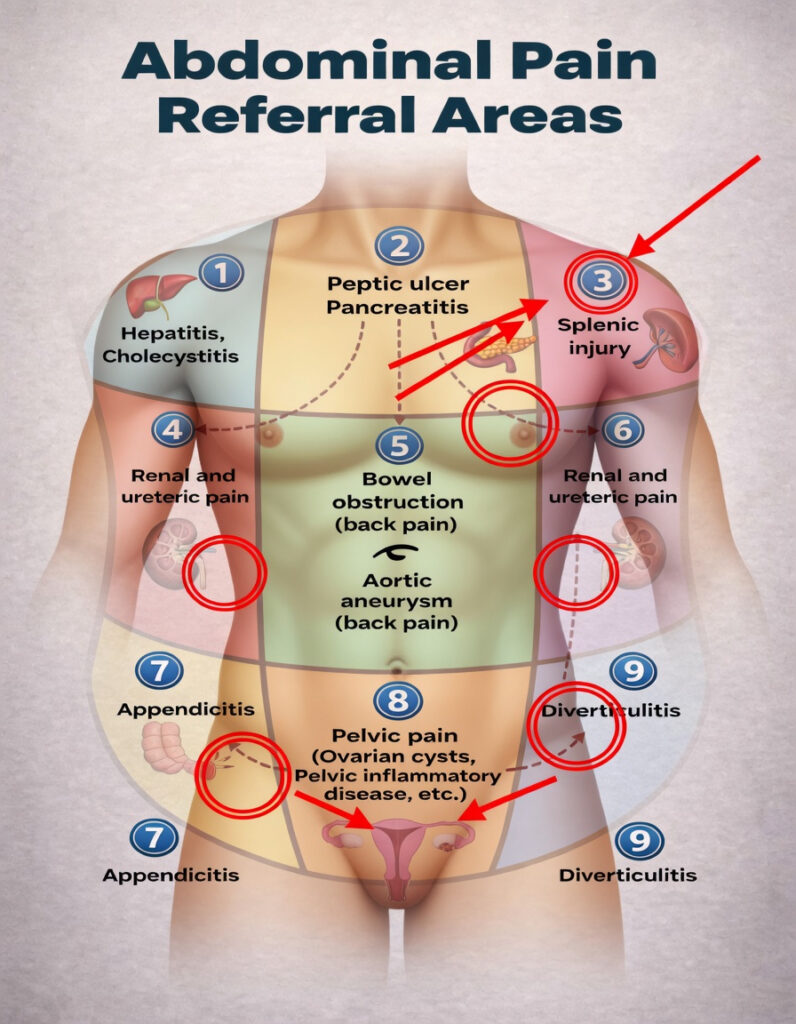
The 9 Main Abdominal Pain Referral Areas
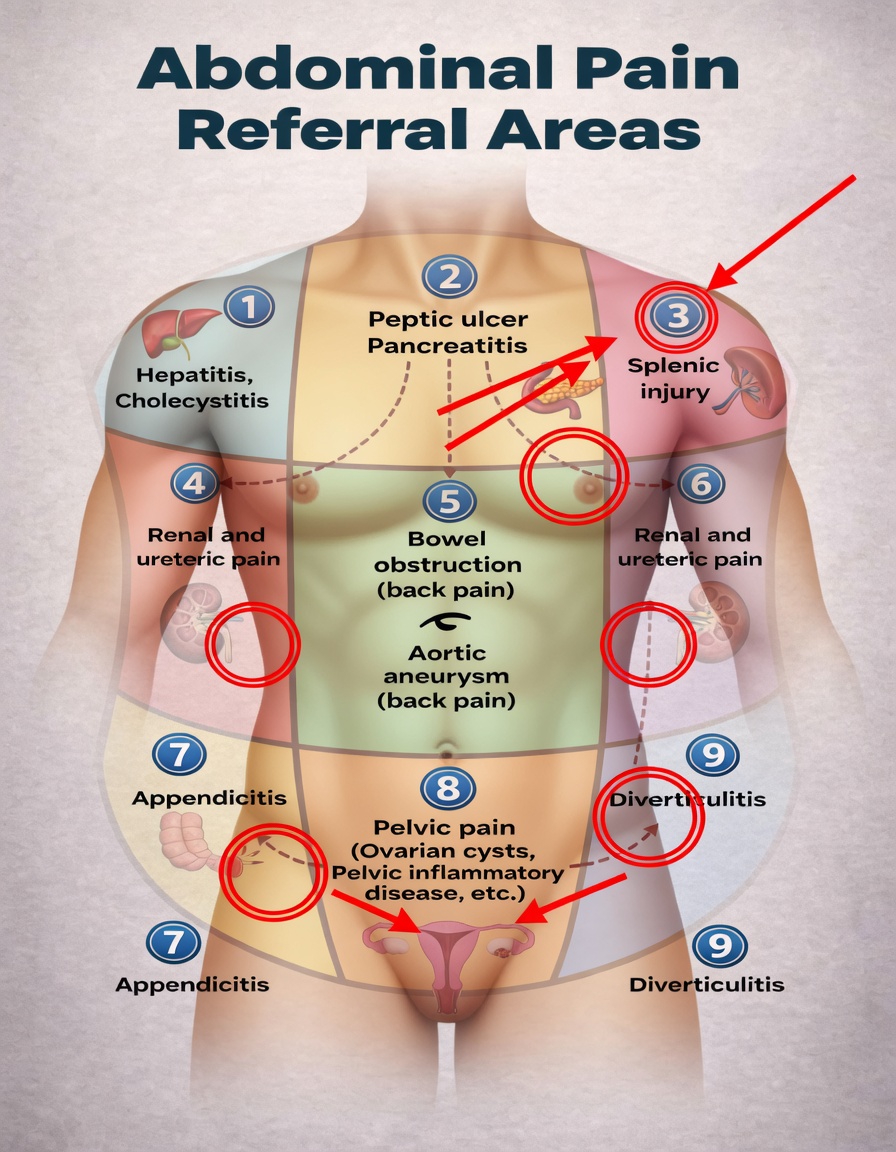
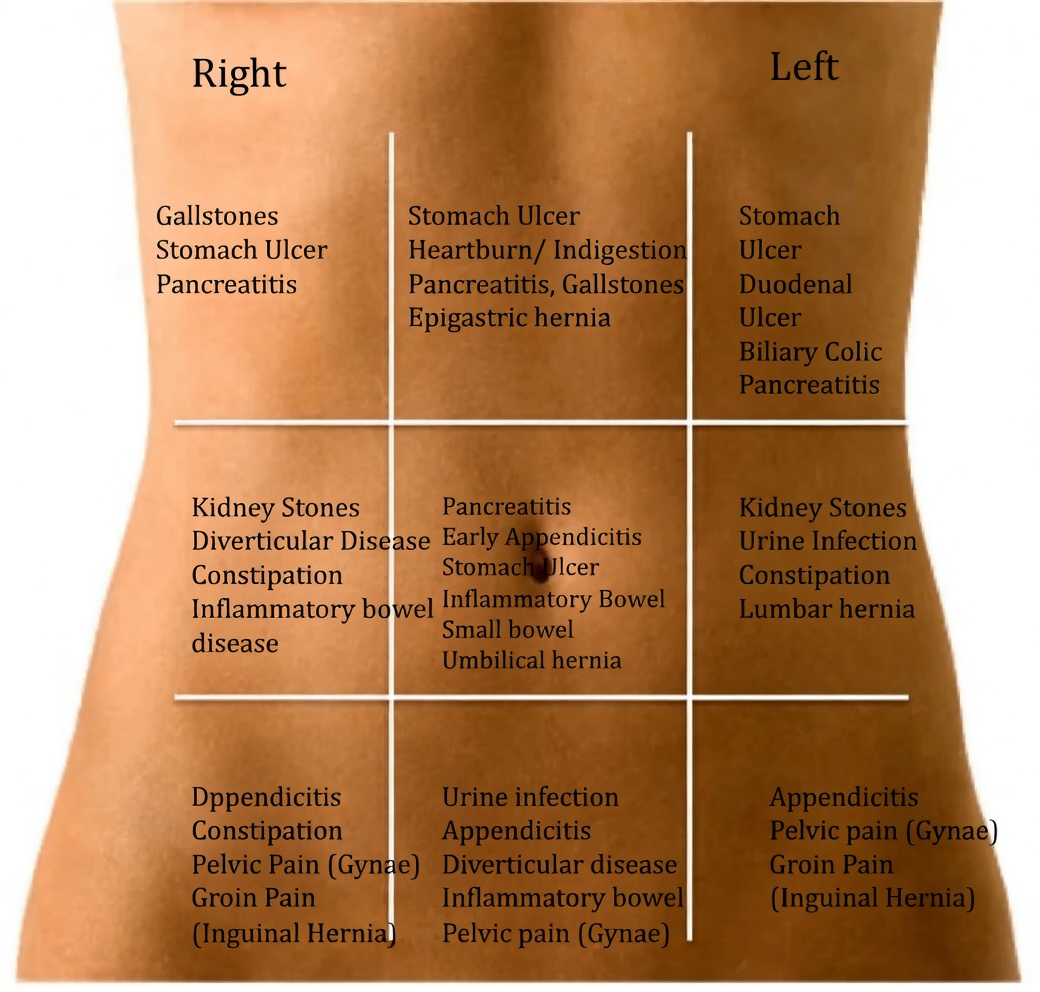
A common medical approach is to divide the abdomen into nine regions. These areas make it easier to describe symptoms accurately.
- Right upper quadrant
- Upper central or epigastric region
- Left upper quadrant
- Right flank
- Central area around the navel
- Left flank
- Right lower quadrant
- Lower central or pelvic region
- Left lower quadrant
Below is a closer look at what pain in each area is commonly associated with.
Area 1: Right Upper Quadrant
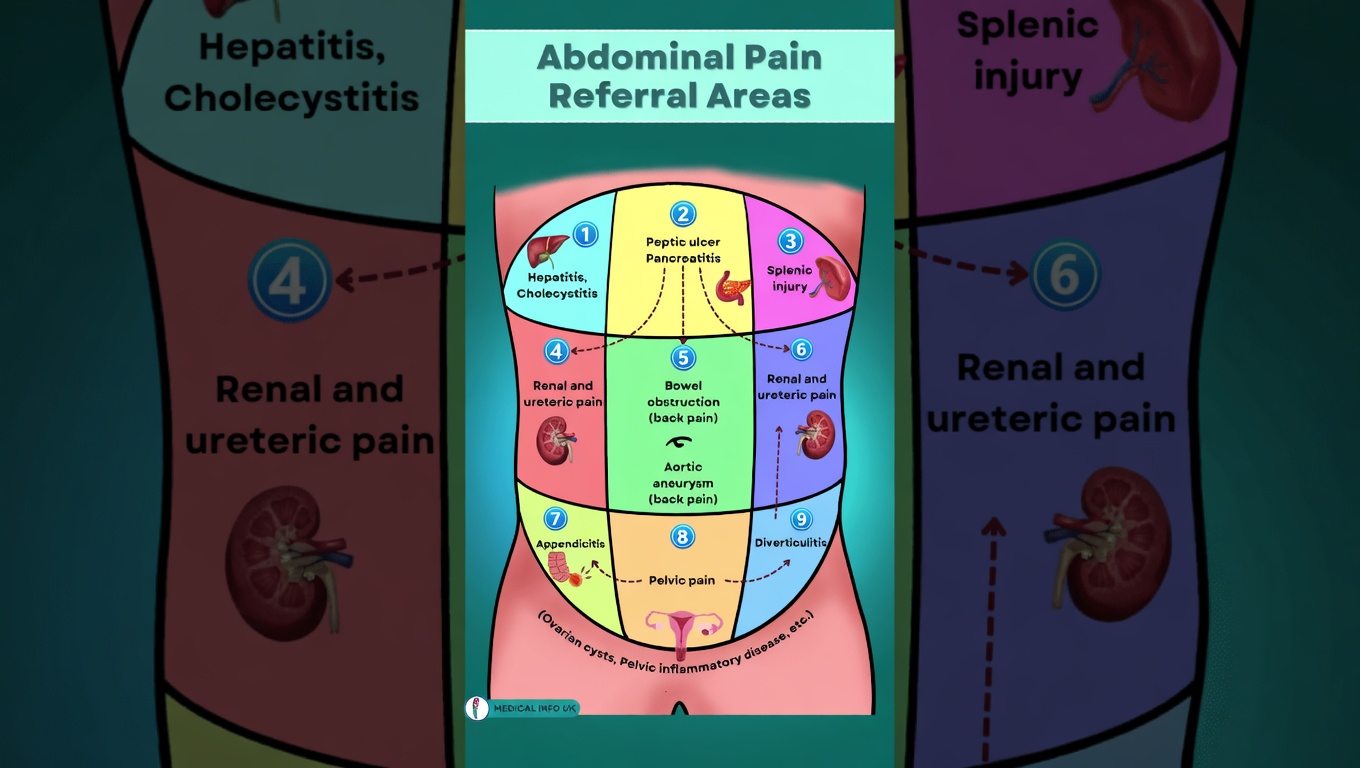
Pain in the upper right part of the abdomen is often linked to the liver and gallbladder. Conditions such as hepatitis or cholecystitis may be considered when discomfort appears in this region.
The liver plays a central role in filtering blood and processing nutrients, while the gallbladder stores bile that helps digest fats. Pain here may sometimes occur after eating, especially after certain meals, or appear along with other symptoms.
When someone reports pain in this area, healthcare providers usually explore liver and gallbladder causes as part of the evaluation. A full medical assessment is always important.
Area 2: Upper Central Region
The upper middle abdomen, just below the ribs, is called the epigastric region. Pain here is commonly associated with the stomach and pancreas. Medical professionals may consider issues such as peptic ulcers or pancreatitis.
Because this area is closely involved in digestion, discomfort here may also be linked to eating or digestive upset. In some cases, pain in the epigastric area can spread or feel connected to nearby regions.
Area 3: Left Upper Quadrant
Pain in the upper left abdomen may point attention toward the spleen. Examples include splenic injury or other spleen-related conditions.
The spleen supports immune function and helps filter blood. Although not all pain in this region means a spleen problem, any persistent or significant discomfort should be evaluated carefully by a healthcare professional.
Areas 4 and 6: Right and Left Flanks
The flanks are the side areas of the abdomen. Pain in the right flank or left flank is often associated with the kidneys or ureters. Problems affecting the urinary system may create pain in these zones.
A notable feature of flank pain is that it may seem to travel. It can sometimes radiate toward the back or move downward toward the groin, a pattern commonly recognized in clinical practice.
Area 5: Central Abdominal Region
Pain around the belly button, also called the central abdominal area, can be related to the bowel. In some situations, doctors may also consider problems involving the aorta, including aneurysm.
This area is important because much intestinal activity occurs here. Some conditions affecting the central abdomen may also cause back pain, which can make the source less obvious at first.
Area 7: Right Lower Quadrant
The right lower quadrant is widely known for its association with the appendix. Appendicitis is one of the best-known conditions linked to pain in this area.
Although many people recognize this pattern, pain in the lower right abdomen can have more than one cause. Only a proper medical evaluation can determine what is actually happening.
Area 8: Lower Central or Pelvic Region
Pain in the lower middle abdomen, just above the pubic bone, may involve pelvic structures. In women, this area can be associated with concerns such as ovarian cysts or pelvic inflammatory disease, among other possible conditions.
This region also relates to parts of the urinary and reproductive systems, which is why doctors often ask detailed questions about accompanying symptoms and recent changes.
Area 9: Left Lower Quadrant
Pain in the left lower abdomen is often connected to the colon. In some adults, diverticulitis is one of the common conditions considered in this region.
The large intestine here may develop small pouches that can become inflamed or irritated. Being able to identify this exact location can make conversations with your healthcare provider more productive.
It is also important to remember that abdominal pain does not always stay in one place. It may shift, spread, or become referred to another area over time.
How to Track Abdominal Pain Effectively
Keeping a simple symptom record can be very helpful before speaking with a doctor or other healthcare professional. Clear details often make it easier to explain what you are feeling.
Use these practical steps to monitor abdominal pain:
- Mark the exact location using the nine abdominal areas
- Rate the severity on a scale from 1 to 10
- Write down when it began
- Note how long it lasts
- Record possible triggers such as foods, movement, or time of day
- List other symptoms like fever, appetite changes, or bowel habit changes
- Track what improves or worsens the pain
- Mention whether the pain spreads to the back, groin, or another area
This kind of record turns a general complaint like “my stomach hurts” into useful, structured information.
When to Seek Medical Attention
Mild abdominal discomfort can happen from time to time, but some patterns should not be ignored. You should contact a healthcare provider promptly if the pain is:
- Severe
- Persistent
- Worsening over time
- Interfering with daily activities
- Accompanied by concerning symptoms
Early medical advice often leads to a clearer understanding of the cause and the best next steps.
Final Thoughts
Understanding abdominal pain referral areas can give you a better sense of how the body signals potential problems. Knowing where pain occurs, and whether it changes over time, can help you discuss symptoms with more confidence and clarity.
However, pain location alone is never enough to make a diagnosis. The most important step is always a professional evaluation based on your individual symptoms and health history.
FAQ
1. Can pain from one organ be felt somewhere else?
Yes. This is called referred pain. It happens when the brain interprets signals from one area as though they are coming from another. That is one reason location charts are useful in clinical care.
2. Can abdominal problems cause back pain?
Yes. Some conditions involving the central abdomen, including certain bowel or vascular issues, may also produce back pain. This overlap is why a complete symptom description is so important.
3. Does knowing the pain location mean I do not need to see a doctor?
No. Identifying the location may help provide context, but it does not replace a medical exam, diagnostic testing, or advice from a qualified professional.
Disclaimer
This article is for educational and informational purposes only. It is not intended to diagnose, treat, or replace guidance from a qualified healthcare professional. If you are experiencing abdominal pain or any other health concern, consult a doctor or appropriate medical provider for proper evaluation and care.