Atorvastatin Side Effects: 15 Common Experiences and How to Manage Them
For millions of adults, atorvastatin is a routine part of managing cholesterol and protecting heart health. Most people take it without major problems, but some begin to notice physical changes that raise questions about whether the medication could be contributing. These effects may be mild and occasional, or more persistent and disruptive enough to affect daily life.
What often surprises people is that a few simple changes to everyday habits can noticeably improve how they feel while taking this medicine.
What Atorvastatin Does and Why Reactions Happen
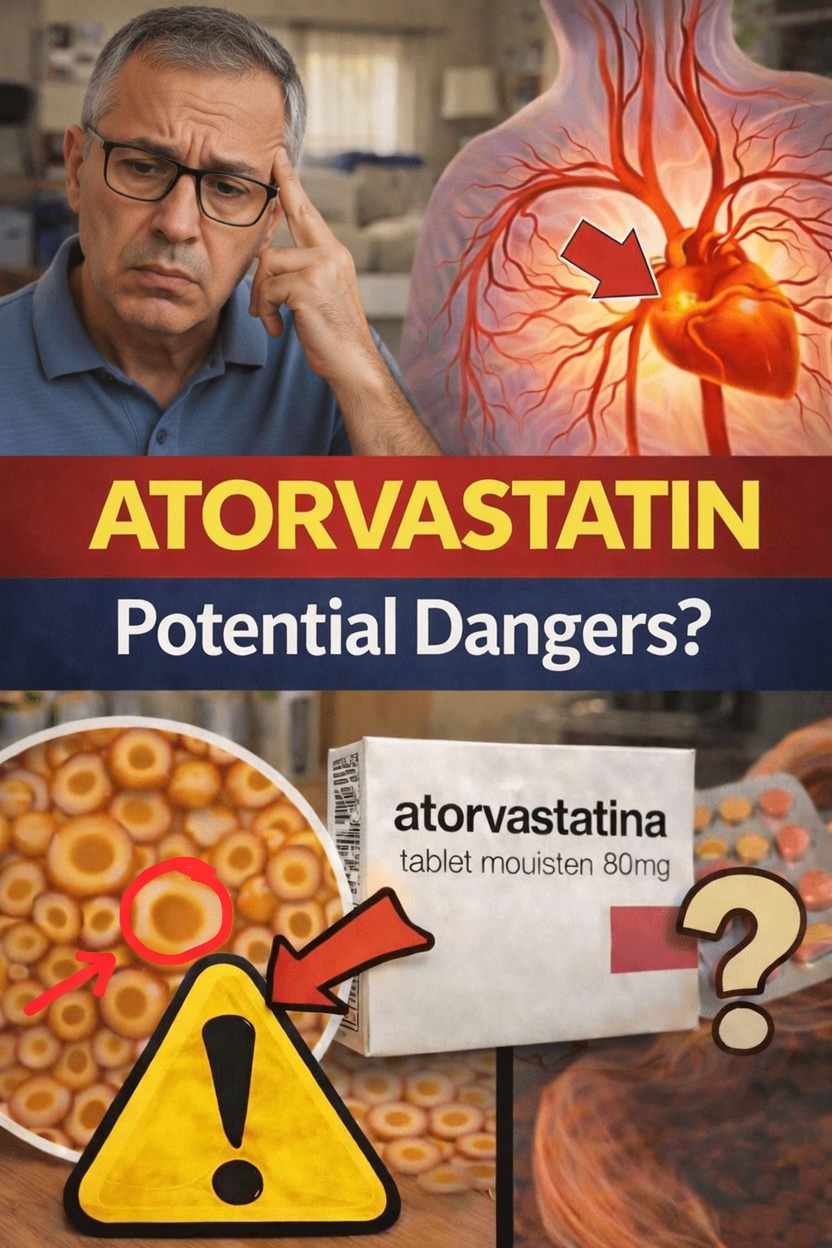
Atorvastatin is a statin medication that lowers cholesterol by helping the liver make less of it. Although it is widely prescribed and generally well tolerated, each person responds differently. Dose strength, age, other medications, and lifestyle habits can all influence side effects. Higher doses, such as 80 mg, may increase the likelihood of certain reactions in some individuals.
Trusted health sources, including the Mayo Clinic and WebMD, note that most side effects are mild and manageable. Still, understanding what to watch for can help you respond early and speak with your healthcare provider with confidence.
Knowing the common patterns makes it easier to separate normal adjustment from something that needs medical attention.
15 Common Experiences Linked to Atorvastatin
The following symptoms are based on clinical findings and patient reports from reputable medical resources. Not everyone will experience them, and many improve over time or with small adjustments.
1. Muscle aches, tenderness, or weakness
This is one of the most commonly reported issues. It often affects the shoulders, hips, arms, or legs and may feel like lingering soreness after exercise, even if you have not been active.
2. Joint pain or stiffness
Some users notice new discomfort in areas such as the knees, elbows, or fingers. It may resemble normal age-related stiffness but seem more noticeable after starting the medication.
3. Headaches
Mild or moderate headaches can occur, often presenting as pressure similar to a tension headache. These may come and go rather than remain constant.
4. Nausea or stomach upset
A queasy feeling after eating is another possible reaction. In many cases, it improves with meal timing or by avoiding heavy foods.
5. Diarrhea or constipation
Digestive changes can happen with atorvastatin, including looser stools or difficulty with bowel movements. Hydration and fiber intake often help.
6. Indigestion or gas
Some people experience bloating, belching, or discomfort after meals, especially when eating rich or greasy foods.

7. Runny nose, congestion, or sore throat
Cold-like symptoms such as a stuffy nose or throat irritation may appear and linger longer than expected.
8. Pain in the arms, legs, or back
General body aches can develop and may be mistaken for overexertion, poor posture, or routine physical strain.
9. Fatigue or drowsiness
Low energy is another reported effect. You may feel more tired than usual, especially later in the day.
10. Sleep problems
Some users report difficulty falling asleep or staying asleep. This may be connected to discomfort, restlessness, or no clear cause at all.
11. Skin changes, rash, or itching
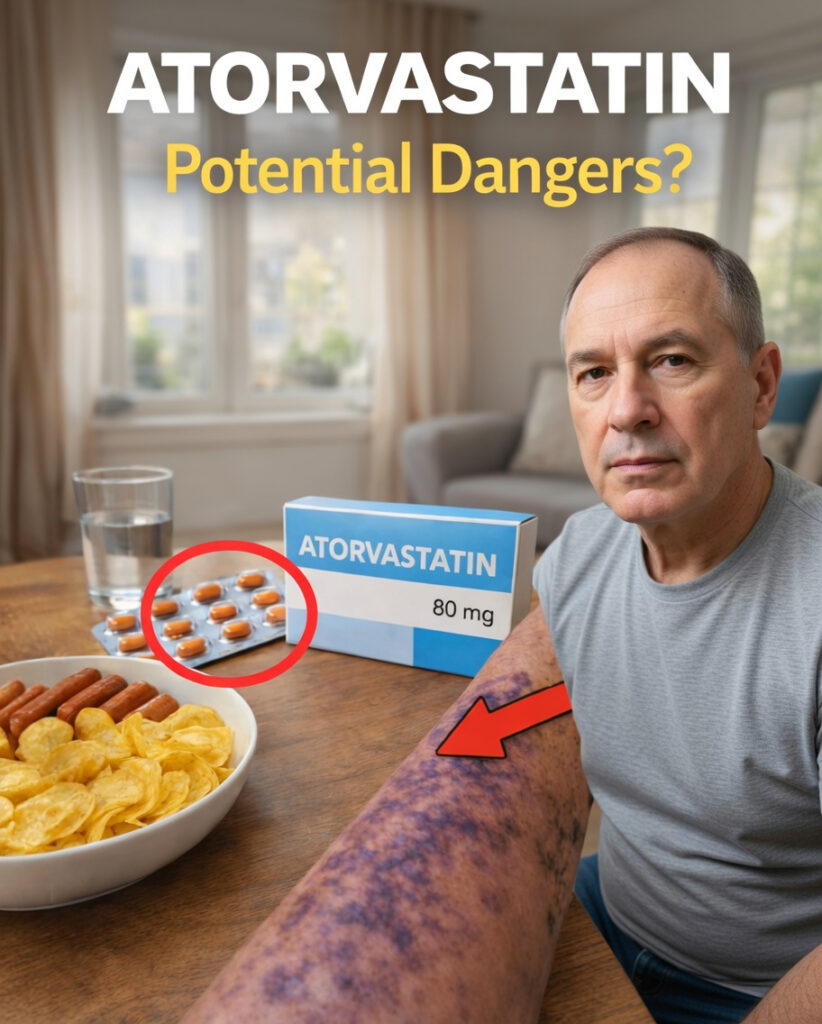
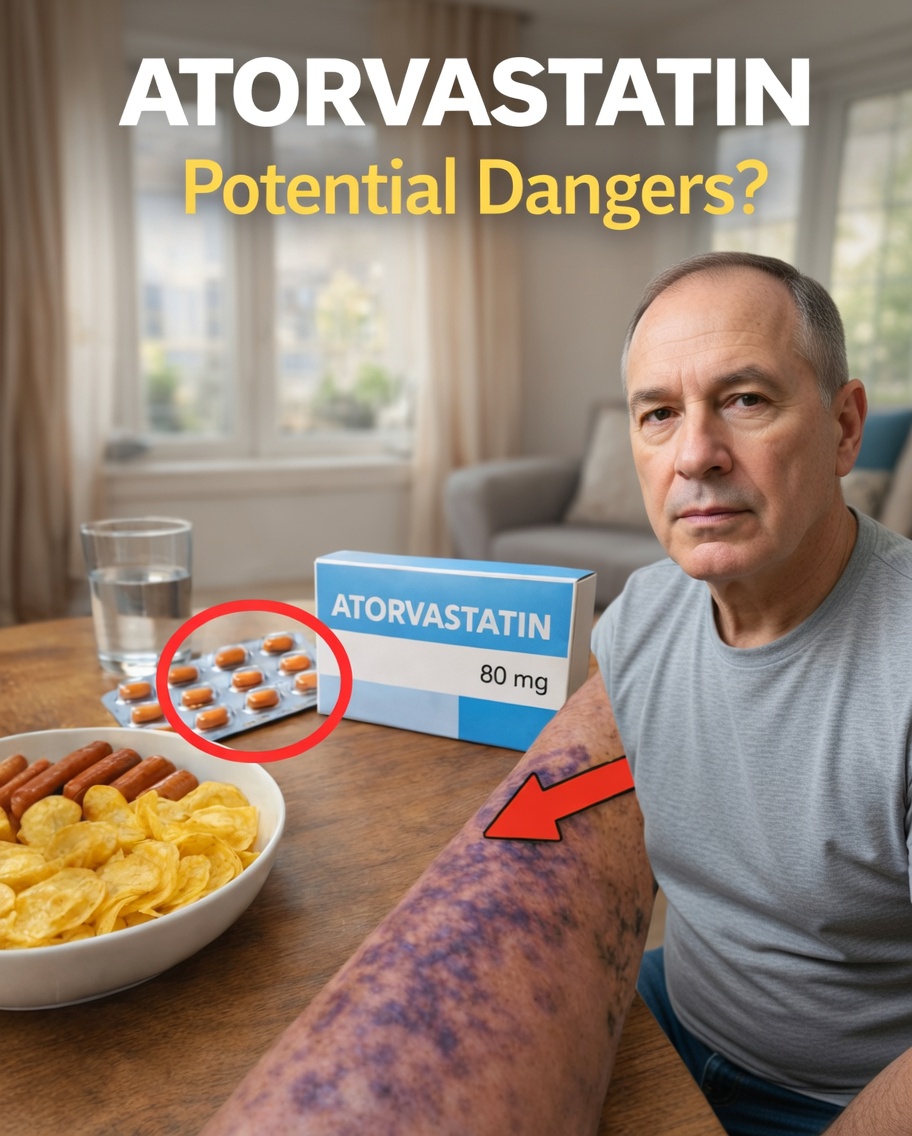
Mild skin irritation, redness, or itching can occur. More unusual discoloration, including mottled or bruise-like areas on the legs, is less common but should be noted if it appears suddenly.
12. Higher blood sugar levels
In some people, atorvastatin may slightly affect glucose readings. This is why doctors often monitor blood sugar during regular follow-up care.
13. Mild memory issues or confusion
Some individuals describe temporary forgetfulness or mental fog. Research suggests this can happen, but it is usually reversible.
14. Dizziness or light-headedness
A brief sense of imbalance may occur, especially when standing up too quickly.
15. Possible allergic-type reactions
Hives, swelling, or unusual bruising without an obvious injury should never be ignored. These symptoms may point to a more serious response.
Rare but Serious Symptoms to Recognize Early
While most side effects are minor, serious complications can occur in rare cases. The Mayo Clinic highlights uncommon but important risks such as severe muscle breakdown, known as rhabdomyolysis, and liver-related problems.
Contact a healthcare professional promptly if you notice:
- Severe muscle pain
- Weakness that feels unusual or intense
- Dark-colored urine
- Yellowing of the skin or eyes
- Extreme fatigue
- Swelling or trouble breathing
These are not common, but early action matters.
Why Images of Unhealthy Foods Are Relevant
You may have seen atorvastatin displayed beside foods like sausages, fries, or other highly processed meals. The medication does not directly react with those foods in the same way it does with grapefruit, but a poor diet can still make cholesterol management harder overall.
That is why food choices matter. Replacing ultra-processed items with more vegetables, whole grains, lean proteins, and fiber-rich meals may improve both cholesterol control and overall comfort while taking atorvastatin.
Practical Tips to Feel Better While Taking Atorvastatin
Small routine changes can make a meaningful difference. Many people find the following steps helpful:
- Keep a symptom journal for one to two weeks using a notebook or phone app
- Bring those notes to your next medical appointment
- Drink enough water throughout the day
- Try gentle movement such as walking or stretching to ease stiffness
- Avoid sudden, intense exercise unless your doctor says it is safe
- Ask your pharmacist about grapefruit or grapefruit juice, which can affect how atorvastatin is processed
- Stay up to date with recommended blood tests to monitor liver enzymes and cholesterol levels
- Ask your doctor whether changing the time of day you take the medication could help
- Focus on balanced meals with more fiber and fewer heavily processed snacks
- Never stop taking atorvastatin abruptly without medical guidance
These simple habits often help people stay consistent with treatment and reduce discomfort at the same time.
When You Should Call Your Doctor
Reach out to your healthcare provider right away if you experience:
- Unexplained muscle pain along with dark urine
- Yellowing of the skin or eyes
- Severe or unusual fatigue
- Swelling
- Hives
- Difficulty breathing
Most side effects are not emergencies, but discussing symptoms early can prevent more serious concerns later.
Frequently Asked Questions
Can atorvastatin side effects go away on their own?
Yes. Many mild symptoms improve within a few weeks as the body adjusts. If they do not, your doctor may recommend a lower dose or a different statin.
Does diet affect how I feel while taking atorvastatin?
It can. Although the medication plays the main role in lowering cholesterol, avoiding grapefruit and choosing heart-healthy foods may help your body tolerate treatment more comfortably.
Is atorvastatin safe for long-term use?
For most people, yes. It has a well-established role in supporting cardiovascular health. Regular monitoring helps ensure it continues to be the right option for you.
Final Thoughts
Atorvastatin helps many adults lower cholesterol and support long-term heart health. Understanding these 15 commonly reported experiences can help you recognize patterns, stay informed, and respond appropriately if something feels off.
By tracking symptoms, making a few smart lifestyle changes, and staying in close contact with your healthcare team, you can get the benefits of treatment while keeping side effects in perspective.
Disclaimer: This article is for informational purposes only and does not replace professional medical advice. Always speak with your doctor or healthcare provider before changing your medication, dose, or health routine. Individual responses to atorvastatin can vary, and only a qualified medical professional can determine what is appropriate for your situation.