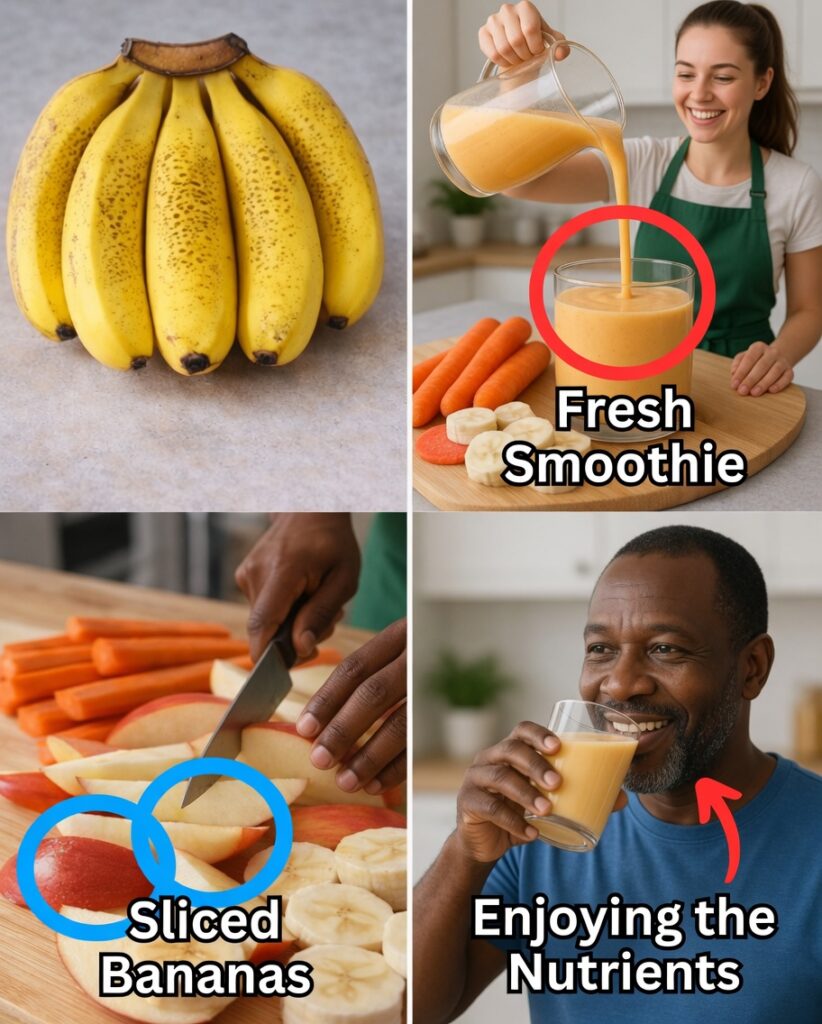
An Easy Way to Enjoy More Fruits and Vegetables: Carrot and Banana Juice
Busy days often make it difficult to eat enough fruits and vegetables. Meals become repetitive, snacks lean heavily on processed options, and energy levels dip as a result. If you’re looking for a simple, convenient way to add more produce to your diet without overhauling your routine, a homemade drink can be a smart solution.
Carrot and banana juice is one such option: familiar ingredients, quick preparation, and a refreshing taste. And there’s a simple preparation twist that makes it even more satisfying—keep reading to discover what it is.
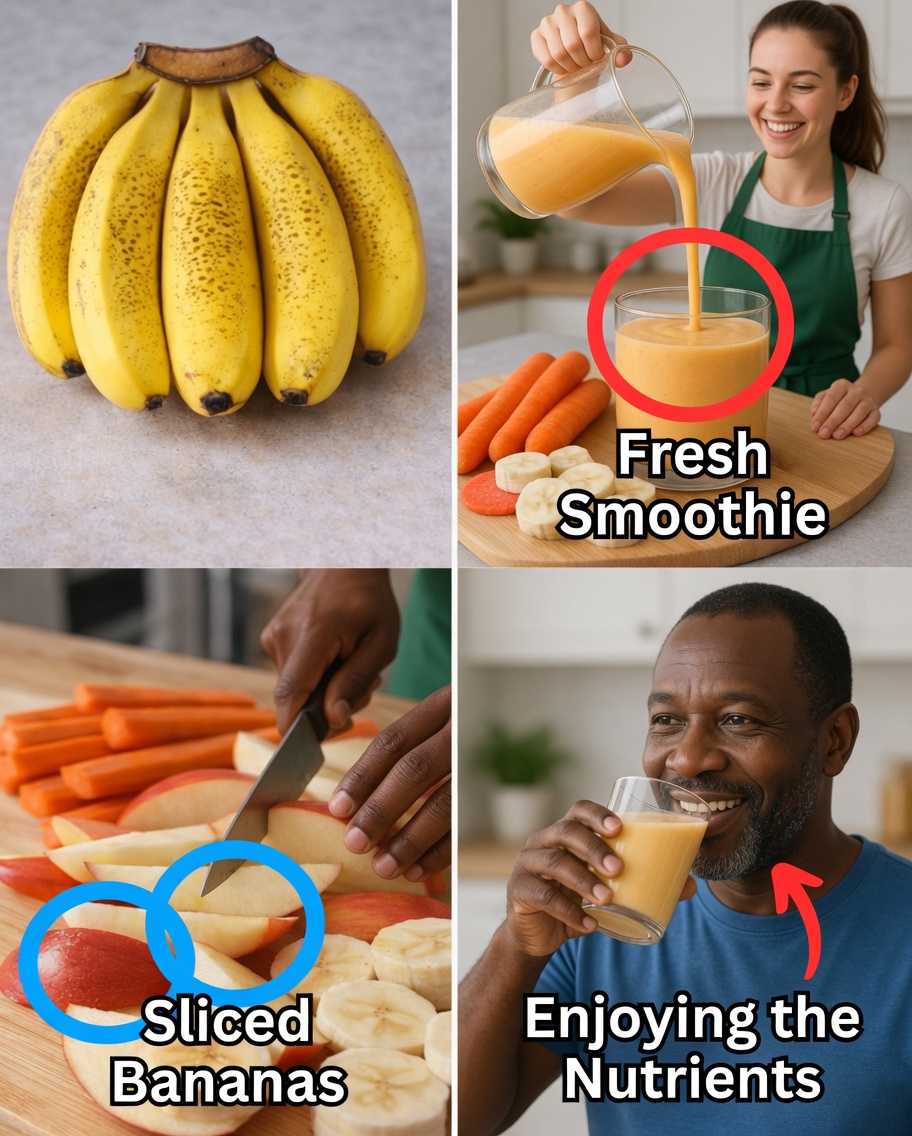
Why Add Carrot and Banana Juice to Your Diet?
Carrots and bananas are two of the most common fruits and vegetables found in home kitchens. They bring natural sweetness, bright color, and a gentle flavor that works well in both snacks and drinks.
From a nutritional standpoint, research in nutrition science points to several benefits:
- Carrots are rich in beta-carotene, a precursor to vitamin A.
- Bananas are known for their potassium content and also offer fiber.
When blended together, they create a naturally sweet, creamy drink that’s easy to sip on the go. For anyone who finds it hard to chew through large salads or snack on raw veggies, this smooth blend can be a practical alternative.
What makes this combination especially appealing is the flavor balance:
- Carrots bring an earthy, subtly sweet note.
- Bananas add creaminess and a mellow sweetness.
Together, they turn a “healthy choice” into something that feels more like a treat than a chore.
Essential Ingredients for Carrot and Banana Juice
To get started, you only need a short ingredient list. Here’s what to have on hand:
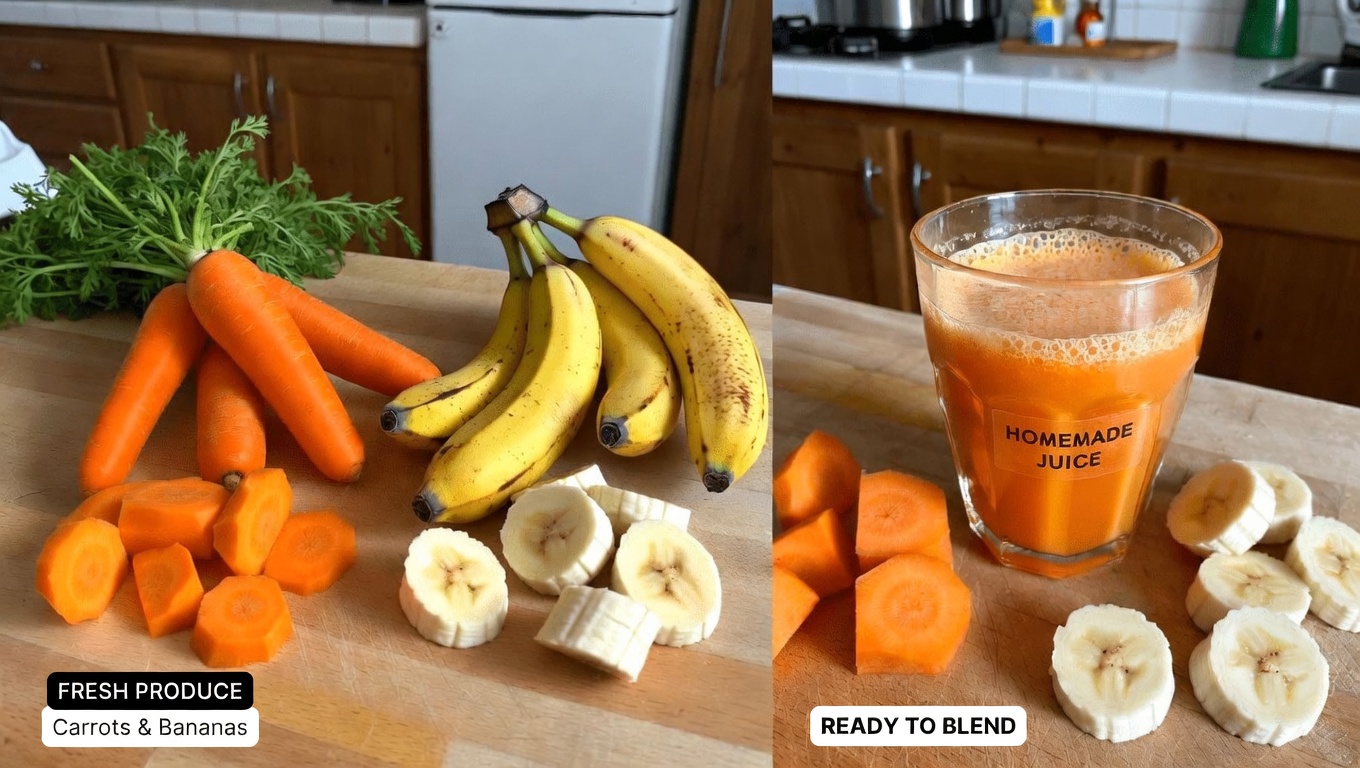
- Fresh carrots: About 4–5 medium carrots, washed well; peel if you prefer.
- Ripe bananas: 2–3 bananas, ideally with brown spots for maximum sweetness and flavor.
- Optional extras:
- Water or plant-based milk (such as almond, oat, or soy) to adjust thickness
- A small piece of fresh ginger or a pinch of ground ginger for a zesty kick
These ingredients are generally affordable and easy to find throughout the year. That makes this recipe a beginner-friendly choice for anyone new to homemade juices and smoothies.
Sustainability tip: When possible, opt for organic produce to support more eco-conscious farming methods.
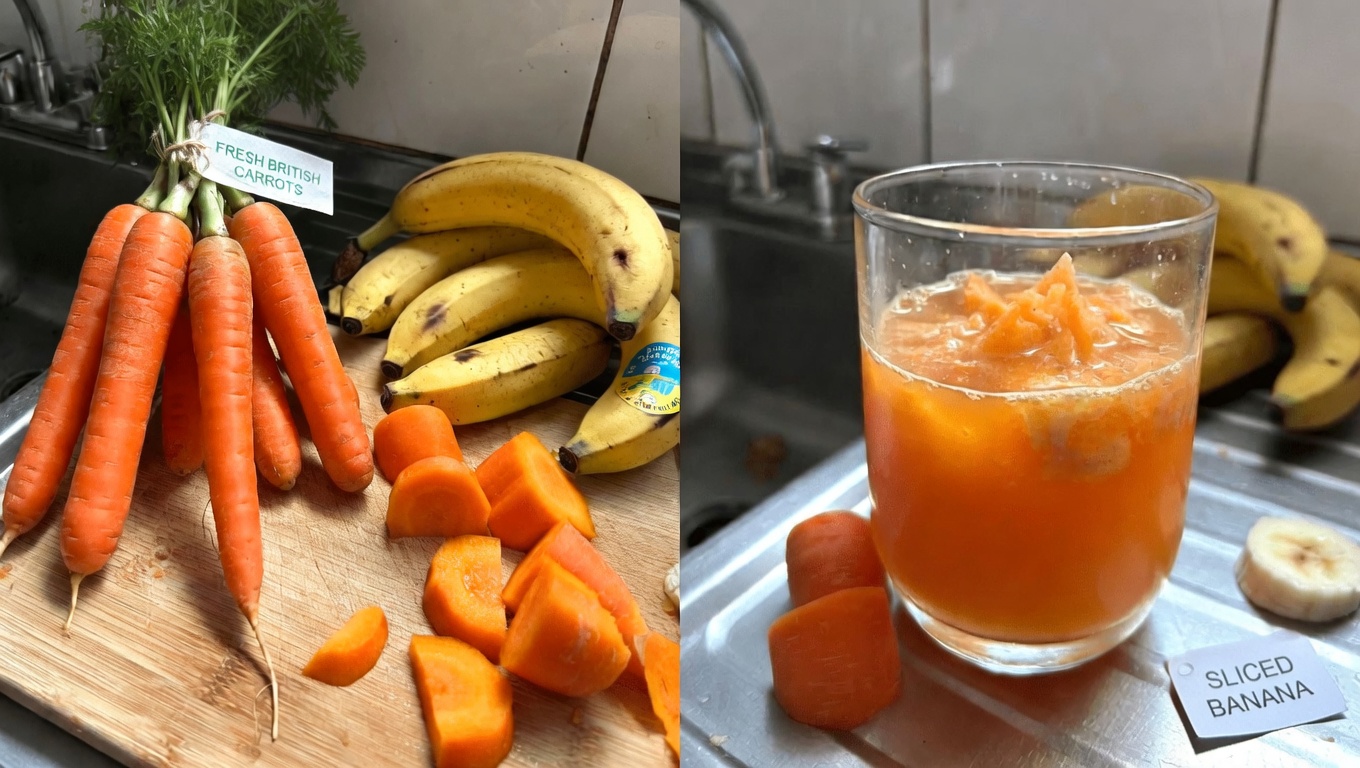
Step-by-Step: How to Make Carrot and Banana Juice
You don’t need any specialized equipment—just a standard blender will do. Follow these steps:
-
Prep the carrots
- Rinse the carrots thoroughly under running water.
- Cut them into smaller chunks so they blend more easily and evenly.
-
Prep the bananas
- Peel the bananas.
- Slice them into pieces.
- For an extra-cold, thicker drink, freeze the banana slices in advance.
-
Load the blender
- Add the carrot pieces and banana slices to the blender jar.
- Pour in about 1 cup of water (or plant-based milk) to help everything blend smoothly.
-
Blend until smooth
- Blend on high for 1–2 minutes.
- Pause to scrape down the sides if needed.
- If you prefer a more juice-like texture, pass the mixture through a fine mesh strainer or nut milk bag.
-
Serve and store
- Pour into a glass and enjoy right away for the best flavor and freshness.
- If you have leftovers, keep them in an airtight container in the refrigerator for up to 24 hours. Shake or stir before drinking.
The fun part? Adjust the carrot-to-banana ratio to suit your taste:
- More bananas = creamier, sweeter drink
- More carrots = lighter, more earthy flavor
Nutritional Snapshot: Carrot and Banana Together
Knowing what’s in your glass helps you make more intentional choices. While exact amounts depend on portion size, carrot and banana juice typically offers:
- Vitamin A precursors (from carrots) that play roles in vision and normal bodily functions.
- Dietary fiber (from bananas and carrots) which supports digestive health, according to general nutrition guidelines.
- Potassium (from bananas) which contributes to overall electrolyte balance.
Information from organizations such as the USDA indicates that thoughtfully combined fruits and vegetables can support meeting daily nutrient needs. This drink is not a cure-all or a medical treatment, but it can be part of a more balanced, nutrient-conscious way of eating.
Compared with many commercial juices, making your own gives you more control:
| Aspect | Homemade Carrot–Banana Juice | Store-Bought Juice |
|---|---|---|
| Sugar content | Naturally occurring from whole fruits | Often contains added sugars |
| Freshness | Made and consumed on demand | Processed and stored for longer shelf life |
| Cost per serving | Typically low, basic ingredients | Often higher, especially premium brands |
| Control over ingredients | Fully customizable | Limited; additives and flavors may be included |
By preparing your own, you decide what goes into the glass—and what stays out.
Another bonus: rotating drinks like carrot and banana juice into your routine helps diversify the “color palette” of your produce intake, a variety many nutrition experts encourage.
Creative Variations to Keep Things Interesting
Sticking with the same recipe can get monotonous. Small additions can transform both flavor and nutrition without complicating the process.
Here are some easy ideas:
-
Add a tart note
- Blend in 1 chopped apple for a bright, tangy twist.
-
Sneak in greens
- Toss in a handful of spinach. It blends surprisingly well and usually doesn’t overpower the taste.
-
Go tropical
- Add a few chunks of pineapple for extra sweetness and a refreshing zing.
-
Cool it down for summer
- Add ice cubes to the blender for a frosty, slush-like drink.
Further tweaks to experiment with:
-
Spice it up
- A pinch of cinnamon, nutmeg, or even cardamom for warmth and depth.
-
Protein boost
- Stir in a spoonful of yogurt after blending, or use a dollop of plant-based yogurt.
-
Thicker smoothie style
- Use less liquid and more banana, or add a spoonful of oats or chia seeds.
Try one change at a time so you can tell which versions you enjoy most. Paying attention to how different ingredients make you feel (energized, satisfied, or comfortably full) can guide your future combinations.
How to Make Carrot and Banana Juice Part of Your Routine
A single recipe won’t change your habits, but a simple system can. Here are practical ways to integrate this juice into your day:
-
Start small and consistent
- Begin by making it 1–2 times per week. Set a reminder if that helps you remember.
-
Pair with breakfast
- Serve alongside oatmeal, whole-grain toast, or eggs for a more balanced morning meal.
-
Use as an afternoon pick-me-up
- Swap a sugary or heavily caffeinated snack for a glass of this juice when you hit the mid-afternoon energy dip.
-
Make it a family project
- Let children help wash or peel the ingredients (with age-appropriate tasks). It’s a hands-on way to introduce them to fruits and vegetables.
-
Store smartly
- Use airtight bottles or jars. Label them with the preparation date to keep track of freshness.
-
Reduce waste
- If you strain the juice, save the leftover pulp. You can add it to muffin batter, pancakes, soups, or compost it if you garden.
Over time, these small, repeated actions can turn a simple drink into a natural part of your daily rhythm.
Common Challenges (and Simple Solutions)
A few obstacles may pop up when you first try making carrot and banana juice. Here’s how to get ahead of them:
-
“Blending takes too long on busy mornings.”
- Pre-chop carrots and freeze banana slices the night before. Store them in containers or freezer bags so you can just blend and go.
-
“I don’t like pulp or thick textures.”
- Strain the blended mixture through a fine mesh sieve or nut milk bag for a smoother, lighter drink.
-
“It’s not sweet enough for me.”
- Use very ripe bananas with plenty of brown spots. You can also add a small piece of apple or a splash of orange juice.
-
“I’m sensitive or allergic to bananas.”
- Replace bananas with pears, mangoes, or apples for sweetness and body.
-
“I don’t have a powerful blender.”
- Many budget-friendly blenders work fine if you cut ingredients into smaller pieces and blend a bit longer. Adding slightly more liquid can help, too.
Facing and solving these minor hurdles not only makes the recipe easier—it can also build confidence for trying other homemade drinks and healthy dishes.
The Simple Twist That Elevates This Juice
Incorporating carrot and banana juice into your diet is a straightforward way to get more fruits and vegetables in a drinkable, enjoyable form. With quick preparation, endless variations, and accessible ingredients, it fits well into a busy lifestyle.
The little trick that transforms it? Freeze the bananas before blending.
Frozen banana slices create a creamier, richer texture—almost like a milkshake—without adding extra cream, sugar, or thickeners. It’s a small step that makes the whole experience more indulgent while keeping the ingredient list simple.
FAQ
What equipment do I need to make carrot and banana juice?
A standard blender or food processor is usually enough. You don’t need a specialized juicer. If you want a smoother, more juice-like consistency, simply strain the blended mixture through a fine mesh sieve or cloth.
Can I prepare carrot and banana juice in advance?
Yes. You can make a batch and store it in the refrigerator for up to 24 hours. Separation is normal—just shake or stir well before drinking.
Are there substitutions for carrots or bananas?
- Instead of carrots, you can try beets or sweet potatoes for a similarly earthy base.
- Instead of bananas, apples, pears, or mangoes can provide natural sweetness and a creamy or pulpy texture.
Disclaimer
This content is for informational and educational purposes only and does not constitute medical advice. For personalized recommendations about diet or health, consult a qualified healthcare professional.