Why Your Feet Deserve More Attention
In a busy, always-on lifestyle, foot care is often overlooked. Yet your feet carry your body all day long, absorbing the impact of standing, walking, and daily movement. After hours of use, they can feel achy, fatigued, and ignored. At the same time, many people deal with stress, tight muscles, and low energy without realizing that the feet may have an important place in a simple wellness routine.
This is one reason foot reflexology continues to attract interest. Traditional reflexology teaches that certain points on the feet relate to different areas of the body. In this guide, we’ll look at how a foot reflexology map helps illustrate those relationships. Once you understand the layout, you may find an easy and calming way to support relaxation and everyday well-being from home.
What Is Foot Reflexology?
Foot reflexology is a complementary practice centered on applying light to moderate pressure to specific areas of the feet. In traditional reflexology theory, these points are believed to correspond with organs, glands, and body systems through connected pathways.
Although reflexology is not a medical treatment, many people include it in their self-care habits as a way to decompress and reset after a demanding day. The goal is often to encourage calmness and a deeper sense of relaxation.
This technique has ancient origins, including links to traditional Chinese medicine, and today it is used around the world for its soothing and restorative feel.
How to Read a Foot Reflexology Map
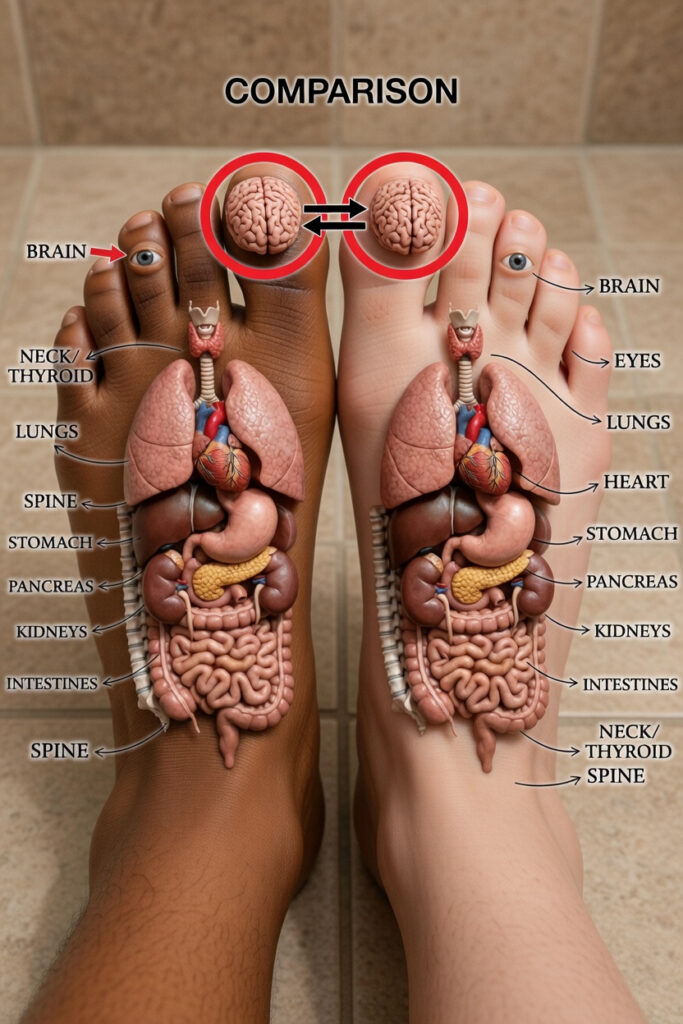
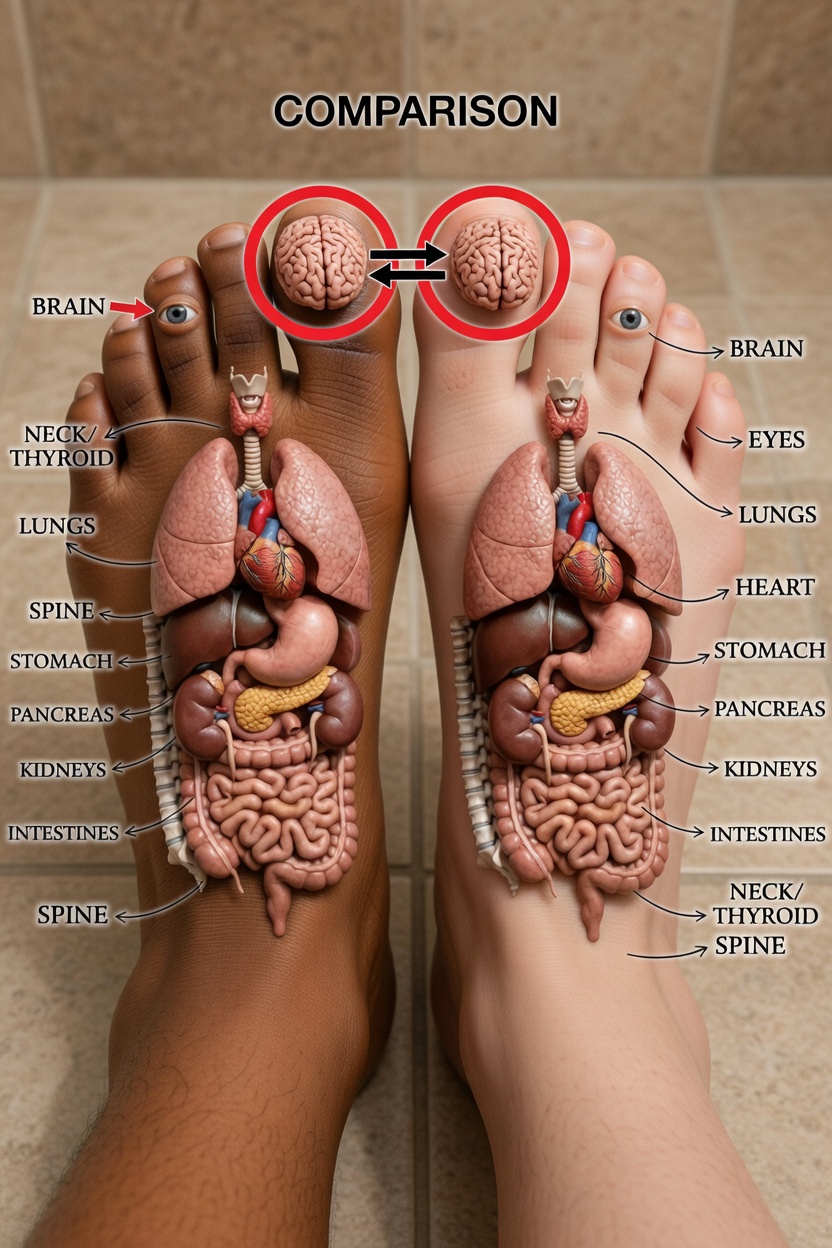
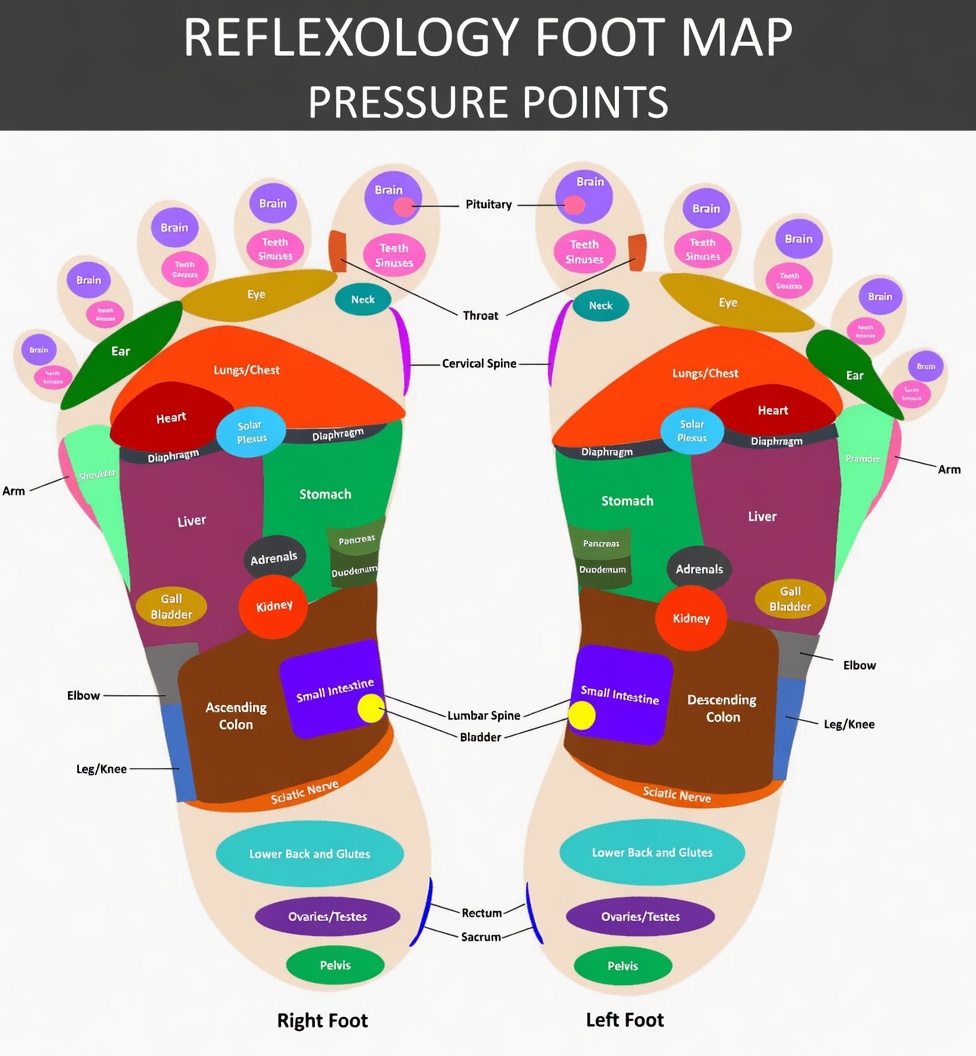
A foot reflexology map works like a body chart displayed on the soles of the feet. Many diagrams show this idea visually by placing small representations of body parts in the zones where they are traditionally believed to connect.
When reading a typical chart, the toes represent the head and upper neck region. The big toe is commonly associated with the brain. Just below that, the ball of the foot reflects the chest area, including the lungs and heart. The arch is usually linked to digestive and internal organs such as the stomach, pancreas, and kidneys. Lower down, the heel and surrounding lower sections are connected with the intestines, hips, and lower back.
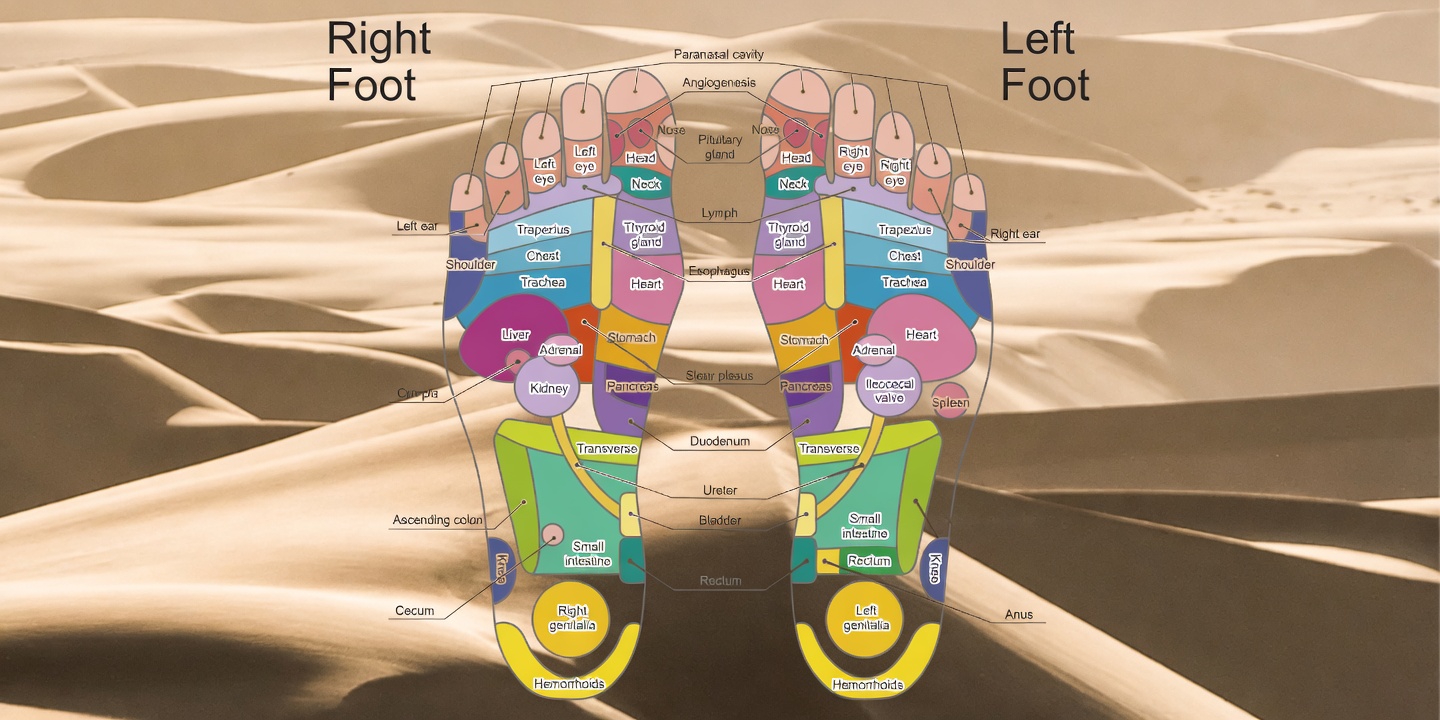
One of the most recognized features on these charts is the spine line, which runs along the inside edge of the foot from the toe area down toward the heel.
Different reflexology charts may vary slightly in presentation, but the main body zones are generally similar across traditional versions.
Main Reflex Points on the Feet
Below are some of the most commonly referenced areas on a foot reflexology chart:
- Brain: Found at the tip of the big toe and often associated with the head region.
- Eyes: Usually located near the bases of the second and third toes.
- Ears: Commonly mapped around the outer areas of the smaller toes.
- Neck and thyroid: Positioned just beneath the big toe.
- Lungs: Spread across much of the ball of the foot.
- Heart: Typically located within the chest reflex zone.
- Stomach and pancreas: Often shown in the upper arch area.
- Kidneys: Usually placed around the middle arch.
- Intestines: Mapped across the lower arch and heel region.
- Spine: Runs along the full inner edge of the foot.
These locations are not presented as random points. Instead, reflexology views them as part of a larger pattern of whole-body connection, which is what makes the feet such an interesting focus for at-home care.
Possible Wellness Benefits of Foot Reflexology
Scientific research on reflexology is still developing, but some findings suggest it may help encourage relaxation and ease feelings of stress. Certain reviews have also reported possible benefits related to anxiety reduction and better sleep quality in some individuals.
Many people say they feel calmer, lighter, and more refreshed after a reflexology session. It may also be a pleasant way to stimulate the feet, improve comfort, and create a quiet moment in a crowded schedule.
It is important to remember that results are not the same for everyone. Reflexology is best approached as a supportive wellness practice, not a replacement for professional medical care or healthy daily habits.
How to Practice Foot Reflexology at Home
If you want to try self-reflexology, use the map as a general guide and follow these simple steps:
-
Set up a relaxing space
- Choose a calm, comfortable place to sit.
- Soak your feet in warm water for about 5 to 10 minutes if possible.
-
Get into a comfortable position
- Rest one foot where you can easily reach it.
- Crossing one leg over the other often works well.
-
Apply gentle pressure
- Use your thumbs or fingertips to press specific reflex points.
- Start softly and use small circular or steady motions.
-
Move through the foot in order
- Begin at the toes and slowly work downward toward the heel.
- Spend around 1 to 2 minutes on each main area.
-
End with a full-foot massage
- Finish by massaging the entire foot gently.
- Take a few slow, deep breaths to help your body relax.
A good starting point is 10 to 15 minutes per foot. Pay attention to how your body feels, and avoid pressing hard enough to cause pain.
Tips for Adding Reflexology to Your Routine
To make your foot reflexology practice more enjoyable and sustainable, try these ideas:
- Pair it with deep breathing for a more calming experience.
- Use a little oil or lotion to help your hands glide more smoothly.
- Practice in the evening to unwind before sleep.
- Stay consistent, even if you only do it a few times each week.
- If you have foot pain, circulation issues, or other health concerns, speak with a qualified professional first.
The real value often comes from regular practice. Turning reflexology into a weekly or daily self-care ritual can make it easier to maintain and more rewarding over time.
Why the Foot Reflexology Map Matters
A foot reflexology map offers an interesting way to look at the body’s interconnected nature. By focusing on the various points beneath your feet, you may discover a simple method for supporting relaxation, body awareness, and mindfulness in everyday life.
Whether you are just beginning to explore wellness practices or looking for a new addition to your routine, learning how to use this map can be both informative and enjoyable.
Frequently Asked Questions
Is foot reflexology the same as a regular foot massage?
Not quite. Both can feel relaxing, but reflexology focuses on specific mapped points that are traditionally linked to other parts of the body. A standard foot massage is usually more focused on relieving tension in the foot muscles and promoting general comfort.
How often should I do foot reflexology?
Many beginners start with 2 to 3 sessions per week, usually lasting 10 to 20 minutes. You can adjust the frequency depending on your comfort level and how your body responds.
Can I try reflexology if my feet are sensitive?
Yes, but begin with very light pressure. If you have existing medical issues involving your feet, nerves, or circulation, it is a good idea to consult a healthcare professional before starting.
Disclaimer
This article is provided for informational and educational purposes only. It is not intended to diagnose, treat, cure, or prevent any disease or medical condition. Always seek advice from a qualified healthcare professional before beginning any new wellness practice.