Wake Up to Heel Pain? Simple Kitchen Remedies May Help
Getting out of bed should feel normal, yet for many people the first sensation of the day is a sharp pull in their heels. That tight, dry discomfort can turn every step into a reminder that even a small skin issue can affect your mood, movement, and confidence. You may avoid sandals, hesitate to show your feet, or feel uneasy about walking for long periods.
If that sounds familiar, you are far from alone. Dry, cracked heels are often treated like a minor cosmetic problem, but anyone who has dealt with them knows they can become uncomfortable fast. Heel skin is naturally thicker and less flexible than skin on most other parts of the body. When moisture drops and pressure keeps building, splits can appear.
The encouraging news is that heels often improve with steady, gentle care. In many cases, the most practical solutions are not expensive at all. Some may already be sitting in your kitchen.
Why Dry, Cracked Heels Get Worse So Easily
You may wonder, “Why do my heels stay dry even if I moisturize sometimes?” The answer is usually hidden in daily routines. Standing for long hours, wearing open-back footwear, taking hot showers, living in dry environments, and not drinking enough water can all slowly reduce the skin’s moisture.
As the heel becomes less supple, repeated pressure makes the skin more likely to split. What makes this frustrating is how easy feet are to ignore. Most people care for their face and hands every day, while their feet do all the work quietly in the background until discomfort finally gets attention.
Once cracks begin to hurt, the issue is no longer just about appearance. The good part is that early care can improve comfort and help the skin feel softer and stronger again.
The Value of Natural Foot Care at Home
Many people assume they need costly foot creams or professional treatments to deal with cracked heels. But for generations, simple household ingredients have been used to soften rough skin and support comfort.
These remedies are not miracle cures. Their strength lies in something more realistic: gentle exfoliation, added moisture, and support for the skin’s natural repair cycle. More than anything, success comes from regular use rather than harsh treatment.
That is why the following five remedies are useful. Each one uses familiar ingredients and simple steps, making heel care easier to turn into a routine.
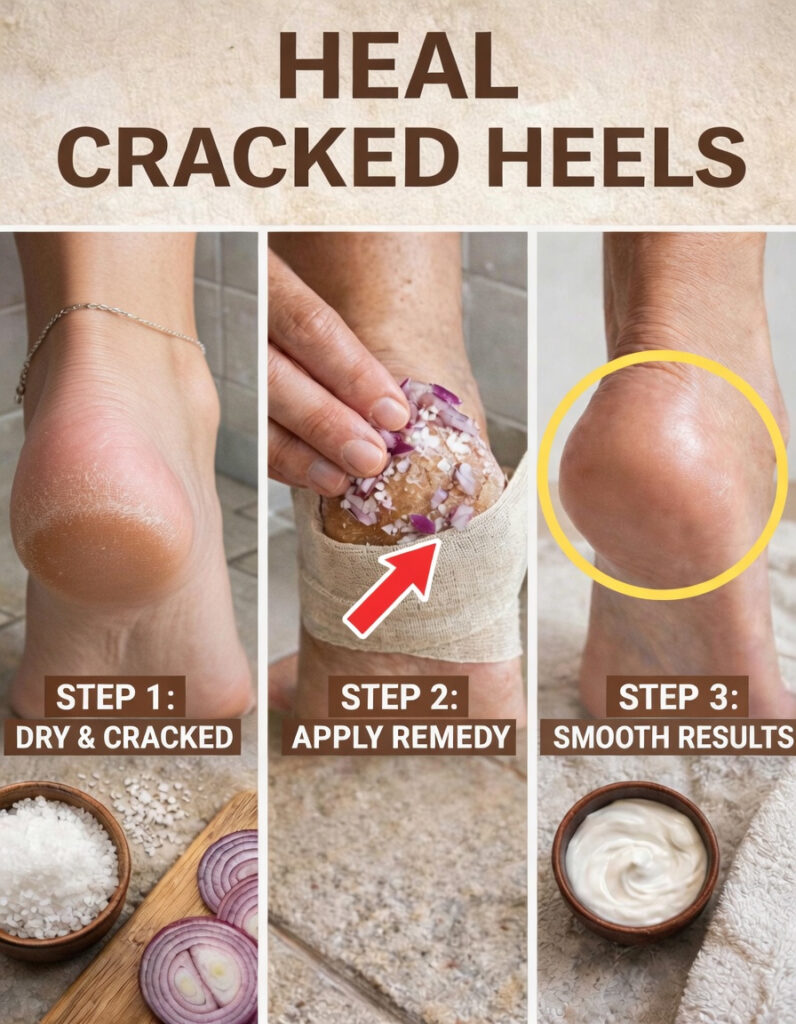
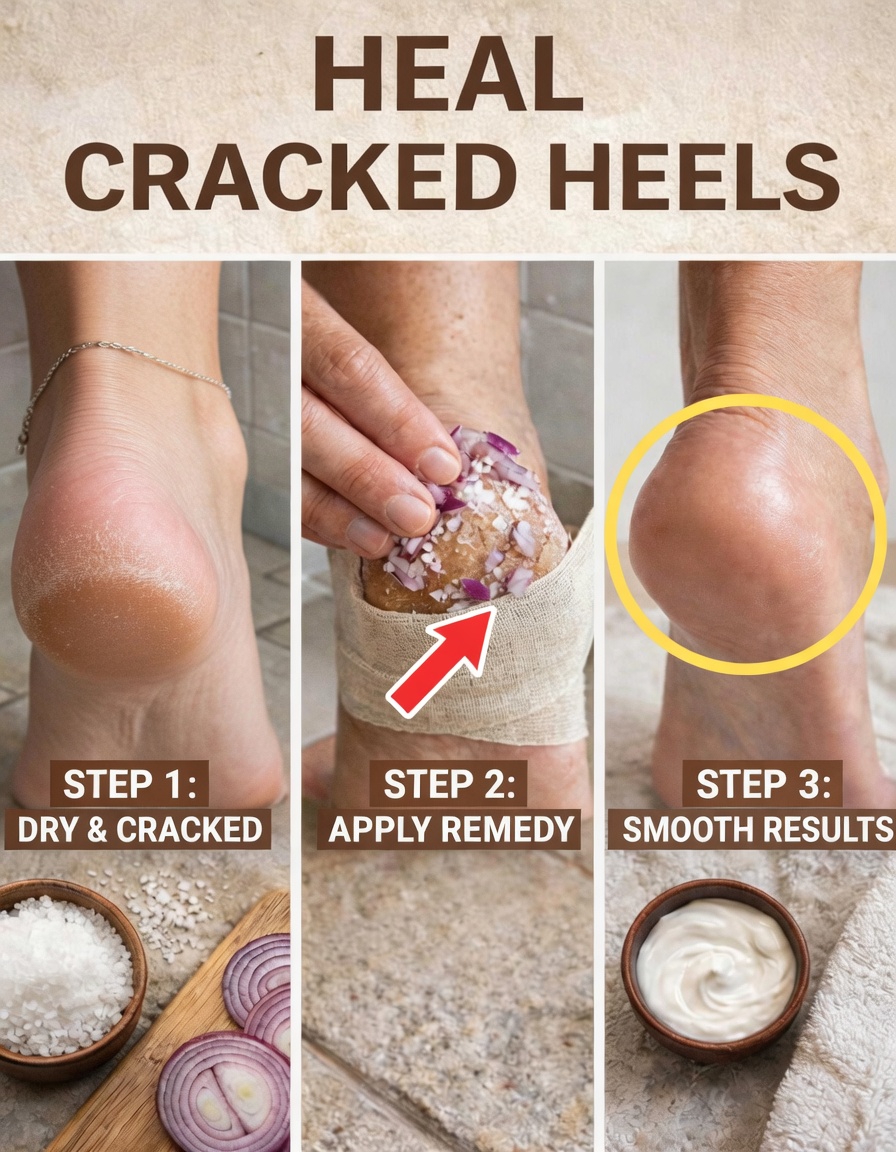
Remedy 1: Onion and Sea Salt for Mild Exfoliation
After a long day, your heels may feel rough, tired, and slightly sore. This is a good time for a gentle exfoliating treatment. Onion contains natural sulfur compounds traditionally associated with skin support, while sea salt helps remove buildup from dry, hardened areas.
How to make and use it
- Finely grate half of a medium onion.
- Combine it with 2 tablespoons of sea salt.
- Add 1 teaspoon of olive oil.
- Massage the mixture onto clean, damp heels using circular motions for about 5 minutes.
- Rinse with warm water and dry gently.
You may feel a little warmth and notice the strong onion scent, which is normal. When used a few times each week, this mixture can help lift dead skin so moisturizers can work more effectively afterward.
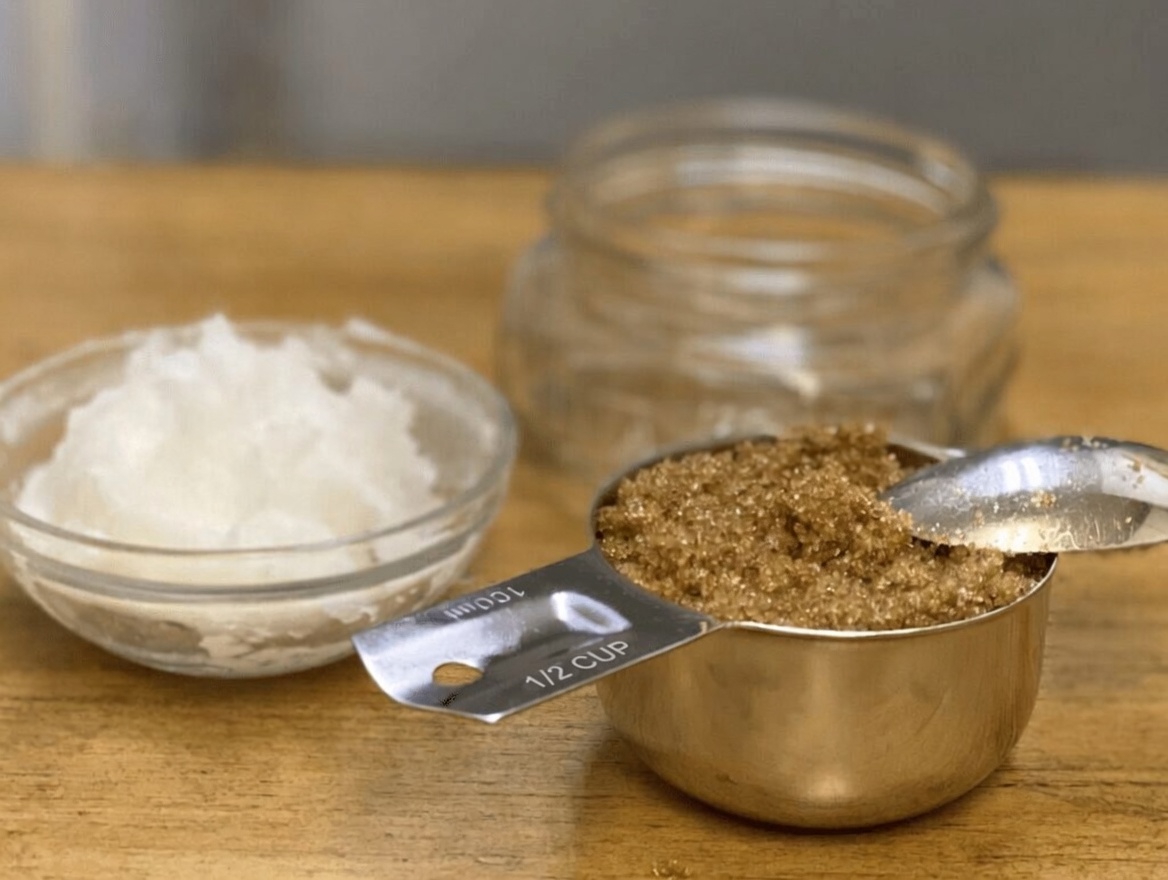
Remedy 2: Coconut Oil and Brown Sugar Scrub
Coconut oil is already popular in many homes for cooking and beauty care. For heels, it helps hold in moisture, while brown sugar offers a softer form of exfoliation than many harsher scrubs.
How to make and use it
- Mix 2 tablespoons of coconut oil with 3 tablespoons of brown sugar.
- Apply the scrub to slightly damp heels.
- Massage gently for 3 to 5 minutes.
- Rinse lightly and pat the area dry.
Many people feel an immediate improvement in smoothness after using this scrub. If you are concerned that sugar sounds abrasive, brown sugar is generally gentler than coarser exfoliants when used with light pressure.
Remedy 3: Banana and Honey Mask for Deep Softness
This option surprises many people because it focuses more on nourishment than scrubbing. Ripe bananas contain skin-friendly nutrients, and honey is widely appreciated for its moisturizing and soothing qualities.
How to make and use it
- Mash 1 ripe banana until completely smooth.
- Mix in 2 tablespoons of raw honey.
- Spread the mask generously over your heels.
- Put on socks and leave it in place for 20 to 30 minutes.
- Rinse with lukewarm water.
One user, Linda, 52, was doubtful at first. After applying this mask twice a week for two weeks, she noticed her heels felt less tight in the morning and more flexible overall.
Remedy 4: Warm Salt and Baking Soda Foot Soak
A warm foot soak at the end of the day can feel both calming and practical. Warm water helps soften tough skin, while salt and baking soda support cleansing and comfort.
How to make and use it
- Fill a basin with warm, not hot, water.
- Add 1/2 cup of sea salt or Epsom salt.
- Add 2 tablespoons of baking soda.
- Soak your feet for 15 to 20 minutes.
- If needed, gently use a pumice stone afterward.
- Pat your feet dry.
This simple evening habit can turn foot care into a relaxing ritual. Once the skin has softened from soaking, moisturizing treatments often absorb better.
Remedy 5: Aloe Vera and Lemon for Regular Maintenance
Aloe vera is well known for its hydrating and soothing effects, while lemon adds a light cleansing and refreshing touch. Together, they create an easy treatment for ongoing heel care.
How to make and use it
- Mix fresh aloe vera gel with a few drops of lemon juice.
- Apply the mixture to clean heels.
- Leave it on for 15 to 20 minutes.
- Rinse gently.
- Follow with a moisturizer.
- Wear cotton socks overnight for extra hydration support.
Many people report that steady use makes it easier to feel comfortable wearing open shoes again. James, 60, said the biggest difference was not perfect-looking heels, but less discomfort and more confidence.
Quick Guide to Choosing the Right Remedy
Here is a simple comparison to help you decide what your heels may need most.
| Remedy | Main Benefit | Best For | Suggested Use |
|---|---|---|---|
| Onion and Sea Salt | Gentle exfoliation | Thick, rough heel skin | 2 to 3 times per week |
| Coconut Oil and Brown Sugar | Moisture and smoothing | General dryness | 2 times per week |
| Banana and Honey | Deep softness | Tight, inflexible heels | 2 times per week |
| Salt and Baking Soda Soak | Softening and relaxation | Evening foot care routine | 3 times per week |
| Aloe Vera and Lemon | Hydration and freshness | Ongoing maintenance | 3 to 4 times per week |
Seeing the remedies side by side can make it easier to choose one or two that fit your current needs.
How to Use These Heel Remedies Safely
To get the best results while keeping your skin comfortable, keep these basic tips in mind:
- Always begin with clean feet.
- Use gentle pressure to avoid irritation.
- Apply moisturizer right after each treatment to lock in softness.
- Wear cotton socks at night to support hydration.
- Avoid very hot water, which can make dryness worse.
You do not need to try every remedy at once. In fact, sticking to one or two treatments consistently usually works better than using all five irregularly.
Everyday Habits That Help Prevent Cracked Heels
If you want softer heels long term, prevention matters just as much as treatment. Small daily habits can make a real difference over time.
- Drink enough water to support hydration from within.
- Wear supportive shoes that reduce pressure on the heels.
- Use moisturizer every night, even when your feet seem fine.
- Spend less time barefoot on hard floors.
These actions may look simple, but together they help create a stronger foundation for healthier skin.
Final Thoughts
Dry, painful heels do not develop in a day, and they usually do not improve in a day either. But with patient, consistent care and a few everyday ingredients, many people notice softer skin, less tightness, and more comfort with daily movement.
The biggest change happens when heel care becomes a regular habit instead of something you only think about when pain appears. Giving your feet steady attention can be one of the easiest ways to feel better step by step.
So before the day ends, ask yourself one simple question: which of these remedies feels easiest to try tonight? Starting small is often the most effective way to create lasting results.