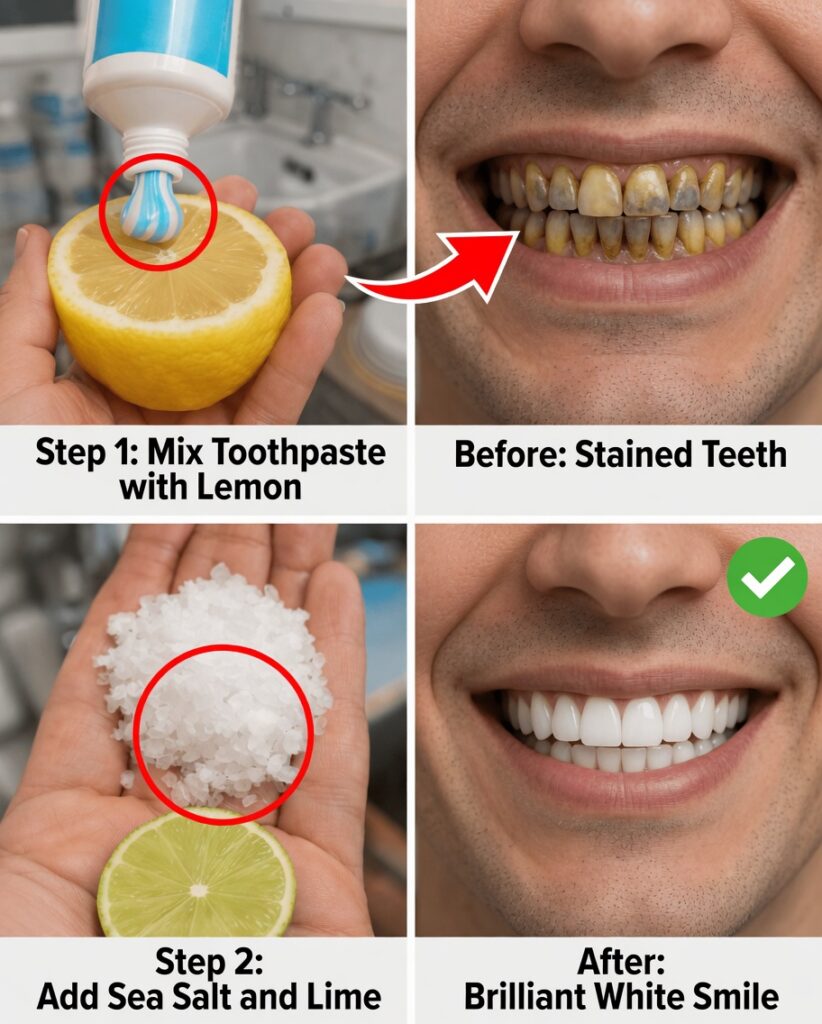
Many people gradually notice their teeth losing their natural brightness over time. Everyday routines—like drinking coffee, enjoying tea, or sipping red wine—can leave persistent surface stains that quietly build up and make you feel less confident when you smile in conversations or photos. It can be even more discouraging when store-bought whitening products feel too harsh, too expensive, or impractical for regular use.
The encouraging part is that you can start addressing surface-level staining at home using a few gentle, common kitchen and cabinet staples. And at the end, you’ll find a surprisingly simple habit that may help you maintain your results longer than expected.
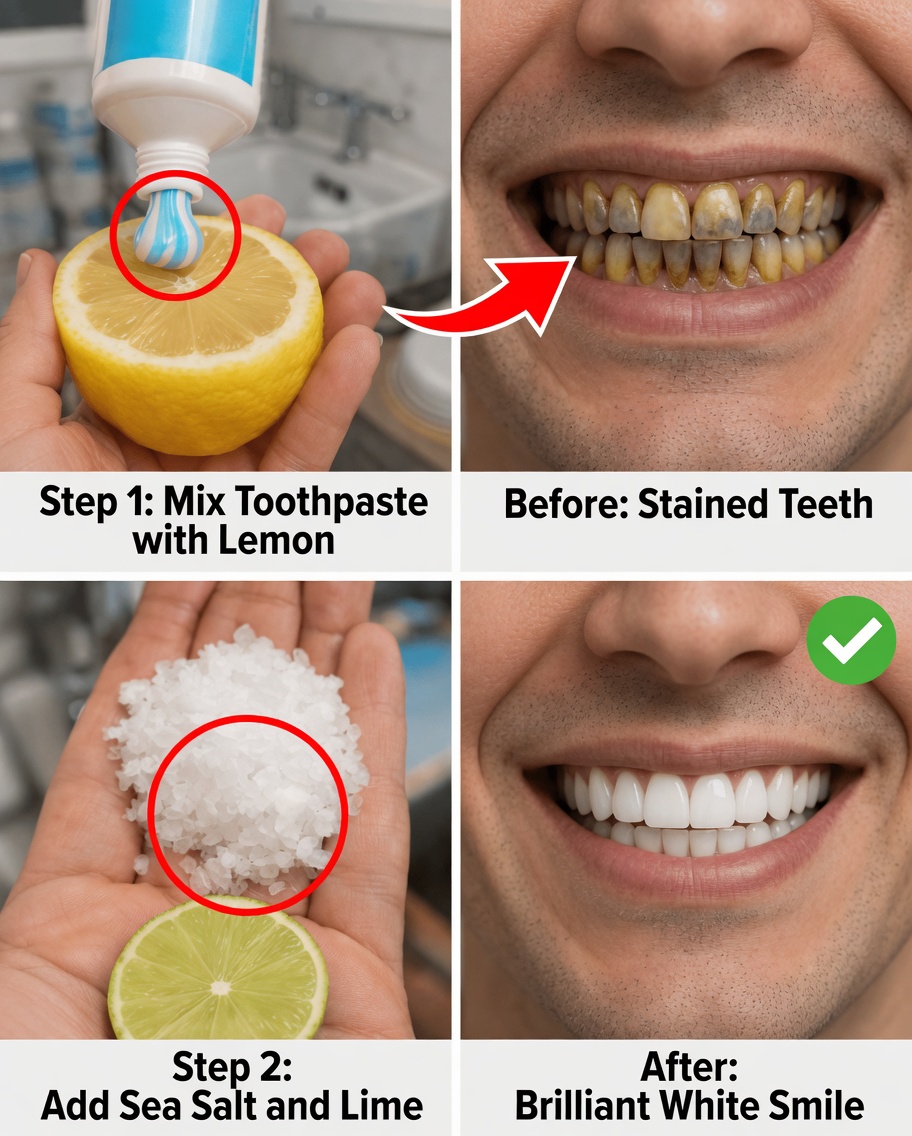
Why Teeth Look Duller Over Time
Before starting any at-home teeth whitening routine, it helps to understand what’s actually causing the discoloration.
In many cases, the issue is external staining—pigments that cling to the outer enamel. Frequent contributors include:
- Coffee and tea, which contain tannins that stick to enamel
- Red wine and dark-colored sodas, which leave strong pigment behind
- Smoking, where tar and nicotine can embed into tooth surfaces
- Deeply pigmented foods like berries, tomato-based sauces, and spices
Discoloration can also come from factors beyond food and drink:
- Aging, which naturally thins enamel and reveals more yellow dentin underneath
- Certain medications, which may affect tooth color
- Inconsistent oral hygiene, which allows plaque to harden into tartar that holds stains more easily (as noted in findings aligned with the American Dental Association)
The upside: many gentle home methods focus specifically on lifting surface stains, which often improves how teeth look without professional treatment right away.
A Gentle At-Home Whitening Routine (Step by Step)
This routine is designed for gradual improvement and enamel safety. The goal is not instant “bleaching,” but steady polishing and stain reduction over time. With whitening, gentle consistency tends to work better than aggressive scrubbing.
1) Use Baking Soda for Light Polishing
Baking soda is a classic household ingredient known for mild abrasive action, which can help remove surface staining.
How to use it:
- Mix 1 teaspoon baking soda with a few drops of water to form a paste.
- Put the paste on your toothbrush.
- Brush gently in small circular motions for 1–2 minutes.
- Rinse thoroughly.
Research published in sources such as the Journal of Clinical Dentistry suggests baking soda can support plaque and stain reduction when used responsibly.
How often: 1–2 times per week (not daily), to reduce the risk of enamel wear.
Important: Continue using fluoride toothpaste for everyday brushing to support enamel strength.
2) Add Diluted Hydrogen Peroxide for a Mild Whitening Boost
Hydrogen peroxide is commonly used in professional and at-home whitening products because it can help break down stain compounds through oxidation.
Safe at-home method:
- Use a 3% solution (commonly available).
- Dilute it with an equal amount of water (1:1).
- Swish for 30–60 seconds.
- Spit it out (do not swallow), rinse well, then brush normally.
Dental literature, including insights similar to those discussed in the International Journal of Dental Hygiene, indicates low concentrations may help with mild discoloration.
How often: 2–3 times per week at most.
Caution: Overuse can increase tooth sensitivity and irritate gums.
3) Try Coconut Oil Pulling for a Cleaner, Fresher Mouth
Oil pulling is a traditional practice often used to support oral cleanliness by reducing bacteria. While it is not a direct whitening technique, a cleaner mouth can make teeth appear brighter and smoother.
Simple approach:
- Take 1 tablespoon coconut oil.
- Swish gently for 10–15 minutes.
- Spit into the trash (not the sink, to avoid plumbing clogs).
- Brush and rinse as usual.
A review in the Journal of Traditional and Complementary Medicine suggests oil pulling may support oral hygiene, which can indirectly improve appearance.
How often: 3–5 times per week, often in the morning.
Many people also report their teeth feel noticeably smoother with consistent use.
4) Use Strawberry + Baking Soda Occasionally (Not Often)
Strawberries contain malic acid, which is sometimes linked with surface cleaning effects. Combined carefully, this method can be an occasional polish—but it should be used sparingly because acids can temporarily soften enamel.
How to do it:
- Mash 1 ripe strawberry into a smooth pulp.
- Add a small pinch of baking soda.
- Apply to teeth using a clean finger or very soft brush.
- Leave on for 2–3 minutes, then rinse and brush.
Some limited evidence (including small discussions in journals such as the Journal of Dentistry) suggests malic acid may help with surface stain removal, but frequency matters.
How often: Once per week maximum.
Safety Tips to Protect Your Enamel
Even “natural” methods can cause problems if used too aggressively. To keep your routine safe:
- Brush gently—scrubbing hard can wear enamel
- Avoid highly acidic DIY trends like undiluted lemon juice (linked with enamel erosion in reports such as the British Dental Journal)
- Follow spacing and frequency guidelines so enamel has time to recover
- Stop if you feel increased sensitivity to hot or cold, and reassess
Suggested Frequency Overview
-
Baking soda paste: 1–2 times/week
- Benefit: mild polishing for surface stains
- Caution: avoid frequent use if enamel is thin or you’re sensitive
-
Diluted hydrogen peroxide swish: 2–3 times/week
- Benefit: helps break down surface stain compounds
- Caution: always dilute; never swallow
-
Coconut oil pulling: 3–5 times/week
- Benefit: supports oral freshness and cleanliness
- Caution: spit into trash; not a direct whitener
-
Strawberry mixture: once/week
- Benefit: occasional surface polish
- Caution: rinse and brush right after; limit due to acidity
Daily Habits That Help Teeth Stay Brighter
Your everyday routine can make a bigger difference than occasional treatments. To support whitening results:
- Brush twice daily with a soft-bristled brush and fluoride toothpaste
- Floss daily to reduce buildup between teeth
- Drink water after meals and staining drinks to rinse residue
- Reduce stain-causing beverages—or use a straw to limit contact
- Keep up with regular dental cleanings and check-ups
Research commonly referenced in sources like the Journal of the American Dental Association emphasizes that preventive habits remain the foundation for long-term oral health and appearance.
When It’s Time to Ask a Dentist
Home routines work best for external stains. If discoloration comes from:
- genetics
- tooth trauma
- medication effects
- deeper internal staining
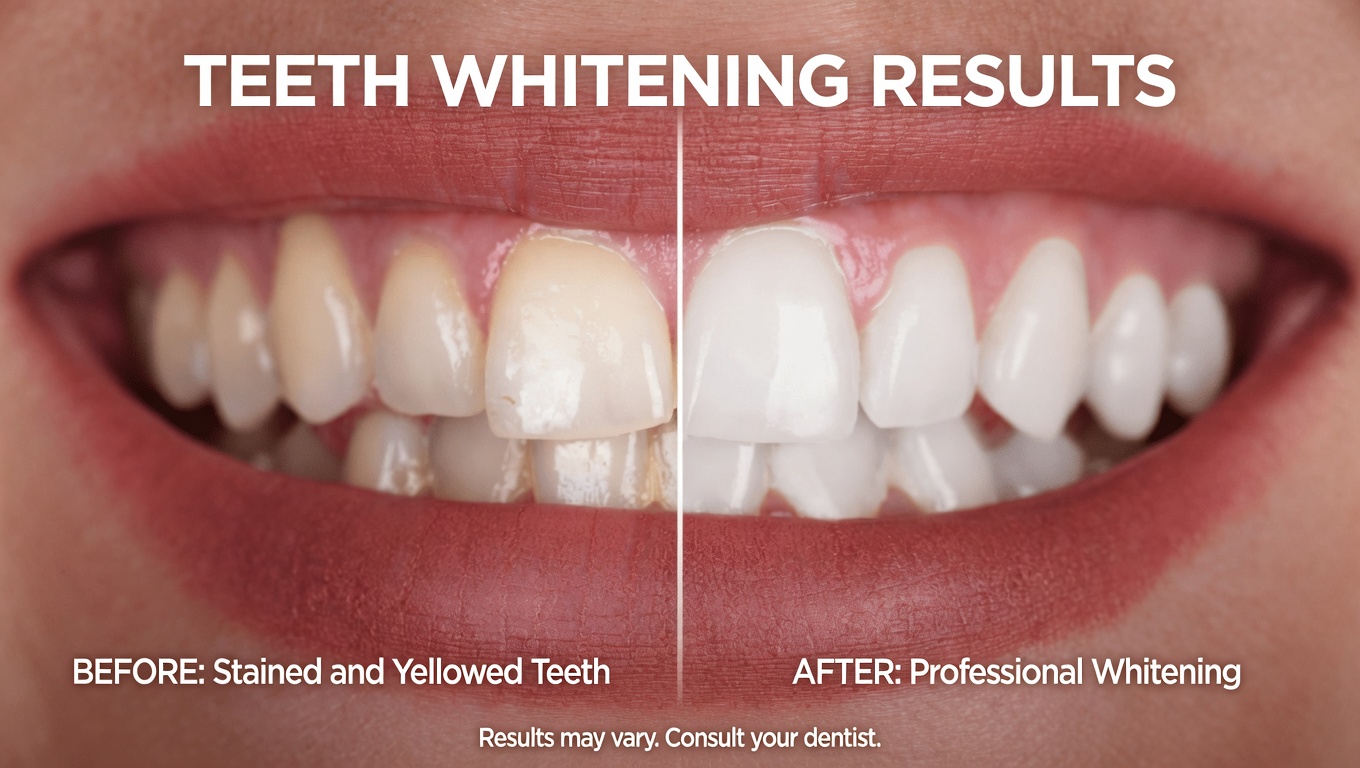
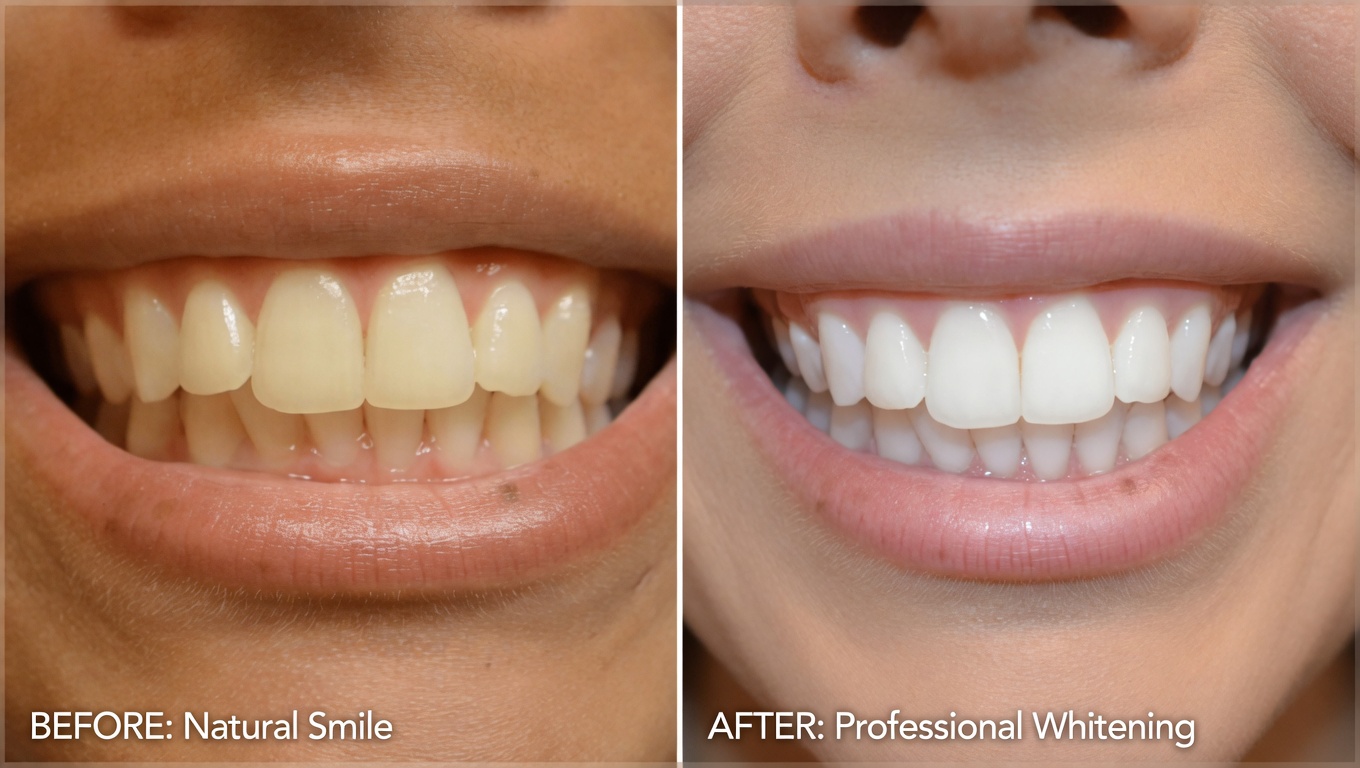
…you may need professional whitening options such as dental bleaching gels or in-office treatments. It’s also smart to discuss any DIY whitening routine with a dentist if you have sensitivity, gum issues, or a history of enamel erosion.
A Brighter Smile—The Gentle Way
A gradual at-home teeth whitening routine using baking soda, diluted hydrogen peroxide, coconut oil pulling, and occasional strawberry paste can be a practical way to reduce surface stains over time. When used carefully—and paired with strong daily habits—you may see subtle improvements in brightness without harsh products.
The unexpected habit that helps results last longer: chew sugar-free gum after meals. It increases saliva production, which helps rinse away food particles and acids before they settle on enamel and contribute to new stains.