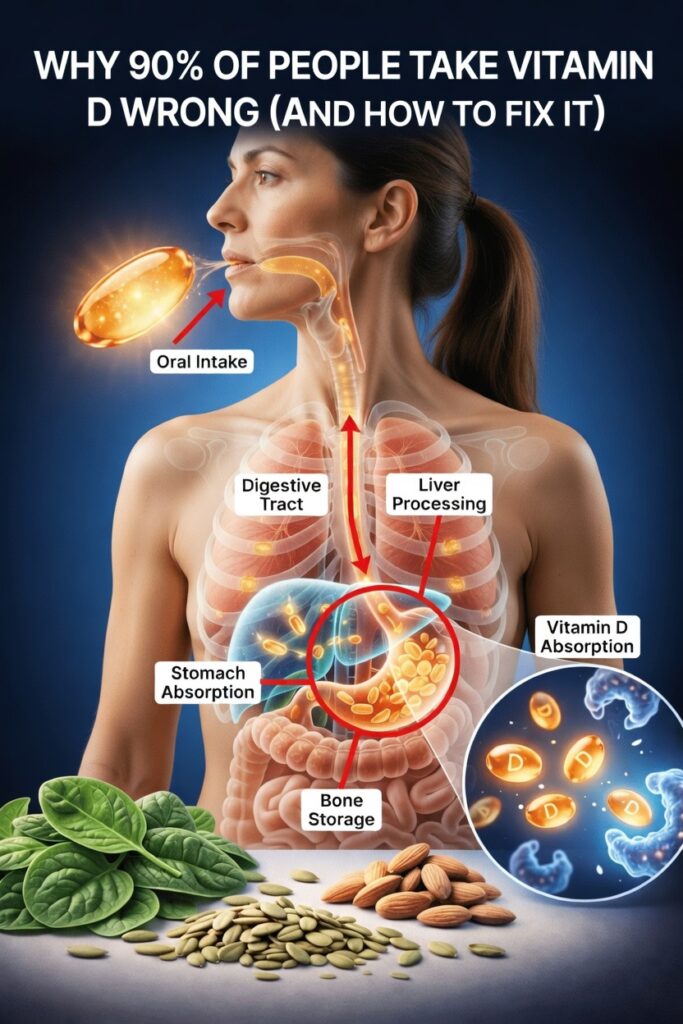
Why Vitamin D May Not Be Helping as Much as You Expect
Feeling constantly tired, catching colds often, or dealing with stubborn muscle soreness even though you take vitamin D every day can be deeply discouraging. This is a widespread issue. Vitamin D deficiency affects nearly half of the global population, becomes even more common during winter, and impacts women more often than men. The result can be low energy, mood changes, and growing concerns about bone strength and immune health.
Modern life plays a major role. Spending most of the day indoors reduces the sun exposure your body was designed to use for making vitamin D naturally. On top of that, many people unknowingly make three major mistakes that prevent vitamin D from being properly activated and used. The good news is that a few evidence-based changes may help your supplement routine work far better.
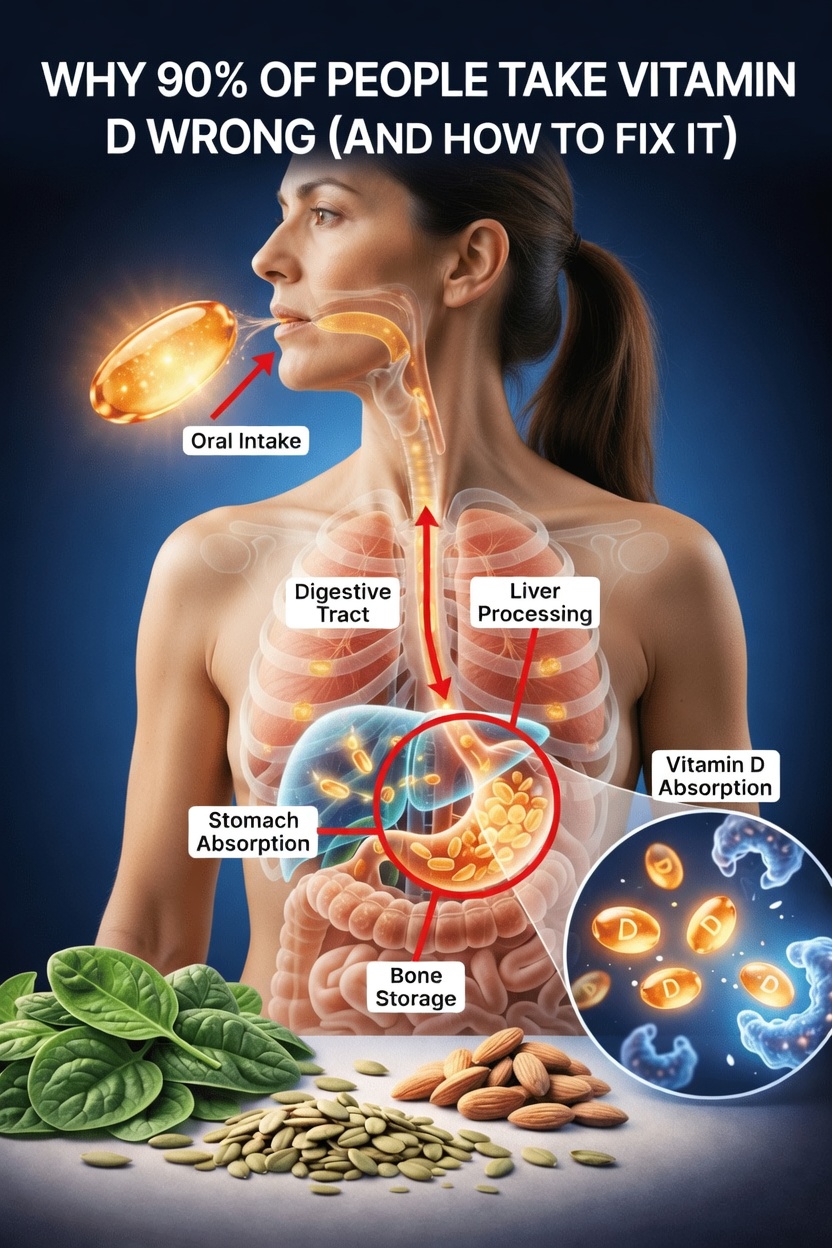
Why Vitamin D Levels Stay Low Even With Supplements
If you spend most of your time inside, your skin has fewer chances to produce vitamin D from sunlight. That matters because natural UVB exposure triggers a process that allows your body to create vitamin D3 over several hours, helping maintain more stable levels than many food sources alone.
When this process is limited, low vitamin D can contribute to ongoing fatigue, low motivation, and reduced immune resilience. Certain groups face an even higher risk of deficiency, including people with darker skin tones, those living in northern climates, and individuals who regularly use sunscreen.
How Low Vitamin D Affects Everyday Health
Insufficient vitamin D can influence much more than bone health. Many people notice they get sick more often, as low levels may weaken normal immune function. Small infections can start feeling like bigger setbacks, making daily life more draining.
Vitamin D also helps the body absorb calcium. When levels stay too low for too long, bone strength may gradually decline, leading to discomfort, sleep disruption, and anxiety about mobility later in life. Research also links healthy vitamin D status to heart and brain function, which may explain why some people with low levels report low mood, joint aches, and a general sense of heaviness.

Mistake #1: Taking Vitamin D Without Magnesium
One of the biggest reasons vitamin D supplements seem ineffective is a lack of magnesium. Your body depends on magnesium to convert vitamin D into its active form. Without enough of it, the liver and kidneys cannot complete this process efficiently.
That means you may be taking vitamin D consistently and still not getting the benefits you want for energy, immunity, or bone support. This issue is common, since nearly half of adults do not get enough magnesium due to modern eating habits, stress, and nutrient-poor diets.
Simple Ways to Add Magnesium to Your Routine
Pairing magnesium with vitamin D may help improve vitamin D activation and support more efficient calcium use. It can also help reduce the low-energy feeling many people describe when their levels are not improving.
Good food sources of magnesium include:
- Spinach and other leafy greens
- Pumpkin seeds
- Almonds
- Cashews
If food intake is not enough, magnesium bisglycinate is often a popular option because it is well absorbed and tends to be gentle on the stomach. Adding it to your evening routine may help your vitamin D plan support steadier energy and better mood balance.
Mistake #2: Ignoring Vitamin K2
Another common problem is taking vitamin D by itself without vitamin K2. Vitamin D increases calcium absorption in the intestines, but vitamin K2 helps direct that calcium to the right places, especially the bones.
Without enough K2, calcium may not be properly managed in the body. Over time, this can raise concerns about stiffness, discomfort, and even cardiovascular health. Together, vitamin D and K2 activate important proteins such as osteocalcin, which supports bones, and matrix GLA protein, which supports the vascular system.

Why Vitamin K2 Is So Important
Vitamin K2 works alongside vitamin D to help keep calcium where it belongs. This makes the partnership especially important for people concerned about bone density, circulation, and long-term vitality.
Among the forms of K2, MK-7 is often preferred because it stays active in the body longer than MK-4. That extended activity gives vitamin D more consistent support and may help reduce the likelihood of calcium being deposited where it should not be.
Mistake #3: Using the Wrong Vitamin D and K2 Ratio
Many combination supplements contain about 5,000 IU of vitamin D but only 90 mcg of vitamin K2. According to research, that amount of K2 may be too low, as a range of 180 to 360 mcg is often considered more effective for proper activation.
This creates a practical problem. If D and K2 are locked together in one formula, you may need to take too much vitamin D just to reach a useful K2 level. That is not ideal for long-term balance. Taking them separately allows you to adjust each nutrient more precisely and support bone and heart health without unnecessary excess.
Practical Ways to Improve Your Vitamin D Routine
Here are three straightforward steps that can help vitamin D work better:
-
Use vitamin D3 wisely
- A high-quality vitamin D3 supplement around 5,000 IU daily is commonly used by many adults.
- Pair it with 180 to 360 mcg of vitamin K2 in the MK-7 form to help manage calcium properly.
-
Support activation with magnesium
- Consider 200 to 400 mg of magnesium bisglycinate, especially in the evening.
- Also include magnesium-rich foods such as spinach, seeds, and nuts.
-
Test instead of guessing
- A basic blood test before and after making changes can help you track your vitamin D status.
- This makes it easier to adjust your routine for mood, immunity, and bone support.

A Better Approach to Vitamin D Absorption
Even when people take vitamin D regularly, absorption can still be an issue. Standard supplements may lose some potency in stomach acid or may not pass through the intestinal wall efficiently.
That is why some advanced products use micelle liposomal technology. This delivery method surrounds vitamin D3 and K2 with protective layers that help shield them from stomach acid and improve their compatibility with cell membranes. Some evidence suggests this can lead to far greater absorption than traditional formulas, in some cases up to 800% better.
This type of formula may also provide vitamin D3 and K2 in a more effective ratio, reducing the need to take extra vitamin D just to compensate for poor K2 content.
How Proper Vitamin D Support Can Change the Way You Feel
When vitamin D is combined with enough magnesium, the right amount of K2, and a better absorption method, many people notice meaningful improvements. Energy may feel more stable, focus can become sharper, and mood may feel more resilient.
You may also experience better bone comfort and fewer nagging aches as calcium is used more effectively. Added support for immune and cardiovascular health can bring a greater sense of confidence about long-term wellness. In short, vitamin D works best when it is supported by the nutrients and delivery methods your body needs.
Quick Recap: 3 Fixes That Make Vitamin D More Effective
To get more from your vitamin D routine, remember these three key points:
- Magnesium is essential because your body needs it to activate vitamin D properly.
- Vitamin K2 matters because it helps direct calcium into bones instead of other tissues.
- Separate dosing can be smarter because it allows you to reach the right balance of vitamin D and K2 without overdoing either one.

Ready to Help Your Vitamin D Work Better?
Correcting these three common mistakes can make a major difference. By adding magnesium, using enough vitamin K2, and improving absorption, you give your body a better chance to use vitamin D the way it was meant to be used.
Small adjustments in your daily routine can help restore energy, improve resilience, and make everyday tasks feel easier again.
FAQ About Vitamin D Supplementation
How much vitamin D should I take each day for general wellness?
Many adults use 2,000 to 5,000 IU of vitamin D3 daily, but individual needs vary. The best approach is to check your blood levels with a healthcare professional so you can avoid taking too little or too much.
Can food alone provide enough vitamin D?
Foods such as fatty fish, egg yolks, and UV-exposed mushrooms contain vitamin D, but diet alone is often not enough for many people, especially during winter or for those with limited sun exposure.
Why should I take magnesium with vitamin D?
Magnesium is required to activate vitamin D in the body. Without enough magnesium, your body may struggle to fully use the supplement, even if you take it consistently.
Is vitamin K2 really necessary with vitamin D?
Vitamin K2 is highly beneficial because it helps guide calcium into bones and away from tissues where it may be less desirable. This makes vitamin D supplementation more balanced and potentially safer over time.
Should I choose D3 and K2 together or separately?
Separate supplements can offer more flexibility. They make it easier to take the right amount of vitamin K2 without increasing vitamin D beyond what you actually need.