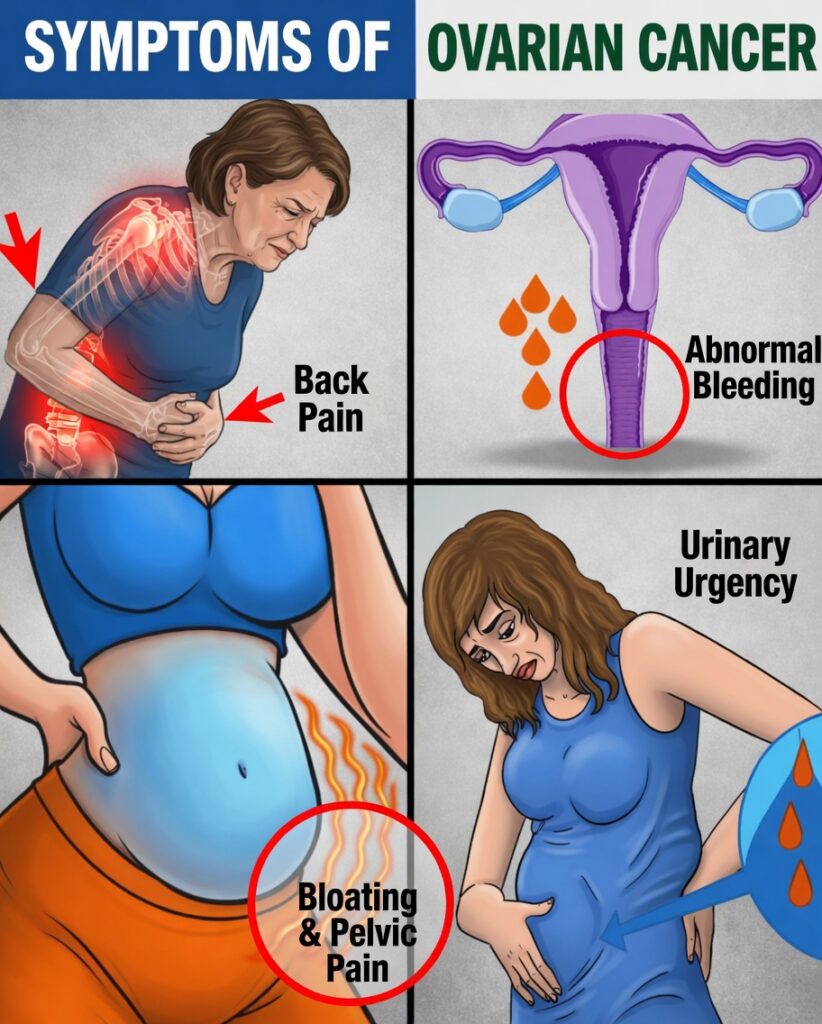
Many women experience a stubborn, day-after-day bloated sensation—sometimes even when they’ve eaten very little. The abdomen can feel tight, heavy, and uncomfortable, and the feeling may not ease as the day goes on. Because it’s a subtle shift, it’s easy to dismiss as indigestion, hormonal changes, stress, or simply aging—and that can allow the discomfort to continue for weeks.
However, vague and persistent abdominal symptoms can sometimes be linked to more serious conditions, including ovarian cancer. Noticing changes early and acting on them may create more options for evaluation and management. Later in this article, you’ll find practical, immediate steps to take if these signs feel familiar.
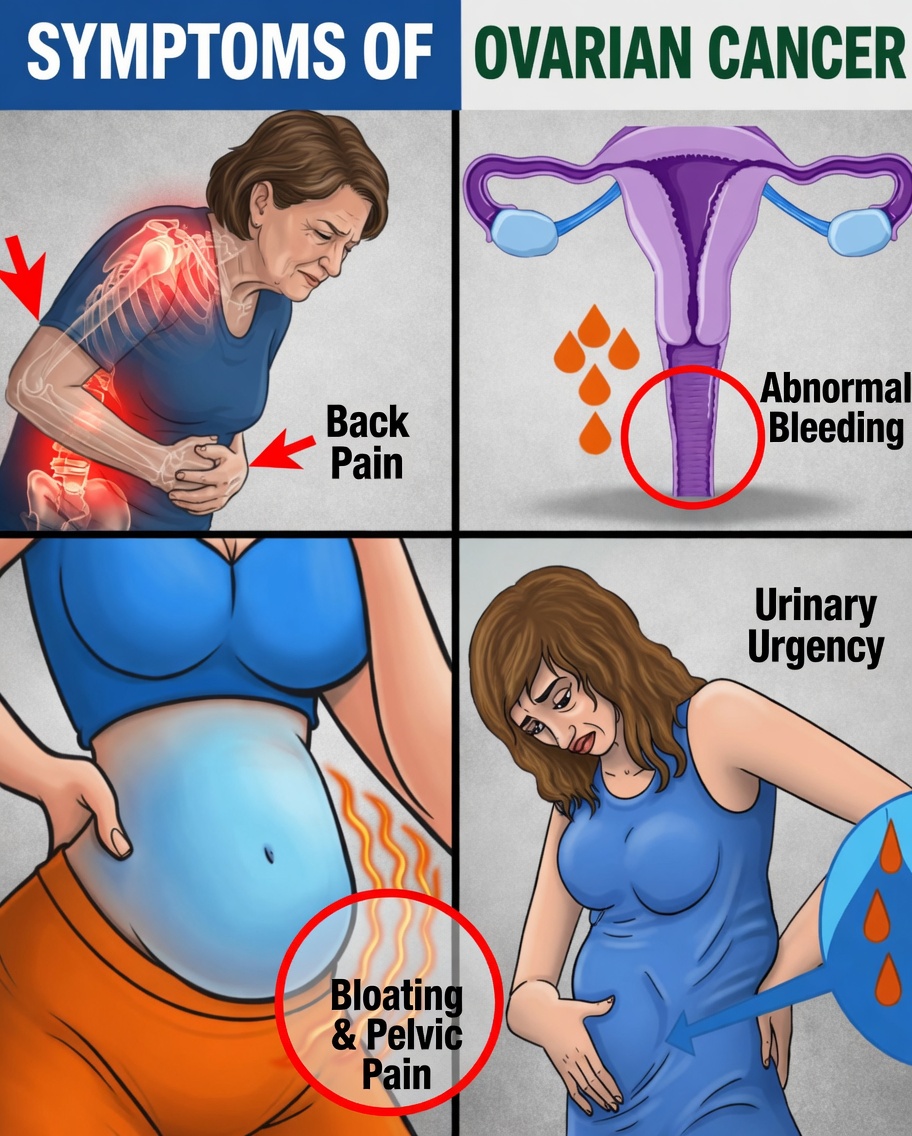
Why Ovarian Cancer Symptoms Are Often Missed
Ovarian cancer is frequently described as a “silent” disease—not because symptoms never happen, but because the signs can be mild, common, and easy to misinterpret. Many symptoms overlap with everyday issues like digestive discomfort, menopause-related changes, or normal fluctuations in energy.
Medical organizations such as the American Cancer Society and the Mayo Clinic note that symptoms can appear even in earlier stages for many women, but they are often nonspecific, which leads to delays in seeking care.
Risk increases for some groups—particularly women over 50 and those with a family history of ovarian or related cancers. Still, awareness matters for everyone, because recognizing persistent changes can speed up evaluation.
Why Paying Attention to “Small” Changes Matters
It’s common to keep moving through life while discomfort quietly builds: a constant sense of fullness, a pressure that wasn’t there before, or a new ache you can’t explain. Many people try to “wait it out,” assuming it’s temporary.
Real-world stories often share a similar lesson: persistence is the key signal. Some women reported months of ongoing bloating they blamed on diet or stress—until medical evaluation revealed something that needed attention.
Research and clinical guidance repeatedly emphasize that when symptoms last for weeks, occur most days, or show up as a cluster, they deserve professional review. The goal isn’t panic—it’s timely clarity.

Normal Fluctuations vs. Concerning Patterns
Almost everyone deals with occasional bloating, fatigue, or digestive changes. What separates routine discomfort from a potential red flag is usually:
- How long it lasts
- How often it occurs
- Whether multiple symptoms appear together
- Whether it feels “new” or unusual for you
Quick Comparison Guide
| Symptom | Typical Description | When It May Be Concerning | Other Possible Causes |
|---|---|---|---|
| Bloating | Persistent abdominal swelling or pressure | Daily for 2+ weeks | Digestion issues, hormones |
| Pelvic pain | Dull ache or pressure in the lower abdomen | Ongoing, no clear cause | UTIs, fibroids |
| Early satiety | Feeling full quickly after small meals | Happens with most meals | Gastritis, acid reflux |
| Urinary changes | Urgency or frequent urination | Sudden and persistent | Bladder infection |
| Fatigue | Unusual tiredness not improved by rest | Continues despite sleep/rest | Stress, thyroid disorders |
| Back pain | Lower back discomfort without injury | Unexplained and ongoing | Muscle strain |
Medical sources such as the Mayo Clinic commonly advise that new symptoms lasting more than two weeks, especially if persistent or worsening, should be discussed with a clinician.
6 Warning Signs Commonly Linked to Ovarian Cancer
Because ovarian cancer symptoms overlap with many everyday conditions, context matters. Still, certain signs appear repeatedly in medical literature and patient reports. Below are six important ovarian cancer symptoms to know—listed from less commonly emphasized to most frequently reported.

6) Persistent Fatigue
This isn’t normal end-of-day tiredness. It’s a deep exhaustion that doesn’t improve with rest and may feel out of proportion to your routine. Some women describe feeling unusually “drained” without a clear reason.
5) Ongoing Lower Back Pain
A dull ache in the lower back that lingers—without recent strain, heavy lifting, or injury—can be easy to overlook. When it’s persistent and unexplained, it’s worth noting.
4) Changes in Urination
A sudden shift toward frequent urination or urgent need to go, especially without typical signs of infection, may occur when pelvic pressure increases. It often becomes noticeable when it starts disrupting daily life.
3) Feeling Full Very Quickly (Early Satiety)
If you feel “stuffed” after only a few bites and this happens regularly, it’s a symptom to track. Early satiety can change eating patterns and may lead to unintended dietary changes.
2) Pelvic or Abdominal Pain
This may show up as pressure, heaviness, or a dull ache below the belly button that doesn’t go away. Many women describe it as persistent discomfort rather than sharp pain.
1) Ongoing Abdominal Bloating
This is one of the most commonly reported symptoms: bloating or visible abdominal swelling that doesn’t come and go. It may not follow meals or time of day—it simply stays. Organizations like the American Cancer Society frequently list persistent bloating among the top symptoms to evaluate.
Helpful tracking tips
- Write down how long symptoms last, especially if they continue beyond 2 weeks
- Note whether multiple symptoms appear together
- Share any family history of ovarian, breast, or related cancers during medical visits
Real Experiences: When Women Paid Attention
Survivor accounts often describe symptoms that seemed “too mild to matter” at first. For example, one woman in her early 60s noticed ongoing bloating and pelvic pressure and initially blamed diet and stress. After tracking symptoms consistently, she booked an evaluation—leading to earlier insight into what was happening.
Another woman noticed she was getting full quickly and felt unusually tired. Because she didn’t wait for symptoms to resolve on their own, she was able to move forward with medical guidance sooner.
The takeaway is simple: even vague symptoms can be meaningful when they are persistent and new for you.

Practical Steps You Can Take Today
It’s understandable to want to avoid unnecessary worry. At the same time, having a plan helps you stay in control. If symptoms feel unusual or continue beyond two weeks, consider the following:
-
Track your symptoms
- Record what you feel, when it happens, and how long it lasts each day (at least 7 days).
-
Look for patterns
- Pay attention to whether symptoms worsen, become more frequent, or appear as a group.
-
Schedule a medical visit
- Talk with your primary care doctor or gynecologist. Clearly explain that symptoms are persistent and occurring most days.
-
Bring focused questions
- Ask whether evaluation might include a pelvic exam, pelvic ultrasound, or bloodwork such as CA-125 (not definitive on its own, but sometimes used in assessment).
-
Support overall health
- Stay active as you’re able, eat balanced meals, and attend routine checkups as recommended.
These actions cost little more than time—and they can provide reassurance, clarity, or earlier guidance if something needs attention.
Take Charge of Your Health Starting Now
When ongoing changes are brushed aside, opportunities for earlier evaluation can be missed. Paying attention to your body—especially to symptoms that persist—supports informed decisions and potentially stronger outcomes.
A consistent message across research and clinical guidance is that persistence matters. If something feels off and it doesn’t resolve, you deserve answers.
P.S. September is Ovarian Cancer Awareness Month. The teal ribbon is a meaningful reminder to share awareness with friends and family.
FAQ: Common Questions About Ovarian Cancer Symptoms
1) Do these symptoms always mean ovarian cancer?
No. Symptoms like bloating, fatigue, or pelvic discomfort are often caused by less serious issues such as diet changes, stress, gastrointestinal conditions, or menopause. The concern increases when symptoms are new, persistent, frequent, and clustered.
2) Is there a routine screening test for ovarian cancer?
For average-risk women without symptoms, there is currently no reliable routine screening test (as noted by sources such as the American Cancer Society and CDC). Monitoring changes and seeking prompt evaluation remain essential.
3) When should I see a doctor?
If symptoms like bloating, pelvic pressure, early fullness, or urinary changes occur most days for more than two weeks, or feel different from your normal baseline, schedule a medical appointment sooner rather than later.
Medical disclaimer: This article is for informational purposes only and does not replace professional medical advice. For personalized guidance, consult a qualified healthcare provider.