
Many adults notice a familiar pattern: an afternoon energy crash, a heavy feeling after meals, and a general dip in vitality that makes ordinary days feel harder than they need to be. When these “small” discomforts stack up, it’s natural to look for a simpler, more sustainable way to feel steady and well.
A growing number of people explore eating like Japanese centenarians because it emphasizes mindful portions and traditional, nutrient-dense foods—without complicated rules. By the end of this article, you’ll have a clear 4-week plan, a list of key foods, and practical daily habits you can start right away.

Why People Explore Eating Like Japanese Centenarians
If mid-afternoon fatigue or that “too full” sensation after lunch sounds familiar, the centenarian-style Japanese approach can feel refreshingly doable. Rather than strict dieting, it’s built on balanced meals, modest portions, and consistent routines.
Many who adopt elements of Japanese centenarian eating habits describe:
- Feeling lighter after eating
- Having more stable energy during the day
- Experiencing less digestive heaviness
Because these practices have been used for generations, they often fit smoothly into modern schedules—especially if you focus on the core principles instead of trying to copy an entire cuisine overnight.
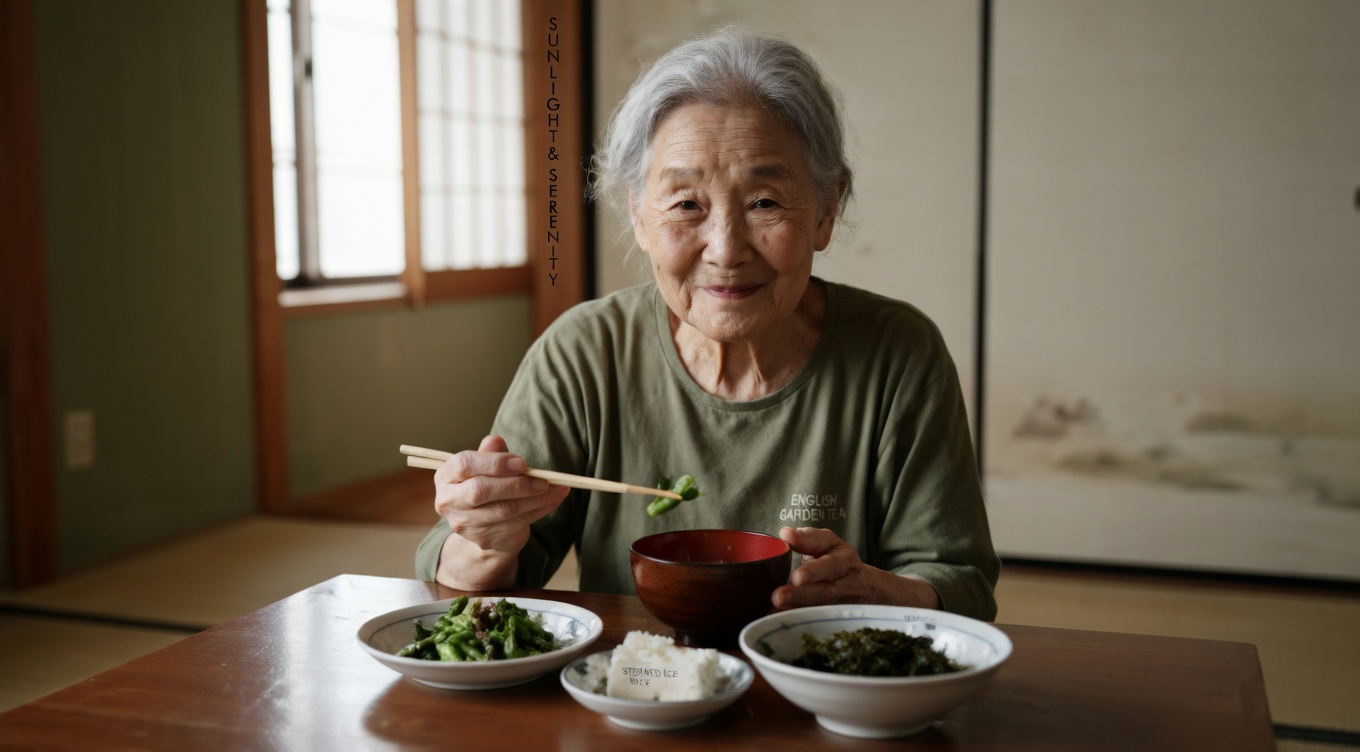
How This Approach Supports Natural Daily Rhythms
One overlooked advantage of eating like Japanese centenarians is the natural spacing between meals. Traditional patterns often include clear meal times and fewer random snacks, creating gentle “rest periods” for digestion.
This rhythm can be especially appealing if you deal with:
- Occasional brain fog
- Sluggish mornings
- A sense that your digestion feels “slow” after heavy meals
The goal isn’t extreme fasting or rigid restrictions. It’s simply aligning your eating schedule with a calmer, more consistent daily pattern.

The “80% Full” Principle (Hara Hachi Bu)
A signature habit often linked to long-lived Japanese communities is stopping when you’re about 80% satisfied, not completely stuffed. This small pause can help reduce that post-meal heaviness many people dislike and may support more comfortable digestion.
To try it today:
- Eat at a normal pace.
- Pause halfway through.
- Ask yourself how full you feel on a 1–10 scale.
- Aim to stop around a comfortable “7–8” rather than a “9–10.”
People who practice this regularly often report less bloating and more even energy after meals.

Meal Timing Patterns Often Used by Japanese Centenarians
Another common pattern is eating dinner earlier and then allowing a longer break until breakfast. This creates a natural overnight window that many find supportive for rest and next-day freshness.
If you often wake up tired or hit an afternoon slump, adjusting timing—without changing everything you eat—may be one of the simplest experiments to run.
A widely used rhythm includes:
- A lighter, earlier evening meal
- A 12–14 hour overnight break (for example, dinner at 6:30 pm and breakfast at 7:30 am)
Common Challenges vs. Centenarian-Style Adjustments
-
Afternoon energy dip
- Common modern habit: Frequent snacking
- When eating like Japanese centenarians: A natural 12–14 hour overnight break
-
Post-meal heaviness
- Common modern habit: Large portions
- When eating like Japanese centenarians: Stop at 80% comfortable fullness
-
Morning sluggishness
- Common modern habit: Late, heavy dinner
- When eating like Japanese centenarians: Earlier, lighter evening meal

Everyday Foods Common in Eating Like Japanese Centenarians
Meals inspired by Japanese centenarians often center on vegetables, plant-based proteins, and antioxidant-rich staples. These foods are frequently chosen because they’re nourishing, gentle, and easy to include in everyday meals.
Popular options include:
- Purple sweet potatoes
- Bitter melon
- Seaweed
- Tofu
- Green tea
Many people find these foods help them feel more balanced after eating and support steadier energy—especially when combined with mindful portions.
Simple Ways to Start Today
If you want a low-effort entry point, try adding just one or two of these habits:
- Start your meal with vegetables or a light soup
- Chew slowly and pause halfway through
- Sip green tea instead of automatically reaching for snacks
- Add small amounts of seaweed or tofu to meals
- Mix a teaspoon of olive oil into morning vegetable-based drinks (if that’s part of your routine)
A Practical 4-Week Plan for Eating Like Japanese Centenarians
-
Week 1: Practice the 80% rule
- Aim to stop at about 80% full at each meal and track how your body feels afterward.
-
Week 2: Shift dinner earlier
- Move dinner 30–60 minutes earlier to gently extend your overnight break.
-
Week 3: Add one traditional food daily
- Choose one: seaweed, tofu, purple sweet potato, bitter melon, or green tea.
-
Week 4: Combine the habits
- Keep portions mindful, maintain earlier dinners, and include at least one centenarian-style food daily to support steadier energy.
Bonus Daily Rituals Often Linked to Japanese Longevity
Beyond food, many long-lived Japanese communities keep routines simple and consistent:
- Eating without screens for better awareness and satisfaction
- Staying gently active through walking, gardening, or light movement
- Sipping green tea slowly during the day, which can also reinforce mindful pacing at meals
The real impact usually comes from making these habits consistent, flexible, and enjoyable for your lifestyle.
FAQ
Is eating like Japanese centenarians safe for most people?
For many, it’s a balanced and well-tolerated approach. Still, talk with your healthcare provider before making major changes to meal timing or portion size—especially if you have medical conditions or specific nutritional needs.
How quickly can I notice results?
Some people report feeling lighter and more energized within a couple of weeks when they follow the habits consistently. Results vary based on sleep, stress, activity, and individual metabolism.
Can I still eat my favorite foods?
Yes. This lifestyle is mainly about timing, portions, and adding nutrient-rich foods, so familiar meals can still fit—just in moderation and with more mindful structure.