Feeling wiped out by the afternoon slump, catching colds more often than you’d like, or lying awake at night can be maddening—especially when your everyday meals still don’t seem to deliver what your body needs. Many modern diets fall short on key minerals and healthy fats that pumpkin seeds naturally provide, which can make small problems feel bigger over time.
The upside: adding pumpkin seeds (pepitas) to your routine is simple, budget-friendly, and requires zero complicated lifestyle changes. And there’s one benefit many people overlook until much later—stay with this guide to see the surprising way pumpkin seeds can support calmer evenings.
What Are Pumpkin Seeds?
Pumpkin seeds—often called pepitas (and known by other regional names)—are the edible kernels found inside mature pumpkins and related squash varieties.
If you feel like you’re eating “enough” but still missing real nutrition, pumpkin seeds are an easy upgrade. They’re also incredibly flexible: enjoy them raw, lightly roasted, shelled, or blended, making them ideal for busy schedules.
Nutritional Profile of Pumpkin Seeds
A 1-ounce (28g) serving of pumpkin seeds provides roughly 7 grams of plant-based protein, plus unsaturated fats that support steady energy and satiety.
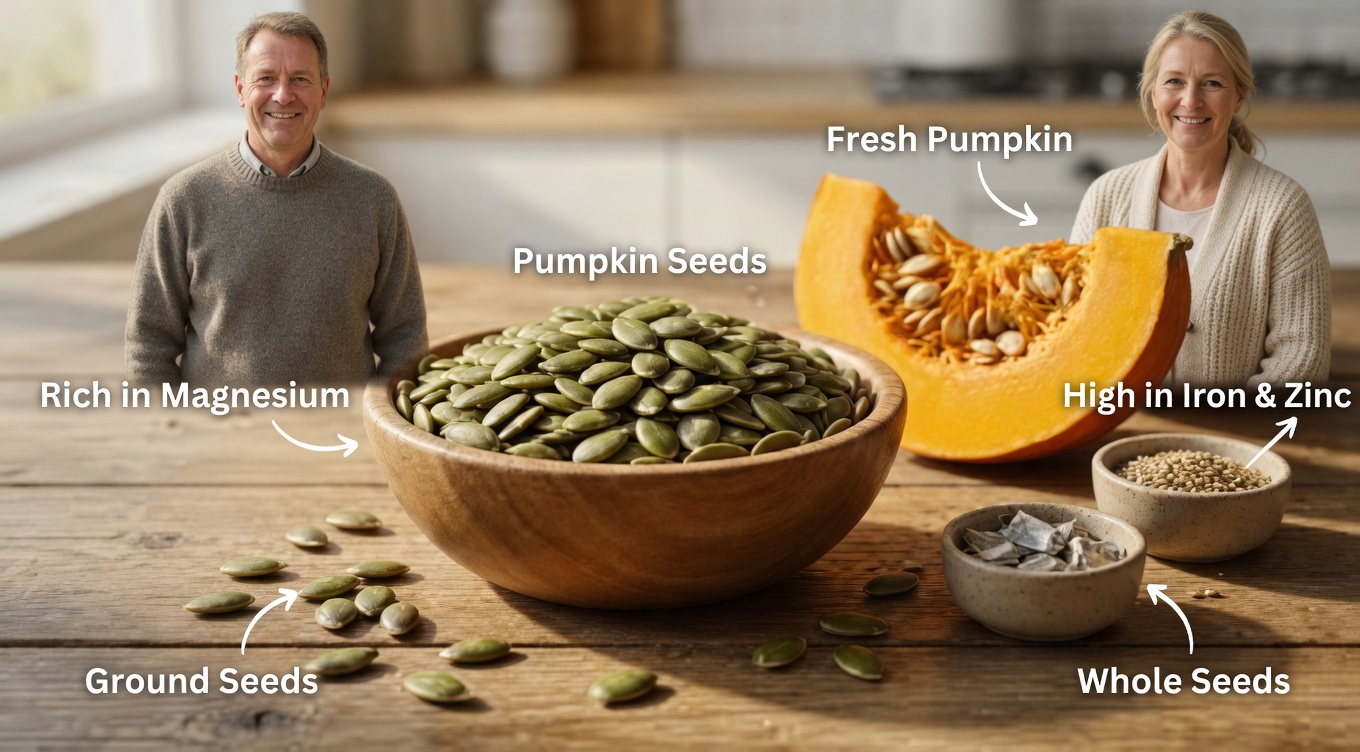
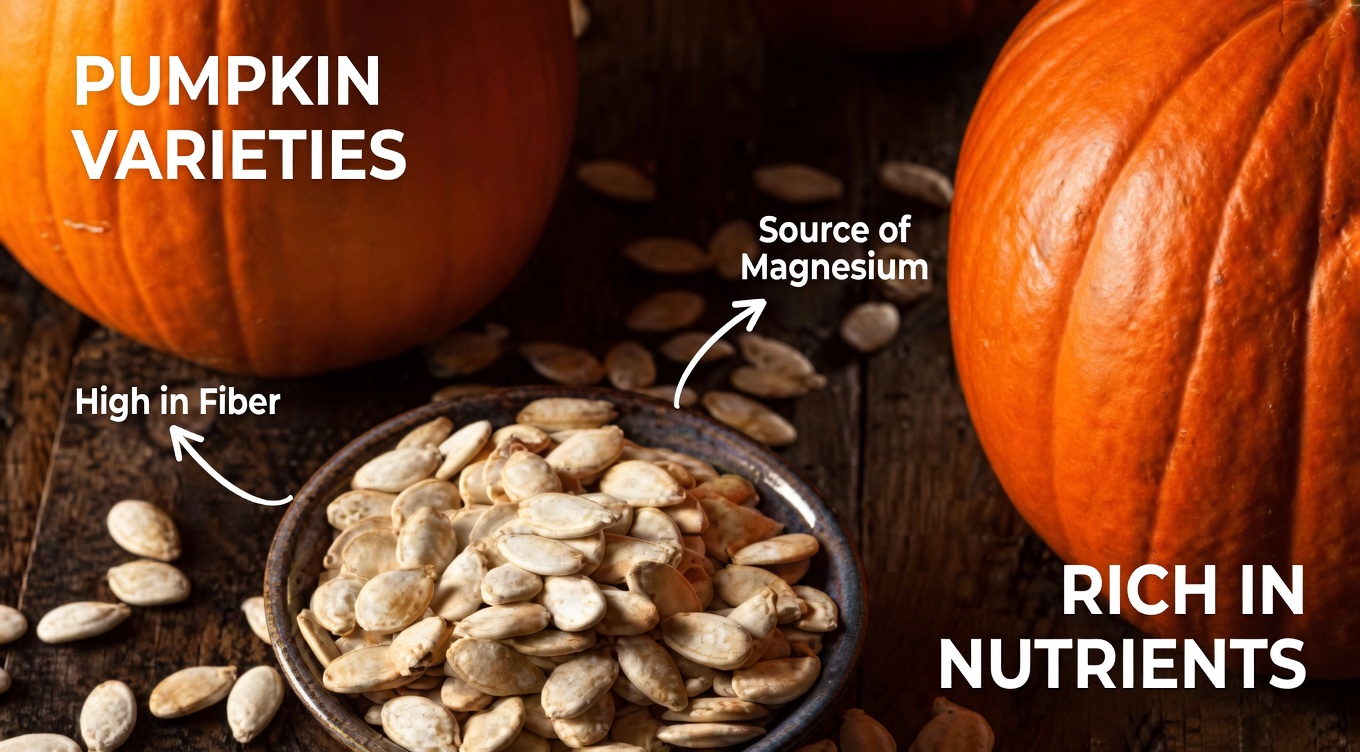
Pumpkin seeds are also naturally rich in:
- Magnesium
- Zinc
- Iron
- Vitamin E
- Fiber and antioxidants
When low energy, cravings, or “always getting sick” has you relying on coffee or supplements, pumpkin seeds offer a nutrient-dense, food-first option backed by established nutrition science.
Heart Health Support from Pumpkin Seeds
If you’re thinking about long-term wellness—especially healthy blood pressure and cardiovascular support—pumpkin seeds are worth attention. Their magnesium and healthy fats are commonly associated with normal heart function.
In addition, the antioxidants in pumpkin seeds may help support healthy cholesterol balance, making them an easy add-on for a heart-smart routine.
But heart support is only one part of what these seeds can do.
Better Sleep Quality with Pumpkin Seeds
Restless nights can quickly turn into tired mornings, brain fog, and an endless cycle of feeling “off.” Pumpkin seeds contain tryptophan, an amino acid your body uses to produce serotonin and melatonin—two compounds closely tied to relaxation and sleep cycles.
Many people find that a small serving of pumpkin seeds in the evening helps promote a more settled wind-down without feeling groggy the next day.
Digestion and Weight Management Benefits
If bloating, irregular digestion, or constant hunger keeps derailing your goals, pumpkin seeds can help. Their fiber and protein support:
- A stronger feeling of fullness
- More stable energy (fewer spikes and crashes)
- Smoother digestion and improved gut comfort
Because they’re nutrient-dense, pumpkin seeds are also useful for people trying to manage cravings in a more natural, sustainable way.
Immune System Support with Pumpkin Seeds
Frequent colds and slow recovery can disrupt work, travel, and everyday life. Pumpkin seeds naturally provide zinc and iron, two minerals known to play key roles in immune function.
Including pumpkin seeds regularly may help support your body’s defenses—especially during stressful periods or seasonal changes.
Antioxidant and Anti-Inflammatory Properties
Daily stress, pollution, and poor sleep can increase oxidative stress and accelerate feelings of fatigue and discomfort. Pumpkin seeds contain vitamin E and plant compounds (including polyphenols) that help protect cells from oxidative damage.
This antioxidant support contributes to overall vitality—and for many people, it’s something they can actually notice over time.
Prostate Health Support
Men over 40 often become more aware of urinary comfort and prostate wellness. Some research suggests pumpkin seeds’ nutrient profile may support prostate health and help ease mild discomfort related to urinary function.
This is one of the quieter benefits of pumpkin seeds, but it’s frequently cited as a reason many men add them to their daily diet.
Skin and Hair Support from Pumpkin Seeds
Skin dullness and hair thinning can affect confidence more than people admit. Pumpkin seeds provide zinc, healthy fats, and antioxidants that nourish from within, supporting:
- A healthier-looking glow
- Improved skin resilience
- Stronger-looking hair over time
Consistency matters here—regular intake tends to deliver the best results.
Key Nutrients in Pumpkin Seeds (Quick Comparison)
| Nutrient | Amount per 1 oz | How It May Help You Feel Better |
|---|---|---|
| Protein | 7g | More sustained energy, fewer mid-day crashes |
| Magnesium | 150mg | Supports relaxation, muscles, and heart function |
| Zinc | 2.2mg | Helps immune health and clearer-looking skin |
| Healthy fats | 13g | Satiety and hormone support |
| Fiber | 1.7g | Smoother digestion and steadier blood sugar |
| Vitamin E | 2.2mg | Antioxidant protection and a more youthful look |
This snapshot makes it clear why pumpkin seeds deserve a regular spot in a balanced diet.
How to Eat Pumpkin Seeds Every Day
Pumpkin seeds are easy to add with minimal effort:
- Sprinkle over yogurt or oatmeal for crunch
- Add to salads or grain bowls
- Blend into smoothies (an easy “hidden” nutrition boost)
- Lightly roast with a pinch of sea salt for a snack
- Mix ground pumpkin seeds into soups, sauces, or baking
For the best quality, choose unsalted, minimally processed pumpkin seeds.
A Simple Routine to Make Pumpkin Seeds a Habit
If you’re trying to close common nutrition gaps, this plan is realistic for most people:
- Morning: Add 1 tablespoon to breakfast
- Afternoon: Keep a small portion at your desk or in your bag
- Evening: Sprinkle on dinner soup or a salad
- After 2 weeks: Notice changes in energy, cravings, and sleep quality
Small steps like these make pumpkin seeds feel effortless—and sustainable.
Key Takeaways
Pumpkin seeds stand out because they:
- Support heart health and daily energy through magnesium and healthy fats
- Promote sleep and immune support with tryptophan, zinc, and iron
- Nourish digestion, skin, and overall vitality thanks to fiber and antioxidants
If fatigue, frequent discomfort, or recurring colds have been holding you back, pumpkin seeds are a simple, affordable nutrition upgrade that many people underestimate.
If you have health conditions or specific dietary needs, talk with a healthcare professional before making major changes.
P.S. The “too-late” benefit many people miss: the tryptophan in pumpkin seeds can support a calmer, more natural wind-down in the evening—one of the easiest ways to improve how you feel day after day.
FAQ About Pumpkin Seeds
How many pumpkin seeds should I eat per day?
Most people do well with 1–2 tablespoons daily, which provides meaningful nutrients without adding too many calories.
Are raw or roasted pumpkin seeds healthier?
Both can be nutritious. Raw and lightly roasted pumpkin seeds typically retain nutrients well. Try to avoid heavily salted or overly processed options.
Can pumpkin seeds help with sleep?
Pumpkin seeds contain tryptophan, which may support sleep quality when eaten regularly, especially in the evening as part of a balanced routine.
Medical Disclaimer
This article is for informational purposes only and does not replace professional medical advice. Consult a qualified healthcare provider for personalized guidance.