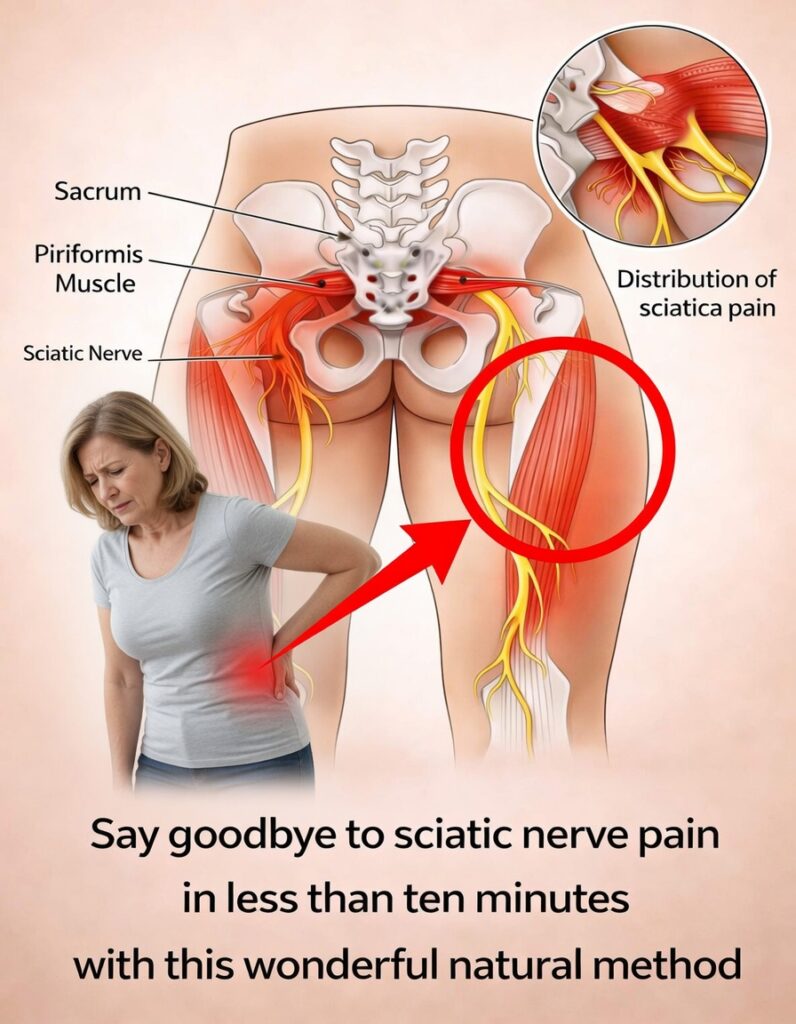
Sciatica pain can arrive out of nowhere—often as a sharp, electric sensation that travels from the lower back through the buttocks and down the leg. When it flares, everyday tasks like sitting at a desk, walking short distances, or even finding a comfortable sleep position can feel unusually difficult and draining. It can disrupt work, routines, and time with family, leaving many people looking for fast, gentle, at-home sciatica relief.
The good news: simple stretches and supportive home techniques may help reduce muscle tension and ease pressure around the sciatic nerve—without complicated equipment. Stay with this guide to the end, because there’s one often-missed daily habit that many people report helps reduce how frequently sciatica flare-ups come back.
What Causes Sciatica Discomfort—and Why Gentle Movement Can Help
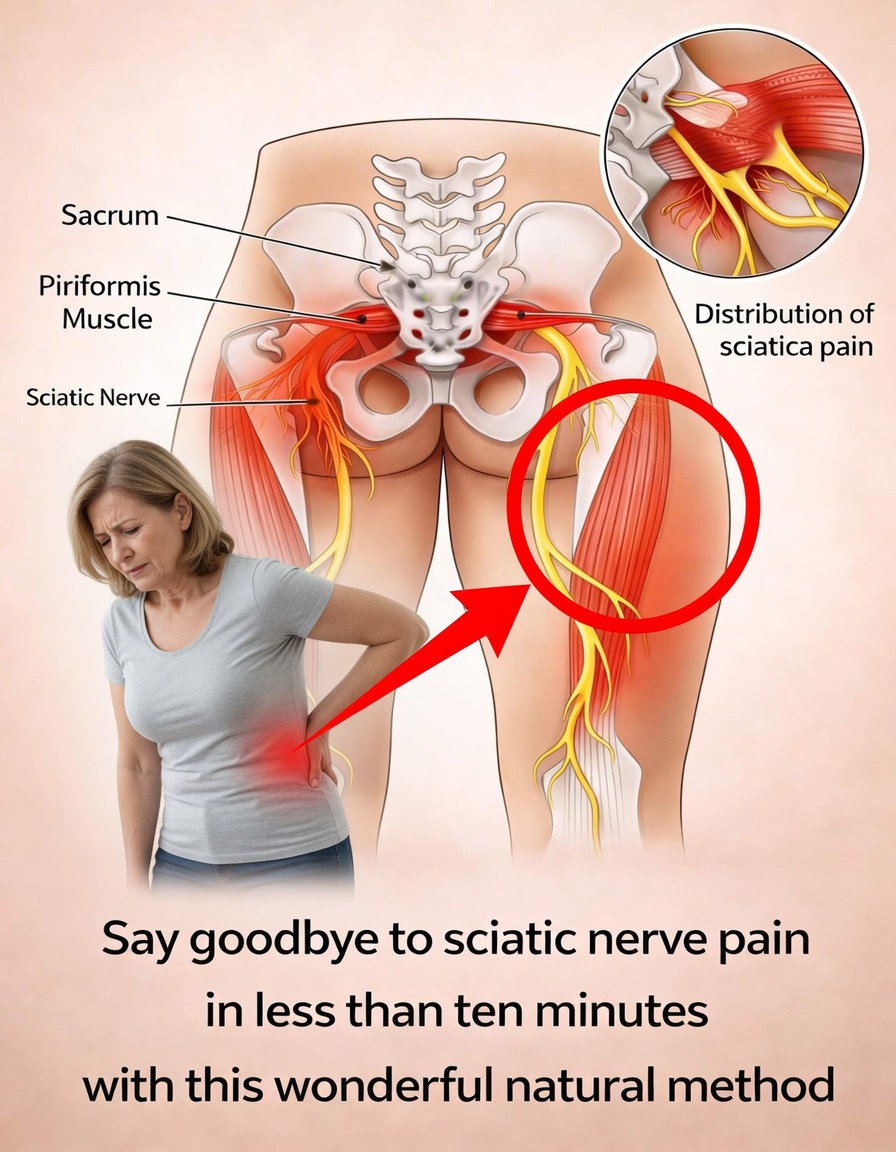
Sciatica discomfort typically happens when the sciatic nerve (the body’s longest nerve) becomes irritated or compressed. This nerve runs from the lower spine through the hips and buttocks and down each leg. Common contributors include:
- Tight hip or glute muscles
- Long periods of sitting
- Postural strain or subtle spinal changes
- Reduced mobility in the lower back and hips
Research reviews (including findings discussed in sources such as Frontiers in Neurology) suggest that gentle stretching and controlled movement can support flexibility, circulation, and mobility—potentially decreasing irritation around sensitive nerve pathways. The key is to keep movements low-impact and comfortable, not forceful.
Just as important: pairing stretches with simple at-home support strategies can make relief last longer and help you move through your day with more confidence.
Why Gentle Sciatica Stretches Can Feel Helpful Quickly
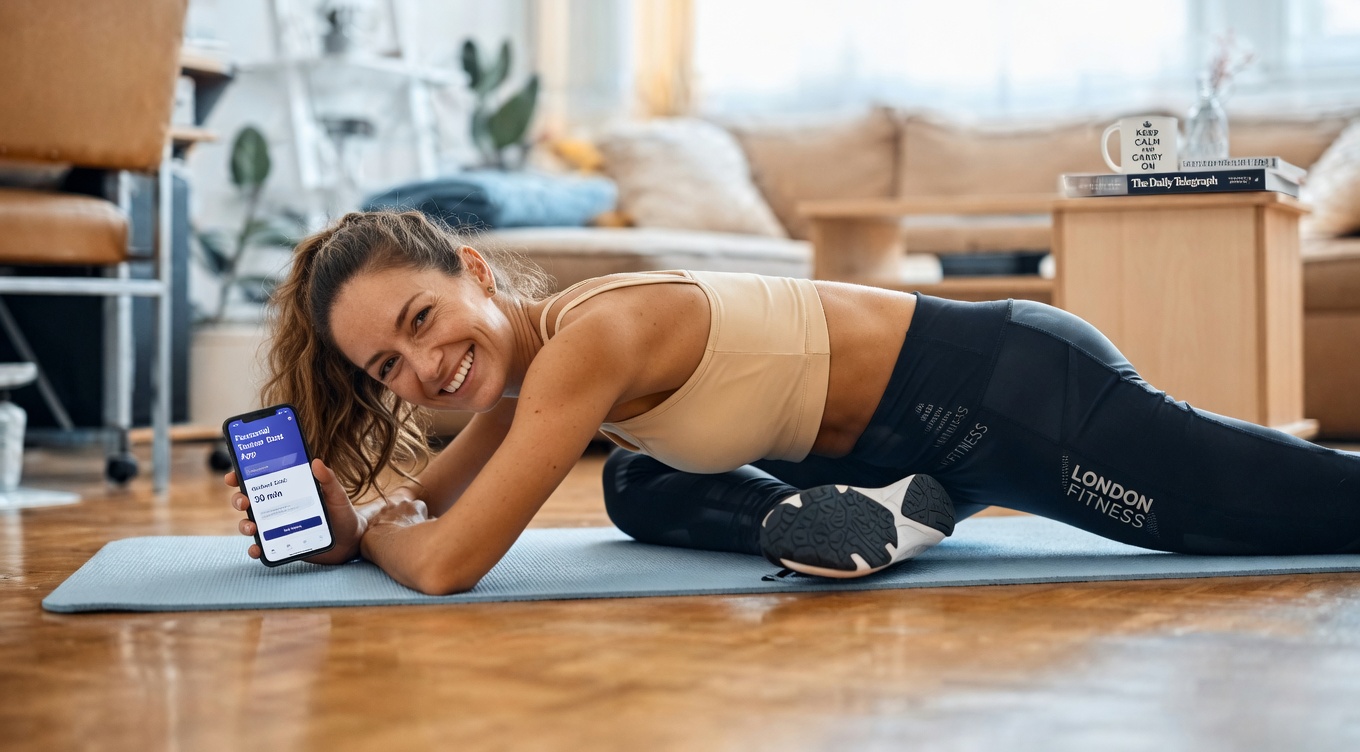
Many physical therapists recommend gentle stretching as an early self-care step because it may:
- Encourage muscle relaxation (especially hips, glutes, and lower back)
- Improve blood flow to tight areas
- Reduce pressure and guarding around the nerve pathway
- Restore basic mobility without aggressive loading
Some people notice improvement within minutes—using only a small space on the floor and their own bodyweight.
Safety note: If a movement increases pain, causes sharp symptoms, or triggers numbness/weakness, stop immediately and seek medical guidance.
Knee-to-Chest Stretch (Lower Back Release)
Lower back tightness often makes sciatica feel relentless and hard to “settle.” The knee-to-chest stretch is a simple option that gently eases tension through the lumbar area and can feel soothing quickly.
How to do it
- Lie on your back on a mat or carpet.
- Bend one knee and clasp your hands around the shin or behind the thigh.
- Slowly draw the knee toward your chest until you feel a mild, comfortable stretch.
- Keep the other leg straight—or slightly bent if that feels better.
- Hold for 20–30 seconds, breathing slowly.
- Release with control and repeat 2–3 times per side (or try both knees together if comfortable).
Many people report the lower back “lets go” after a few calm holds.
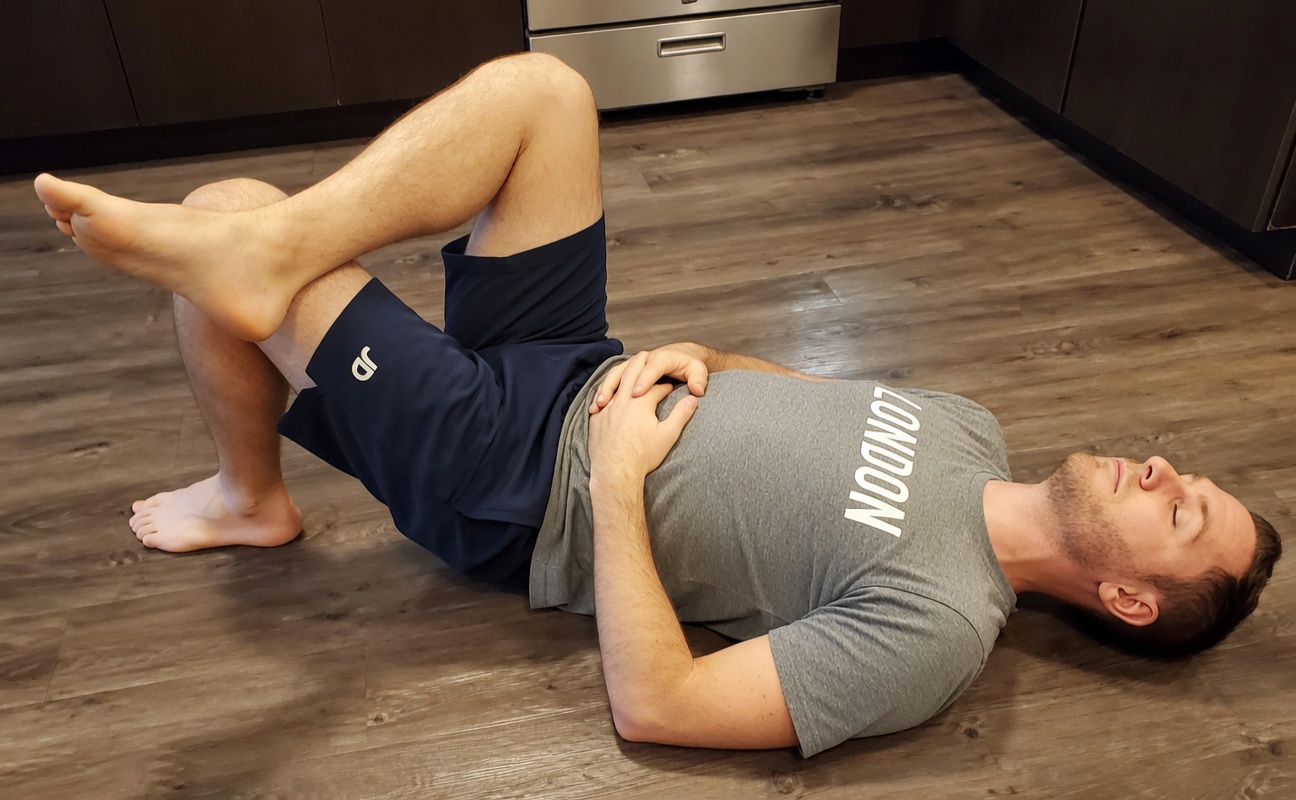
Piriformis (Figure-Four) Stretch for Deep Glute Tightness
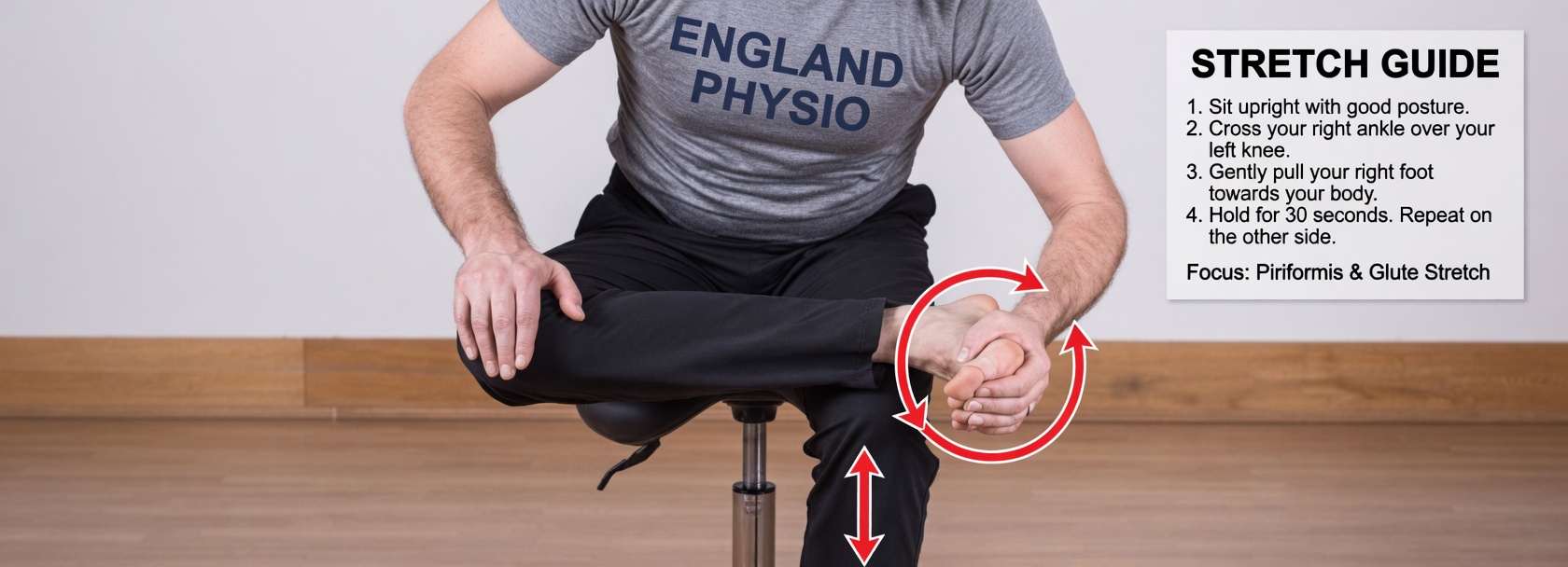
If sciatica symptoms linger in the buttock and down the leg, the piriformis muscle is often involved. This small, deep muscle sits close to the sciatic nerve, and when tight, it may add unwanted pressure or irritation. A gentle figure-four stretch targets this area and can also support hip rotation.
Step-by-step
- Lie on your back with knees bent and feet flat.
- Cross the ankle of the affected leg over the opposite knee (making a “4” shape).
- Reach through and hold the back of the bottom thigh.
- Gently pull the thigh toward your chest until you feel a mild stretch in the glute/hip.
- Hold for 20–30 seconds with steady breathing.
- Switch sides and repeat 2–3 times per side.
A deep, satisfying release in the hip/buttock area is a common sensation when this stretch hits the right spot.
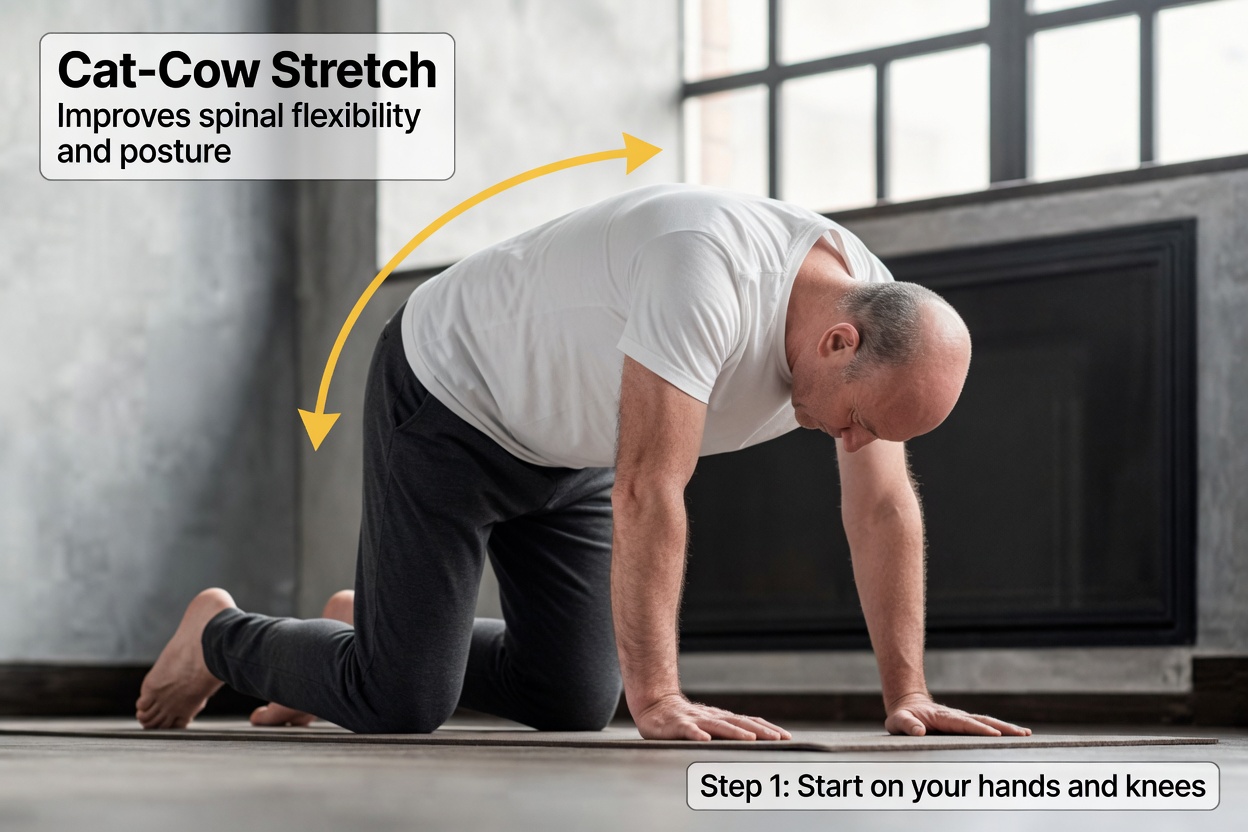
Cobra Stretch (Gentle Back Extension to Counter Sitting)
Extended sitting can increase stiffness by compressing the lower spine and shortening the front of the body. A modified cobra stretch provides mild spinal extension, often recommended in yoga-informed mobility routines and therapeutic movement programs for back discomfort.
Perform it safely
- Lie face down with hands under shoulders.
- Keep elbows close to your sides.
- Press gently to lift your chest while keeping hips and legs grounded.
- Only rise as high as feels comfortable—avoid forcing the lower back.
- Hold 15–20 seconds, then lower slowly.
- Repeat 3–5 times.
This stretch can help you feel “uncompressed,” especially after long periods seated.
Quick Add-On: Heat and Cold Therapy to Boost Comfort
Temperature therapy is a simple way to enhance the effects of stretching and reduce stubborn discomfort. General guidance often suggests:
- Cold for fresh flare-ups (to calm irritation)
- Heat for tight muscles (to promote relaxation and circulation)
A simple approach
- Cold: Wrap an ice pack in a towel and apply to the lower back or buttock for 10 minutes.
- Heat: Use a warm pad or towel for 15 minutes to loosen tight areas.
You can alternate based on comfort—many people start with cold during acute flare-ups, then switch to heat.
Supportive Resting Positions That Can Bring Faster Relief
Sometimes the quickest sciatica relief comes from improving alignment while resting. Small changes can reduce strain through the lower back and hips:
- On your back: Place a pillow under your knees to support the spine’s natural curve.
- Sitting or reclining: Add a small cushion behind the lower back for gentle lumbar support.
- On your side: Put a pillow between the knees to keep hips aligned.
These positions can be especially useful during recovery periods or while symptoms are active.
The Often-Overlooked Habit That Helps Reduce Flare-Ups
A simple strategy many people miss: take short walking breaks regularly.
If you sit for long stretches, aim to stand up and walk for 2–5 minutes every 30–45 minutes—even if it’s just around your home or office. This helps prevent stiffness from building up, supports circulation, and encourages gentle nerve and muscle movement. Over time, many find it reduces how often sciatica symptoms return.
When to Seek Professional Help
These tips are intended as general self-care for temporary relief. Contact a doctor or physical therapist promptly if:
- Symptoms last more than a few days without improvement
- Pain intensifies or becomes constant
- You develop leg weakness, worsening numbness, or significant tingling
- You have changes in bladder or bowel function
These signs may indicate a condition requiring urgent evaluation.
Quick Comparison: At-Home Sciatica Relief Techniques
| Technique | Main Target | Typical Hold/Time | Best For |
|---|---|---|---|
| Knee-to-Chest Stretch | Lower back muscles | 20–30 sec | Quick lower back tension release |
| Piriformis (Figure-Four) Stretch | Glutes/piriformis | 20–30 sec | Buttock/hip tightness linked to sciatica |
| Cobra Stretch (Modified) | Gentle spinal extension | 15–20 sec | Countering prolonged sitting posture |
| Temperature Therapy (Cold/Heat) | Irritation & muscle tightness | 10–15 min | Enhancing comfort alongside stretching |
Conclusion: Simple, Consistent Steps Toward Sciatica Comfort
Managing sciatica at home often comes down to gentle consistency. Using knee-to-chest, piriformis, and cobra stretches—plus heat/cold therapy, supportive resting positions, and frequent short walking breaks—can provide practical, low-cost tools for easing sciatica discomfort and improving day-to-day mobility.
Frequently Asked Questions
How often should I do these sciatica stretches?
Many people do well with 1–3 sessions per day. Start with once daily, then increase gradually if your body responds comfortably.
Can I use cold and heat in the same session?
Often yes. A common routine is 10 minutes cold, followed by 15 minutes heat—always protect the skin and stop if it feels uncomfortable.
Are these stretches safe during pregnancy or with other medical conditions?
They are generally gentle, but you should get clearance from a healthcare professional first if you are pregnant, recovering from surgery, or managing a diagnosed spinal condition.
Medical Disclaimer
This article is for informational purposes only and is not a substitute for professional medical advice, diagnosis, or treatment. Always consult a qualified healthcare provider regarding any medical concerns or before starting a new exercise routine.