Many people experience small changes in thirst, energy, or skin condition and assume they are simply part of stress, aging, or a busy routine. Over time, however, these subtle shifts can affect sleep, concentration, productivity, and even the quality of time spent with loved ones. When everyday tasks start to feel more difficult, it is natural to wonder what has changed. The encouraging part is that recognizing these patterns early can help you become more aware of your overall health. What often goes unnoticed is that some early warning signs show up through skin changes or daily habits, and noticing them sooner can lead to better decisions later.
Why These Signs Matter in Daily Life
The Centers for Disease Control and Prevention reports that millions of adults have high blood sugar without knowing it in the early stages. Information from the Mayo Clinic also shows that these changes often develop slowly, which is why many people miss them at first. Instead of waiting for severe symptoms, it is more helpful to pay attention to repeating patterns.
So what do these warning signs actually look like in everyday life? Below are 15 common early signs of diabetes and how they may show up in your routine.
15 Common Early Signs of Diabetes
1. Excessive Thirst
If you feel the need to drink water all day, even when you are already well hydrated, it may be a sign worth noting. High blood sugar can make the body work harder to maintain balance, often leading to ongoing dehydration.
2. Frequent Urination
Going to the bathroom more often than usual, especially during the night, is one of the best-known early symptoms. The kidneys attempt to remove excess glucose from the body, and that process pulls extra fluid with it.
3. Increased Hunger
You may notice that hunger returns quickly, even after a full meal. When the body cannot use glucose efficiently for fuel, it may respond by increasing appetite.
4. Unusual Fatigue
Feeling tired from the moment you wake up or losing energy in the middle of the day can happen even if you are getting enough sleep. This may occur because sugar is not being converted into energy as effectively as it should be.
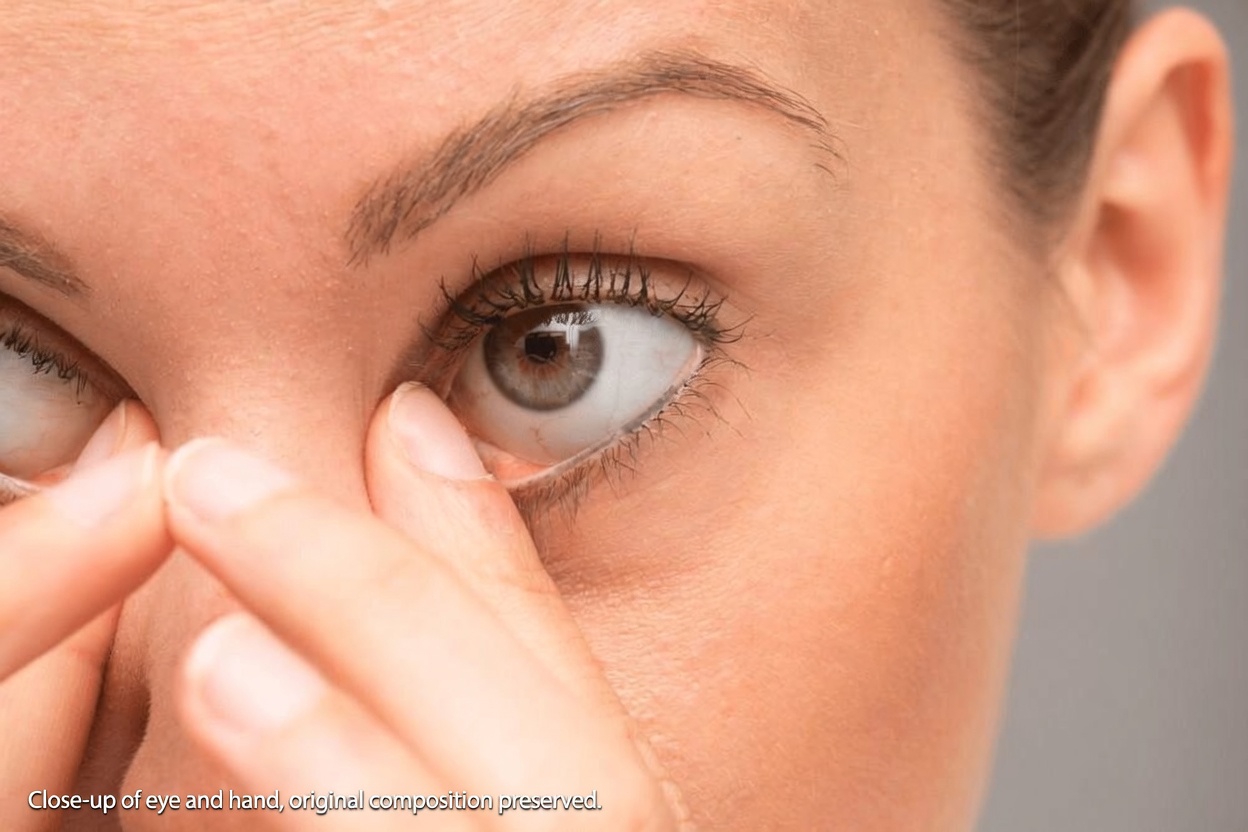
5. Blurred Vision
Vision can become temporarily blurry when blood sugar levels fluctuate. These shifts can affect fluid balance in the eyes and change the shape of the lens.

6. Unexplained Weight Loss
If your weight drops without any change in diet or physical activity, it may be a sign of concern. When glucose remains in the bloodstream instead of entering cells, the body may begin using fat and muscle for energy.
7. Slow-Healing Cuts or Sores
Minor cuts, bruises, or scrapes that take far longer than usual to heal should not be ignored. Elevated blood sugar can interfere with circulation and reduce the body’s ability to repair itself efficiently.
8. Frequent Infections
Repeated infections, including skin problems, urinary tract infections, gum issues, or yeast-related discomfort, may happen more often. Higher sugar levels can create conditions that allow bacteria and yeast to grow more easily.
9. Tingling or Numbness in the Hands and Feet
A mild pins-and-needles sensation, numbness, or discomfort in the hands or feet can begin gradually. Over time, elevated blood sugar may affect nerve health in these areas.
10. Dry, Itchy Skin
Frequent urination can leave the body dehydrated, and that often shows up in the skin. Dryness and itching may become more noticeable on the arms, legs, or face.
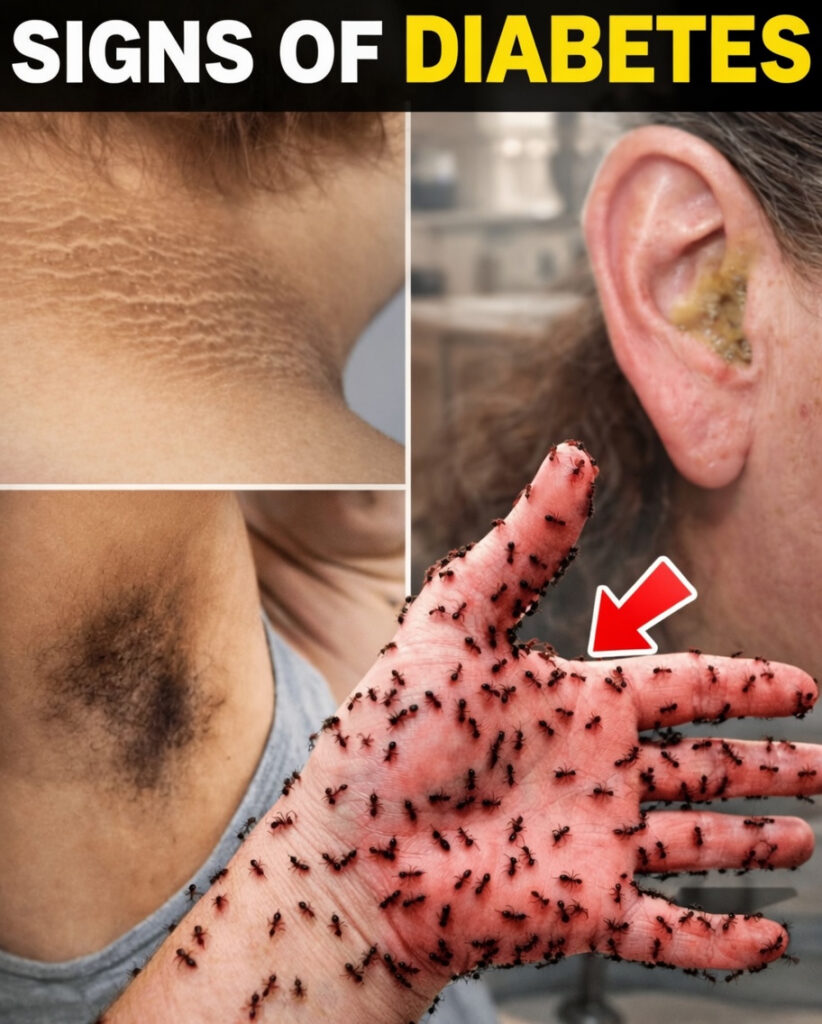
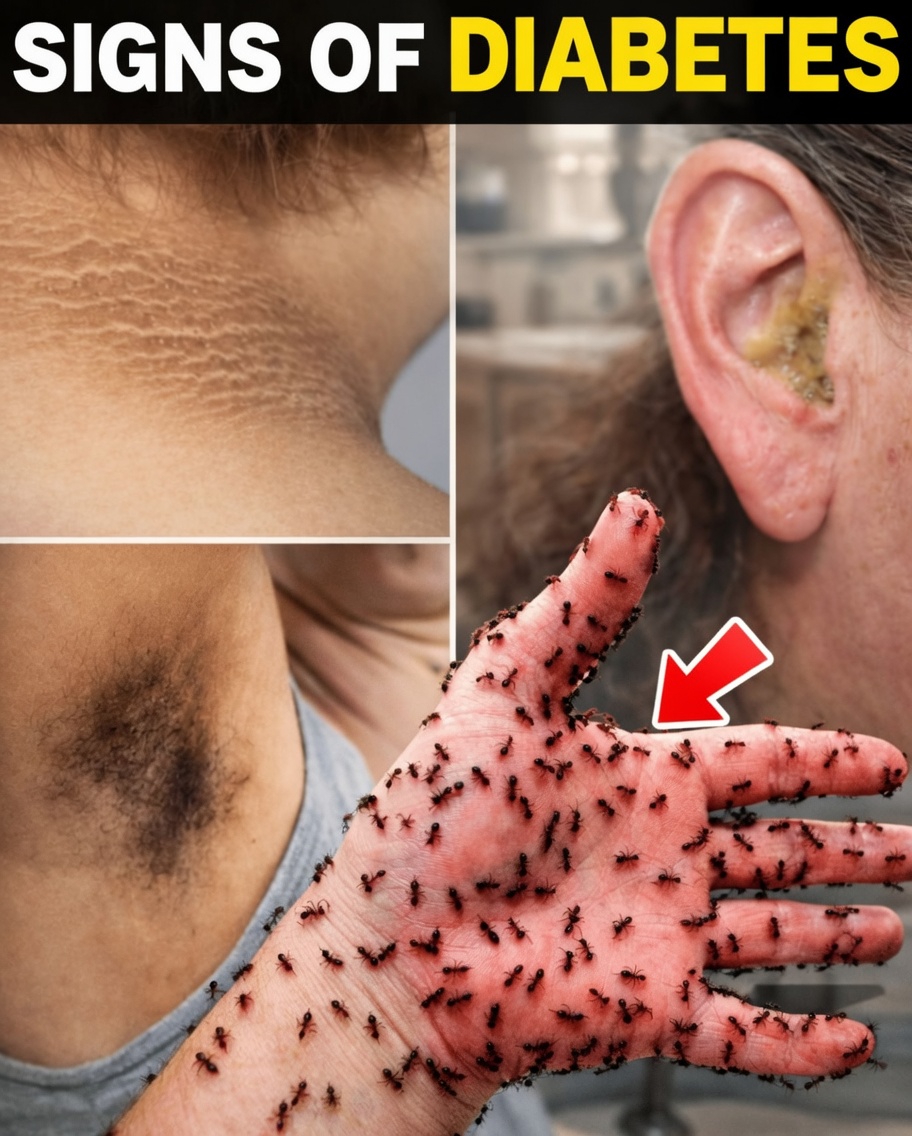
11. Dark, Velvety Skin on the Neck
Thicker, darker skin around the back of the neck or under the chin may develop slowly. This condition, known as acanthosis nigricans, is often linked to insulin-related changes in the body.
12. Darkened Skin in the Armpits or Groin
The same velvety darkening may also appear in skin folds such as the underarms or groin. Many people notice this while dressing or bathing and do not immediately know what it means.
13. Skin Tags or Small Growths
Soft, tiny skin tags near the neck or under the arms are usually harmless. Still, they can sometimes appear alongside other metabolic changes.
14. Recurrent Yeast Infections
For some people, yeast infections become more frequent than usual. This can happen because high sugar levels support yeast growth in certain parts of the body.
15. Insects Drawn to Urine or Sweat
Some people report seeing ants or other insects around bathroom areas or on clothing more often than expected. This traditional observation may happen when excess sugar is present in urine or sweat.
Why Multiple Signs Matter More Than One
One important fact is that these symptoms often appear together in mild, easy-to-miss ways. Looking at a combination of signs, rather than focusing on only one, can provide a clearer view of what may be happening inside the body.
How These Symptoms Relate to Everyday Habits
High blood sugar affects several systems at the same time, forcing the body to work harder than normal. According to information from the American Diabetes Association, insulin resistance is central to many of these changes. For example, skin darkening on the neck or underarms may reflect reduced insulin sensitivity. Factors such as family history, physical activity, and eating habits can all influence how quickly these signs appear.
The good news is that small daily changes can help support your body’s natural balance.
Simple Daily Habits That Support Better Health
You do not need a complicated routine to take better care of yourself. These easy steps can help you stay more aware of possible changes:
- Monitor how much water you drink and notice when thirst becomes stronger than usual.
- Build balanced meals with vegetables, whole grains, lean protein, and other fiber-rich foods.
- Take short walks after meals to help your body use energy more efficiently.
- Check your skin regularly, especially the neck, underarms, hands, and other commonly affected areas.
- Keep a basic journal of energy levels, bathroom frequency, hunger, and how you feel after eating.
Foods and Ingredients That May Support a Healthy Routine
Many people choose to include everyday foods that support metabolic health as part of a balanced lifestyle. For example:
- Leafy greens such as spinach and kale provide fiber that may help keep energy more stable.
- Nuts and seeds, including almonds and chia seeds, offer healthy fats and protein that can help you feel full longer.
- Cinnamon is a popular spice often added to oatmeal, yogurt, or coffee for flavor and possible benefits within a varied diet.
- Bitter melon and fenugreek seeds are used in traditional dishes in many cultures and may be included in teas, soups, or stir-fries.
To keep things practical, try replacing one processed snack each day with a small handful of mixed nuts, or add a little cinnamon to breakfast. Simple choices like these can fit into a busy schedule and support overall well-being, especially when paired with regular movement.
When to Take a Closer Look
If several of these symptoms sound familiar and continue for more than a few weeks, it is a good idea to speak with a healthcare professional. A basic blood test can offer clear answers and remove the guesswork. Early medical guidance can help you take action sooner rather than later.
FAQ
What are the most common early signs of diabetes that people notice first?
The symptoms many people notice first include increased thirst, more frequent urination, and persistent fatigue. Skin changes, especially darkened patches on the neck or underarms, can also become noticeable.
Can these signs appear even when blood sugar is only slightly high?
Yes. Many of these symptoms can begin during prediabetes, before diabetes is fully diagnosed. Routine check-ups are helpful for identifying changes early.
How can I support my health naturally while watching for symptoms?
Focus on balanced meals, regular movement, and good hydration. Fiber-rich foods, healthy fats, and ingredients like cinnamon can be useful additions to a healthy routine, but they should not replace professional medical advice.
Important Note
This article is for informational purposes only and does not replace professional medical advice, diagnosis, or treatment. Please consult a qualified healthcare provider with any concerns about your symptoms or health.