Baking Soda for Pest Control: Does It Really Work on Roaches, Ants, Bed Bugs, and Mice?
Spotting a cockroach dart across the kitchen or waking up with mysterious, itchy bed bug bites can make any home feel unsafe. It’s stressful, uncomfortable, and often triggers an urgent search for solutions—especially “natural” ones. Among the most talked-about DIY options is baking soda (sodium bicarbonate), often praised as a chemical-free home remedy for pests.
But how effective is baking soda for pest control in real life? Below is a clear, evidence-aware look at what baking soda may (and may not) do against cockroaches, ants, bed bugs, and mice, plus tips to use it more responsibly.
How Baking Soda Is Supposed to Affect Pests: Gas + Dehydration
Baking soda is widely used in cooking and cleaning, but its pest-control reputation is linked to two common theories:
- Gas buildup after ingestion: Baking soda reacts with acids and can release gas. Some DIY guides claim that if certain pests eat it, internal pressure may increase.
- Drying (dehydration) effect: As a fine powder, baking soda may absorb moisture and oils. In theory, heavy contact could contribute to dehydration in some insects.
These mechanisms are often repeated online, but effectiveness varies greatly by pest type, infestation size, and how the product is applied.
8 Common Ways People Use Baking Soda Against Household Pests
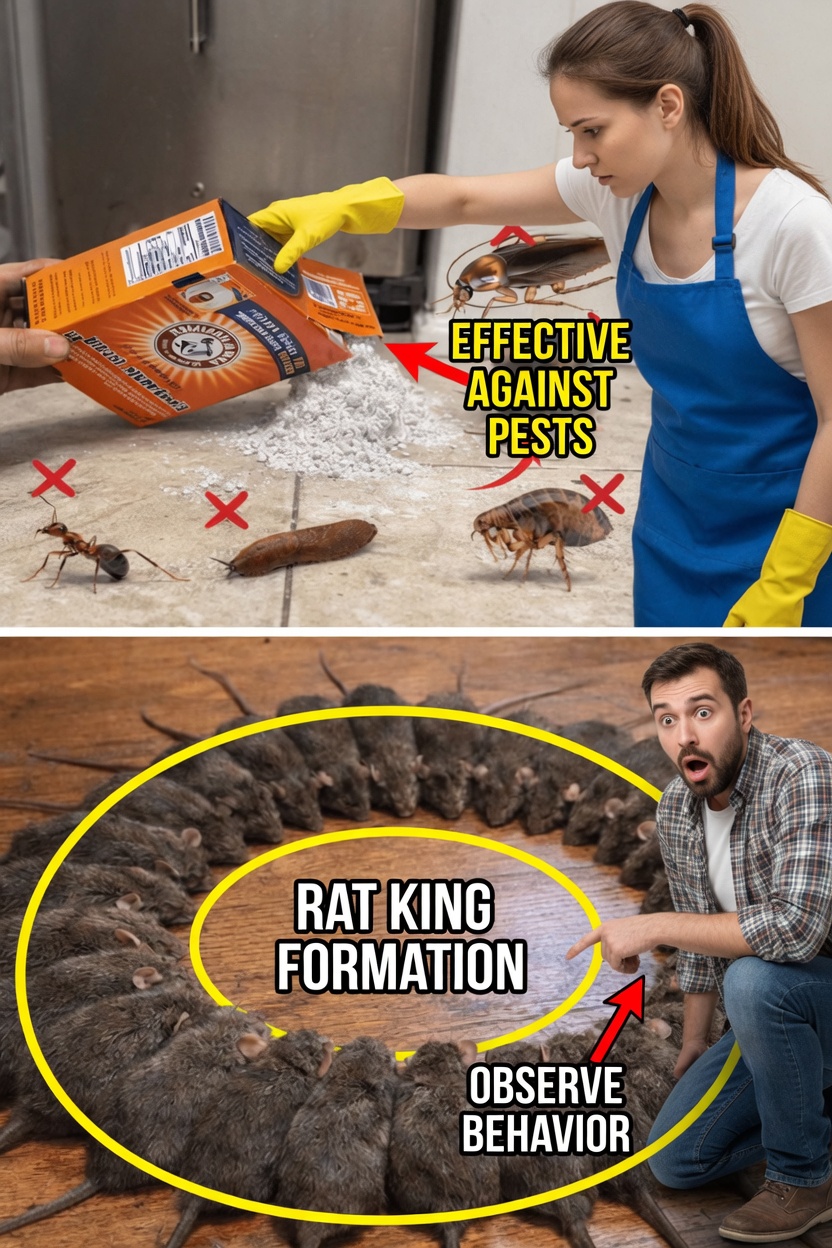
1) Sprinkling Baking Soda as a “Barrier”
A popular approach is dusting baking soda along baseboards, behind appliances, under sinks, and near cracks where insects travel.
- Why people try it: The powder may disrupt or deter insects by absorbing oils and moisture on their bodies.
- Reality check: This may offer mild deterrence in some cases, but it’s rarely a complete solution. Once the powder gets damp or dirty, performance drops quickly. Frequent cleaning and reapplication matter.
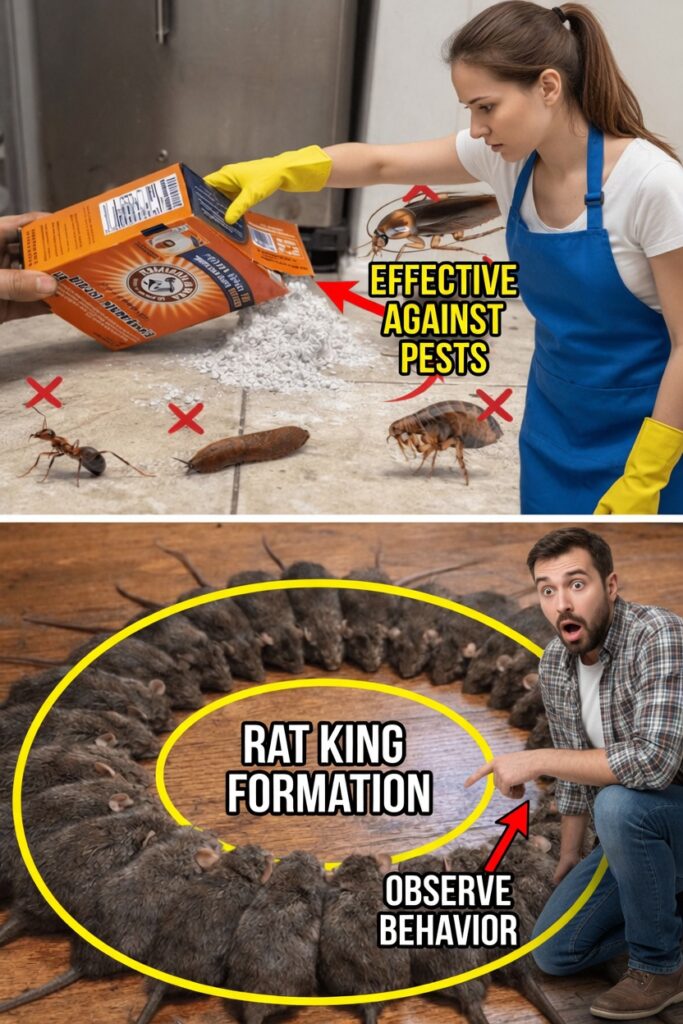
2) Baking Soda Bait for Mice and Rats (Sugar or Flour Mix)
For rodents, some homeowners place a mix of baking soda + sugar or flour near droppings or along walls.
- Theory: Rodents may struggle to release gas the way humans can, which could lead to internal pressure.
- Important considerations: Reports are mixed, and there are humane concerns. For significant rodent activity, snap traps, exclusion work (sealing entry points), or professional pest control are often more reliable.
3) Baking Soda on Mattresses for Bed Bugs
Bed bugs are notoriously difficult to eliminate, so baking soda is sometimes sprinkled on mattresses and furniture seams.
- Claimed benefit: Dehydration from contact with the powder.
- What experts generally find: Baking soda is not considered an effective bed bug treatment. Even if activity appears reduced temporarily, it typically doesn’t address hidden bugs and eggs.
4) Powdered Sugar + Baking Soda for Ant Trails
Another common method mixes powdered sugar with baking soda and places it near ant trails.
- Goal: Sugar attracts ants; they carry the mixture back, potentially affecting the colony.
- Limitations: Ant behavior varies by species. Some ants may avoid the mixture, and moisture can ruin the bait. Results are inconsistent.
5) Onion or Peanut Butter “Bait” for Cockroaches
Because cockroaches are attracted to strong food scents, some DIY bait recipes combine:
-
baking soda + chopped onion, or
-
baking soda + peanut butter
-
Idea: Roaches eat the bait; baking soda causes internal gas buildup.
-
Real-world results: Mixed. Some households notice fewer sightings, while others see little change—especially if competing food sources remain available.
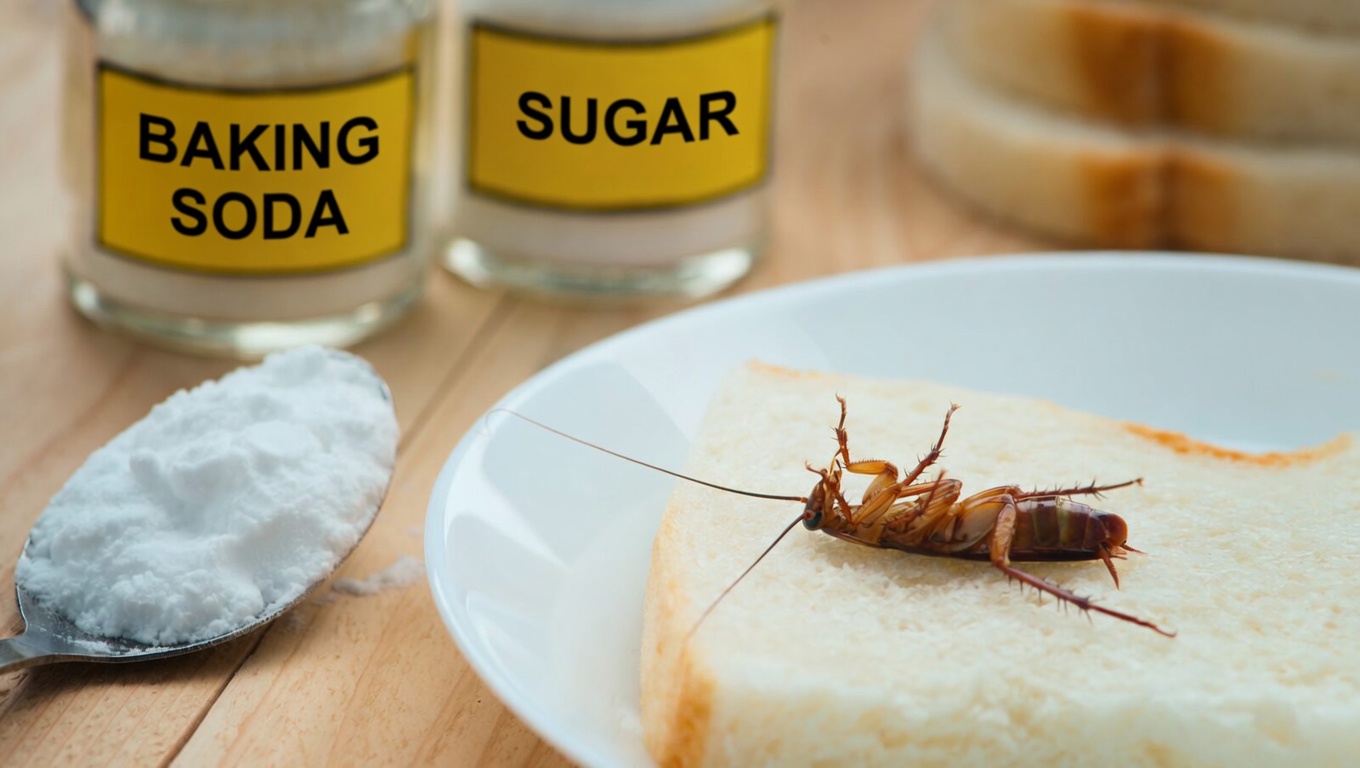
6) The Classic Roach Recipe: Equal Parts Sugar + Baking Soda
The best-known DIY option for roaches is a 50/50 mix of sugar and baking soda placed in shallow lids or dishes.
- Why it’s popular: Sugar encourages feeding; baking soda is the active ingredient.
- What to expect: It’s not instant. People who report success usually mention consistent placement for weeks, plus strong sanitation practices.
7) Adding Yeast or Other Attractants
Some variations add yeast or other attractants to increase feeding.
- Possible upside: Stronger scent and higher interest from pests.
- Possible downside: If not managed carefully, attractants may draw more pests to the area or make cleanup harder.
8) Consistency + Cleaning: The “Best Case” DIY Strategy
When baking soda appears to help, it’s usually part of a larger effort:
- placing bait regularly in dark, hidden locations
- cleaning crumbs and spills daily
- reducing moisture (fixing leaks)
- sealing entry points
In other words, baking soda tends to work (if it works at all) as a minor tool within a broader pest-prevention routine—not as a standalone fix.
Quick Comparison: What Baking Soda May Do for Different Pests
-
Cockroaches:
- Common method: sugar + baking soda bait
- Potential mechanism: ingestion + gas
- Notes: anecdotal success; keep bait dry and remove other food sources
-
Ants:
- Common method: powdered sugar + baking soda
- Potential mechanism: bait carry-back
- Notes: inconsistent results; moisture reduces effectiveness
-
Bed bugs:
- Common method: sprinkled powder
- Potential mechanism: dehydration claim
- Notes: generally ineffective compared to proven bed bug treatments
-
Mice (and rats):
- Common method: flour/sugar bait
- Potential mechanism: gas-related theory
- Notes: humane concerns; monitor pets/children; consider traps/exclusion
Safety Tips for Using Baking Soda Around the Home
If you choose to test baking soda pest control methods, apply it carefully:
- Use dry bait mixtures: Put them in shallow dishes or lids to limit mess.
- Place strategically: Focus on dark corners, behind appliances, under sinks, and along trails.
- Refresh often: Replace bait every 3–7 days, or sooner if damp.
- Clean up promptly: Vacuum dead insects and remove old bait to avoid attracting more pests.
- Keep away from kids and pets: Even though baking soda is common, bait mixtures (especially with sugar) should not be accessible.
How to Prevent Future Pest Problems (Most Effective Long-Term)
DIY baits help far more when your home is less inviting to pests:
- Seal entry points: Close gaps around doors, windows, pipes, and wall cracks.
- Store food properly: Use airtight containers and clean spills immediately.
- Maintain a cleaning routine: Regularly wipe counters, sweep floors, and remove trash.
- Reduce moisture: Fix leaks and improve ventilation—many pests thrive in damp environments.
Conclusion
Baking soda is not a universal pest killer, and it’s especially weak against bed bugs. Still, as a low-cost, low-toxicity DIY option, it may help reduce activity from cockroaches, ants, and possibly mice—particularly when used consistently and paired with strong cleaning and prevention habits. For large or persistent infestations, professional support is often the fastest and most dependable route.
FAQ
-
Does baking soda kill bed bugs?
Generally, no. Baking soda is widely considered ineffective for bed bug control, especially compared with proven treatment methods. -
Can baking soda help with cockroaches?
It can sometimes help when used as a sugar + baking soda bait, but results vary and typically require consistent placement and good sanitation. -
Is baking soda safe to use around pets?
In small household amounts, baking soda is usually considered low risk, but bait mixtures should be kept out of reach to prevent accidental ingestion.
Disclaimer: This article is for informational purposes only and does not replace professional pest-control advice. For severe infestations, contact a licensed pest control specialist.