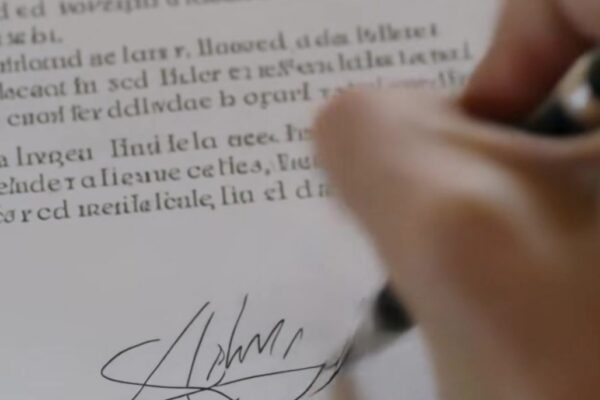
The invitation arrived in a box as heavy as a secret. Ivory paper, raised gold lettering, and a wax seal stamped with a crest that meant nothing to the world and everything to the people who used it: a falcon on a tower, wings spread as if it could keep the sky for itself. Inside was a card that called it a celebration of love. Beneath that, in smaller script, the true promise: an untouchable event.
The estate had been built on a hill where the wind never stopped moving. Its lawns were shaved into obedience, its hedges clipped into spheres so perfect they looked manufactured. On the evening of the wedding, crystal chandeliers hung from the old oaks like captured constellations. White roses climbed every archway and bled perfume into the heat. Gold tables waited beneath the last orange light of sunset, shimmering like coins laid out to prove a point.
The guests arrived dressed like verdicts. They laughed softly and carefully, watching to see who laughed back. They drank champagne that tasted of wealth and excuses. Every detail had been arranged to say: nothing bad happens here. Not under this lighting. Not with this much security. Not in front of this many cameras pointed politely away from the edges.
The bride moved through it all as if she had designed the air herself. Vivian Harrow wore a dress that could have bankrupted a country—silk that caught the light, lace stitched into tiny, deliberate shadows. Her makeup was flawless, her smile calibrated. She held people with a glance and released them with a touch. When she stood near the marble fountain at the center of the garden, the water seemed to make space for her.
The groom, Adrian Vale, stood beside her, handsome in the soft way money can be. His hand hovered at the small of her back like a promise he wasn’t sure he could keep. He was beloved, called charming, called lucky. There had been headlines about the merger, about the dynasty, about how Adrian’s marriage to Vivian was more than romance—it was continuity.
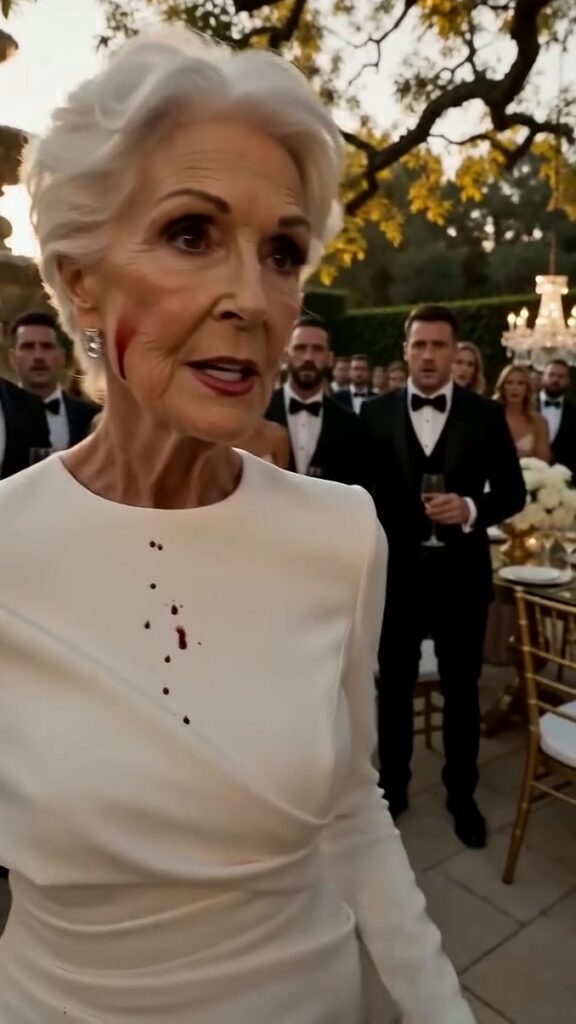
And then there was Celeste Vale, the groom’s mother, positioned not like an honored elder but like a woman who had chosen her own corner of the world. She wore a plain white dress with no jewels, no embroidered insignia, nothing that glittered. Her hair was pinned neatly. Her face held no expression that could be purchased. She looked on with a stillness that made even the boldest guests step around her, as if she were a piece of antique furniture no one dared to scuff.
They had tried, over the months of planning, to push her to the margins. Vivian’s bridal consultant had suggested “a different sort of seat.” The planner had offered “a quiet room.” The women in Vivian’s circle had smiled sharp smiles and asked Celeste whether she would be “comfortable” not appearing in certain photographs. Celeste accepted each insult with a nod that gave away nothing, as if she were simply collecting them.
Vivian noticed her by the fountain the way a queen notices a stain on her floor. The music swelled; the evening grew more golden; laughter rose and fell like practiced tide. And Celeste stood there, calm, as if she were watching a play whose ending she already knew.
Vivian had promised herself there would be no shadows at her wedding. No ghosts. No reminders of old power. She stepped away from her bridal party, reached for a passing tray, and took a glass of red wine as if it were a prop placed for her hand.
She did not hesitate. She threw it.
The wine struck Celeste’s face with a wet slap that cut through the music like a scream. Crimson spread across the plain white fabric, blooming fast, unmistakable. For a second, the entire garden stopped breathing. The musicians faltered. Forks paused in midair. Phones rose, instinctively, like a field of metal flowers turning toward sunlight.
“You don’t belong at my wedding!” Vivian shouted, loud enough to hit every table. Her voice carried the sweet edge of rehearsal. She wanted shock. She wanted the sound of a door closing on the past.
Adrian jerked forward, horror bleaching his face. “Vivian—what are you doing?” he demanded, but his words landed soft against the weight of what she’d chosen to do.
Celeste did not flinch. She did not gasp or wipe her eyes dramatically. Slowly, she touched two fingers to her cheek, gathered a smear of wine, and looked at it as if assessing the color of paint. Then she glanced down at the stain on her dress with faint interest, like someone noticing weather.
When she raised her eyes, something in the garden changed. Not the lighting. Not the decorations. The feeling—like a room tilting a degree you can’t measure but your body knows.
“Finishing your lesson,” Celeste said quietly. It was not a threat. It was a conclusion.
Vivian’s smile trembled, the first crack in a surface designed never to show strain. “Excuse me?” she demanded, but the word came out smaller than she intended.
Celeste reached into a small purse—plain leather, no designer logo. She drew out her phone and held it as if it were a key. She tapped once. The motion was minimal, almost lazy.
Across the reception, at the long bar where guests had been ordering cocktails named after the couple, the card terminals chirped. One beep, then another. The bartender frowned. A waiter leaned in, whispering urgently. The wedding planner, a woman who had been hovering with a clipboard like a priest with scripture, sprinted toward the payment table.
At first people laughed, thinking it was part of the spectacle—some clever surprise. But then phones began to buzz in pockets and purses, small vibrations that sounded like insects gathering. Men in tailored suits stared down at screens. Women blinked, brows tightening as alerts arrived, one after another, in neat, impersonal fonts.
Declined. Payment failed. Account locked. Authorization revoked.
Vivian’s eyes darted. Her mouth parted, the diamond smile forgotten. “What did you do?” she whispered, and there was no performance left in her voice.
Celeste stepped closer, the wine still dripping slowly from the hem of her dress. She did not raise her voice; she didn’t need to. The front tables leaned in without knowing why.
“I own the trust,” Celeste said, each word precise. “The Vale family trust. I froze everything.”
Adrian stiffened as if struck. “Mother,” he said, but it was not a command. It was a plea, a question, a child suddenly remembering the existence of consequences.
Celeste turned her phone so Vivian could see the screen. A video call opened, the face of a lawyer appearing in crisp, fluorescent office light. He looked like someone who never attended weddings, only their aftermath.
“Transfer complete, ma’am,” he said. “Accounts secured. Properties placed under new authorization. The holdings are no longer accessible to Mrs. Harrow’s entities.”
The word entities floated in the warm garden air like ash.
Silence fractured into noise. A vendor near the catering tent began shouting about invoices. Another demanded immediate payment before serving dessert. The planner’s voice rose in frantic negotiations. A guest at the bar slammed a hand down, insisting it was a mistake. Security glanced at one another, suddenly uncertain whom they were meant to protect.
Vivian clutched the empty wine glass in her hand as if it might become full again, as if she could undo the throw by squeezing hard enough. “This is my day,” she said, but it sounded like a child insisting on a toy already removed.
Adrian turned slowly toward her, the movement heavy, as if he had to push through water to face the truth. His gaze traveled from her perfect hair to the trembling set of her jaw, then down to the red wine stain on his mother’s dress. Something in his eyes changed—not anger, not love, but recognition. The kind that rewrites history.
In the crowd, someone cried out, voice high with scandal and delight. “She sold the house too?!”
Vivian’s head snapped toward the sound. Her pupils widened. She looked, for the first time all evening, like someone who understood that untouchable was not a quality you purchased. It was permission. And she had mistaken borrowed power for her own.
Celeste’s gaze remained steady. “I warned you,” she said, soft enough that only Vivian and Adrian heard. “I told you not to confuse my silence with surrender.”
Vivian’s throat worked. “You can’t—” she began, but her certainty had drained away. Around them, the wedding’s illusion started to crumble in real time: chandeliers still glittered, roses still glowed, but the air felt colder, as if the hill had finally let the wind in.
Adrian’s voice came out hoarse. “Why now?”
Celeste looked past him to the tables, the guests, the golden arrangements designed to dazzle and distract. Then she met his eyes. “Because she needed an audience,” she said. “And so did I.”
Vivian’s hands shook. Her kingdom, built in a season of planners and promises, was dissolving with every beep from a terminal and every alert on a screen. The wealth that had made her feel invincible had been revealed as a door she never owned.
Celeste reached up and, with the same two fingers that had wiped away the wine, brushed a stray drop from her jaw. She did not look humiliated. She looked finished.
The band tried to start playing again, a frantic attempt to sew the evening back together with music, but the notes sounded thin and desperate. Guests began to drift in uneasy clusters, whispering into phones, calculating exit strategies. The bar lights flickered as staff argued with managers. The wedding planner cried into a headset.
Vivian stood at the fountain, the empty glass still in her hand, surrounded by untouchable beauty that no longer protected her. Adrian stepped back from her, not as a dramatic gesture, but as an instinct—like a person stepping away from a flame they finally admit is real.
Celeste turned and walked toward the darkened edge of the garden, leaving a faint trail of crimson drops on the stone. Behind her, the carefully designed dream collapsed, not with a bang, but with a series of small, humiliating sounds: beeps, murmurs, declined transactions, and the sharp inhale of a bride realizing she had just thrown wine at the one person who still held the keys.
The wedding had been designed to look untouchable.
It had never been designed to survive being touched by the truth.