“HEY! GET HIM OUT OF HERE!”
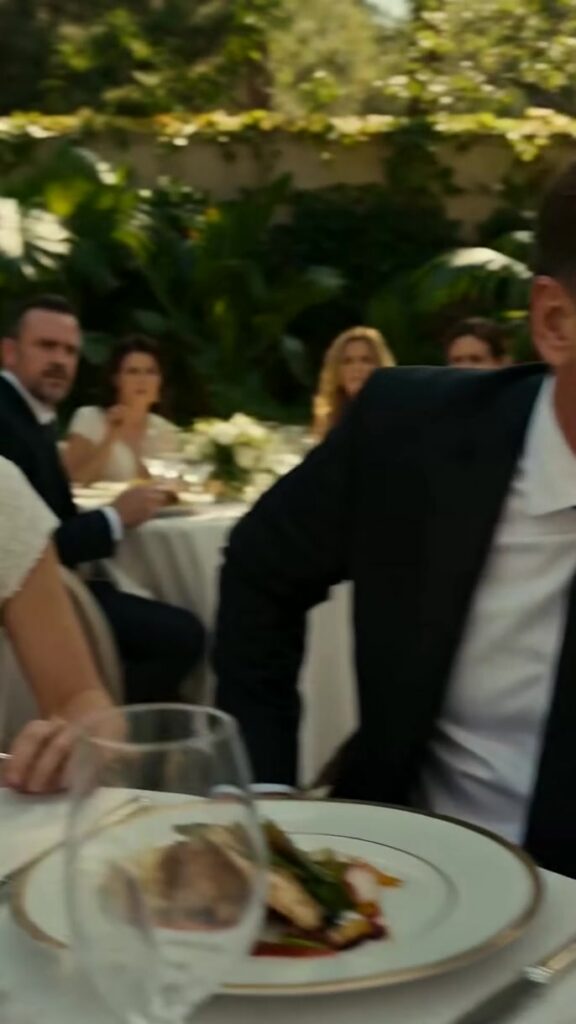
The shout cracked through the garden restaurant like a whip, slicing the gentle music and the murmuring conversations into sudden, stunned quiet. Heads turned as one. Crystal glasses stopped midair; forks hovered above white plates. Beneath the lattice of climbing roses and twinkling lights, amid linen and perfume, a child stood as if he’d been placed there by mistake.
He was small—barely five, perhaps six—his knees scabbed, his shirt too thin for the evening breeze. Dirt streaked his cheek like a careless handprint. He clutched a tiny flute, wood worn smooth where fingers had worried it, as though it were a handle to the only door left open in the world. Yet his eyes were not frantic. They were eerily calm, the kind of calm that doesn’t belong to children unless something has already been taken from them.
“Please,” he said, voice thin but steady. “I need money. My mom is sick.”
A ripple moved through the tables. Some people looked offended, as if poverty were contagious. Others stared too long, then blinked and stared at their plates as if the child might vanish if they refused to confirm he existed. A waiter stepped forward, face tight with a practiced smile, hands lifted in apology toward the guests. “I’m so sorry—”
At the center table, a man in a dark suit leaned back as if he’d paid for the interruption. His hair was silver at the temples, his cufflinks bright in the candlelight. The name on the reservation ledger, whispered by staff with deference, was Gideon Vale. He watched the boy with open amusement, like a patron judging a street act.
“Oh?” Gideon said. “Sick. That’s unfortunate.” He tilted his glass, letting the ice clink softly. “Then earn it.”
A few guests shifted uncomfortably. A woman in pearls pressed her napkin to her lips. The waiter hesitated, caught between the rules and the gravity of the man’s money. Gideon leaned forward, his tone sharpening as though he were offering a fair bargain. “Surprise us. If you can, I might give you something.”
The boy’s knuckles whitened around the flute. For a moment, the garden seemed to hold its breath: leaves stilled; a candle flame stopped fluttering. He lifted the instrument to his mouth with hands that trembled, but his gaze stayed anchored—steady on Gideon, steady on something behind Gideon, steady on a past the boy had no business carrying.
When the first note came, it was almost too soft to be real, like the sound of a bird calling from far away. It wavered, then steadied. The melody unfurled slowly, tender and strange, not a tune meant for tips and laughter. It carried the sting of cold water and the ache of hunger. It carried the rhythm of footsteps running from something. It carried the way a mother hums when she thinks no one is listening because there isn’t enough strength left for words.
Conversations died without anyone deciding to end them. Forks lowered to plates without a clink. One of the younger servers, who had been fuming at the boy’s intrusion, went still, eyes shining. A woman at the edge of the terrace blinked hard, tears catching the light before she could wipe them away. The sound swelled as if the boy’s lungs held more air than a child should possess, as if the flute were less an instrument than a wound turned into music.
Gideon’s smirk flattened. His fingers tightened around his glass. Something in his jaw began to work, not quite a tremor, not quite a clench. His gaze narrowed, dragged unwillingly into the song like a man being pulled under by a current he’d thought long gone. For an instant, the executive polish fell away, and there was a flicker of someone else—someone younger, someone afraid.
Then the melody stopped. Not with a flourish, not with a showman’s bow—just an ending, sudden as a door closing. The silence that followed felt heavier than the music. It pressed against the hedges, the chandeliers, the listening faces.
The boy lowered the flute. Without speaking, he reached into his pocket and pulled out a small photograph, edges bent and softened by too many hands. He walked forward with slow care, as if the stone path might crack under him, and placed the photo directly in front of Gideon Vale.
Gideon looked down. His expression didn’t change at first; he wore the mask of a man who never loses control. Then the color drained from his face in a clean, swift tide. The amusement vanished so fast it was almost violent. Confusion flashed—then something deeper, something raw that no amount of money could purchase away.
His fingertips hovered above the photo as though touching it might burn. When he finally picked it up, his grip pinched the corners too hard. “Where did you get this?” he asked. The question came out hoarse, as if his throat had forgotten how to form sounds that mattered.
The boy met his eyes without flinching. He didn’t look triumphant. He didn’t look pleased. He looked tired in the way only the very old or the very wounded look tired. “My mom said,” he replied, “you would recognize me.”
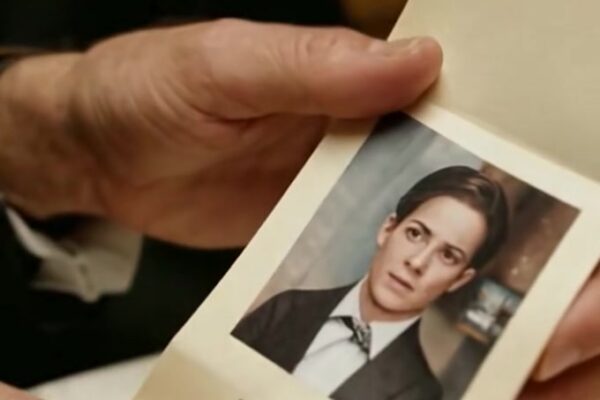
The photograph showed a younger Gideon, not yet armored in tailored suits, sitting on a hospital bed with his head bowed. Beside him was a woman with a braid over her shoulder, smiling into the camera despite the stark room. She had an arm around him, her hand on his chest as if to keep him from falling apart. And between them, tucked into the crook of her elbow, was a newborn with a wrinkled face and a tiny fist lifted like a promise.
Gideon’s mouth opened, then closed again. The garden’s perfume turned sour in his lungs. He knew that braid. He knew that hospital. He knew the look in his own eyes—hollowed out by debt, by fear, by a diagnosis he’d once believed would swallow his life. He also knew the name he had tried to bury beneath decades of deals and denials.
“Lena,” he whispered, so quietly it might have been the wind. The boy’s gaze didn’t soften at the name. It stayed fixed, almost accusing in its calm.
“She’s very sick now,” the boy said. “She said you left because you were scared. She said you promised you’d come back when you weren’t scared anymore.” He held the flute tighter. “She told me to play the song she wrote when you were in the hospital. She said if you heard it, you would remember how you sounded when you cried.”
A sharp breath escaped Gideon, and it was not a businessman’s controlled inhale. It was the kind of breath a person takes when a wall collapses inside them. Around the table, the guests sat frozen, suddenly embarrassed by their own comfort. The waiter had stopped moving. The entire restaurant felt like it was balanced on the edge of an answer.
Gideon pressed the photograph to the table as if pinning down a ghost. “I didn’t know,” he said, and the words looked pathetic the moment they landed. “I was told—she said—”
“She said you chose not to know,” the boy interrupted gently. There was no cruelty in it. Only precision.
Gideon stared at the child’s face, searching for himself and finding it in the curve of the brow, in the shape of the mouth, in the stubborn set of the chin. Recognition struck with a quiet brutality. He had spent years building a life that could not be threatened by a past like this, and now that past was standing barefoot on his expensive stone, holding a flute and a photograph like evidence in a trial where the only verdict was truth.
He pushed his chair back. The scrape of it against the floor sounded obscene. For a second he looked as if he might run—away from the garden, away from the eyes, away from the boy who had walked in carrying an old song like a key. Then Gideon reached slowly across the table and extended his hand, palm up, the way you offer your hand to someone you do not deserve to touch.
“What’s your name?” he asked.
The boy hesitated, just once, and the tremor that lived in him finally rose to the surface. “Milo,” he said. “She calls me Milo when she’s not hurting.”
Gideon’s eyes glistened, and he looked furious at the weakness, at the late-coming flood of it. “Milo,” he repeated, as if he could stitch the name into himself and undo the years with a single thread. He stood, unsteady, and the entire restaurant watched him—watched the man who owned the air in this place suddenly realize he had been breathing borrowed oxygen all along.
He took off his suit jacket and wrapped it around the boy’s shoulders with trembling hands. The gesture was clumsy, inadequate, too late, yet it was the first honest thing he’d done in years. “We’re going,” Gideon said, voice cracking. He looked at the staff, at the stunned guests, at the world he’d paid to obey him. “Get my car. Now.”
Milo didn’t move until Gideon lowered himself to the child’s height, eyes level, the photograph still on the table between them like a witness. “I don’t know what I can fix,” Gideon whispered. “But I’m not leaving again.”
The boy studied him with that impossible calm, and for the first time it wavered—just enough to reveal something underneath, a small, frightened hope that had survived when it had no reason to. “Then come,” Milo said, and held out the flute as if it were a fragile invitation. “She’s waiting for you to remember.”
Gideon took the flute carefully, as if it might shatter, and then he took Milo’s hand. Together they walked through the garden’s stunned silence toward the gate, leaving behind the untouched plates and the murmuring wealth, leaving behind a room full of people who had been forced, for a brief and terrible moment, to listen. The roses swayed as they passed, and the air felt different—as if the night itself had decided to witness what happened when a man finally met the child he’d abandoned, and could not buy his way out of the reckoning.