Many people wake up with lower-back stiffness, aching muscles, or a persistent neck twinge that follows them all day. What’s easy to miss is that your sleep position—for the 7–9 hours you’re relatively still—can strongly influence how your spine feels in the morning. When your body is misaligned overnight, extra stress can build on muscles, joints, spinal discs, and even nerves, making normal movement feel harder the next day.
The encouraging part is that you don’t always need a dramatic overhaul. Often, small changes—especially smarter pillow placement—can improve spinal alignment and help you wake up feeling looser and more mobile. Below are sleep positions worth trying, plus habits many experts recommend reconsidering.
Why Your Sleep Position Affects Spinal Health
Your spine is designed with natural curves that support posture and absorb impact throughout the day. During sleep, the goal is to keep those curves in a neutral spine alignment—not overly arched, flattened, or twisted. When your spine stays neutral, pressure is spread more evenly across spinal discs and surrounding tissues, which may reduce tension and morning discomfort.
Think of sleep as “recovery time” for your back and neck. If your mattress and pillows hold you in a strained posture, gravity and body weight can gradually pull your spine out of line. Over time, that can lead to recurring stiffness and soreness.
Best Sleeping Positions for Better Spinal Alignment
Health professionals often recommend the following positions because they support the spine’s natural curves and reduce uneven pressure. The key is using pillows to keep the head, shoulders, hips, and knees in better alignment.
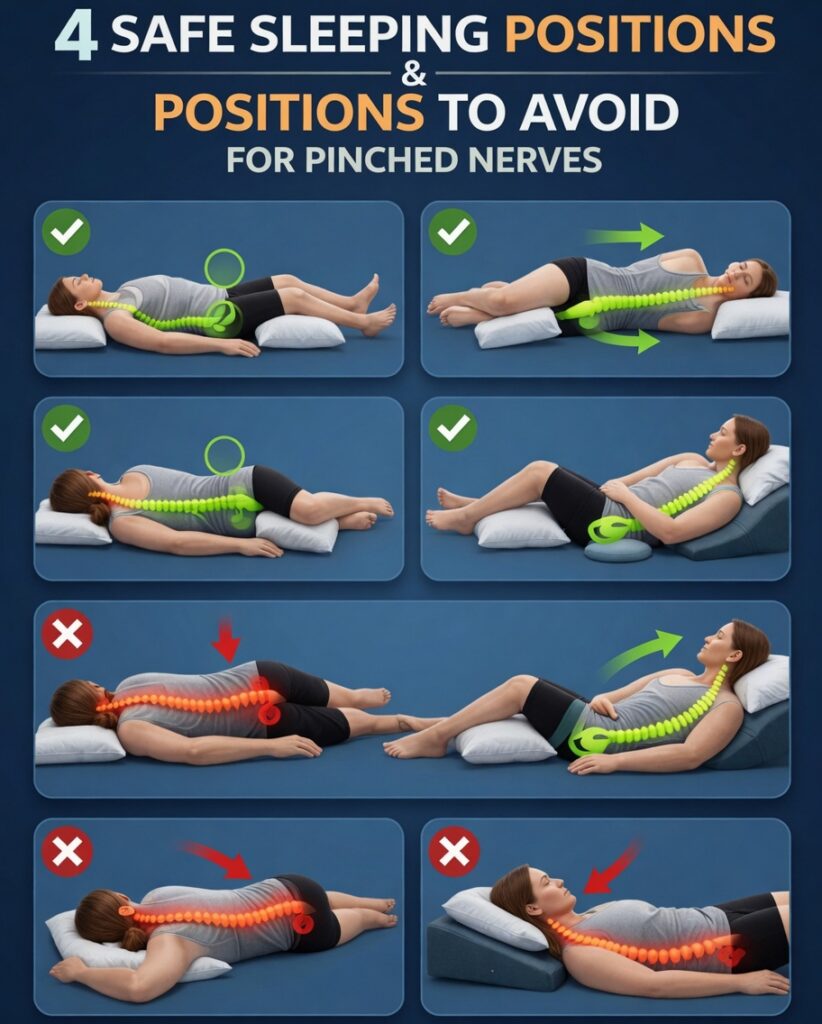
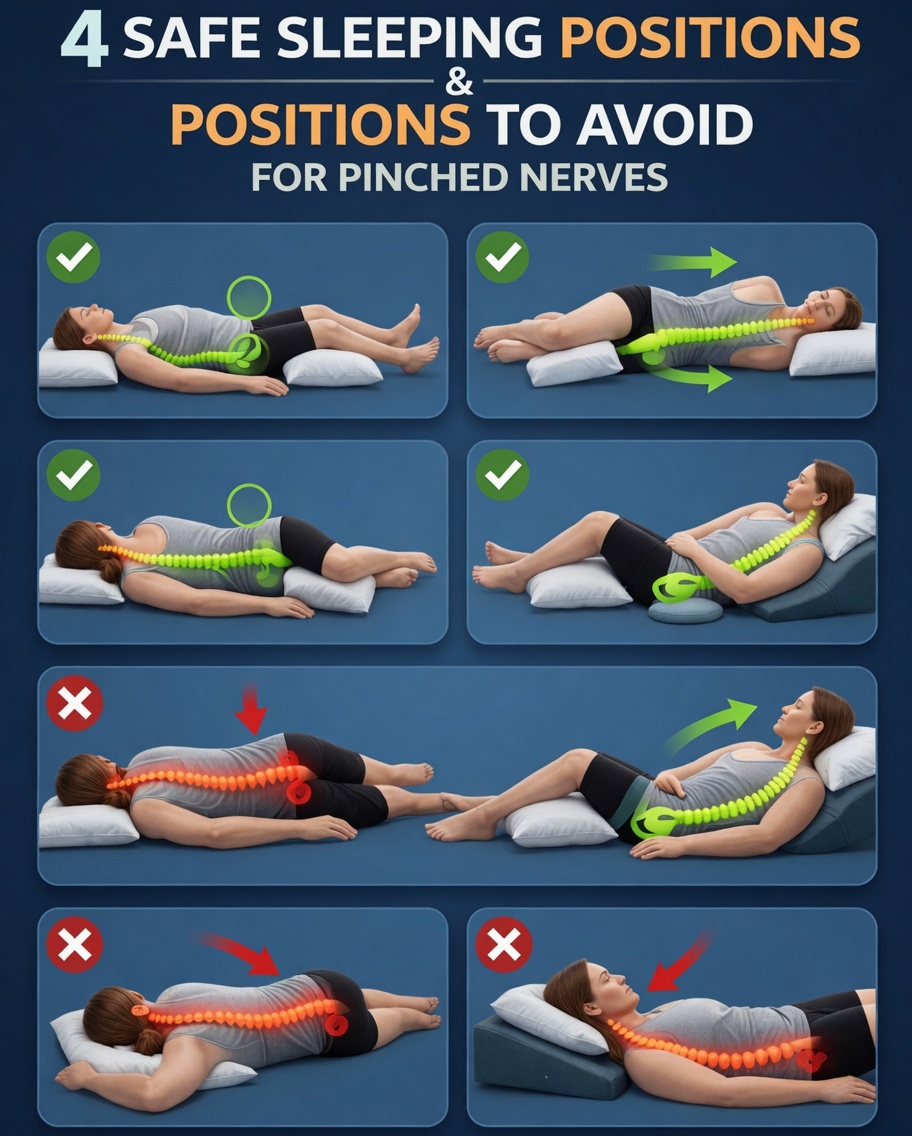
1) Sleep on Your Back with a Pillow Under Your Knees
Back sleeping (supine position) is commonly considered one of the most supportive options for the spine because it distributes body weight more evenly. Adding a small pillow or rolled towel under the knees helps maintain the lower back’s natural inward curve, potentially reducing strain on the lumbar area.
How to set it up
- Use a thin to medium pillow under your head so your neck stays neutral (not pushed forward).
- Place a pillow under your knees until your lower back feels more relaxed against the mattress.
2) Sleep on Your Side with a Pillow Between Your Knees
Side sleeping can be excellent for spinal alignment when done with proper support. Slightly bending your knees and placing a pillow between them helps keep the hips, pelvis, and spine in a straighter line.
Key technique
- Put a firm pillow between your knees to prevent the top leg from falling forward and twisting the lower back.
- Choose a head pillow that fills the space between your shoulder and ear to keep the neck aligned.
- A body pillow can help stabilize both the upper body and legs for more consistent support.

3) Sleep Slightly Reclined (With the Right Support)
Some people feel better in a gentle recline—such as on an adjustable bed or a supportive recliner—because it can reduce pressure points and create more comfortable spacing along the spine. This can be especially useful if lying completely flat increases tension.
Practical setup
- Elevate your upper body to roughly 30–45 degrees using pillows or an adjustable base.
- Add a pillow under your knees to reduce pull on the lower back.
4) Back Sleeping with Neutral Neck Support (Neck-Focused Setup)
A common reason back sleeping feels “wrong” is poor head-and-neck support. The goal is a pillow that supports the natural curve of the neck without tilting the chin down toward the chest.
What to look for
- A pillow that “cradles” the neck so your face points upward naturally.
- Avoid overly thick pillows that push the head forward.
Sleep Positions and Habits to Rethink
Not every sleeping style is spine-friendly—especially if it forces twisting or flattens natural curves. The following are common culprits behind added strain:
Stomach Sleeping
Sleeping on your stomach often:
- Flattens the natural curve of the lower back
- Forces the neck into a sharp rotation to breathe
- Creates uneven load across the spine for hours
Too Many Pillows Under Your Head
Stacking pillows can push your head forward, placing the neck in prolonged flexion—similar to a “forward head posture”—which may worsen neck stiffness.
No Support Where It Matters
Without a pillow under the knees (back sleeping) or between the knees (side sleeping), hips and shoulders can drift out of alignment, increasing twisting through the lower back.
Twisted or Over-Curled Positions Without Support
An extreme fetal position or uneven leg placement can pull the pelvis and strain the lumbar region—especially when there’s no pillow support to keep the hips level.

Quick Comparison: Supportive vs. Riskier Sleep Positions
Supportive (Worth Trying)
- Back sleeping + pillow under knees → More even weight distribution and lumbar support
- Side sleeping + pillow between knees → Improved hip-to-spine alignment
- Slight recline + knee support → Reduced pressure points for some sleepers
Often Problematic (Limit if Possible)
- Stomach sleeping → Flattened curves and twisted neck
- Back sleeping with no knee support → Lower-back curve may collapse
- Overly high head pillows → Increased neck strain
Simple, Actionable Ways to Improve Your Sleep Setup Tonight
If you want to test better spinal alignment quickly, start here:
-
Check your head pillow height
Your head should rest in line with your spine—not tilted up or dropped down. -
Add targeted pillow support
- Back sleeper: place a pillow under your knees
- Side sleeper: place a pillow between your knees
-
Change one variable at a time
Try a single adjustment for a few nights before switching again, so you can tell what’s helping. -
Consider mattress firmness
Many people do best with a medium-firm mattress, which tends to support spinal curves better than very soft surfaces. -
Give your body time to adapt
If you’re switching positions, it may take 1–2 weeks to feel natural and consistent.
What Research and Guidelines Commonly Emphasize
Across multiple reviews and clinical guidance (including widely referenced healthcare sources and spine-health organizations), the consistent theme is neutral spinal alignment during sleep. Supported back and side sleeping positions are often highlighted because they help maintain natural curves and distribute pressure more evenly. In contrast, prone (stomach) sleeping is frequently associated with increased spinal stress due to neck rotation and reduced lumbar support.
Conclusion: Small Changes Can Lead to Better Mornings
Your sleep position is more than a comfort preference—it can be a practical way to support your spine every night. By aiming for neutral alignment and making simple pillow adjustments, you may reduce overnight strain and wake up feeling less stiff. Start with one change, stick with it for several nights, and let your body guide you toward what feels most natural.
Frequently Asked Questions
Is sleeping on your back always the best option?
Not for everyone. Back sleeping often supports neutral alignment well, but side sleeping with proper knee and head support can be just as effective. The best position is the one that keeps your spine feeling neutral and relaxed.
How many pillows should I use?
Typically:
- One pillow for your head (to keep the neck neutral)
- One pillow for knees (back sleeping) or between knees (side sleeping)
Avoid stacking multiple pillows under your head, which can strain the neck.
Can changing sleep position reduce morning stiffness?
Many people report improvement after switching to supported back or side sleeping that promotes better alignment. Results vary, and consistency usually matters more than quick changes.
Disclaimer: This article is for educational purposes only and does not provide medical advice. For personalized recommendations about sleep, pain, or spinal concerns, consult a qualified healthcare professional.