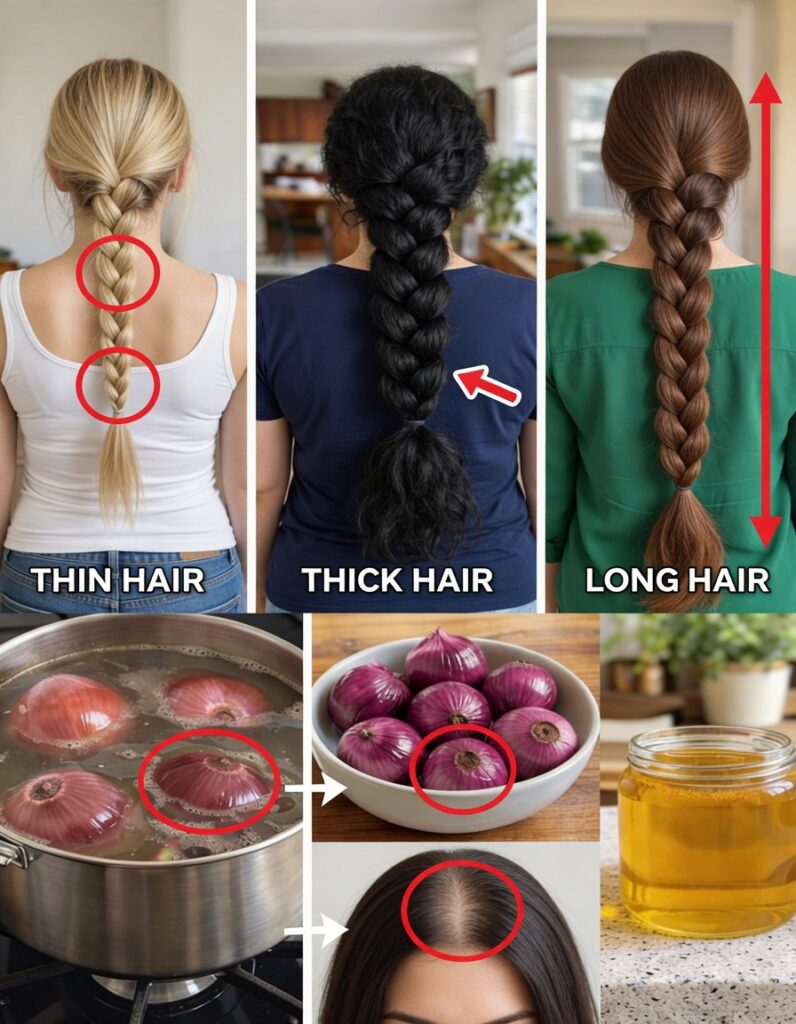
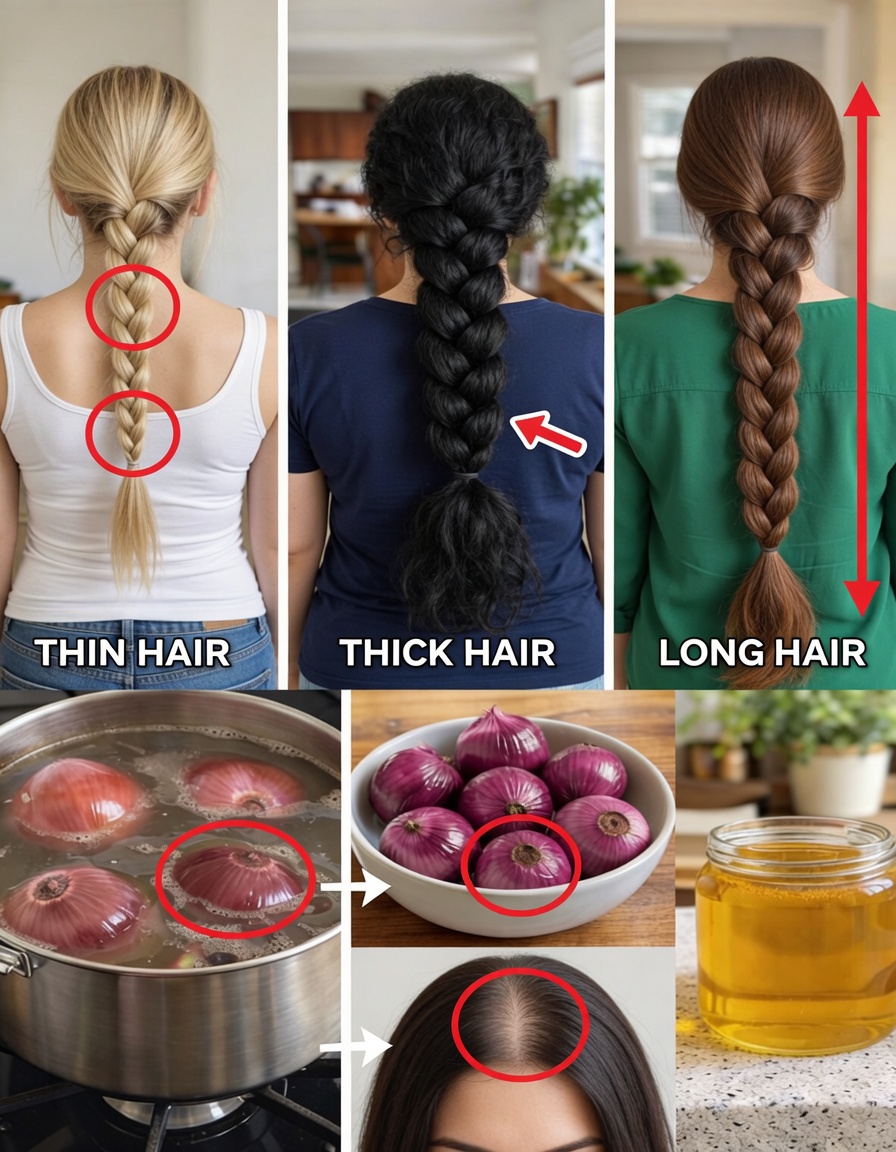
Many people deal with thinning hair, heavy shedding, or strands that snap before they ever reach the length they want. Watching extra hair collect in the shower drain—or spotting areas that look flatter than they used to—can feel discouraging, especially after trying product after product with uneven results. One simple, kitchen-friendly remedy that keeps resurfacing in natural hair care is fresh onion juice, often used to support a healthier-looking scalp and fuller-looking hair over time.
This approach has been used for generations and is largely tied to onions’ natural nutrient profile, including sulfur-containing compounds and antioxidants such as quercetin. A small study published in the Journal of Dermatology (2002) reported that people with patchy alopecia areata who applied crude onion juice twice daily experienced visible regrowth in about 87% of cases after six weeks, while a tap-water control group showed far less change. More research is still needed—especially for common concerns like general thinning—but many consistent users say they notice less breakage and improved density when they apply it carefully and regularly.
The overlooked detail is execution: how you prepare it, how you reduce the smell, and how consistently you apply it often makes the difference between “I tried it once” and “I actually stuck with it.”
Why Onion Juice May Help Hair Look Thicker and Healthier
Onions naturally contain sulfur, an important building block associated with keratin, the primary protein structure of hair. Using onion juice topically may help reinforce the hair shaft, which can support less breakage—and better length retention over time.
Onion juice also contains antioxidants like quercetin, which may help defend the scalp against oxidative stress, a factor often linked to dullness and weakened-looking strands. When you massage it into the scalp, the massage itself may also encourage better circulation, helping deliver oxygen and nutrients to follicles and creating a healthier-looking scalp environment.
Traditional use spans centuries, and modern attention increased after the alopecia areata study. Results vary from person to person, but many people who stay consistent report less daily shedding and a gradual boost in visible fullness within 4–8 weeks.
9 Potential Ways Onion Juice Could Improve Hair Appearance
Based on onion juice’s composition and common user experiences, here are several ways it may support stronger, fuller-looking hair:
- Supports keratin strength with sulfur compounds — hair may feel tougher and less prone to splitting.
- May reduce the look of excessive shedding over time — supporting better retention during washing and styling.
- Massage encourages scalp circulation — increased blood flow may support healthier roots.
- Antioxidant support from quercetin — may help counter environmental stressors.
- May support collagen around follicles — contributing to a more resilient appearance.
- Mild antimicrobial properties — may help keep the scalp feeling balanced and comfortable.
- May encourage the look of new “baby hairs” in sparse spots — some notice fine hairs near the hairline.
- Can enhance shine and texture — stronger strands often reflect light better.
- Helps length retention — less breakage can make hair appear longer and thicker.
Consistency matters—but so does preparation. Done poorly, the smell and irritation risk can ruin the routine.
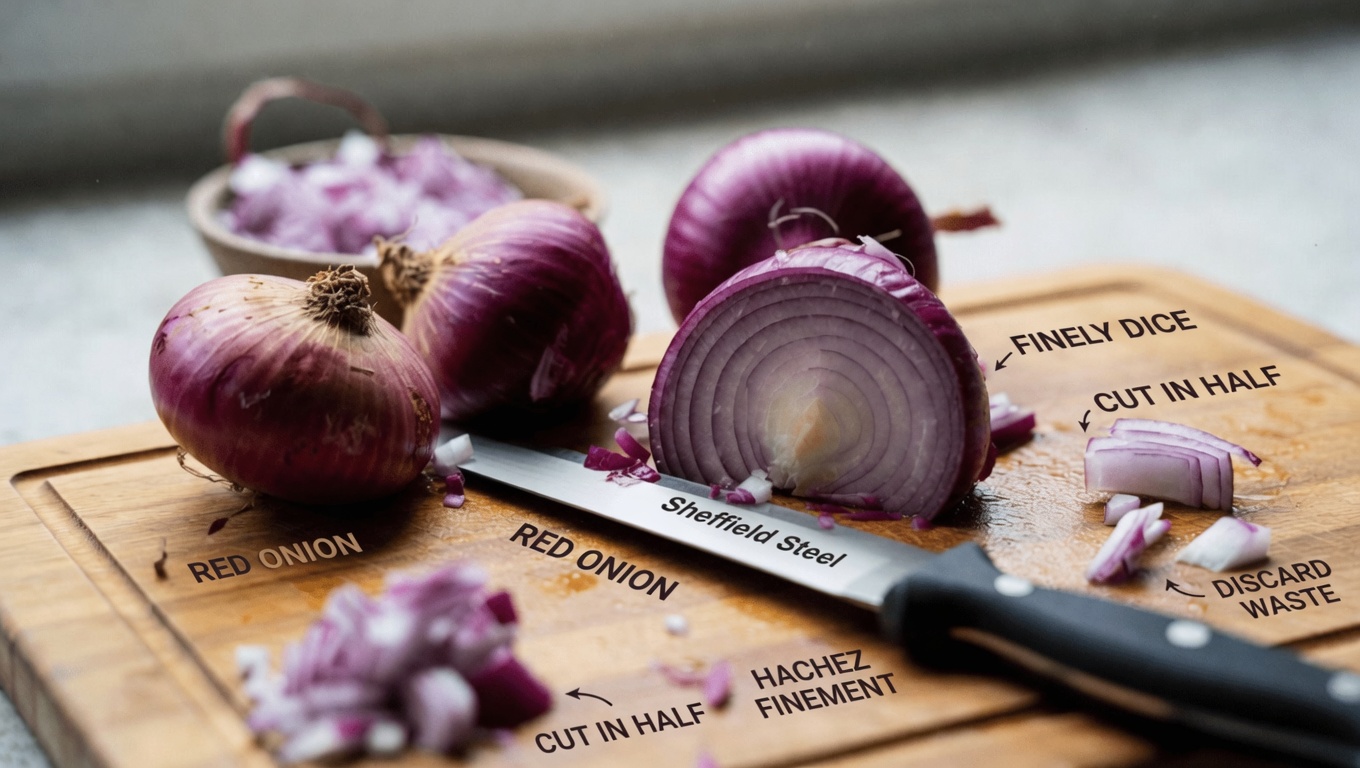
How to Make Fresh Onion Juice at Home (Step-by-Step)
Red onions are often preferred because they tend to be higher in quercetin, but yellow or white onions can work as well. For best potency, use onions that are fresh.
Ingredients (for one treatment)
- 1–2 medium onions (red preferred)
- Optional (choose one or combine):
- 1–2 tsp honey (comfort/softness)
- 1–2 tsp coconut oil (moisture/odor masking)
- 1–2 tsp lemon juice (freshness/pH balance)
Preparation
- Peel and roughly chop the onions.
- Blend in a blender/food processor (or use a juicer) until pulpy.
- Strain through cheesecloth or a fine mesh strainer, pressing firmly to extract the liquid.
- If using add-ins, stir them in after straining to help soften the smell and improve the feel on the scalp.
You’ll typically get about ¼ to ½ cup—usually enough for a full scalp application.
How to Apply Onion Juice for the Best Results
If you’re new to onion juice hair care, start gently to see how your scalp reacts.
- Start with dry or slightly damp hair (washing first isn’t necessary).
- Apply onion juice directly to the scalp using:
- a cotton pad,
- a dropper bottle, or
- clean fingertips.
- Massage the scalp for 5–10 minutes to help distribute the juice and support circulation.
- Cover with a shower cap to reduce dripping and contain the scent.
- Leave it on for 15–60 minutes (start closer to 15–20 minutes if you’re sensitive).
- Rinse thoroughly with cool water, then shampoo twice using a gentle clarifying shampoo.
- Apply conditioner to restore softness and help detangle.
Suggested frequency: 2–3 times per week. Many people report early changes (like less fallout) around 4–6 weeks, with more visible fullness closer to 8 weeks when consistent.
Plain vs. Mixed Onion Juice: Which One Should You Use?
Mixing onion juice can make the routine much easier to tolerate—without removing the main sulfur-based benefit.
- Plain onion juice
- Best for: maximum potency and simplest formula
- Onion juice + honey
- Best for: a calmer feel on sensitive scalps and less irritation
- Onion juice + coconut oil
- Best for: dry, brittle hair and better odor masking
- Onion juice + lemon juice
- Best for: oily scalp types and a fresher finish
Feel free to experiment—many people stick with the method only after finding a blend they can tolerate.
Safety Tips and Key Precautions
Treat onion juice like any other active scalp remedy: use it responsibly.
- Patch test first: apply a small amount to the inner arm and wait 24 hours for redness, itching, or burning.
- If irritation happens: dilute with water or mix with a carrier oil, and reduce the leave-on time to 15 minutes.
- Manage odor smartly: lemon or honey can help; double-shampoo, and use an apple cider vinegar rinse if needed.
- Avoid overuse: keep it to 2–3 applications weekly to prevent dryness.
- Use fresh whenever possible: if storing, refrigerate in a sealed container and use within 24 hours.
- Skip or consult a professional if needed: avoid if you have an onion allergy; ask a healthcare provider if you have scalp conditions or are combining with medical treatments.
Stop immediately if you feel strong discomfort, and avoid leaving it on overnight unless you’ve already confirmed your scalp tolerates it well.
Real-World Results: What People Often Notice
People who stay consistent commonly describe small but motivating shifts: less hair in the brush, strands that feel stronger, and fine baby hairs appearing around the temples or hairline after several weeks. Others say the biggest change is reduced breakage, which finally allows their hair to reach lengths they struggled to maintain.
The smell is usually the hardest part—but users who switch to mixed versions often say the routine becomes manageable, and the gradual improvements make it worth continuing.
Extra tip: add one additional minute of massage during application—many find the scalp feels more stimulated, and the routine becomes more effective and relaxing.
Frequently Asked Questions
How long does it take to see results from onion juice on hair?
Many people report early signs—such as less shedding—in about 4–6 weeks when using onion juice 2–3 times per week. More noticeable changes in fullness or density are often reported closer to 8 weeks, depending on the individual and consistency.