Many older adults deal with small but frustrating everyday issues—an upset stomach after meals, dry or irritated skin, or mild mouth discomfort. While these problems may seem minor, they can still reduce comfort and affect overall quality of life. Baking soda (sodium bicarbonate)—a familiar kitchen staple—has long been used in traditional home care and is mentioned in evidence-based resources for short-term, situation-specific relief when used appropriately.
Reputable medical sources such as Mayo Clinic and WebMD note that sodium bicarbonate can function as a gentle antacid for occasional heartburn or indigestion by neutralizing excess stomach acid. Beyond digestion, its mildly alkaline properties are also commonly applied in careful, practical ways for other day-to-day concerns.
This guide covers safe, realistic ways seniors may use baking soda at home, based on traditional practices and available research discussions. Many people are especially surprised by one simple option that can bring quick comfort when used mindfully.
Why Baking Soda Can Feel Mild and Practical for Everyday Situations
Baking soda is a basic (alkaline) compound that reacts with acids, creating a balancing effect. In cases of occasional digestive discomfort, it may help reduce that “too much acid” feeling fairly quickly. Mayo Clinic, for example, describes sodium bicarbonate as an option for relieving heartburn or sour stomach in certain short-term situations.
Another reason seniors often like it is its simplicity: no complicated formulas or specialty products, just a well-known pantry item. When used sparingly and prepared correctly, many people find it straightforward and relatively non-harsh.
Consider a common scenario: a 70-year-old who sometimes feels bloated after a heavier meal. For some individuals, a small, occasional baking soda mixture can feel like a light, temporary reset—without reaching for multiple over-the-counter products.
Still, it’s important to keep expectations realistic: baking soda is not a long-term solution. It’s best viewed as occasional, gentle support, not a cure or daily routine.
Safe, Senior-Friendly Ways to Use Baking Soda at Home
Start with the smallest effective amount and pay attention to how your body responds. Choose plain baking soda only (no fragrances, added ingredients, or specialty blends).
Common preparation options
- For digestive comfort (internal use): Dissolve ½ teaspoon in 4–8 ounces (120–240 ml) of water. Stir well and drink slowly after fizzing settles.
- For an oral rinse: Mix ½ teaspoon into a glass of warm water. Swish gently, then spit out (avoid swallowing large amounts).
- For skin use: Create a thin paste with water for small, targeted areas, or add baking soda to bathwater for soaking.
- Helpful basics:
- Drink water after internal use.
- For skin use, patch-test first to reduce the risk of irritation.
Quick reference: occasional uses
- Digestive (heartburn/indigestion): ½ tsp in 4–8 oz water — temporary acid neutralization — use sparingly, as needed
- Oral (mouth irritation/breath): warm-water rinse — soothing/pH-balancing feel — up to 2–3 times daily
- Skin (itchy areas/bites): paste with water — calming sensation — spot use only
- Bath soak (muscle/skin comfort): about ½ cup in a tub — relaxing soak — weekly or as needed
- Deodorizing (feet/body odor): sprinkle or dissolve — odor absorption — daily if needed
These uses align with widely discussed applications in sources such as Healthline and WebMD, which describe baking soda’s role mainly as temporary relief rather than treatment.
The key is not “using it everywhere,” but using it selectively and thoughtfully. Below are 13 popular ways people explore baking soda for simple comfort.
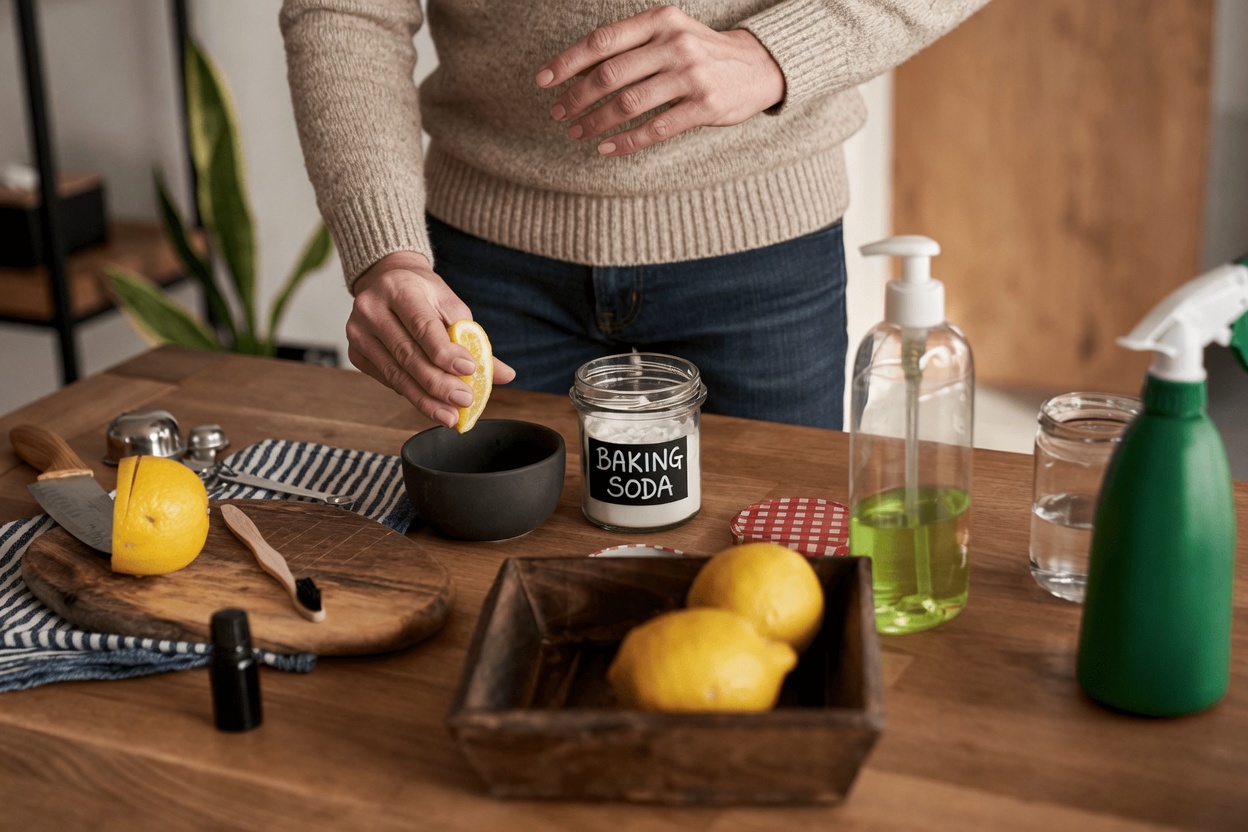
13 Everyday Ways Baking Soda May Provide Temporary Comfort
These ideas combine traditional home practices with mentions found across general health resources. Keep usage conservative and stop if irritation occurs.
-
Managing occasional foot odor
- Sprinkle a small amount into shoes overnight to help reduce odors.
-
Gentle exfoliation for rough patches
- Make a mild paste and rub lightly on heels or elbows, then rinse thoroughly.
-
Comfort for minor bug bites
- Apply a simple paste to the itchy area for short-term soothing.
-
Easing canker sore irritation
- Use a gentle rinse; some guidance (including common clinical suggestions) notes it may help calm mouth discomfort.
-
Freshening breath without strong ingredients
- Swish a diluted solution for a cleaner feeling.
-
Occasional itchy scalp support
- Some people mix a small amount into shampoo to reduce the feel of flakes (use cautiously to avoid dryness).
-
Soothing sensation for minor kitchen burns (after cooling first)
- A cool paste may feel calming for very minor incidents—only after the area has been cooled with water.
-
A relaxing baking soda bath
- Dissolve about ½ cup in warm bathwater for a gentle soak.
-
Deodorizing underarms
- A very light dusting may help absorb odor (stop if irritation occurs).
-
Rinsing for mild gum tenderness
- A warm-water rinse may feel soothing for occasional sensitivity.
- Exploring “alkalizing” effects for urinary comfort (with medical guidance)
- Some research explores this area, but it’s essential to ask a clinician first—especially with any medical conditions.
- Post-meal indigestion support
- Some people find a carefully prepared drink brings temporary ease after heavy meals.
- Occasional heartburn relief
- The most recognized use: ½ teaspoon in water, taken occasionally, consistent with guidance discussed by Mayo Clinic and WebMD for short-term antacid use.
These options are best understood as comfort measures, not medical treatments.
Real-World Experiences Seniors Commonly Share
Some seniors report that small, mindful changes help their routines feel easier. For example:
- A 71-year-old who frequently felt reflux after dinner found that occasional baking soda use helped make evenings more comfortable.
- A 74-year-old dealing with dry, itchy patches said that a carefully used paste or bath soak helped her skin feel calmer, improving rest.
Individual responses can differ significantly, so personal caution and medical guidance matter.
Essential Safety Rules Seniors Should Follow
Because baking soda is high in sodium, it may be inappropriate for frequent internal use—especially for anyone who:
- follows a low-sodium diet
- has high blood pressure
- has heart disease
- has kidney disease
- takes medications affected by sodium or acid/base balance
Always consult a healthcare professional if any of the above applies.
Key safety reminders
- For internal use, do not exceed ½ teaspoon per dose unless a clinician instructs otherwise.
- Avoid frequent or long-term internal use, particularly for adults over 60.
- Stop immediately if you notice stomach pain, nausea, swelling, or unusual symptoms.
- For skin use, avoid broken skin and rinse thoroughly to reduce dryness.
- Never swallow baking soda dry—always dissolve in water.
- Store it in a cool, dry place.
If symptoms continue, worsen, or repeat often, seek medical advice. Occasional use is the safest framework.
A Simple, Gentle Option Worth Considering (With Care)
That familiar orange box may offer more everyday utility than many people realize. When used in small amounts and with sensible precautions, baking soda can be a convenient at-home option for minor, temporary discomforts—especially occasional heartburn, mouth rinsing, and targeted skin applications.
Mayo Clinic and other clinical resources highlight its role as a short-term antacid, which is often where it provides the clearest benefit.
P.S. Many people consider a quick baking soda oral rinse a surprisingly effective way to feel fresher—without strong, harsh-tasting additives.
FAQ
Is baking soda safe for seniors to use every day?
For most people, occasional use may be acceptable for short-term situations, but daily long-term internal use is not recommended due to sodium content and potential side effects. Seniors—especially those over 60 or on medication—should check with a clinician first.
Can baking soda help soothe skin irritation?
Some people add it to baths for a calming sensation, and organizations such as the National Eczema Association have discussed baking soda baths for certain individuals. However, it can also cause dryness, so patch-test first and use sparingly.
What if I have high blood pressure—can I still use it?
Because baking soda contains significant sodium, internal use may be risky for people with hypertension or heart concerns. Speak with a healthcare provider before trying it.
Medical disclaimer
This article is for informational purposes only and does not replace professional medical advice. For personalized guidance, consult your healthcare provider.