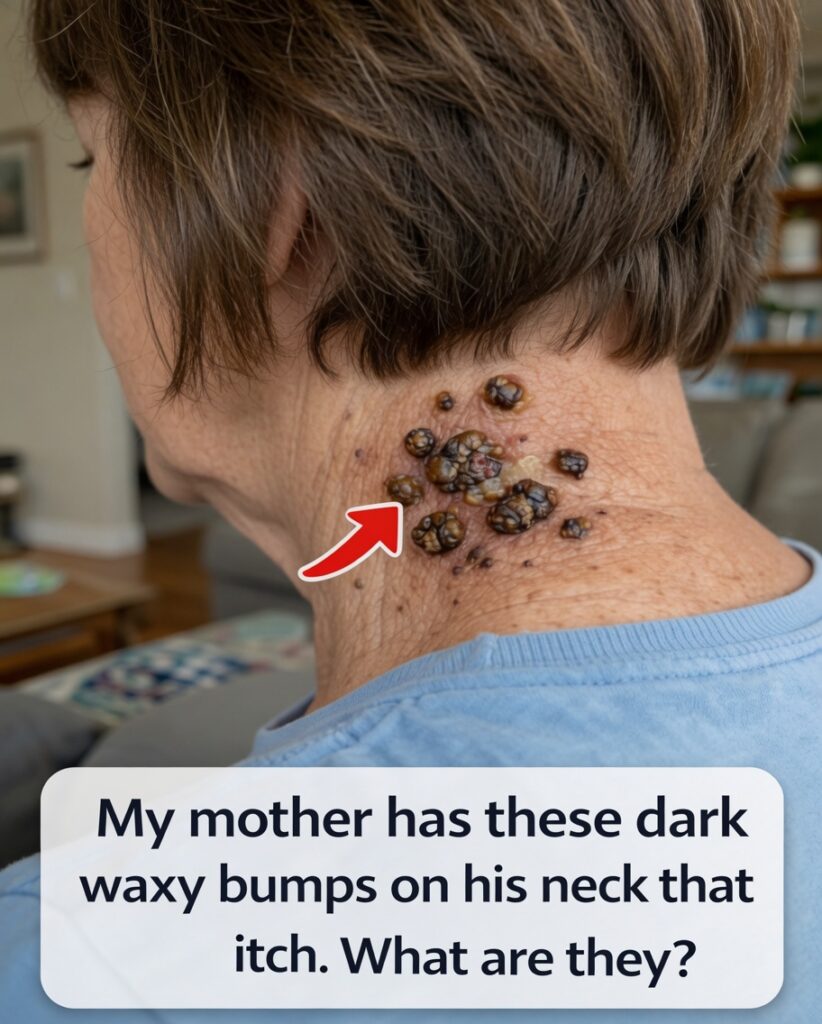
Noticing Dark, Waxy Bumps on an Older Adult’s Neck: What It Usually Means
Seeing dark, waxy-looking bumps suddenly show up on your grandfather’s neck can be unsettling—especially if they itch or seem to multiply quickly. Because skin changes significantly with age, these growths become increasingly common and can easily raise fears about serious illness.
In most situations, however, these bumps are benign (noncancerous) and simply reflect normal aging of the skin. Understanding what they are—and what signs should prompt a medical check—can bring a lot of reassurance. Toward the end, you’ll also find practical ways to reduce irritation and decide when it’s smart to see a doctor.
What Those Dark, Waxy Bumps Most Likely Are
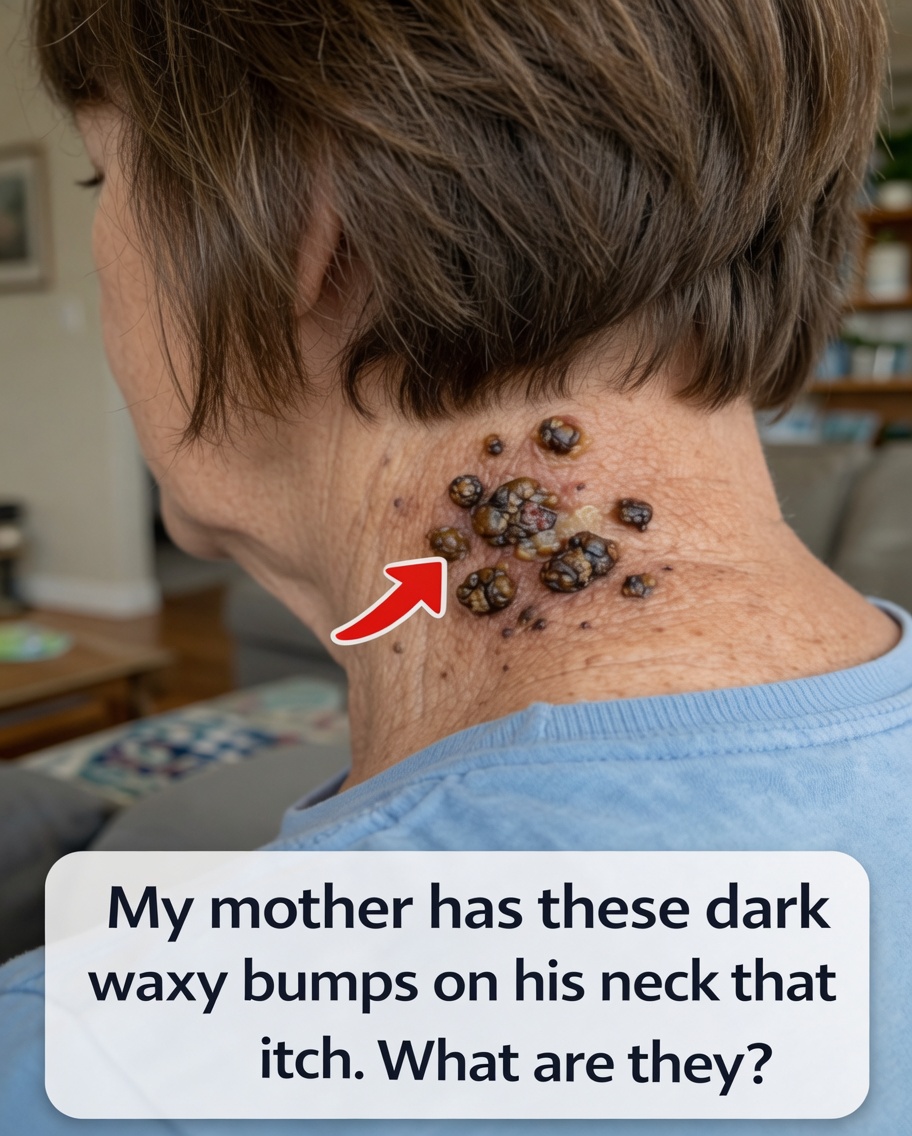
The most likely explanation for dark, itchy, waxy bumps on the neck in older adults is seborrheic keratosis. According to widely cited medical authorities such as the Mayo Clinic and the American Academy of Dermatology, seborrheic keratoses are among the most common harmless skin growths, often appearing after age 50 and increasing in frequency over time.
Typical features include:
- A “stuck-on” look, as if a bit of wax or clay was placed on the skin
- Color ranging from tan to dark brown or black
- A surface that may feel rough, scaly, or slightly warty
- Common locations such as the neck, chest, back, and face, where friction from clothing and movement is frequent
Many people also report that they appear suddenly or in clusters, which can make them feel more alarming than they actually are.
Classic Signs You Can Often Recognize at Home
Seborrheic keratoses are often easy to suspect based on appearance and texture. The most common at-home clues include:
- Waxy, “pasted-on” appearance
- Bumpy or scaly texture when you run a finger across the surface
- Fairly consistent coloring within a single spot (from pale tan to very dark)
- Round or oval shape, starting small but sometimes growing beyond 1 cm
- Mild to moderate itching, especially after sweating or when collars rub the area
If several of these traits match what you’re seeing, the odds strongly favor a benign growth—though any meaningful change should still be taken seriously.
How These Bumps Differ From More Serious Skin Conditions
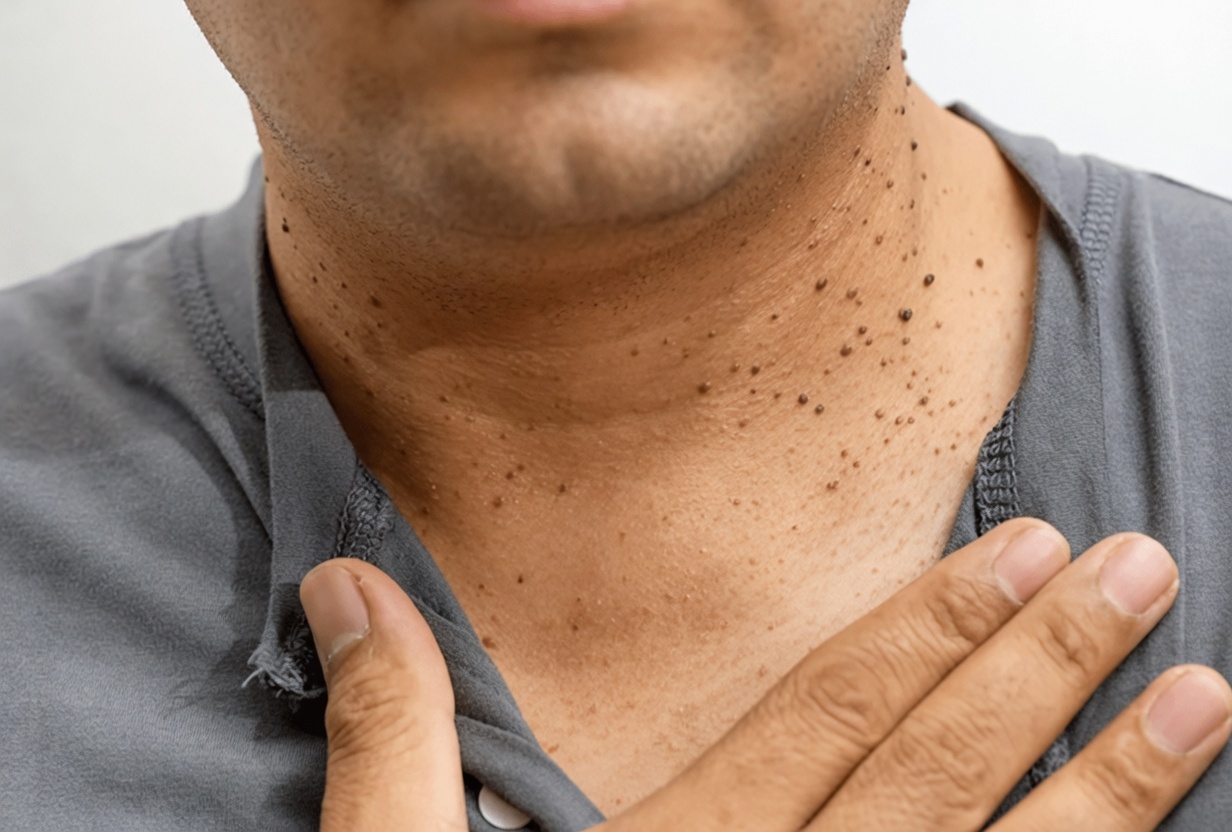
It’s completely reasonable to worry about skin cancer when a dark spot appears. Some seborrheic keratoses can resemble more serious lesions at a glance, but there are differences that often help distinguish them:
- More uniform shape and color compared with melanoma, which may show multiple shades or irregular borders
- A clear “stuck-on” look rather than a spot that seems embedded in the skin and evolving
- Slow change over time, whereas concerning lesions may grow quickly, bleed, crust repeatedly, or change shape and color rapidly
Importantly, seborrheic keratoses are not considered precancerous, and they do not turn into skin cancer. Still, if one bump looks noticeably different from the rest—or starts bleeding easily—getting a professional evaluation is the safest way to confirm what’s going on.
Why Age (and Genetics) Matter So Much
Seborrheic keratoses become far more common with age. Many estimates suggest that most people in their 70s have at least one. Several factors are believed to play a role:
- Aging skin and long-term wear on the skin barrier
- Genetic tendency (they often run in families)
- Cumulative sun exposure over decades, which may influence where they appear (though they are not the same as sunspots and aren’t directly caused by UV damage in the way some other lesions are)
They can occur in all skin tones, though they may be more noticeable visually in some individuals than others. For many families, realizing these growths are a normal part of aging is a major relief.
Why They Itch or Seem to Pop Up
The exact reason seborrheic keratoses develop isn’t fully understood, but common contributors include:
- Family history, increasing the likelihood of developing multiple lesions
- Long-term sun exposure, affecting distribution in some people
- Irritation and friction from shirt collars, necklaces, shaving, or scratching
Itching often worsens when the area is dry or repeatedly rubbed, so gentle daily care can make a noticeable difference.

When You Should Pay Closer Attention
Most seborrheic keratoses remain harmless and stable. Still, it’s wise to schedule a dermatology visit if any bump shows:
- New or intense itching that doesn’t improve
- Bleeding with light rubbing or without clear injury
- Rapid growth or a new irregular shape
- Significant color change, especially if it becomes varied or patchy
- Many new spots appearing in a short time
Getting checked early is not only reassuring—it also helps prevent irritation from turning into inflammation or infection due to repeated scratching.
How a Doctor Typically Confirms the Diagnosis
A clinician—especially a dermatologist—can often identify seborrheic keratosis quickly by visual exam. They may also use a dermatoscope (a handheld magnifier with light) to examine details beneath the surface.
If anything appears atypical, a small biopsy may be done. This is a routine procedure that allows the tissue to be evaluated under a microscope for a definitive diagnosis.
Removal Options (If It’s Itchy, Irritated, or Bothersome)
Seborrheic keratoses do not need treatment unless they:
- catch on clothing or jewelry,
- itch frequently,
- bleed from friction,
- or affect comfort and confidence.
Common in-office removal methods include:
- Cryotherapy: freezing the growth with liquid nitrogen
- Curettage: gently scraping it off after numbing
- Laser treatment or electrosurgery: precise removal, typically with minimal downtime
These procedures are generally quick, and many people return to normal routines the same day.
Everyday Care: What Helps (and What to Avoid)
For comfort at home, focus on reducing friction and dryness:
- Moisturize daily using a fragrance-free lotion to lessen itching
- Choose soft, looser collars to reduce rubbing
- Avoid scratching or picking, which can cause bleeding and infection
- Use a mild cleanser and pat dry instead of scrubbing
Avoid attempting to remove them yourself or using harsh “spot removers” without medical guidance—these approaches frequently cause irritation and may worsen the problem.
Simple steps you can try today:
- Apply a cool compress for 10 minutes during itch flare-ups
- Keep the area clean and dry
- Take weekly photos to track changes clearly
- Book a routine skin check if it’s been a while
Takeaway: Reassurance Is Usually Just a Few Facts Away
Dark, waxy, itchy bumps on the neck in older adults are most often seborrheic keratoses—a common, harmless skin change associated with aging. While they can be irritating or cosmetically bothersome, they are typically not dangerous and often require nothing more than gentle care.
If a spot changes quickly, bleeds easily, or looks unlike the others, a quick medical evaluation can provide clarity and peace of mind. Encouraging your grandfather to talk openly about what he’s noticing—and offering to go with him to an appointment—can make the process easier and more reassuring.
FAQ
Are seborrheic keratoses contagious?
No. They do not spread from person to person, and they are not an infection.
Can seborrheic keratoses disappear on their own?
They usually do not go away completely once they form, though many remain stable for years and may change only slowly.
Do seborrheic keratoses raise the risk of skin cancer?
No. Medical organizations including the American Academy of Dermatology note that seborrheic keratoses are not linked to developing skin cancer.
Medical disclaimer: This article is for general information only and does not replace professional medical advice. Consult a qualified healthcare provider for personalized guidance about any new, changing, or concerning skin growths.