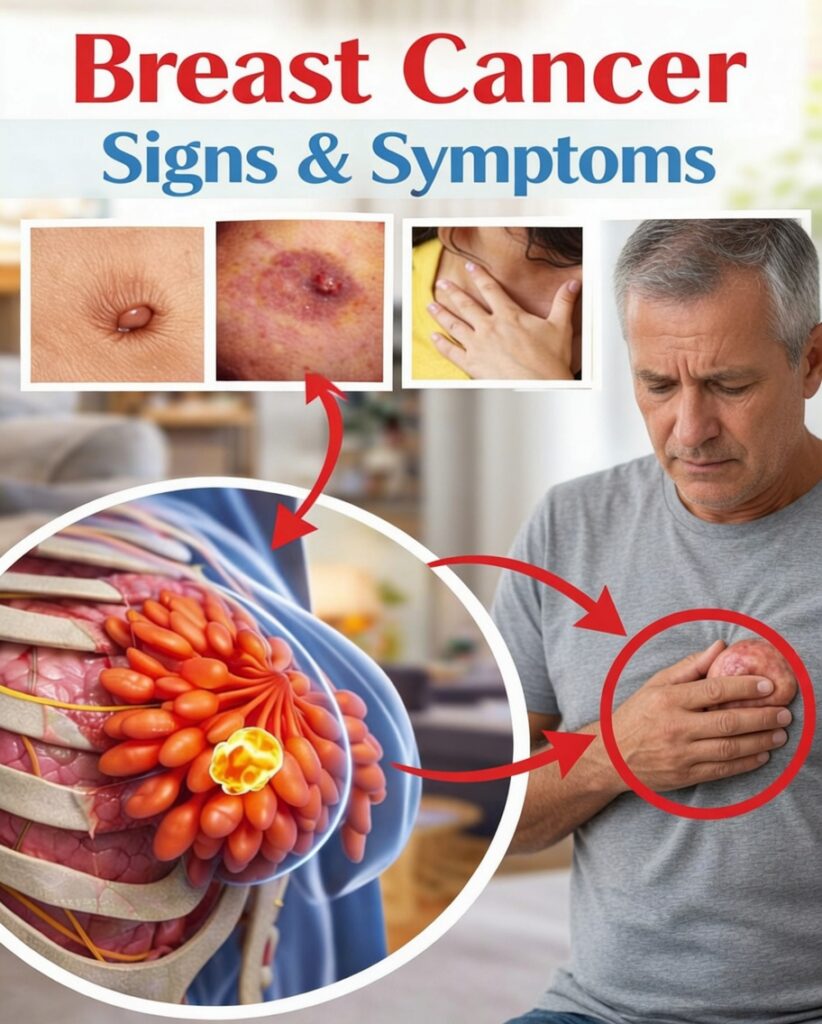
Breast changes can be unsettling—especially after 40, when hormones fluctuate and daily life leaves little room for self-checks. A small lump, mild soreness, or a slight skin change may seem easy to blame on stress or aging. However, overlooking early signs can delay medical assessment and reduce treatment options later. The encouraging truth is that recognizing key warning signals can help you respond earlier—and by the end, you’ll learn the one simple habit that connects awareness with long-term peace of mind.
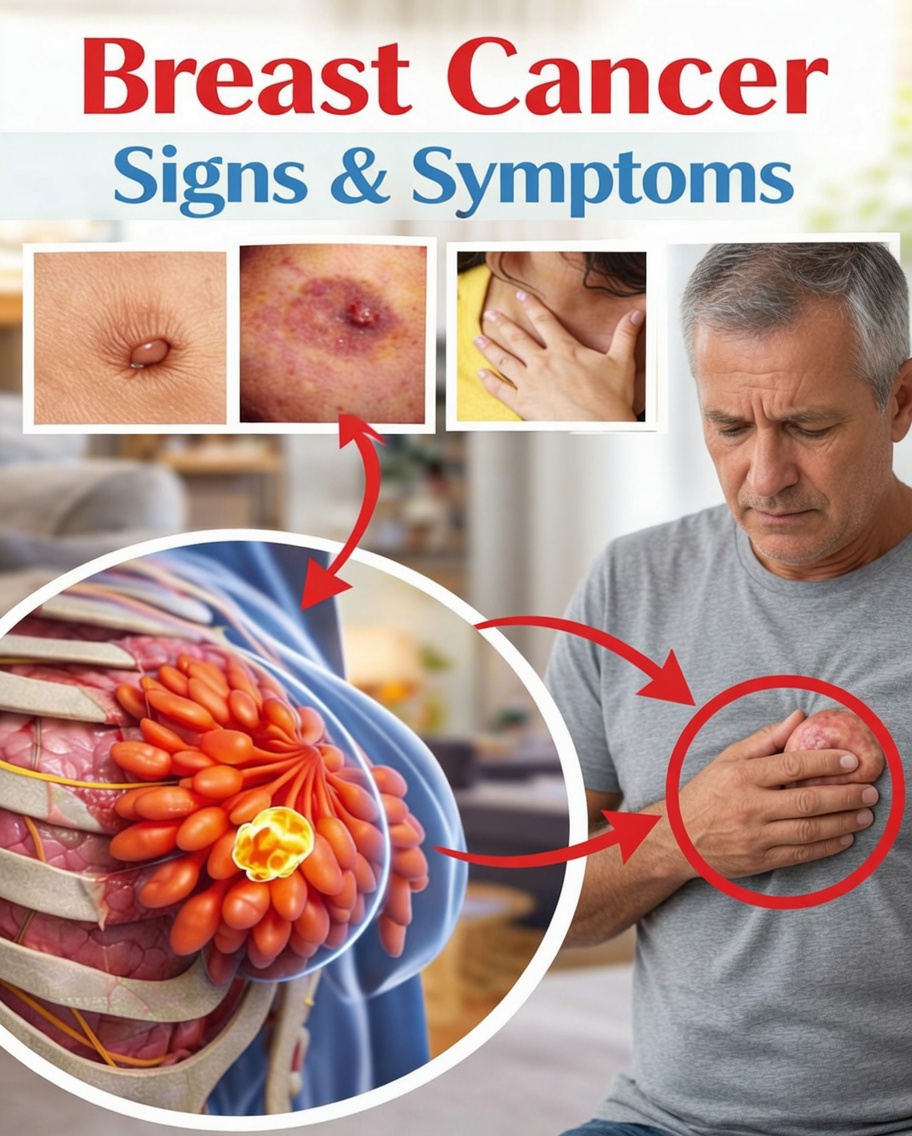
The Silent Risk Many Women Underestimate
The American Cancer Society estimates that 316,950 women in the U.S. will be diagnosed with invasive breast cancer in 2025, with more than 42,000 projected deaths. These figures are serious—but they also underline something important: early action saves lives.
Here’s what many people don’t realize.
Mammograms are essential, but they aren’t perfect. Some breast cancers are discovered between routine screenings, often because someone noticed a change on her own.
So yes, screening matters—but breast awareness matters too.
Below are 10 breast cancer warning signs you should not ignore.
1. A New Lump or Thickening in the Breast or Underarm
This is the best-known warning sign—and for good reason.
Cancer-related lumps are often described as:
- Hard or firm
- Irregular in shape
- Painless
- Less movable
But not always. Some lumps may feel softer or cause tenderness. That’s why any new lump—especially one that doesn’t go away—should be evaluated.
Leading medical sources (including the Mayo Clinic) note that many breast cancers are initially found as a lump. The key rule: if it’s new or feels different from your usual texture, don’t dismiss it.
2. A Noticeable Change in Breast Size or Shape
Have you developed new asymmetry? Does one breast look swollen or smaller without an obvious reason?
If your weight and menstrual cycle haven’t changed, yet your breast appearance has, pay attention. Breast cancer can alter internal tissue structure before obvious symptoms develop, meaning even subtle contour shifts can matter.
3. Skin Dimpling or a “Orange Peel” Texture
When breast skin looks dimpled, puckered, or thickened—similar to an orange peel—it can signal a problem.
One possible reason is that cancer cells may block normal lymph drainage, leading to fluid buildup and skin texture changes.
Common skin assumptions vs. why they may matter:
- Dimpling: often blamed on aging, but may reflect tissue pulling beneath the skin
- Thickened texture: may look like dryness, but can suggest inflammation
- Persistent redness: may seem like irritation, but needs evaluation if it lingers
If a skin change doesn’t improve quickly, it’s time to consult a healthcare professional.
4. Nipple Changes: Inversion, Retraction, Scaling, or Crusting
A nipple that suddenly turns inward (when it previously didn’t) deserves medical attention. Other concerning nipple changes include:
- New flattening or pulling inward
- Crusting or flaking skin
- Ongoing itching
- An ulcer-like sore
Not all inverted nipples are dangerous—some people naturally have them. The concern is a new change. Also, scaling that doesn’t improve with basic skin care should not be brushed off.
5. Ongoing Breast Pain Not Related to Your Cycle
Breast pain by itself is rarely the only sign of breast cancer. Still, persistent, localized pain—especially in one area—should be checked, particularly if:
- It continues for weeks
- It affects only one breast
- It doesn’t match your usual hormonal pattern
Most breast pain is benign, but a small portion of breast cancers may involve discomfort. If it persists, get it assessed.
6. Unusual Nipple Discharge (Especially Bloody)
Nipple discharge that happens without squeezing—especially from one breast—should not be ignored.
Discharge that warrants evaluation may be:
- Bloody
- Clear and watery
- Coming from one duct or one breast only
Milky discharge can be related to hormones, but unexpected discharge after menopause is especially important to investigate. When unsure, write down what you observe and discuss it with a clinician.
7. Redness, Warmth, or a Rash That Doesn’t Go Away
A rare but aggressive type called inflammatory breast cancer can appear as:
- Redness
- Warmth
- Swelling
- Thickened skin
- A rash that doesn’t resolve
Because it can resemble infection (like mastitis), it may be mistaken for something less serious. If symptoms don’t improve with treatment (or there’s no clear cause), follow up immediately—this is a sign that needs urgent evaluation.
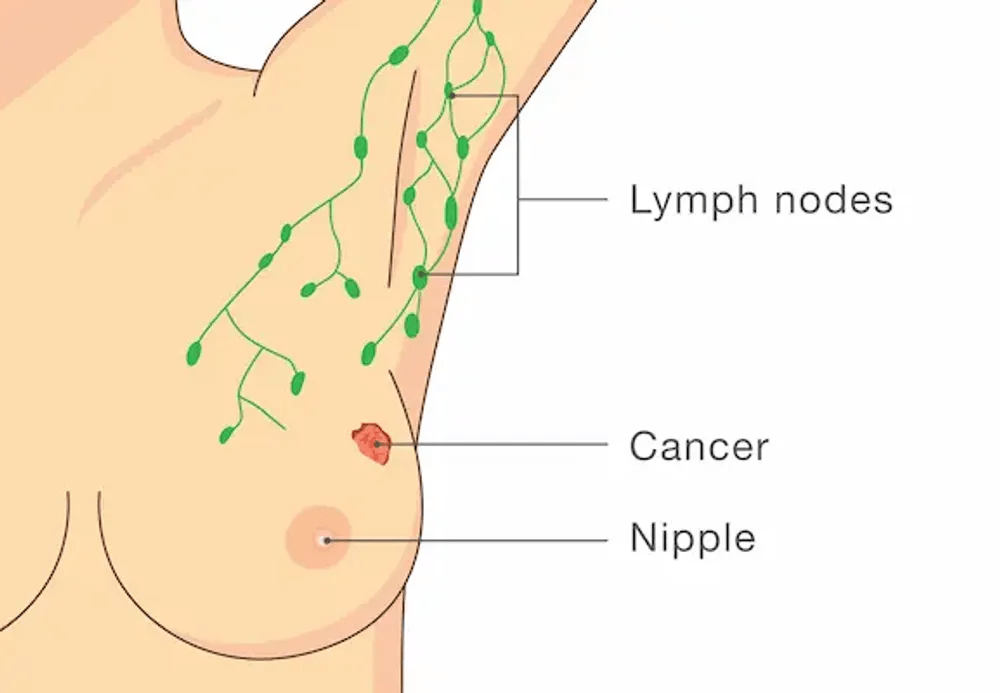
8. Swollen Lymph Nodes (Armpit or Collarbone Area)
Lymph nodes help filter immune activity. If cancer spreads, it can reach nearby lymph nodes before a breast lump becomes noticeable.
Signs can include:
- A firm lump in the armpit
- Swelling near the collarbone
- Persistent tenderness in the underarm area
Even if you don’t notice breast changes, lymph node swelling that persists should be checked.
9. Suddenly Prominent Veins or Unusual Swelling
Veins that become noticeably more visible—especially when paired with swelling—may indicate tissue changes or increased blood flow.
Swelling that feels different from typical premenstrual fullness, particularly if it’s one-sided, should be assessed. The key red flag is sudden, unexplained change.
10. Any Persistent, Unexplained Breast Change
This may be the most important point: breast cancer does not always follow a predictable pattern.
Take seriously:
- Anything new
- Anything that lasts more than a couple of weeks
- Anything that feels “not normal for you”
Knowing your baseline makes it easier to recognize what’s truly different.

Why These Signs Are Often Missed
Life is full—work, family responsibilities, caregiving, and constant deadlines can make it easy to rationalize symptoms away.
Common reasons women delay getting checked include:
- “It doesn’t hurt, so it’s probably fine.”
- “My last mammogram was normal.”
- “It must be hormones.”
- Fear of what the answer could be.
Awareness isn’t about panic—it’s about control. Research consistently suggests that women who are familiar with their breasts are more likely to notice changes earlier, and earlier detection is strongly linked to better outcomes.
A Simple Monthly Breast Awareness Routine
You can start this practical routine today:
-
Mirror Check
- Look with arms at your sides, then raised overhead
- Watch for:
- Asymmetry
- Dimpling
- Redness
- Nipple changes
-
Shower Check
- Use the pads of your fingers
- Move in gentle circles
- Cover the whole breast and include the underarm area
-
Lie Down and Repeat
- Lying down spreads tissue more evenly and can make changes easier to feel
-
Track What You Notice
- Set a monthly reminder
- Use a notes app to record anything new
- If a change persists, follow up promptly
Timing tips:
- If premenopausal, check a few days after your period ends
- If postmenopausal, pick the same day each month
Consistency is what makes this effective.
Breast Awareness + Mammograms: Stronger Together
A combined approach offers better coverage:
- Monthly: breast self-awareness checks (to catch changes early)
- Annually (40+ or as advised): mammograms (screening detection)
- Immediately: see a doctor for any new or persistent change (timely evaluation)
Breast awareness does not replace screening—and screening does not replace awareness. Together, they form a stronger safety net.
The One Habit That Makes the Biggest Difference
This isn’t about fear. It’s about familiarity.
The most protective habit is simple: know what’s normal for your body. When you understand your baseline, small changes stand out—and acting early can change everything.
Set one reminder today. That small step can protect your future self.
Conclusion
Breast cancer remains one of the most common cancers affecting women worldwide, but outcomes can improve significantly with awareness and timely evaluation. These 10 warning signs are not meant to create anxiety—they’re designed to help you act with confidence. Most breast changes are not cancer, yet anything unusual or persistent deserves medical attention. Make breast awareness part of your monthly routine, alongside professional screening, for greater peace of mind over time.