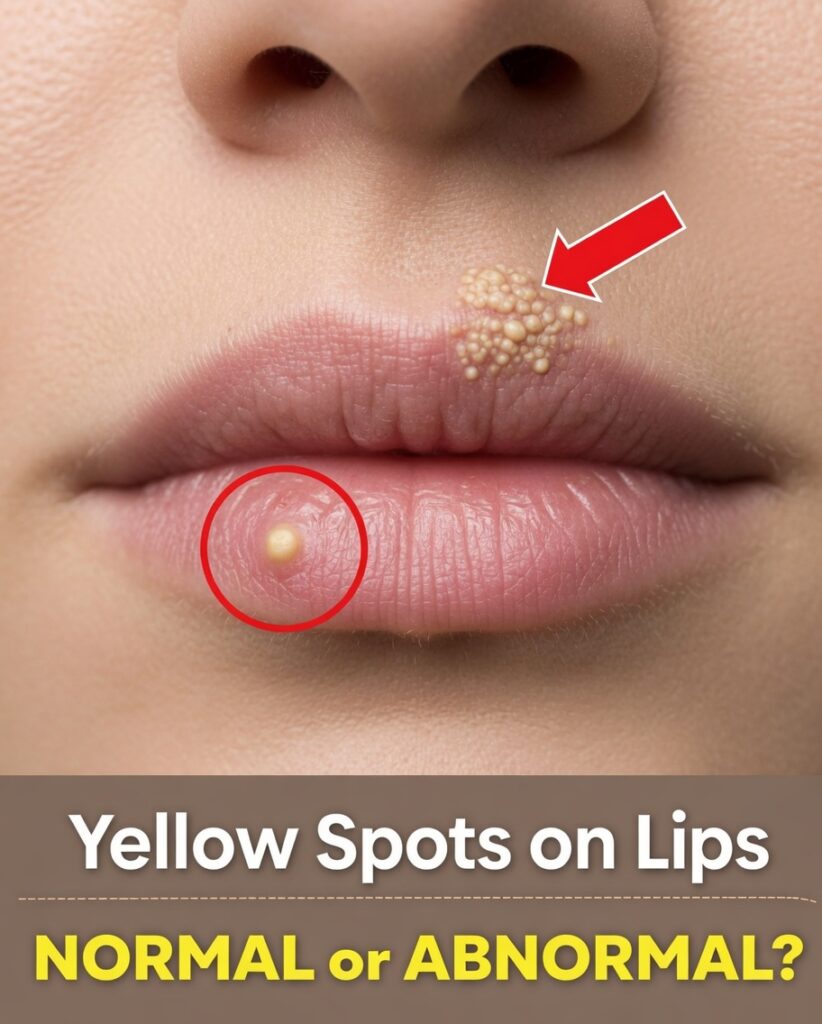
Noticing Tiny Yellow-White Dots on Your Lips? It’s Usually Fordyce Spots
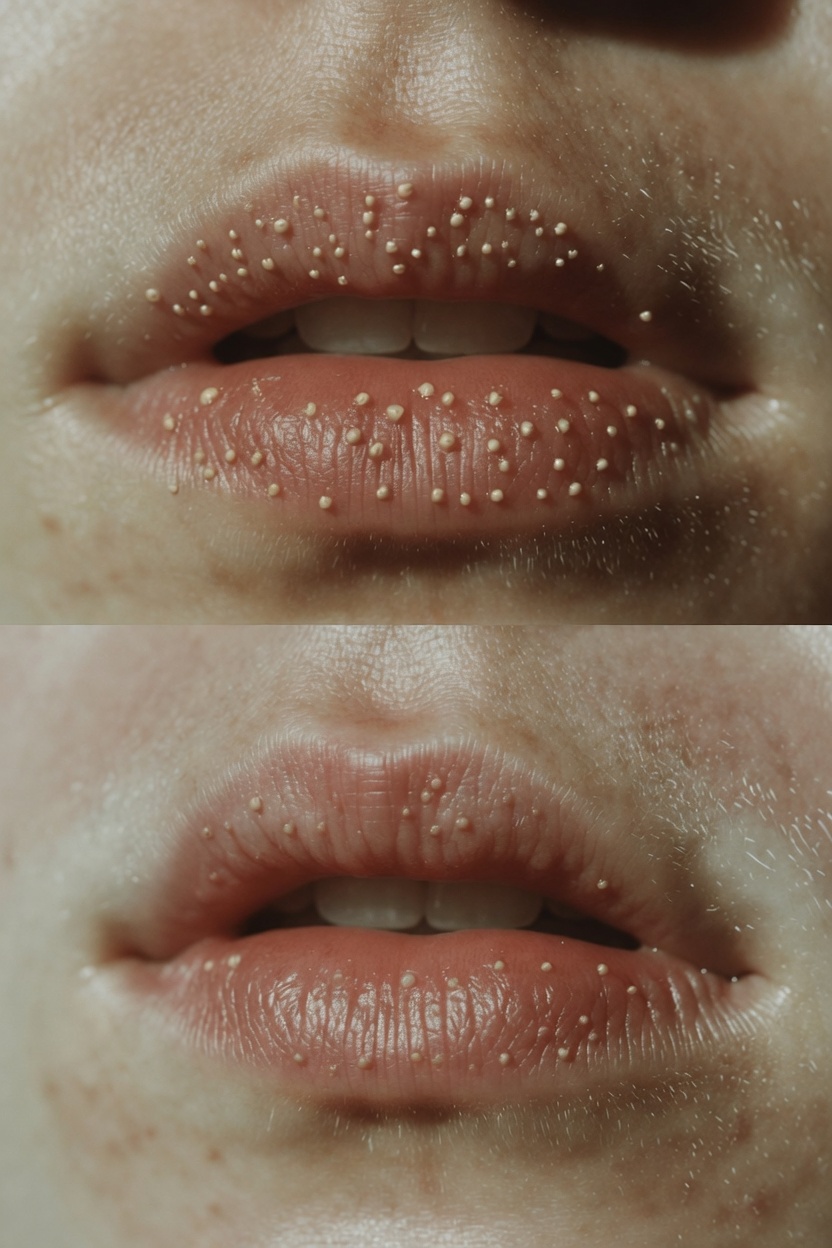
Seeing small yellowish-white specks or tiny bumps along the lip line can be unsettling—especially when they stand out in selfies, bright bathroom lighting, or with flash photography. Many people first notice them in their teens or early adulthood and immediately fear an infection, an STD, or something serious.
In most cases, the explanation is far more reassuring: they’re Fordyce spots, a common, harmless anatomical variation. Dermatology sources frequently report that around 70–80% of adults have them to some degree.
Understanding what these spots are—and what they are not—can remove the worry for good.
What Are Fordyce Spots (Fordyce Granules)?
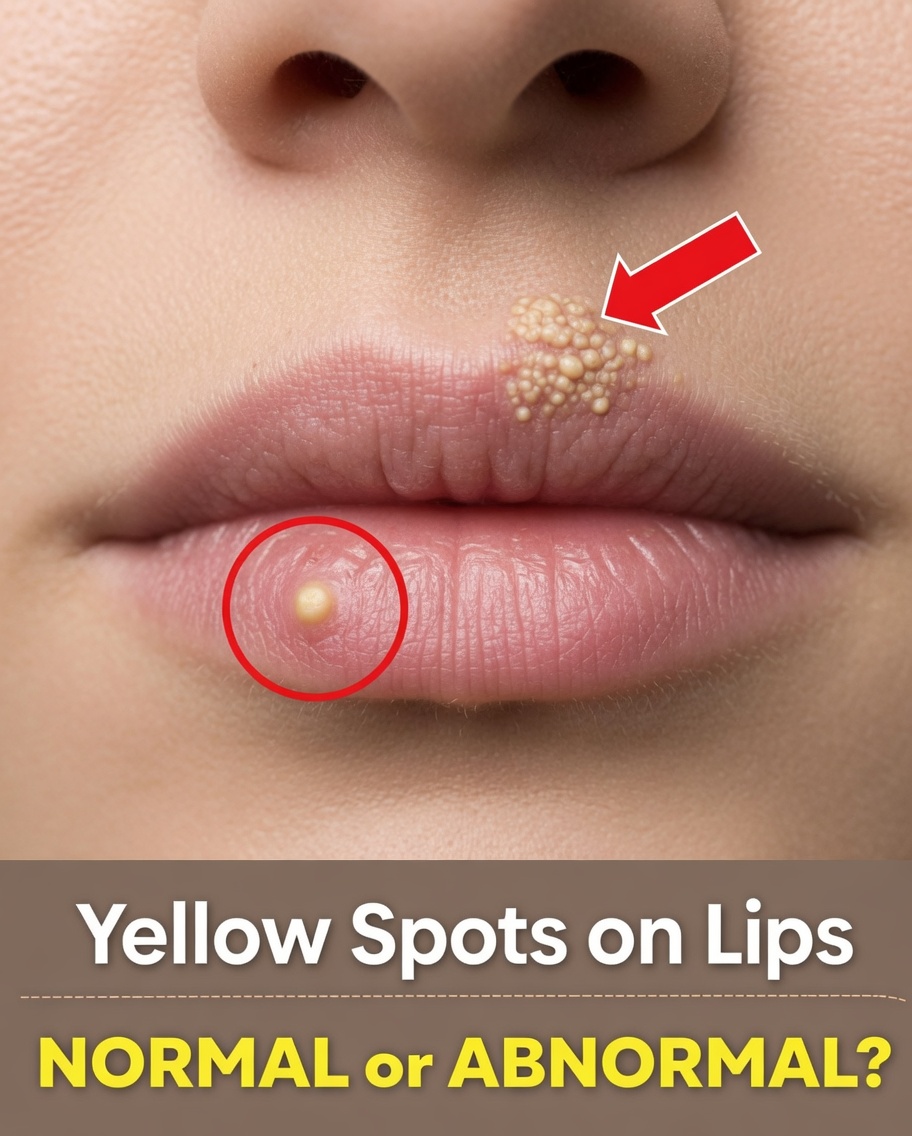
Fordyce spots (also called Fordyce granules) are visible sebaceous (oil) glands located unusually close to the skin surface and not connected to hair follicles. Because they appear in places where oil glands aren’t typically obvious, they’re considered ectopic sebaceous glands—“out of place,” but still normal.
They usually look like:
- Pale yellow or creamy-white dots
- Skin-colored pinpoints
- Tiny, slightly raised bumps
They often become more noticeable during or after puberty, when hormonal shifts increase oil-gland activity. Prevalence also tends to rise with age, commonly appearing most prominently in young adults (roughly ages 20–40).
Most importantly, Fordyce spots are benign—a natural variation similar to freckles or moles.
Where Fordyce Spots Commonly Show Up
Fordyce spots prefer moist, hairless areas. Common locations include:
- The vermilion border of the lips (where the pink/red lip meets facial skin)
- Inside the cheeks (buccal mucosa)
- Sometimes the inner lower lip or corners of the mouth
They can also appear on genital skin and remain completely normal there as well:
- Penis shaft or glans and scrotum (in men)
- Labia (in women)
Because they can occur in multiple areas, it’s easy to see why so many people notice them at some point and assume something is wrong.
What Fordyce Spots Usually Look Like
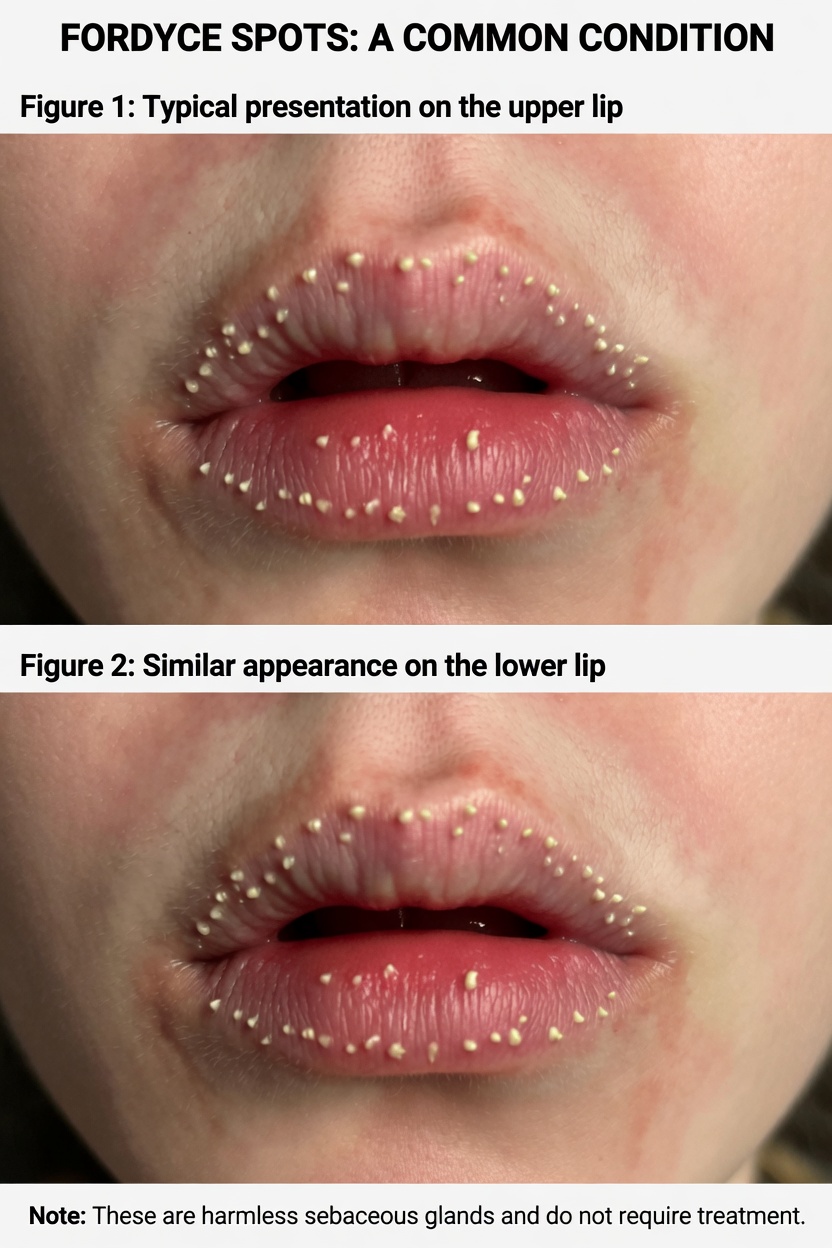
Fordyce spots tend to follow a recognizable pattern:
- Appear as small clustered dots or tiny bumps
- Usually measure about 1–3 mm
- Color is typically pale yellow, off-white, or skin-toned
- Surface is smooth, without scabbing, scaling, or open sores
- Often look more obvious when:
- You stretch the lips
- Your lips are dry
- You’re under direct light or using a camera flash
If the spots fit this description and have looked the same for months or years, Fordyce spots are the most likely cause.
Why Do Fordyce Spots Happen?
The simplest reason: these oil glands develop naturally, but some end up positioned in areas where hair follicles aren’t present, making them easier to see.
Hormonal changes—especially in adolescence and early adulthood—can increase oil production, which can make the glands more visible.
Key facts to remember:
- They are not caused by poor hygiene
- They are not related to sexual activity
- They are not an infection
- They are not contagious
Medical literature describes Fordyce spots as an anatomical feature, not a reaction to diet, lifestyle, or environmental exposure.
Are Fordyce Spots Dangerous?
No. Fordyce spots are non-cancerous, harmless, and not linked to disease risk. They also don’t “spread” in a contagious sense or pose a threat to your overall health.
Do Fordyce Spots Cause Symptoms?
Most people feel nothing at all—no pain, itching, burning, or tenderness.
Some may notice mild dryness or a slightly uneven texture around the lips, but this is usually due to general lip dryness, not the spots themselves.
If you develop pain, bleeding, ulcers, crusting, or rapid changes, it may be something else and should be checked promptly.
Fordyce Spots vs Other Lip Issues (How to Tell the Difference)
Several common conditions can resemble Fordyce spots at first glance. Here’s how they typically differ:
- Cold sores (HSV-1): tingling/burning, then fluid-filled blisters that crust and recur in outbreaks
- Fordyce spots: steady dots that do not blister or crust
- Lip pimples/acne: red, swollen, tender, often temporary and may contain pus
- Fordyce spots: not red, not sore, and usually persistent
- Oral thrush: white patches that may wipe off, soreness/burning, taste changes
- Fordyce spots: embedded dots that cannot be scraped away
- Mucocele (salivary cyst): usually a single soft, bluish lump often after lip biting
- Fordyce spots: multiple tiny pale dots
- HPV-related warts: rough texture, may enlarge, “cauliflower-like” appearance
- Fordyce spots: smooth, uniform, typically unchanged
- Leukoplakia: thicker, irregular white patches; may involve persistent sores or bleeding
- Fordyce spots: small, consistent clusters with stable appearance
This comparison helps many people feel more confident—but a clinician can confirm quickly if you’re uncertain.
When to See a Dentist or Dermatologist
Fordyce spots are usually harmless, but it’s smart to get evaluated if you notice any warning signs, such as:
- Spots that appear suddenly and increase quickly
- Areas that become painful, ulcerated, crusty, or bleed
- Symptoms like fever, swollen lymph nodes, or painful blisters
- Any sore, patch, or lesion in the mouth/lips that doesn’t heal within 2 weeks
In many cases, a professional diagnosis is made with a simple visual exam, offering fast reassurance.
Do Fordyce Spots Need Treatment?
From a medical standpoint, treatment isn’t necessary, because the spots are benign and don’t affect health.
If someone wants treatment for cosmetic reasons only, a dermatologist may discuss options such as:
- CO₂ laser ablation (reported as effective in selected cases)
- Electrosurgery or micro-punch techniques (specialist procedures)
Avoid trying to remove them yourself. Picking, squeezing, or using harsh “spot removers” can lead to irritation, infection, scarring, or pigment changes.
Simple Lip-Care Habits That Help (Without Trying to “Remove” Them)
You typically can’t eliminate Fordyce spots at home, but good lip care can improve comfort and overall appearance:
- Moisturize consistently: use a gentle, fragrance-free balm or plain petroleum jelly, especially before sleep
- Reduce irritants: avoid harsh scrubs, cut back on lip-licking, and limit spicy foods if they trigger sensitivity
- Use sun protection: choose a lip balm with SPF 30+ to reduce dryness and UV damage
- Hydrate and humidify: drink enough water and consider a humidifier in dry climates or heated rooms
- Clean gently: wash with mild cleanser and pat dry instead of rubbing
These steps won’t “target” the glands, but they can make lips look healthier and feel smoother.
Bottom Line: Fordyce Spots Are Common, Normal, and Not a Health Threat
Fordyce spots are simply visible oil glands—a normal feature found in most adults. They are not an STD, not an infection, not cancer, and usually don’t require any treatment.
If anything changes or you’re unsure, a quick check with a dermatologist or dentist can provide clarity and peace of mind.
Frequently Asked Questions (FAQ)
Are Fordyce spots on the lips contagious?
No. They are not caused by viruses or bacteria, and they cannot spread through kissing, sharing items, or contact.
Do Fordyce spots go away naturally?
They often remain stable over time. Some people notice they become less prominent with age, but they don’t usually disappear completely without professional treatment.
Can stress or diet make Fordyce spots worse?
There’s no strong evidence that stress or specific foods cause or worsen Fordyce spots. Hormonal changes are the main reason they become more visible.
Medical Disclaimer
This content is for educational purposes only and does not replace professional medical advice, diagnosis, or treatment. For personalized guidance about any lip or skin changes, consult a qualified healthcare professional.