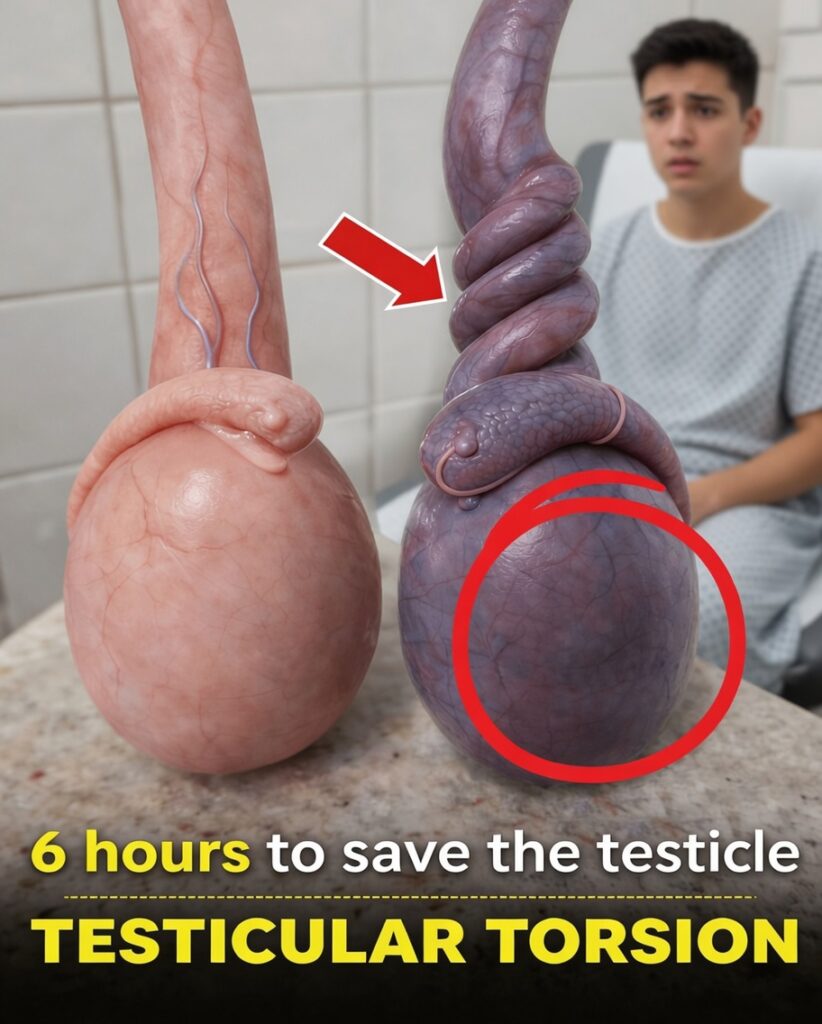
Sudden, Severe Testicle Pain? Treat It as an Emergency
Waking up with intense, sudden pain in one testicle can feel shocking—sharp, overwhelming, and unrelenting. Many people try to brush it off as a minor strain, hoping it will fade. That delay can be costly. Testicular torsion is a time-critical condition in which the testicle twists and cuts off its own blood supply—and the longer you wait, the harder it can be to save the testicle.
The most important takeaway is simple: recognize the warning signs early and get to the emergency room immediately. Quick action dramatically improves outcomes. Toward the end, you’ll find clear, practical steps to follow if this ever happens to you or someone close to you.
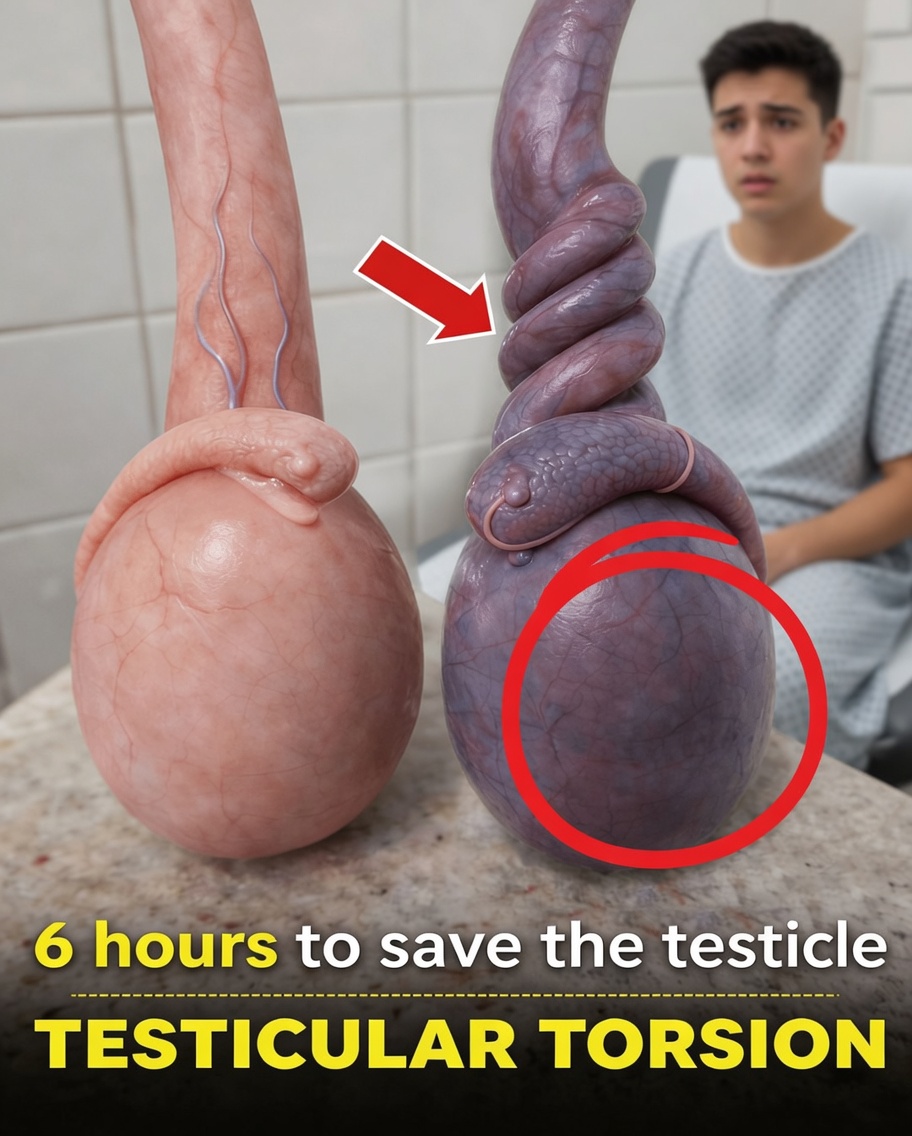
What Is Testicular Torsion?
Testicular torsion happens when a testicle rotates around the spermatic cord—the “bundle” that carries blood vessels, oxygen, and nerves to the testicle. When the cord twists, blood flow can be severely reduced or completely blocked.
Without oxygen-rich blood, testicular tissue begins to suffer damage that worsens over time. This is why torsion is widely treated as a true medical emergency.
A key point many people miss: torsion is not always triggered by an injury. It can occur suddenly and without any obvious cause.
Why Testicular Torsion Is So Dangerous
The spermatic cord functions like a lifeline, delivering:
- Oxygenated blood
- Essential nutrients
- Nerve signals
When torsion occurs, that lifeline becomes pinched off. The testicle can begin to die from ischemia (oxygen deprivation). In emergency medicine, a common message applies here: “time equals testicle.” The longer the delay, the higher the chance of permanent loss.
Beyond saving the testicle itself, delayed treatment can also impact:
- Fertility potential
- Hormone production (less common, but possible)
- Emotional well-being following loss or surgery
The Time Window: What Studies Show About Testicle Salvage
Many people hear about a “6-hour window,” and medical research often supports that the highest salvage rates occur with very fast treatment. Large reviews of real-world cases report approximate outcomes like:
- Under 6 hours: often 90–97% salvage in some reports
- 6–12 hours: roughly around 79%
- 13–24 hours: highly variable, often around 50–54%
- After 24 hours: frequently below 20% in aggregated findings
Recent analyses add an important nuance: successful salvage can still occur beyond 6–8 hours in some situations. However, experts strongly agree on the practical message—do not wait. Even if several hours have passed, urgent evaluation remains essential.
Approximate Salvage Rates by Time Since Symptom Onset
- < 6 hours: High (often 90–97%)
- 6–12 hours: Moderate to high (around 79%)
- 13–24 hours: Variable (around 50–54%)
- > 24 hours: Low (often < 20%)
These figures come from studies tracking actual patient outcomes and underline why emergency care is non-negotiable.
What Causes Testicular Torsion?
Testicular torsion is most common in teenagers and young men, but it can occur at any age, including newborns.
A major risk factor is a congenital anatomical variation called the bell-clapper deformity. In this setup, the testicle is less securely attached inside the scrotum and can swing more freely—making twisting more likely. This anatomy can exist on both sides, which is why surgeons often protect both testicles during treatment.
Potential triggers include:
- Sudden movement during sports or exercise
- Minor groin trauma
- Twisting occurring during sleep
- Exposure to cold temperatures
In many cases, there is no clear trigger at all—it simply happens.
Warning Signs You Should Never Ignore
The most classic symptom is abrupt, severe pain in one testicle. It often starts suddenly and feels extreme.
Other common signs include:
- Scrotal swelling and/or redness
- One testicle sitting higher than the other or at an unusual angle
- Nausea and vomiting
- Pain spreading into the lower abdomen
- Scrotal skin that looks tight or discolored
If severe testicular pain appears—especially with any of the symptoms above—do not wait to see if it improves. Go to the emergency room immediately.
How Testicular Torsion Is Diagnosed
Clinicians typically begin with a physical exam, looking for findings commonly associated with torsion, such as:
- A high-riding testicle
- An absent cremasteric reflex (normally the testicle pulls upward when the inner thigh is stroked)
To evaluate circulation, a Doppler ultrasound is often used because it can quickly show whether blood flow is reduced or absent.
Crucial point: if symptoms and exam strongly suggest torsion, many clinicians prioritize immediate surgery rather than losing time waiting on imaging.
The Only Reliable Treatment: Emergency Surgery
There is no medication that “fixes” torsion, and waiting it out is dangerous. Emergency surgery is the standard of care.
During the operation, the surgeon typically:
- Untwists the spermatic cord (detorsion) to restore blood flow
- Checks whether the testicle is still viable
- Performs orchiopexy (securing the testicle to the scrotal wall) to prevent recurrence
- Often secures both testicles because the underlying risk can be bilateral
If the testicle has been without blood flow too long and is no longer viable, removal (orchiectomy) may be necessary to prevent further complications.
In some emergency settings, a clinician may attempt manual detorsion (careful untwisting by hand). Even if it relieves pain, it is usually followed by prompt surgery to confirm blood flow and prevent recurrence.
What Happens If Treatment Is Delayed?
Waiting increases the likelihood of:
- Permanent damage to the testicle or complete loss
- Possible effects on fertility (one healthy testicle often maintains fertility, but risk can increase depending on circumstances)
- Hormonal issues in rare cases
- Significant stress, anxiety, or emotional distress related to the event
Medical guidance is consistent: fast action prevents many of these outcomes.
Exactly What to Do If You Suspect Testicular Torsion
If sudden, severe testicular pain occurs, take these steps immediately:
- Stop what you’re doing and note the exact time symptoms began (this helps clinicians assess urgency).
- Do not try to “push through it,” and don’t rely on home remedies like heat or ice.
- Go to the nearest emergency room now or call emergency services. Clearly state: “sudden severe testicular pain.”
- Do not eat or drink, since urgent surgery may be required.
- If possible, bring someone with you to help with transportation and communication.
Getting treatment within the first few hours offers the best chance of a full recovery.
Key Takeaways (Quick Summary)
- Testicular torsion is a twist of the spermatic cord that blocks blood flow.
- The biggest warning sign is sudden, severe one-sided testicular pain, often with swelling and nausea.
- The sooner you get emergency care, the better the chance of saving the testicle.
- Surgery is the definitive treatment—delaying is risky.
- Even if hours have passed, still seek emergency care immediately; successful outcomes can still occur.
FAQ: Common Questions About Testicular Torsion
-
Can testicular torsion happen again?
Yes. Without surgical fixation (orchiopexy), torsion can recur. This is why surgeons commonly secure both testicles. -
Does torsion always mean the testicle must be removed?
No. When treated quickly, the testicle is often saved. The risk of removal rises as time without blood flow increases. -
Is the pain usually obvious?
Most cases involve sudden, intense pain that is hard to ignore. Milder presentations are uncommon but still require urgent evaluation.
Medical Disclaimer
This article is for educational purposes only and does not replace professional medical advice. If you develop sudden testicular pain or related symptoms, seek emergency medical care immediately. Only a qualified healthcare professional can diagnose and treat this condition.