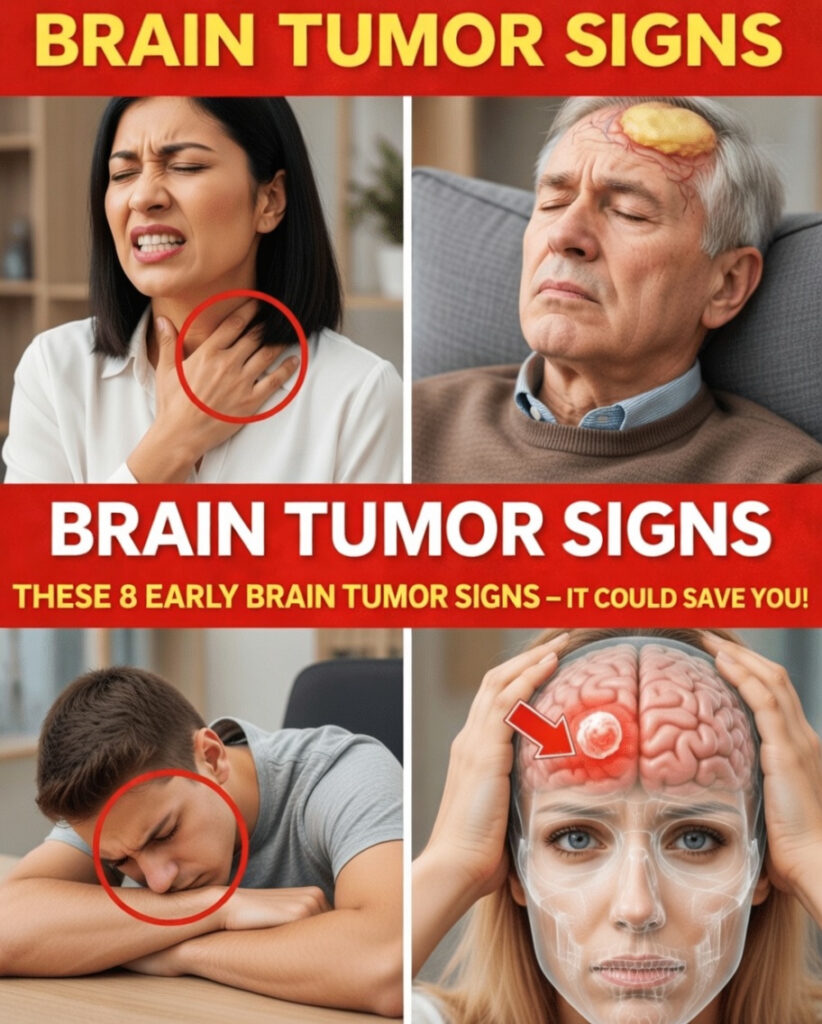
8 Early Brain Tumor Signs You Should Not Ignore
It is easy to dismiss small physical changes as stress, lack of sleep, or simply getting older. However, when headaches last longer than usual or nausea appears out of nowhere, those symptoms can begin to interfere with everyday life and cause real concern. Uncertainty often fuels anxiety, especially when you are not sure what deserves medical attention.
Understanding symptom patterns can help you speak with your doctor more confidently. Below are eight early warning signs medical experts often highlight, along with one practical step at the end that can help connect the dots.
Why These Symptoms Can Happen
A brain tumor is an abnormal growth in the brain that may press on nearby tissue or increase pressure inside the skull. The Mayo Clinic notes that symptoms vary depending on the tumor’s size and where it is located, and they often appear gradually over time rather than all at once.
Many of these changes can also be caused by far more common problems, including migraines, stress, dehydration, or other non-serious conditions. Still, noticing a pattern early can encourage someone to seek medical advice sooner rather than later.
Ignoring ongoing symptoms does not make them disappear. Here are eight signs that deserve closer attention.
1. Headaches That Feel Unusual for You
Headaches are one of the most frequently reported symptoms associated with brain tumors. According to Mayo Clinic data, about half of patients experience them at some point. These headaches are usually different from typical tension headaches or occasional migraines.
Common features may include:
- Stronger pain in the morning
- Slight improvement after getting up and moving around
- Worsening with coughing, sneezing, or bending over
- A deep pressure or throbbing sensation
- Limited relief from usual headache treatments
If you develop a new type of headache that continues for weeks and does not have an obvious cause, it is worth monitoring carefully. What often stands out is that the pain feels unfamiliar and gradually becomes more noticeable.
2. Unexplained Nausea or Vomiting, Especially After Waking Up
Nausea or vomiting without a clear digestive reason can also be a warning sign. In some cases, it happens in the morning or after changing position, when increased pressure inside the skull affects the part of the brain involved in vomiting.
Unlike a stomach virus, this kind of nausea usually does not come with diarrhea or typical digestive symptoms and may not last throughout the day.
When morning nausea appears together with unusual headaches, the combination may seem different from everyday illness. Noting when it happens can be very useful during a medical appointment.

3. Vision Problems That Come and Go
Changes in eyesight may appear briefly at first and are easy to brush off as eye strain or a sign that you need new glasses. Still, visual symptoms can sometimes be linked to pressure on the brain’s visual pathways.
Possible changes include:
- Blurred vision
- Double vision
- Halos around lights
- Sudden loss of side vision
- Symptoms triggered by head movement
Medical research suggests that vision problems often depend on the exact location of the tumor. If your eyesight starts changing in unpredictable ways without a clear explanation, keep track of the details.
4. First-Time Seizures in Adulthood
A seizure that happens for the first time after age 25, especially in someone with no history of epilepsy, should always be assessed promptly. Seizures do not always look dramatic. They can range from full-body convulsions to more subtle episodes.
They may involve:
- Staring spells
- Sudden jerking of an arm or leg
- Strange smells
- Déjà vu sensations
- Brief periods of confusion
The American Brain Tumor Association reports that seizures occur in roughly 20% to 45% of brain tumor patients at some stage. Even a single unexplained episode deserves medical attention.
5. Personality or Behavior Changes That Feel Out of Character
Mood, judgment, and behavior can shift when certain parts of the brain are affected, especially the frontal or temporal lobes. These changes are often noticed by family members, friends, or coworkers before the person experiencing them fully recognizes them.
Examples can include:
- Increased irritability
- Apathy or loss of motivation
- Impulsive decisions
- Confusion with familiar tasks
- Poor concentration
These symptoms may overlap with memory problems and can gradually affect work performance, communication, and relationships. If someone close to you notices clear changes in your usual behavior, it is important not to dismiss them.
6. Difficulty Finding Words or Understanding Speech
Language-related problems can develop slowly and may feel frustratingly specific. Some people know what they want to say but cannot find the correct words. Others may begin mixing up words or struggle to follow conversations.
This symptom can also affect:
- Reading fluency
- Writing ability
- Understanding spoken language
- Expressing thoughts clearly
These changes are often linked to tumors involving the brain’s language centers, usually on the left side in right-handed individuals. Writing down when these episodes happen can help your doctor understand the pattern more clearly.

7. Ongoing Balance Problems or Dizziness
Persistent unsteadiness is another symptom that can interfere with daily life. Some people describe it as feeling like they are walking on a boat, while others notice frequent tripping, poor coordination, or lingering vertigo.
Possible signs include:
- Sudden clumsiness
- Trouble walking straight
- Frequent stumbles
- Dizziness that does not quickly improve
- A growing fear of falling
These problems may be related to the cerebellum or nearby brain structures. Unlike common inner-ear dizziness, they often worsen gradually instead of resolving after a short time.
8. Severe Fatigue That Rest Does Not Fix
Extreme tiredness can be another early clue. This is not ordinary fatigue from a long week or a bad night’s sleep. People often describe it as a constant low-energy state that remains even after plenty of rest.
This type of exhaustion may:
- Feel deep and unrelenting
- Continue despite sleep or downtime
- Make it harder to function normally
- Appear alongside other neurological symptoms
Research shows that fatigue is common in people with brain tumors and can significantly reduce quality of life. When it appears together with other persistent symptoms, it becomes more important to evaluate.
What You Can Do Right Now
Recognizing possible warning signs is only the first step. Taking simple action can make a real difference.
1. Keep a Symptom Journal
Write down:
- When each symptom starts
- How long it lasts
- How often it happens
- What makes it better or worse
- Whether it occurs with other symptoms
2. Watch for Changes Over Time
Pay attention to whether symptoms are:
- Brand new
- Becoming more frequent
- Getting more intense
- Appearing in combination
3. Book a Medical Appointment Promptly
Share your notes with a primary care doctor. A clear record can help guide the next steps, which may include a neurological exam or further testing if needed.
4. Avoid Self-Diagnosis
These symptoms do not automatically mean a brain tumor. Use this information to stay informed, not to diagnose yourself. A medical professional is the right person to determine the cause.
Why Awareness Matters
Brain tumors are relatively uncommon, but their early symptoms can be subtle and easy to overlook. Major health organizations stress that patterns lasting for weeks or months deserve attention because timely evaluation can lead to better management options.
At the same time, it is important to remember that most headaches, nausea, fatigue, and dizziness are caused by much more common issues such as migraines, dehydration, stress, or poor sleep.
The key takeaway is simple: awareness helps turn uncertainty into informed action.
FAQ
1. Do these eight signs always mean a brain tumor?
No. Most headaches, nausea, and fatigue are caused by everyday conditions such as stress, infections, lack of sleep, or migraines. These signs become more important when they persist, worsen, or appear together. Only a doctor can make an accurate assessment.
2. How quickly should I contact a doctor if I notice several symptoms?
If multiple symptoms appear at once, or if one symptom gets worse quickly and disrupts daily life, contact a doctor within days instead of waiting weeks. Early evaluation can provide reassurance or help identify a problem sooner.
3. Can lifestyle habits lower risk or help with symptoms?
There is no guaranteed way to prevent brain tumors, but healthy habits still support overall brain and body health. Regular exercise, a balanced diet, quality sleep, limiting alcohol, and avoiding smoking can all contribute to better well-being. They may also help reduce or manage symptoms caused by more common conditions.