Avocados in America: A Beloved Superfood—With a Few Common Pitfalls
Americans eat roughly 9 pounds of avocados per person each year, turning this creamy fruit into an everyday favorite. Avocados are famous for their heart-friendly fats, fiber, and micronutrients, but certain routine habits can occasionally lead to bloating, digestive discomfort, or unexpected reactions.
Many people include avocado in meals day after day without noticing that portion size, handling practices, and personal sensitivities can influence how they feel. The upside is simple: small, mindful changes often make avocado easier to enjoy—without giving up its benefits.
This guide covers 6 common avocado mistakes that research and food-safety guidance link to potential concerns, plus practical, realistic ways to avoid them.
The “Avocado Paradox”: Nutrient-Rich, Yet Not Always Trouble-Free
Avocados deliver monounsaturated fats, fiber, potassium, and key vitamins that can support cardiovascular health and help the body absorb certain nutrients—especially when eaten in reasonable portions. Research frequently connects moderate intake with improvements in markers such as cholesterol and overall dietary quality.
However, as avocado consumption increases, more people report issues like stomach upset or unexpected reactions. In most cases, these problems come from how avocados are used, not from the fruit being inherently “bad.”
A quick self-check: Do you actually know your usual avocado portion? Awareness is often the first step to feeling better.
Mistake 1: Adding the Pit, Skin, or Leaves to Food and Drinks
Some wellness trends promote blending avocado pits or using leaves to “maximize nutrients.” The concern is that these parts of the plant contain higher concentrations of persin, a natural compound produced by the avocado plant.
Evidence suggests persin in the ripe flesh is typically not an issue for most people, but pits, skins, and leaves may carry higher levels that could be problematic in larger amounts—especially for sensitive individuals or when used in less mature forms. Toxicity concerns are more clearly documented in animals than in typical human avocado consumption, but the safest approach remains straightforward.
Safer habit
- Eat only the soft, ripe flesh
- Discard the pit and skin after cutting
Mistake 2: Overserving Avocado Because “Healthy” Feels Unlimited
Avocados are nutrient-dense—but also calorie-dense. A large avocado can contain around 320 calories, primarily from fat (even if it’s the “good” kind). When avocado appears in toast, bowls, salads, dips, and smoothies—sometimes all in one day—portions can climb quickly.
Studies tend to highlight benefits at moderate intake, while consistently oversized portions may contribute to an unintended calorie surplus, which can matter for weight goals or metabolic health.
Practical portion guide
- Start with 1/3 to 1/2 an avocado per meal
- If you eat avocado daily, measure once or twice to “reset” your eye for serving size
Mistake 3: Ignoring Latex-Fruit Syndrome (Latex Cross-Reactivity)
Avocado can trigger symptoms in people with latex allergy due to shared or similar proteins—a phenomenon often called latex-fruit syndrome. Research estimates that 30–50% of individuals with latex sensitivity may react to foods such as avocado, banana, or kiwi.
Possible symptoms include:
- Itching or tingling in the mouth
- Lip or tongue swelling
- Hives or more significant reactions in some cases
If you notice mouth tingling, swelling, or repeated discomfort after avocado, it’s worth taking seriously.
What to do
- If you have a known latex allergy or frequent latex exposure history, discuss symptoms with a healthcare professional
- They may recommend testing, avoidance, or an action plan based on your risk level
Mistake 4: Storing or Handling Cut Avocados in Ways That Raise Contamination Risk
Food-safety problems often come from handling, not the food itself. Leaving cut avocado at room temperature for too long—or using popular “water storage” hacks—may increase bacterial concerns.
Food-safety surveillance has identified pathogens such as Salmonella and Listeria on some avocado surfaces. The main issue is transfer: a knife can carry microbes from the skin into the flesh, and prolonged room-temperature exposure can increase risk.
Safer handling and storage
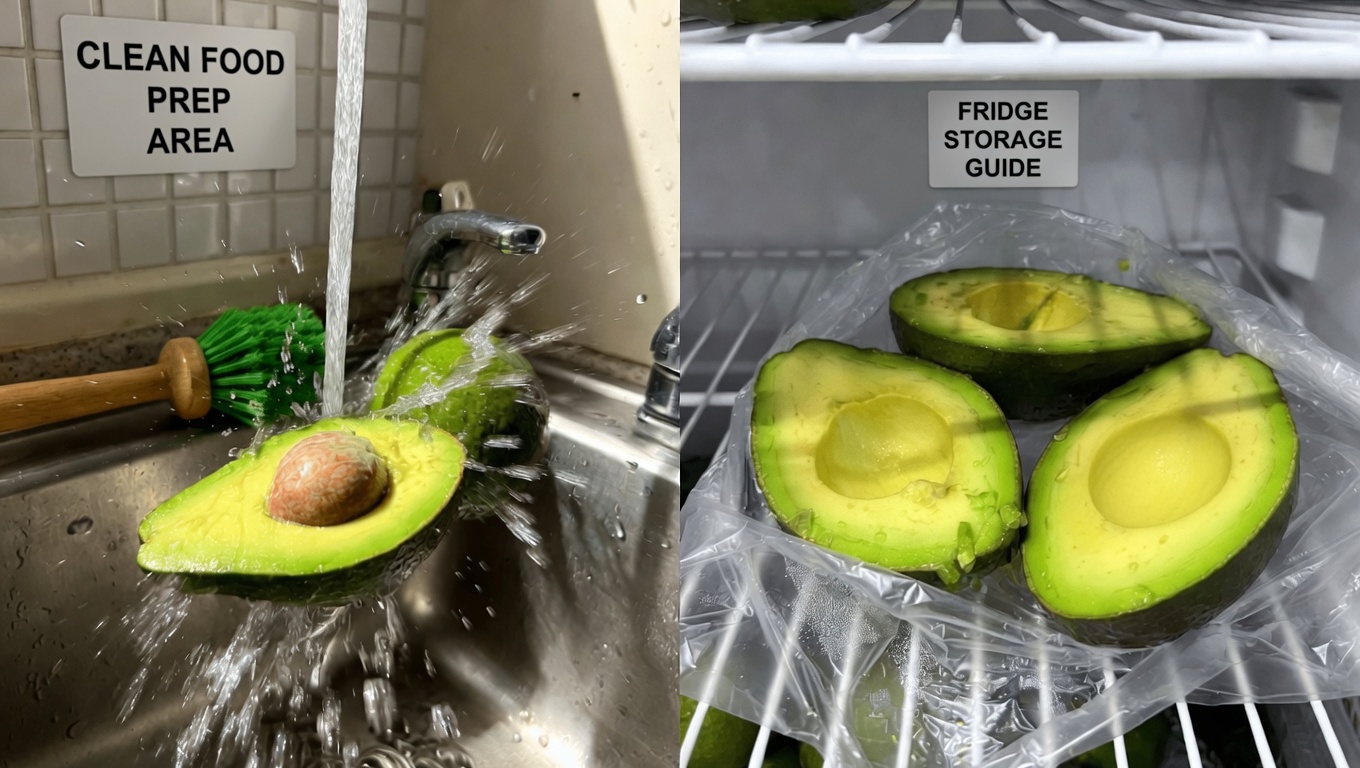
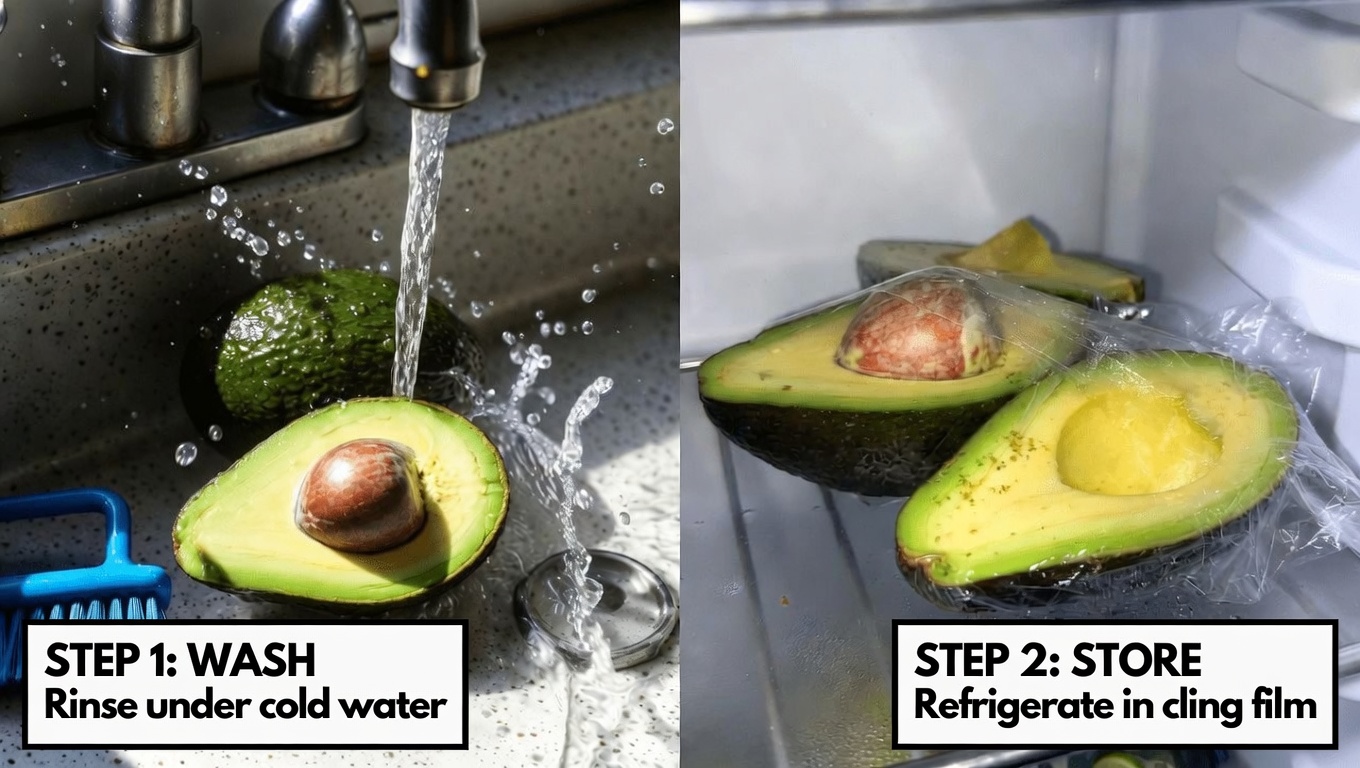
- Wash the avocado skin under running water and scrub with a clean produce brush before cutting
- Refrigerate cut avocado promptly
- To reduce browning: add lemon/lime juice, keep the pit in the unused half, and wrap tightly
- Avoid submerging cut avocado in water as a storage method
Mistake 5: Forgetting Avocado May Matter With Certain Medications
Avocados provide vitamin K and potassium—both valuable nutrients, but they can be relevant for specific medical situations.
This may matter if you:
- Take warfarin or other anticoagulants where vitamin K consistency can affect medication management
- Use medications or have conditions where potassium levels must be monitored
For many people, the key is consistent intake, not total avoidance.
Action step
- Keep portions steady from week to week and bring your typical intake to your doctor or pharmacist for personalized guidance
Mistake 6: Overlooking Personal Digestive Tolerance (Especially With Larger Servings)
Even without an allergy, some people notice gas, bloating, abdominal discomfort, or fatigue after eating larger amounts of avocado. Potential reasons include:
- The fruit’s high fat content, which can slow digestion for some
- Naturally occurring polyols (including a unique one found in avocados), which may trigger symptoms in people with sensitive digestion
- Greater sensitivity in conditions such as IBS
FODMAP-focused research and guidance commonly note that portion size can determine whether avocado is tolerated.
Listen to your body
- If symptoms appear, reduce to a smaller serving (for example, 1/8–1/4 avocado) and reassess
- Consider spacing avocado out (e.g., not every day) and pairing it with other foods
Quick Comparison: Common Avocado Mistakes vs. Smarter Habits
- Using pit/skin/leaves → Higher persin exposure → Use the flesh only
- Oversized servings → Calorie creep → Aim for 1/3–1/2 avocado
- Ignoring latex allergy history → Cross-reaction risk → Consult a clinician if sensitive
- Poor storage/handling → Bacterial transfer risk → Wash skin, refrigerate promptly
- Not considering medications → Possible vitamin K/potassium implications → Keep intake consistent + get professional advice
- Pushing through gut symptoms → Repeated discomfort → Lower portion and observe
A Quick Avocado Safety Check
How many of these habits sound familiar? Rate your current avocado awareness from 1 to 10 (10 = very mindful). Most people find at least one simple area to improve.
How to Enjoy Avocado’s Benefits—Comfortably and Safely
When eaten in moderation, avocados can be an excellent addition to a balanced diet:
- Heart support: rich in oleic acid → often well-tolerated at 1/3–1/2 avocado
- Better nutrient absorption: pair with vegetables to help absorb fat-soluble nutrients
- More satisfaction after meals: fiber + fat can support satiety
For variety, rotate avocado with other healthy fats like nuts, seeds, and olive oil.
A simple starting point: measure your next portion once, then store leftovers safely in the refrigerator.
FAQ
Q: How much avocado is safe to eat per day?
Most people do well with about 1/3 to 1/2 an avocado daily as part of a balanced diet. Adjust based on your goals, digestion, and any medical guidance.
Q: Can everyone eat avocados without problems?
Many can, but people with latex allergies, certain medication considerations, or digestive sensitivities (like IBS) may need extra caution and professional advice.
Q: What’s the best way to store leftover avocado?
Add lemon or lime juice, keep the pit in the unused half, wrap tightly, and refrigerate. For best quality, use within 1–2 days.
Disclaimer: This article is for informational purposes only and is not a substitute for medical advice. For personalized guidance, consult a qualified healthcare professional.