A 4-Minute Posture Routine for Adults Over 60 to Reduce Forward Head Posture
A 2022 study published in The Spine Journal reported that adults over 60 with forward head posture were much more likely to deal with more than just ongoing neck pain. They also faced persistent fatigue, mental fog, slower digestion, and an alarming 56% higher risk of falls—even when their leg strength appeared normal.
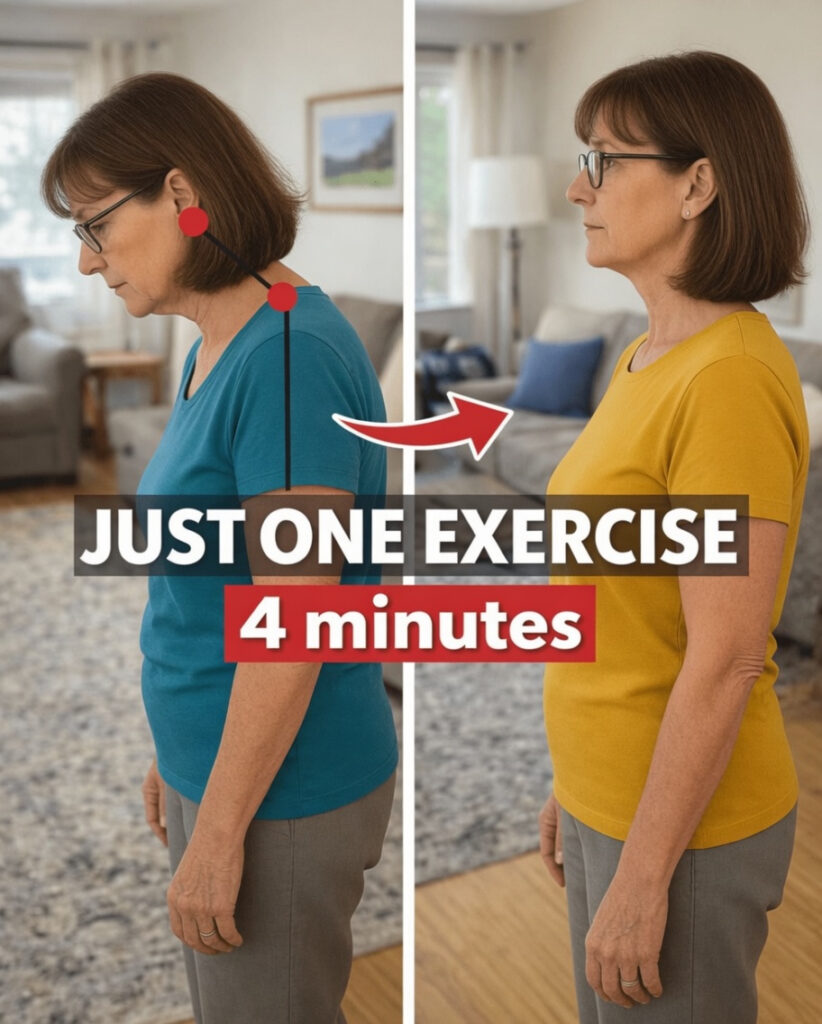
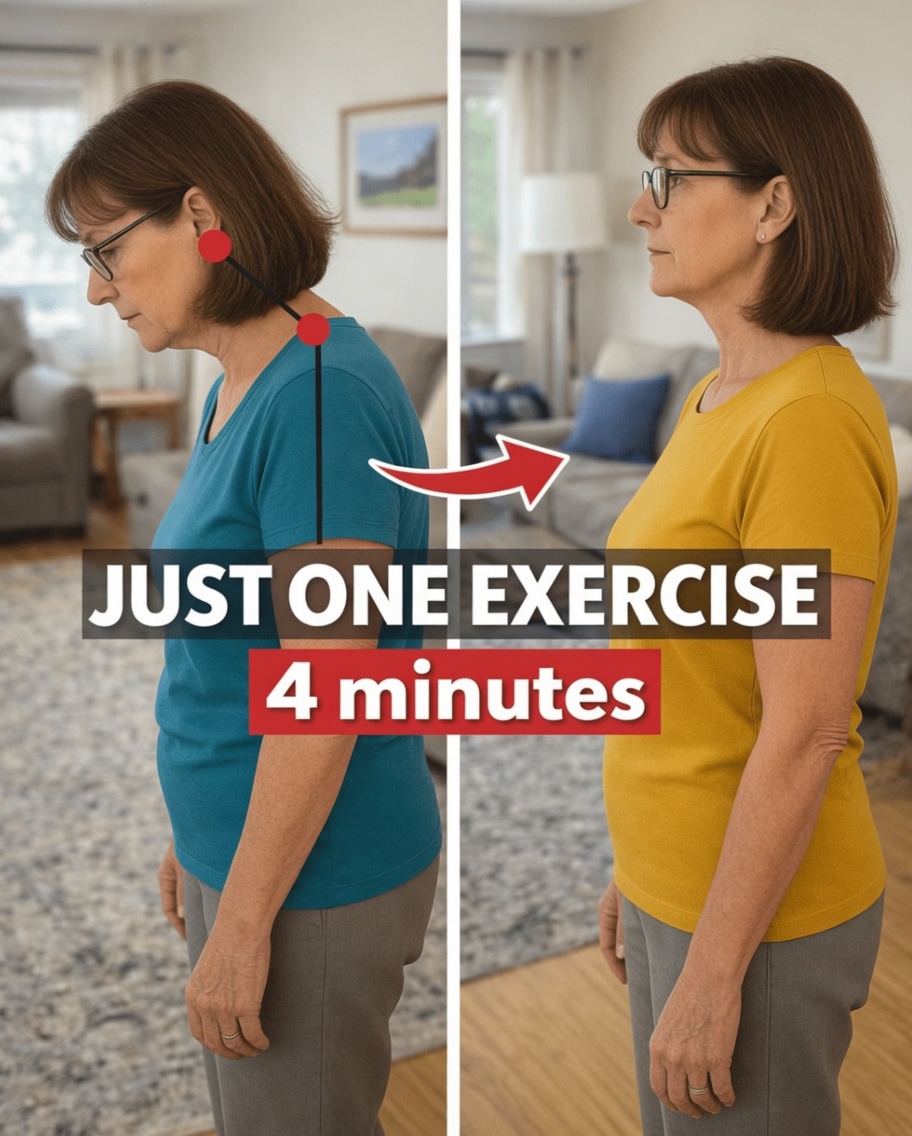
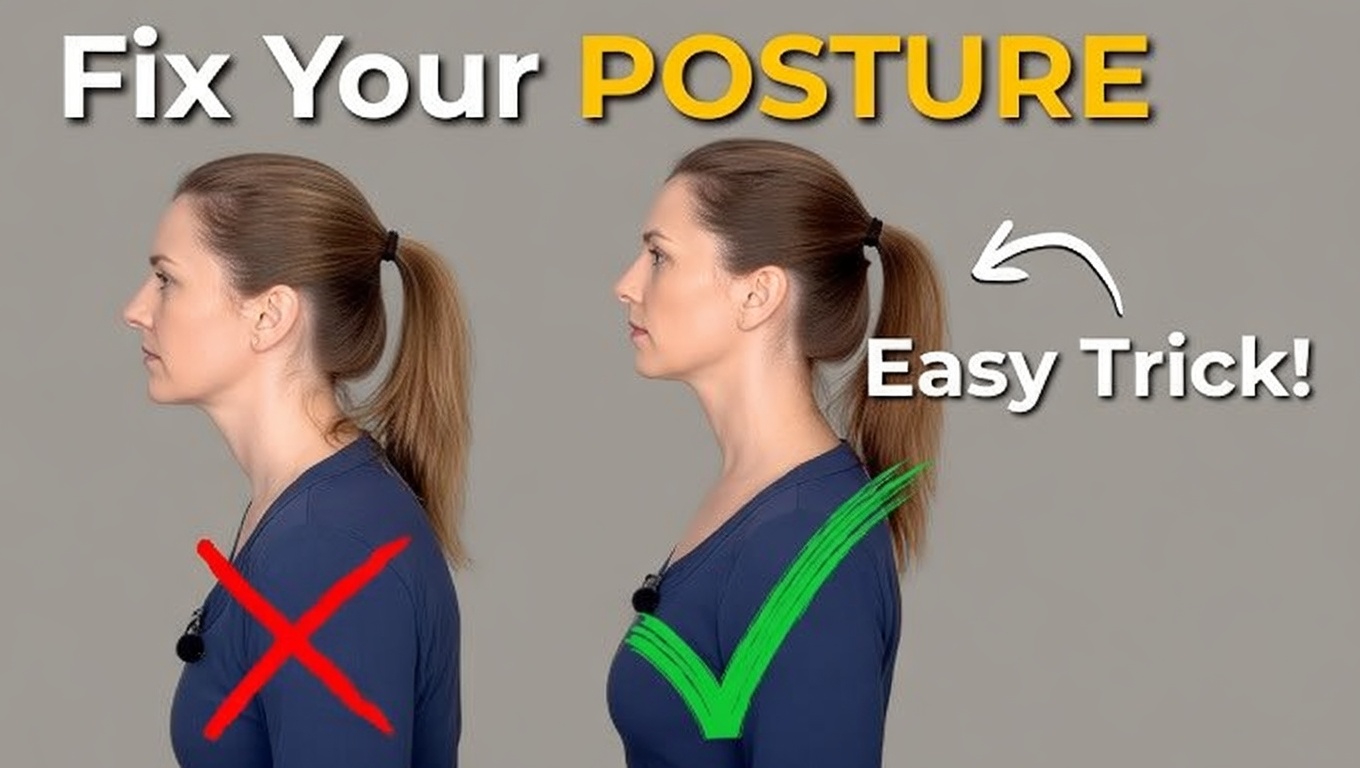
Take a moment and picture what that posture can look like: your head drifting forward, shoulders curling inward, upper back rounding. At the same time, you may feel more tired, heavier, and less balanced than you used to.
Before going further, give yourself a quick score from 1 to 10:
How tall, light, and aligned do you feel when you sit or stand naturally?
Not forced posture—just your normal everyday position.
Hold on to that number. A gentle 4-minute routine, shared by one of Japan’s most experienced senior physicians, may help improve that feeling safely and gradually—without harsh stretching, complicated exercises, or expensive gear.
Many people over 60 quietly assume a slouched posture is simply part of aging. But what if your body still remembers how to stand taller? What if it only needs the right signals to return there? Below, you’ll learn the exact 4-step method, why it works, and how it supports posture, energy, breathing, and balance later in life.
Why Forward Head Posture Becomes So Problematic After 60
After age 60, several everyday habits can slowly pull posture out of alignment:
- Looking down at phones or tablets for long periods
- Years of desk work
- Caregiving tasks that round the shoulders forward
- Old injuries
- Stress-based tension patterns
- Reduced movement in the upper spine
Some surveys suggest that as many as 68% of adults over 65 show measurable forward head posture. Yet many never connect it to symptoms such as:
- Daytime fatigue
- Poor balance
- Shallow breathing
- Neck stiffness
- A heavy feeling in the chest or abdomen
- General low energy
Trying to “sit up straight” often works for only a few minutes. Then the body collapses back into the same pattern. That is frustrating—but also very common.
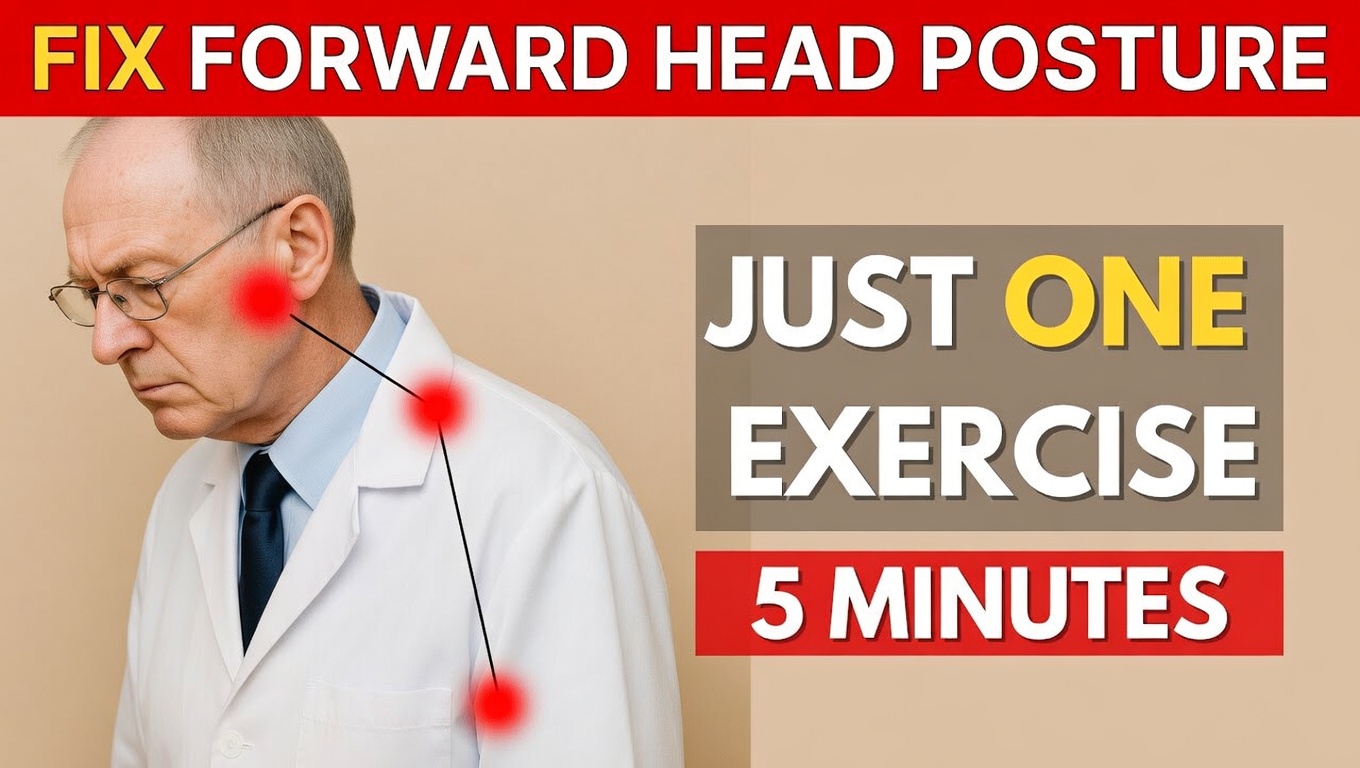
This issue is not only cosmetic. For roughly every inch the head moves forward, the neck may take on about 10 extra pounds of load. Over time, that added strain can:
- Compress cervical structures
- Irritate nearby nerves
- Reduce blood flow efficiency
- Limit diaphragm movement
- Increase shallow breathing
- Interfere with proprioception, the body’s internal balance system
That last point matters. When proprioception becomes less reliable, the risk of falling rises significantly.
Forward head posture can also quietly contribute to:
- Low-grade inflammation
- Brain fog from reduced oxygen delivery
- Slower digestion
- Stress-related nervous system overactivation
- Reduced confidence while walking or turning
Ask yourself this:
On a scale of 1 to 5, how often do you notice neck tightness, afternoon energy crashes, or unsteadiness when you turn quickly?
If your answer is 3 or higher, you may already have tried things like:
- Chin tucks
- Posture braces
- Reminders to “sit straight”
The problem is that these strategies often work against the nervous system instead of with it. Force tends to create tension. Gentle, rhythmic movement is more likely to create lasting change.
Why This 4-Minute Routine Can Work So Well After 60
According to senior physicians in Japan, posture correction after 60 is less about brute strength and more about retraining the nervous system.
When forward head posture becomes habitual, the brain starts treating that position as normal—even if it places stress on the spine. If you try to correct it too aggressively, the body may respond with protective tightening. But if you use slow, mindful movement, the nervous system receives a message of safety. That allows deeper stabilizing muscles to come back online more naturally.
This routine is built around four simple phases:
- Sensory warm-up to reconnect and release
- Integrated retraction to restore alignment through the whole chain
- Passive traction to decompress the neck
- Thoracic opening to improve upper-back mobility and breathing
What you need
- 4 minutes
- A chair or a comfortable standing position
- A small rolled towel or a yoga block/cushion
Best time to do it
- In the morning
- After long periods of sitting
- Daily, for best results
Step 1: Sensory Neck Warm-Up to Restore Safe Movement
Time: 60 to 90 seconds
Before the body accepts a new posture, the neck needs to feel safe moving again.
How to do it
Sit or stand comfortably.
- Rest your hands on your thighs or gently clasp them behind your back.
- Slowly turn your head to the right, return to center, then turn left, and return to center.
- Continue for about 30 seconds, moving through 5 to 6 smooth cycles.
- Next, gently lower your chin toward your chest, then lift your gaze upward without crunching the back of your neck.
- Finish with light side bends, bringing one ear toward the shoulder, then the other.
Move only within a range that feels easy and comfortable. Do not force end-range motion.
Breathing cue
- Inhale before the movement
- Exhale as you soften into it
Why it helps
Slow, controlled neck motion stimulates proprioceptors and reduces protective muscle guarding. Studies involving older adults suggest that gentle, multi-directional neck mobility work may improve cervical awareness and comfort within a few weeks.
A real-life example
Margaret, 68, a former librarian, described her neck as feeling “locked” for years. After just 10 days of practicing this warm-up, she said:
“I can turn my head to check blind spots without that sharp pull. It feels like my neck remembered how to move again.”
Quick self-check
During your final head turn, notice your breathing.
Did it get deeper or easier?
That often means your nervous system is beginning to register the motion as safe.
Step 2: Chin Retraction with Shoulder Blade Engagement
Time: 60 seconds
This is the core of the routine. It is not just a chin tuck. It is a whole upper-body alignment movement.
How to do it
- Sit or stand tall.
- Clasp your hands behind your back, or simply rest them on your lap.
- Gently draw your shoulder blades slightly together and downward, as if you were holding a pencil between them.
- Keep your shoulders away from your ears.
- Without lifting or dropping your chin, slide your head straight back.
- Imagine making a soft double chin while keeping your eyes level.
- Feel the back of your neck lengthen.
- Hold for 10 to 15 seconds while breathing calmly.
- Release and repeat 3 times.
Why it works
This movement helps activate deep stabilizing muscles while reducing overactivity in tense surface muscles. Physical therapy research suggests similar gentle retraction patterns may reduce forward head angle over time in adults over 60.
A real-life example
Robert, 71, had felt hunched for nearly 10 years. After two weeks of doing this routine, his wife told him:
“You look like yourself again—taller and lighter.”
He also noticed:
- Easier breathing
- Less afternoon fatigue
- Less tension across the shoulders
Quick self-rating
After one hold, rate the ease in your neck and shoulders from 1 to 10.
Even a small improvement is worth noticing.
Step 3: Passive Cervical Traction with a Towel
Time: 60 seconds
Now the goal is to let gravity assist with gentle decompression.
How to do it
- Sit in a firm chair.
- Roll up a small hand towel, or use a thin yoga block or cushion.
- Place it horizontally at the base of the skull, not deep in the neck curve.
- Let your head rest back so the support cradles the occiput.
- Allow your arms to hang forward or rest on your thighs.
- Let gravity create a light traction effect.
- Think of the crown of your head lifting slightly upward.
- Hold for 15 to 20 seconds while breathing deeply into the ribs.
- Repeat 3 times.
What you should feel
- Gentle length through the neck
- No pinching
- No sharp pressure
- No strain
If anything feels uncomfortable, reduce the height of the towel or skip the position.
Why it helps
Supported positioning can calm tight tissues and give the nervous system a chance to recognize a less compressed neck posture. Japanese geriatric research has suggested that supported traction-style positions may improve comfort, alignment awareness, and relaxation in older adults when performed gently and consistently.
Breathing cue
Try to expand the sides of your ribcage as you inhale. This often helps reduce neck gripping and improves relaxation through the upper chest.
Step 4: Thoracic Opening to Support Upright Posture and Better Breathing
Time: 60 seconds
The neck rarely improves for long if the upper back remains stiff and rounded. That is why the final step focuses on the thoracic spine.
How to do it
You can perform this seated or standing.
- Place your hands lightly behind your head, or keep your elbows bent at your sides if that feels easier.
- Gently open your elbows outward.
- Lift the breastbone slightly.
- Think about widening across the collarbones.
- Allow the upper back to extend just a little—do not force a big backbend.
- Hold for 10 to 15 seconds, then relax.
- Repeat 3 times.
Another option is to place a rolled towel vertically along the upper back while lying down for a brief supported chest opening, if that is comfortable and safe for you.
Why it matters
A rounded thoracic spine encourages the head to drift forward. Opening the chest and improving upper-back mobility can help:
- Restore more natural head alignment
- Improve diaphragm movement
- Enhance breathing depth
- Reduce the collapsed feeling through the front of the body
Common benefit people notice
Many older adults report that this final step creates the biggest “aha” moment because they suddenly feel:
- Taller
- More open through the chest
- Less compressed
- More stable when walking
Why This Routine Often Works Better Than Forcing Good Posture
The main reason this approach can be so effective is simple:
It does not rely on willpower alone.
Instead of commanding the body into a rigid position, it uses:
- Gentle repetition
- Sensory awareness
- Breath regulation
- Nervous system safety
- Whole-body alignment
That is especially important after 60, when stiffness, old movement habits, and stress responses may be deeply ingrained.
Aggressive stretching can trigger guarding. Posture braces may create dependency. Constant reminders to “sit up straight” often fade quickly.
But this 4-minute sequence works by giving your brain and body a more comfortable, sustainable reference point.
A Simple Daily Check-In
Before and after the routine, ask yourself:
- How tall do I feel?
- How easy is my breathing?
- How free does my neck feel when I turn?
- How steady do I feel on my feet?
- What is my lightness score from 1 to 10?
Tracking these small changes can help you notice progress that might otherwise be missed.
What Results Can You Expect?
With consistent daily practice, many people notice early changes such as:
- Less neck tension
- Better head rotation
- Deeper breathing
- Improved awareness of posture
- Reduced afternoon heaviness
- Feeling more upright without forcing it
More visible posture changes usually come with time and repetition. The key is consistency, not intensity.
Safety Tips Before You Start
This routine should feel gentle. Stop or modify if you experience:
- Sharp pain
- Dizziness
- Tingling
- Numbness
- Headache that worsens
- Any sense of strain
If you have osteoporosis, a recent injury, severe arthritis, balance issues, or a history of spinal problems, speak with a qualified healthcare professional before starting a new posture practice.
The 4-Minute Routine at a Glance
Step 1: Sensory Neck Warm-Up
- Slow head turns
- Gentle flexion and extension
- Side bends
- 60 to 90 seconds
Step 2: Chin Retraction with Shoulder Blade Squeeze
- Head glides straight back
- Shoulder blades gently draw together and down
- 3 holds of 10 to 15 seconds
Step 3: Passive Cervical Traction
- Rolled towel at base of skull
- Gentle decompression with relaxed breathing
- 3 holds of 15 to 20 seconds
Step 4: Thoracic Opening
- Open the chest
- Lift the breastbone slightly
- Encourage upper-back extension
- 3 holds of 10 to 15 seconds
Final Thought
A slouched posture is often treated like an unavoidable part of aging. But in many cases, it is less about permanent damage and more about lost communication between the body and the brain.
That is why a short, calm, well-designed routine can make such a difference.
You do not need to force yourself into perfect posture. You only need to give your body the right signals—gently, consistently, and with patience.
Your body may not have forgotten how to stand taller after all. It may simply be waiting for the right reminder.