
Waking Up to Pee at 3 a.m.? Understanding Nocturia and How to Sleep Better
That all-too-familiar moment—waking up in the dark with a full bladder and seeing the clock read 3 a.m. again—can feel defeating. When nocturia repeatedly breaks up deep sleep, it often leads to grogginess, irritability, low energy, and fuzzy concentration the next day. Research suggests this problem is especially common in older adults: more than half of people over 50 experience it, and it often becomes more frequent with age.
The encouraging part is that many cases are linked to everyday routines or normal age-related shifts that you can identify and improve. There’s also a lesser-known factor—revealed later—that may change how you interpret nighttime urination.

What Is Nocturia?
Nocturia is the need to wake up one or more times during the night to urinate. An occasional single trip to the bathroom can happen to anyone. However, waking two or more times regularly may indicate an underlying trigger worth addressing.
Studies consistently show nocturia increases with age. It affects both men and women, though the most common causes can differ depending on gender and life stage. Beyond inconvenience, nocturia-related sleep disruption is associated with:
- Daytime sleepiness and fatigue
- Reduced attention and mental clarity
- Higher risk of falls, particularly in older adults
Common Cause #1: Too Much Fluid Close to Bedtime
A frequent (and often overlooked) cause is drinking too much in the evening. It’s not just water—fluids can add up quickly through:
- Tea or other hot drinks
- Soup and brothy meals
- High-water fruits and snacks
When you drink late, your kidneys continue producing urine during sleep, so the bladder fills faster than expected.
Another key point: caffeine and alcohol can make things worse because they act as mild diuretics, increasing urine output and potentially disturbing sleep quality.
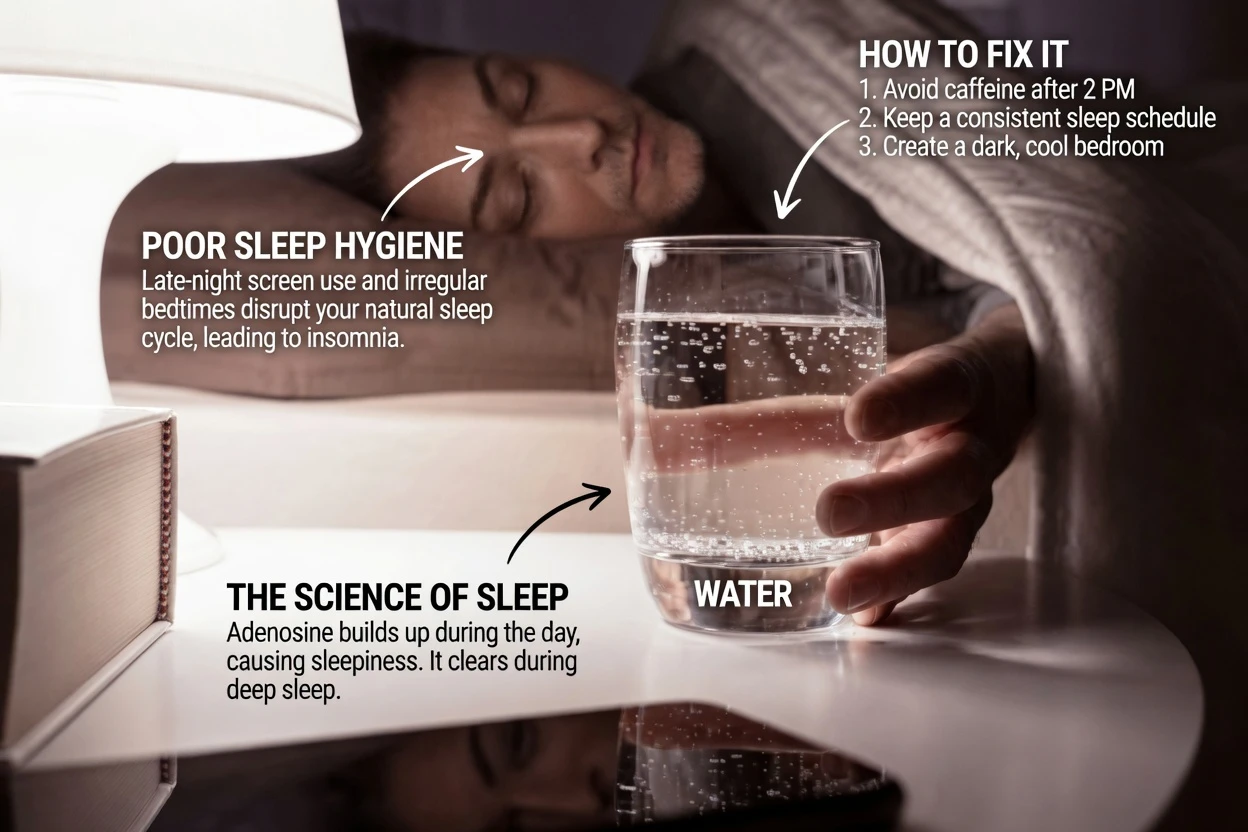
Common Cause #2: Light or Fragmented Sleep That Makes You Feel Every Urge
In some cases, the bladder is not the main issue—the sleep itself is. If you’re waking often due to:
- Stress or anxiety
- Insomnia
- Sleep apnea or other sleep disorders
…your brain may become more reactive to even small bladder signals. This can create a cycle:
- You wake up for another reason
- You notice mild bladder fullness
- You urinate a small amount
- You struggle to fall back asleep
- You wake up again soon after
Research shows sleep disorders frequently overlap with nocturia, turning minor sensations into repeated disruptions.
Age-Related Hormone Changes: Why Nighttime Urine Increases
As people age, the body often produces less vasopressin, a hormone that helps reduce urine production at night by concentrating urine. With lower vasopressin levels, the kidneys may generate more urine overnight—a pattern called nocturnal polyuria.
Some research suggests nocturnal polyuria contributes to a large share of nocturia cases in adults. While this shift can be a normal part of aging, understanding it helps explain why symptoms often become noticeable after 50 or 60.
The Surprising Connection: Leg Fluid, Circulation, and Heart Health
Here’s the unexpected factor mentioned earlier: fluid that pools in the legs during the day can significantly increase nighttime urination.
If you experience mild leg swelling or reduced circulation, gravity pulls fluid into the lower legs while you’re upright. When you lie down at night, that fluid moves back into circulation, gets filtered by the kidneys, and can boost urine production—leading to more nighttime bathroom trips.
This doesn’t automatically mean something serious is happening, but studies note nocturia can sometimes reflect circulatory patterns. It’s a useful clue to watch, especially if you notice swelling or a recent change in symptoms.

Gender-Specific Factors That Can Influence Nocturia
Why Nocturia Can Be More Common in Women
Women may experience nocturia for reasons that are closely tied to anatomy and hormonal transitions, including:
- Pelvic floor weakness after pregnancy, childbirth, or aging, reducing bladder support and control
- Overactive bladder, which creates urgency even when urine volume is low
- Menopause-related estrogen decline, which can increase urinary tract sensitivity and frequency
These can combine with age-related changes, making nighttime urination more disruptive.
Why Men Often Notice Nocturia More After 50
For many men, symptoms become more noticeable as the prostate changes with age. Benign prostatic hyperplasia (BPH)—a non-cancerous enlargement—can narrow the urethra and interfere with complete emptying.
When the bladder doesn’t fully empty, it refills more quickly, increasing the likelihood of repeated nighttime urges. Catching these patterns early can help guide effective management.
Practical, Evidence-Based Steps You Can Try Tonight
Many people see meaningful improvement from targeted habit changes. Consider starting with these strategies:
- Reduce evening fluids: Try limiting drinks 2–4 hours before bed, while drinking enough earlier in the day.
- Avoid late diuretics: Cut back on caffeine and alcohol in the afternoon/evening to reduce urine production and sleep disruption.
- Elevate your legs in the evening: Spend 30–60 minutes with legs raised to help shift pooled fluid before bedtime.
- Review medication timing: If you take diuretics, ask your healthcare provider whether taking them earlier (often in the morning) may help.
- Strengthen sleep hygiene: Keep a consistent sleep schedule, dim lights at night, and reduce screen time to lower unnecessary awakenings.
Clinical guidance commonly supports lifestyle adjustments as a first-line approach for many nocturia cases.
Quick Comparison: Evening Habits That Help vs. Habits That Can Worsen Nocturia
-
Helpful: Drink most fluids earlier in the day
- Why it helps: Gives your kidneys time to process fluids before bedtime
-
Worsening: A large drink right before sleep
- Why it hurts: Directly increases overnight bladder filling
-
Helpful: Chamomile or other non-caffeinated tea earlier in the evening
- Why it helps: Relaxing and typically not strongly diuretic
-
Worsening: Coffee or black tea after dinner
- Why it hurts: Caffeine increases urine output and can disrupt sleep
-
Helpful: Leg elevation 30–60 minutes pre-bed
- Why it helps: Reduces fluid pooling in the legs before lying down
-
Worsening: Prolonged standing/sitting late evening
- Why it hurts: Encourages leg fluid accumulation
-
Helpful: Rest earlier in the day when possible
- Why it helps: Can reduce fluid buildup and support overall recovery
-
Worsening: Alcohol in the evening
- Why it hurts: Acts as a diuretic and fragments sleep
When to Talk to a Doctor
Waking up once per night can be common, especially after age 50. Consider medical advice if:
- Nighttime urination starts suddenly or worsens rapidly
- You have additional symptoms such as:
- burning or pain during urination
- extreme thirst
- low back pain
- swelling
- persistent fatigue
- Lifestyle changes don’t help after 1–2 weeks
A clinician can evaluate likely causes with a basic assessment and recommend safe next steps.
FAQ: Nocturia
Is it normal to wake up once per night to urinate?
Often yes—especially after 50. One nightly trip is common and may not be concerning if you feel well otherwise.
When does nocturia require medical attention?
When it appears abruptly, escalates quickly, or comes with symptoms such as pain, unusual thirst, swelling, or significant fatigue.
Can nocturia be related to heart or circulation issues?
Sometimes. Fluid shifting from leg pooling at night can increase urine production and may reflect circulation patterns.
Final Thoughts
Nighttime bathroom trips aren’t just an annoyance—they can be your body’s signal that something needs attention. By recognizing common triggers like late-evening fluids, sleep fragmentation, age-related hormone changes, and leg fluid shifting, many people can reduce nocturia and regain more consistent, restorative sleep.
Disclaimer: This article is for informational purposes only and does not replace professional medical advice. Consult a qualified healthcare provider for personalized guidance about symptoms or health concerns.