Nobody expected the night to explode like this. The tide was calm, the kind that made the sea look like polished glass, and the restaurant sat above it like a crown—white stone, open terraces, lanterns already lit though the sun still clung to the horizon. Waiters moved in rehearsed silence. Silverware flashed. Somewhere, a pianist coaxed out notes that were more perfume than sound.
It was the sort of place where voices lowered automatically, not out of courtesy but out of fear of being the loudest person in a room full of money.
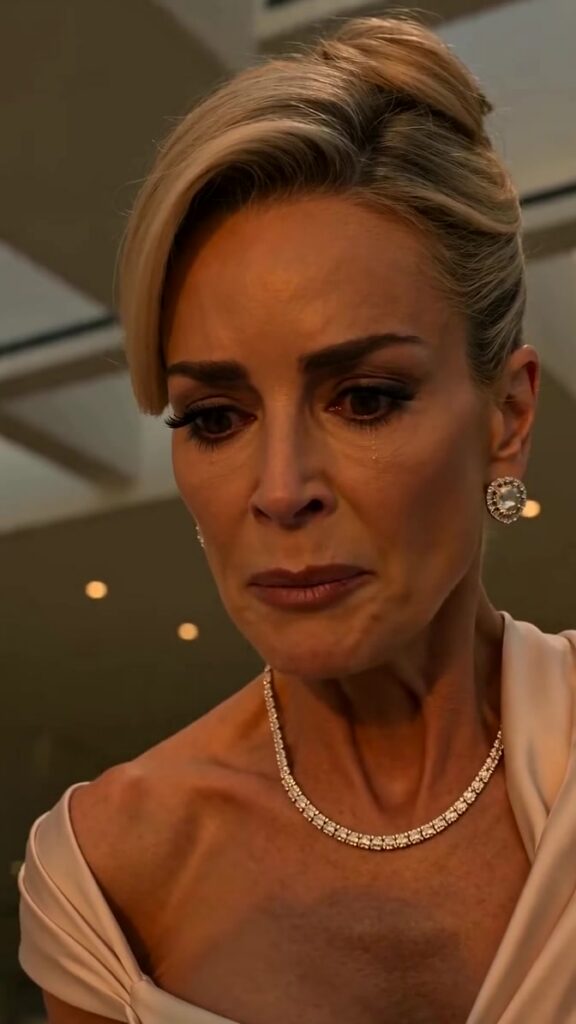
At the center of the terrace, Lena Arsen leaned back in her chair and let the sunset pour gold into her wineglass. She wore a dress the color of sea foam and a calm smile that had been practiced in mirrors since childhood. Across from her sat Kellan Rusk—investor, benefactor, predator in a linen suit—talking about a new marina project that would “revitalize” the coast. Lena nodded at intervals, eyes drifting to the horizon as if the sea might offer an excuse to leave.
When she glanced down, her bracelet shifted, revealing a pale line around her wrist where a watch used to sit. She covered it instinctively with her sleeve. The motion was small, but it carried a weight she couldn’t name, like tapping a cracked wall to see if it would finally fall.
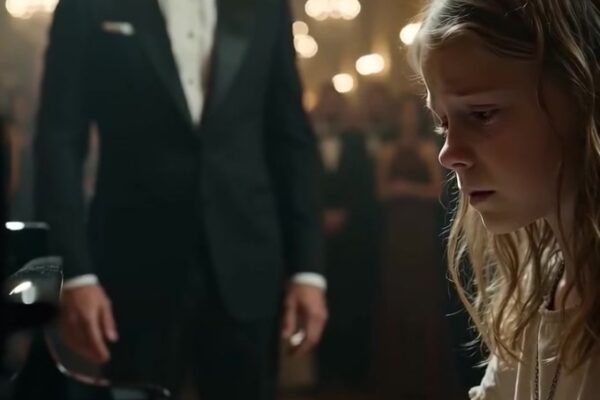
A soft shuffle near the terrace entrance broke the spell. A boy stood between two tall planters filled with glossy leaves. He was maybe ten, maybe eleven—small enough that the doorman should’ve dismissed him at a glance, but somehow he’d slipped through. His green shirt looked like it had been washed too many times. His hair stuck up in places as if he’d been running his hands through it all day. His shoulders rose and fell, fast, like he’d climbed the cliff to get here.
He took one step onto the terrace, then another, as if expecting the stones beneath his shoes to judge him.
A waiter approached with a polite smile already prepared. “Sweetheart, you can’t—”
The boy flinched, and his hands shot up. “Hey—don’t touch me!”
The words cracked through the terrace like a dropped plate. The pianist faltered. Forks paused midair. All eyes turned toward the boy, toward the thin line of defiance in his posture. His hands were shaking, but his gaze was steady—locked on Lena as if she were the only solid thing in the world.
Lena straightened. It was reflex, a response to being seen. She watched him the way you watch a stray spark near dry paper. Kellan frowned, irritation sliding over his face like a mask.
The boy moved forward, weaving between tables that suddenly felt too close, too crowded with strangers who smelled of perfume and cologne and certainty. “She has the same hair,” he said, voice rough with effort.
The woman at the adjacent table laughed, a sharp little sound. “What is that supposed to mean?”
But the boy didn’t look at her. He stopped only a few feet from Lena. Close enough now that she could see the thin scratches on his forearms and the faint bruise along his jawline.
Lena’s first instinct was annoyance—the wrong child, the wrong place, the wrong time. She was used to being approached, but not like this, not by someone who looked as if the world had been chewing him up.
“What are you talking about?” she asked, careful, measured, the tone she used for misunderstandings and reporters.
The boy swallowed, and for a second his steadiness wavered. Then he lifted his chin. “My mom said I’d find you here.”
Something shifted. Not in Lena’s face—she’d learned to keep that still—but in her chest, where a cold fingertip pressed against a memory she hadn’t allowed herself to touch.
Chairs scraped. Heads angled. Glasses stopped clinking. Phones rose slowly, one after another, as if the terrace had become a stage and everyone had silently agreed to record the play.
Kellan leaned forward, voice low and impatient. “This is absurd. Get security.”
The boy didn’t move. He looked at Lena like he had rehearsed this moment in the dark. “She told me you wouldn’t believe me. She said you’d make this face.”
Lena’s throat tightened. “Where is your mother?”
His eyes glistened, but he held his tears back, as if crying would ruin the only chance he had. Instead, he opened his fist.
At first Lena saw only a small object resting in his palm, dull in the lantern light. Then the gold caught the last blade of sun. A tiny watch. Old, scratched, the glass face worn with years of being turned over in anxious hands.
Lena’s breath stopped.
Because on the back, along the rim, there were letters so fine they could be missed by anyone not looking for them. Letters she had once traced with her thumb until her skin went raw. Letters she had sworn she’d never see again.
By Arsen.
She felt the terrace tilt. The sea beyond the railing blurred. Her fingers gripped the armrest until her knuckles went white. “That’s…” she whispered, and the word came out broken. “That’s impossible.”
The boy’s composure cracked at last. A tear slid down his cheek, leaving a clean line through the dust. “She said you’d say that.” He blinked hard, as if the rest of the tears were a flood he was holding back with sheer will.
Lena stood so fast her chair scraped loudly against the stone. Kellan put a hand out as if to steady her, but she jerked away as though his touch burned. Her eyes never left the watch. The air smelled suddenly of salt and rust.
“Where did you get it?” Lena asked, but she already knew the answer she feared.
“My mom kept it in a tin box,” the boy said. “Under the floorboard where we stayed. She said it belonged to you before the fire.” He hesitated, then forced the rest out, each word a stone. “She said you gave it to her. She said you told her she was family.”
The terrace was no longer a restaurant. It was a courtroom. The audience held its breath, their phones like raised torches.
Lena’s vision narrowed. The fire—her father’s house, the screaming, the smoke, the night she ran. She hadn’t spoken of it in years. She had paid to bury it. But the watch had been real. Her father’s gift, engraved on a whim by a jeweler who’d known the family name. She had given it away once, in a moment of panic, to a woman with ash in her hair and blood on her sleeve. A woman who’d pulled Lena through a window and whispered, Go. Don’t look back.
Lena took a step toward the boy. Her voice rose, raw and unguarded, ripping through the terrace’s polished calm. “WHERE IS SHE?!”
People flinched. Someone gasped. The pianist stopped entirely. Even the sea seemed to hush.
The boy didn’t answer. His gaze slid past Lena, past the tables, past Kellan’s tightened jaw and the hovering security guard who suddenly looked uncertain. The boy turned his head toward the far end of the terrace, where a narrow staircase descended toward the private beach.
As if pulled by a single thread, everyone followed his look.
Down below, near the rocks where the waves foamed quietly, a figure lay half-hidden in shadow. A woman’s silhouette, hair dark and long, tangled with sand. One arm stretched awkwardly, as if she’d tried to crawl. A thin line of red glimmered where the last light touched it.
Lena’s lungs forgot how to work. The gold in the sky suddenly looked like a warning. In her periphery, Kellan’s face shifted—too fast, too careful—like someone adjusting a mask before it slips.
The boy’s voice, when it came, was small again. Not steady now. Not brave. Just a child standing in the middle of a world that had never belonged to him. “She made me promise,” he whispered. “She said… if anything happened, I had to bring you the watch. She said you’d know who to trust.”
The terrace erupted—chairs tipping, voices rising, security rushing toward the stairs, phones recording everything. But Lena stood frozen, staring at the shape on the beach and feeling the past claw its way into the present.
Because she did know.
And the night had only just begun to burn.