Subtle Stroke Warnings: Signs That Can Appear Weeks Before a Stroke
You could be in the middle of a normal day when something feels “off”—a sudden weakness in your arm, a headache that won’t quit, or brief dizziness you chalk up to stress. These episodes may seem small and easy to dismiss, but they can sometimes be your body’s early alarm for a stroke.
What makes this especially risky is that many early symptoms disappear quickly. Because they come and go, people often ignore them. Below are 10 important warning signs that may show up days—or even up to a month—before a stroke, plus what to do if they happen.
Why Spotting Early Stroke Symptoms Matters
A stroke occurs when blood flow to part of the brain is blocked (often by a clot) or when a blood vessel ruptures. When the brain is deprived of oxygen, brain cells begin to die within minutes, which is why fast treatment is critical.
Medical organizations, including the American Stroke Association, emphasize that transient ischemic attacks (TIAs)—often called “mini-strokes”—are a major warning signal. A TIA can look like a stroke but resolves on its own. Even if you feel normal again, a TIA may indicate a high risk of a full stroke in the near future, sometimes within days or weeks.
The advantage of recognizing warning signs early is that you can get evaluated promptly and begin prevention steps (medical treatment and lifestyle changes) that can significantly reduce your risk.
10 Stroke Warning Signs You Should Never Ignore
These early stroke symptoms can be mild, brief, or intermittent—but they still require immediate medical attention, especially if they appear suddenly.
-
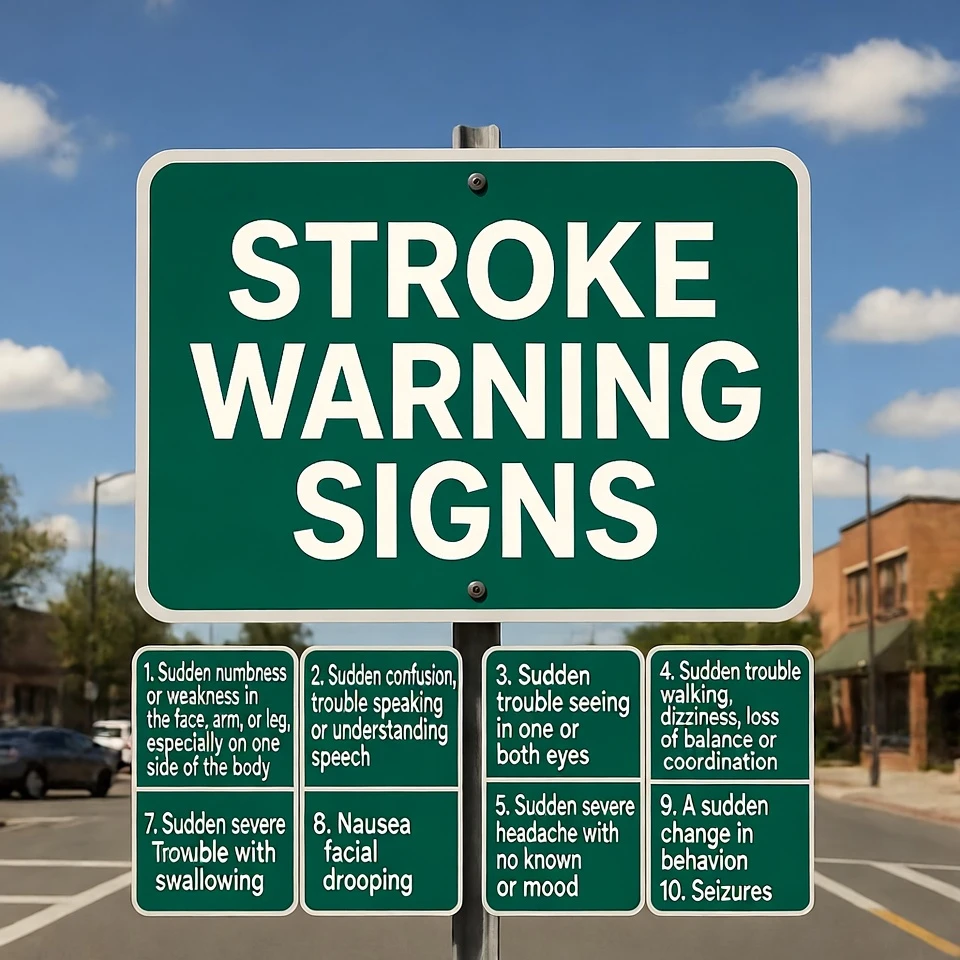
One-sided numbness or weakness
- Tingling, numbness, or weakness in the face, arm, or leg, typically affecting one side of the body.
- It may start abruptly and improve within minutes.
-
Dizziness or loss of balance
- Feeling unsteady, “spinning,” or having trouble walking without an obvious cause.
-
A severe or unusual headache
- A headache that is sudden, intense, persistent, or clearly different from your typical headaches.
-
Sudden vision changes
- Blurry vision, double vision, or brief loss of vision in one or both eyes.
-
Speech problems or trouble understanding
- Slurred speech, difficulty finding words, or trouble following what others are saying—even if it resolves quickly.
-
Confusion or memory disruption
- Unexpected mental fog, difficulty concentrating, or sudden forgetfulness.
-
Extreme fatigue that feels abnormal
- Overwhelming tiredness that doesn’t improve with rest and feels beyond normal exhaustion.
-
Mood or personality shifts
- Sudden irritability, depression, or behavior changes that feel out of character.
-
Persistent hiccups (more commonly reported in women)
- Ongoing hiccups, sometimes paired with chest discomfort or shortness of breath, have been linked in research and clinical reports to stroke warning patterns—particularly in women.
-
Facial drooping or uneven smile
- One side of the face may droop, or your smile may look noticeably uneven.
Even when these symptoms last only minutes, they may represent a TIA. Research suggests that up to one-third of people who experience a TIA may have a full stroke within a month, making rapid medical evaluation essential.
The FAST Test: A Quick Way to Check for Stroke or TIA
Use FAST to recognize common stroke symptoms quickly:
- Face: Ask the person to smile. Does one side droop?
- Arms: Ask them to raise both arms. Does one arm drift down?
- Speech: Ask them to repeat a simple sentence. Is speech slurred or strange?
- Time: If you notice any sign, call emergency services immediately and note when symptoms started.
FAST applies to both major strokes and brief warning episodes like TIAs.
What to Do If You Notice Any Stroke Warning Sign
If you or someone near you experiences any of these symptoms—even if they disappear—treat it as urgent.
- Call emergency services immediately.
- Do not wait to see if it happens again.
- Medical professionals may use tests such as brain imaging, heart rhythm monitoring, and vascular evaluations to identify causes like:
- High blood pressure
- Irregular heart rhythm (including atrial fibrillation)
- Narrowed or blocked arteries
- High cholesterol or diabetes-related complications
Practical steps that support stroke prevention and brain health
- Track blood pressure regularly (high blood pressure is a leading stroke risk factor).
- Follow heart-healthy habits: balanced diet, regular exercise, stop smoking, and limit alcohol.
- Manage chronic conditions with your clinician’s guidance, including diabetes, high cholesterol, and atrial fibrillation.
- Stay physically active and socially engaged, which supports vascular and overall health.
Key Takeaway: Don’t Wait for a “Bigger” Symptom
Knowing the early warning signs of stroke can help you act before a life-changing emergency occurs. Many strokes are preventable when TIAs and subtle symptoms are recognized early and treated quickly. Consider sharing this information with family and friends—it may help someone seek care in time.
Disclaimer
This article is for informational purposes only and does not replace professional medical advice. If you experience possible stroke symptoms, seek emergency medical attention immediately. Always consult a qualified healthcare professional for personalized guidance.
Frequently Asked Questions (FAQ)
What’s the difference between a TIA and a stroke?
A TIA causes stroke-like symptoms that typically resolve within minutes to hours and usually does not cause permanent brain damage. However, it is a serious warning sign that a full stroke may occur soon.
Are stroke warning signs different in women?
They can be. In addition to classic stroke symptoms, women may report more generalized signs such as unusual fatigue, confusion, mood changes, or persistent hiccups.
How soon can a stroke occur after warning signs?
A stroke may happen days to weeks after early symptoms, and many occur within one month of a TIA. That’s why immediate evaluation is so important.