The gym smelled like old varnish and fresh panic. The kind that seeped out of the bleachers when a crowd wanted something to happen—wanted it badly enough to forget what it cost. The scoreboard over the court blinked in uneven red, as if even the electricity couldn’t bear to keep watching: 58–57. Eight seconds left. And the boys in blue looked like they’d been living inside a storm for hours.
Coach Marlow paced the sideline with the anger of a man trying to outrun his own mistakes. His tie was gone, his sleeves rolled, his voice hoarse from yelling instructions that bounced off the noise and never made it into anyone’s mind. “One stop,” he kept saying, like a prayer he didn’t believe in anymore. “One stop and we’re out.”
But they weren’t out. Not of the game, not of the season, not of the weight that had been lodged in their chests since winter break. They had lost three in a row. Their captain, Eli Rourke, had sprained his ankle and returned too soon, limping through every sprint like a dare. Jonah Price, all elbows and bravado, had missed two free throws earlier and now refused to look at his own hands. And Miles Greene—Miles who always smiled, Miles who always made the jokes—stood with his palms pressed to his knees as if he might fold in half.
On the other bench, the visiting team’s point guard dribbled with the steady calm of someone who believed the world would arrange itself in his favor. Their fans stamped and shouted. The home crowd answered with a roar that sounded supportive until you listened closely; then you could hear the sharpness of expectation, the hungry edge of disappointment waiting to pounce.
“Switch on the screen,” Coach hissed as the referee held up a hand. “Switch, switch, switch. No hero ball. Trust it.”
Eli nodded, but his eyes had that cracked-glass look. He was staring at the floorboards as if the court might open and swallow him and the choice wouldn’t be his anymore.
The whistle cut the air. The ball came in. A screen hit like a door slammed in a hallway. Jonah switched late. Miles reached but didn’t commit. The visiting guard darted left, rose, and released a shot that seemed to float in slow motion—beautiful, careless, cruel.
It rimmed out.
A rebound turned into a scramble. Shoes squealed. Arms tangled. The ball skittered toward the sideline near the student section, and for half a breath it looked like it would roll away and stop time. Jonah dove, slid on the lacquered floor, and slapped it back inbounds. Eli caught it, pivoted too fast on the bad ankle, and nearly went down.
“Timeout!” Coach yelled, his voice cracking on the word.
But the referee’s hands remained at his sides. The clock kept bleeding. The noise rose until it was not noise anymore but pressure, the kind that made boys do reckless things just to feel something move.
Eli dribbled once, twice—each bounce heavy, wrong. Miles sprinted to the corner with a defender glued to him. Jonah cut through the lane, got bumped, and threw up his hands in outrage. A whistle didn’t come. The crowd hissed like a single animal.
Eli looked to the bench. Coach’s mouth formed instructions, but the words were swallowed by the roar. Eli’s eyes went wide, then empty. He turned back toward the court like a man turning toward a cliff.
“Eli!” Jonah shouted. Not a play call. Not a demand. Just a name—raw with fear.
Eli hesitated, and in that hesitation the defense collapsed. A trap snapped shut. Eli tried to split it, and the ball popped loose—just a fraction too far from his fingertips. The visiting guard reached in and knocked it away.
It wasn’t even a steal yet. It was just a touch. But you could feel the breaking point arrive like a door kicked open.
Coach surged forward, red-faced, ready to tear into the referee. Jonah launched toward the official too, jaw set, fists half-clenched. Miles stopped running altogether and stared at the ball rolling away as if it carried his name on it. Eli froze—caught between chasing the ball and chasing the part of himself that still believed he deserved to wear the jersey.
And then—above the din, above the stamping feet and the shrill horns and the angry shouts—her voice cut through.
It wasn’t loud in the way a megaphone is loud. It was clear. It was placed like a note sung perfectly on pitch, and it sliced open the chaos.
“Breathe.”
The word hit the court like a hand on a shoulder. For a heartbeat, it didn’t make sense that anyone could hear a single voice in that storm. But they did. Eli did. Jonah did. Miles did. Even Coach Marlow’s forward lunge slowed as if he’d walked into invisible glass.
The voice came again, steady as a metronome. “Look at me.”
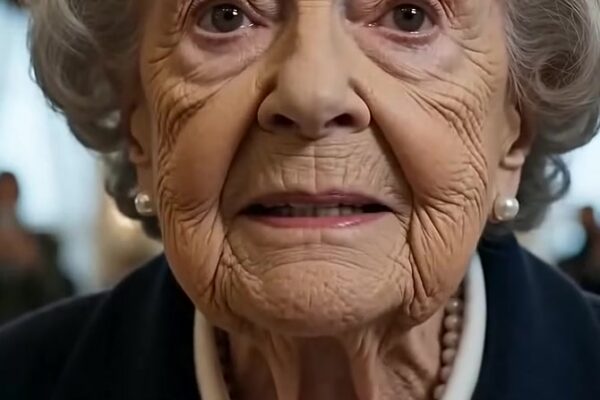
Eli’s head turned toward the bleachers near the band. There, standing in the aisle where cheerleaders normally marched, was Naomi Rourke—Eli’s older sister. She wasn’t in school colors. She wasn’t waving a sign. Her hands were empty, her posture calm in a way that felt almost defiant. The band’s brass blared behind her, but her gaze held the court as if she owned the air itself.
Naomi hadn’t been to a game all season. Not since the accident last spring—the one that had stolen their father’s voice in one brutal instant and left Naomi with a scar that curved under her jaw like a comma. After that, she stopped showing up to places where crowds demanded happy endings. She stopped attending anything that felt like a performance.
Yet here she was, eyes fixed on Eli like a promise.
“You know what to do,” she called. Not a command. A reminder.
On the court, the visiting guard reached for the loose ball. Time snapped back into motion. But something had shifted. Eli inhaled—really inhaled—and his shoulders dropped from around his ears. Jonah exhaled hard, unclenching his fists. Miles blinked like a man waking up.
Eli sprinted, ankle pain and all. He dove, not wildly, but with intention. His fingers hooked the ball before it could be secured, and he batted it forward—right into Miles’s path.
Miles gathered it cleanly. No panic. No apology. He dribbled up the right side, head high. The defense scrambled to reset, but the trap they’d smelled moments ago—blood in the water—was gone. In its place was a team moving like a single thought.
Coach Marlow didn’t shout this time. He pointed. The gesture was small, but it carried. Jonah saw it and set a screen with his chest square and his feet planted. Eli cut through the lane as a decoy, pulling a defender with him like a shadow.
Miles turned the corner. Two defenders stepped up. For one awful moment, the old breaking point threatened to return. Then Naomi’s voice came again—softer now, as if she was speaking only to the boys who needed it most.
“Together.”
Miles didn’t force a shot. He snapped a pass to Jonah, who had rolled off the screen and was now open at the elbow—an open lane carved by trust. Jonah caught, rose, and released. The ball left his hands with a clean backspin that looked like forgiveness.
The buzzer sounded while the ball was still in the air.
It dropped through the net with a sound that didn’t belong to the gym’s chaos. It was too pure. Too final.
For a fraction of a second, the world went silent—as if the building itself had to process that the ending had changed. Then the crowd erupted, not with the hungry noise from before, but with something warmer, shocked into joy.
Jonah stood frozen, eyes wide, as teammates crashed into him. Miles laughed once—one sharp, disbelieving bark—and then covered his face with both hands. Eli sank to one knee, one hand pressed to the floor, the other to his heart like he needed to make sure it was still there.
Coach Marlow’s knees nearly gave out. He gripped the scorer’s table, staring at the boys like he’d been trying to coach a miracle and didn’t realize it had arrived dressed as a single word.
In the bleachers, Naomi didn’t cheer. She simply watched, lips parted, breathing in time with her brother. When Eli finally looked up, their eyes met across the distance. He mouthed something—thank you, or I’m sorry, or both—and Naomi nodded as if she’d heard it anyway.
Later, when the floor had cleared and the lights had dimmed and the boys had finally stopped shaking, Eli limped up the aisle to where Naomi waited. The scar under her jaw caught the fluorescent glow, a reminder of all the ways voices could be taken—and all the ways they could return.
“I didn’t know you were coming,” Eli said, his voice small in the emptying gym.
Naomi looked past him to the court, where the net still swayed slightly, as if remembering. “I didn’t know I could,” she admitted. Then she touched her throat, not in pain but in acknowledgment. “But I heard you slipping. And I couldn’t let you fall without trying to catch you.”
Eli swallowed hard. “It wasn’t just me.”
“I know,” she said. “That’s why I said what I said.”
Behind them, the last of the crowd filtered out, talking about the shot, the buzzer, the win. But Eli knew the real turning point hadn’t been the ball through the net. It had been the instant a familiar voice reminded them they were more than their panic, more than their pride, more than a scoreboard blinking in red.
In a season built on pressure, it took one clear voice to stop the breaking—and teach them how to hold.