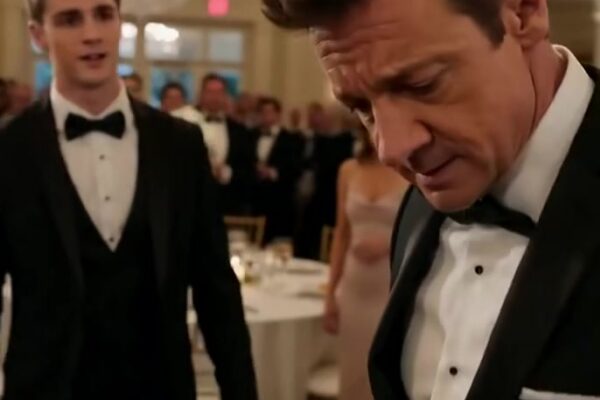
The city wore a morning of polished steel. Towers reflected the sun like blades, and the streets below were already cutting with horns and impatience. Adrian Vale sat in the back seat of his charcoal sedan, tie loosened, eyes fixed on the glowing screen of his phone as if the right numbers might arrange themselves into mercy.
“Two minutes,” his assistant’s voice crackled through the call. “The board’s in the conference room. The lenders are already seated. Adrian, if you’re not there when they start…”
Adrian watched the driver’s shoulders tense as traffic thinned and the car finally turned onto the boulevard that ran straight to Vale Tower. The meeting wasn’t just important; it was oxygen. The company’s flagship project, a waterfront redevelopment, was bleeding cash. A single vote today would decide whether the banks extended credit or pulled the plug and let the whole empire collapse in a slow, public sinking.
Adrian hadn’t slept. He’d spent the night staring at spreadsheets, watching years of decisions narrow into one narrow corridor: arrive on time, speak with certainty, hold the room. He’d built his fortune on control—control of deals, optics, people—and he could feel that control thinning now, like a rope fraying in the dark.
Then, with a cruel simplicity, the car shuddered.
The engine coughed once, twice, then died as cleanly as a switched-off light. The sedan rolled forward on its own momentum, silently drifting toward the curb. The dashboard lit up with warnings like a small, frantic city. Adrian’s phone slid from his fingers and slapped the leather seat.
“No,” he said, the word too small for the moment.
The driver tried the ignition. A weak click. Again. Nothing. Behind them, a chorus of horns rose. The driver’s jaw worked as he stared ahead, as if staring hard enough could will the engine back to life.
“I’m calling a tow,” the driver said.
“A tow?” Adrian’s laugh came out sharp. “In this traffic? I don’t need a tow. I need this car to move.” He shoved the door open and stepped into the noise and exhaust. The street was unforgiving, a river that didn’t care who drowned in it.
Vale Tower was only eight blocks away. Eight blocks might as well have been eighty in a suit and dress shoes, with time closing like a fist. Adrian pulled out his phone to order a rideshare. The screen flashed: no service. A dead zone between towers, between chance and ruin.
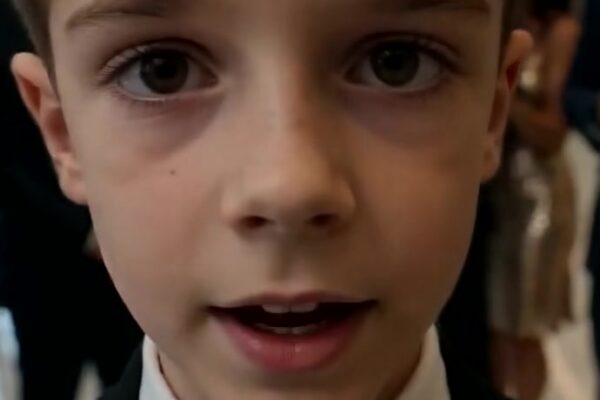
He looked up, and for the first time in weeks he saw the world beyond his numbers. A boy stood on the sidewalk near the dead car, holding a dented bicycle by the handlebars. He couldn’t have been more than twelve or thirteen. His hoodie was too thin for the morning air, his hair a dark tangle under a knit cap. He watched the scene with a stillness that didn’t match the chaos around them.
Adrian’s irritation flared at the absurdity of being observed in this moment of helplessness. He turned away—then noticed what the boy was looking at: not Adrian’s face, not the sleek car’s badge, but the slight shimmer of a cable peeking beneath the hood.
“Mister,” the boy called, voice carrying cleanly through the noise. “Your battery cable’s loose.”
Adrian froze. “What?”
The driver had the hood open now, hands hovering as if he were afraid to touch anything wrong. The boy walked closer, cautious but certain. Adrian stepped between them on instinct, the reflex of someone accustomed to guarding every boundary.
“It’s fine,” Adrian snapped. “This isn’t—”
“I can fix it,” the boy said. He didn’t plead. He didn’t flinch. He just lifted his chin and looked Adrian in the eye as if this were a simple problem in a world full of simple problems. “I work at my uncle’s shop sometimes. People come in with this all the time.”
Adrian’s first impulse was to brush him off. Then he saw the time on his watch. He felt the boardroom doors opening without him. He saw the lenders glancing at each other, the start of whispers. He saw his name becoming a headline with the word “fall” attached.
“Do it,” Adrian said, as if granting permission cost him something. “But be quick.”
The boy nodded once. He slipped around the open hood with practiced ease, as if the car were not a million-dollar symbol but a machine with a heartbeat that could stutter. He pointed to a clamp, tightened a bolt with fingers that seemed too small for the task, then pressed down firmly until it seated with a soft, final click.
“Try now,” he said.
The driver turned the key. The engine caught instantly, surging back to life like a lung finally filled. The dashboard warnings vanished one by one. The horns behind them fell into new patterns as the sedan eased away from the curb.
Adrian stood there, stunned by how quickly disaster had been unmade. He had been seconds from begging a stranger for a ride, from sprinting down a sidewalk, from arriving sweat-soaked and late. Instead, a boy with a bicycle had reset the entire day with two turns of a bolt.
Adrian looked at him again. “What’s your name?”
“Noah,” the boy said. “Noah Reyes.”
Adrian reached into his wallet and pulled out a crisp stack of bills, the kind of gesture he’d used a thousand times to make problems vanish. He extended it like a shield.
Noah didn’t take it. His eyes flicked to it, then away. “I’m not… I didn’t do it for that.”
Adrian felt heat rise in his throat, something close to embarrassment and something closer to panic. “Then what do you want?”
Noah hesitated. For the first time, uncertainty cracked his composure. “My mom,” he said. “She’s inside there.” He nodded toward a low brick building across the street—a clinic tucked between a bakery and a closed storefront. The sign was faded, the windows barred. “They said they might send her home early because we’re behind. I was trying to get to school but… I came back.”
Adrian’s gaze snagged on the clinic door, on the small line of people waiting with papers in their hands. He’d walked past places like this his entire life, never seeing them as anything but scenery. He opened his mouth, and for once the words didn’t arrive dressed in strategy.
“How much?” Adrian asked quietly.
Noah’s shoulders rose and fell. “I don’t know. They just keep saying ‘payment plan’ and ‘deposit.’”
Adrian stared at the clinic a moment longer, feeling the strange shift of gravity inside his chest. The meeting still mattered. Eight blocks away, his empire waited to be decided. But here, on this curb, another decision had been placed in his hands—one without a contract, without a board vote, without applause.
He looked back at Noah. “Get in the car,” Adrian said.
Noah blinked. “What?”
“Get in,” Adrian repeated, already moving. “We’re going to the front desk. Then you’re going to school. And your mother is going to get the care she needs.”
The driver started to protest, something about schedule and security, but Adrian silenced him with a glance. He knew the boardroom’s language better than his own heartbeat. He could afford a delay. He could not afford to become the kind of man who only believed in problems that arrived in a suit.
Inside the clinic, the air smelled of disinfectant and quiet fear. A tired receptionist looked up, bracing for another argument. Adrian stepped forward, placed his card on the counter, and spoke with the calm authority that had built a city around his name.
“Noah Reyes,” he said. “Whatever is needed. Today.”
The receptionist’s eyes widened. She typed, checked a file, called a nurse. The gears of bureaucracy, so slow for everyone else, began to turn with sudden obedience. Noah stood beside Adrian, hands clenched at his sides, as if afraid the moment would evaporate if he breathed too hard.
When it was done, when Noah had been allowed to see his mother and return with red-rimmed eyes and a fierce, shaky relief, Adrian walked back out with him into the brightening day. The sedan waited at the curb like nothing had happened. But everything had happened.
“Why are you doing this?” Noah asked. He didn’t sound naive. He sounded like someone who had learned not to trust gifts.
Adrian glanced down at the boy’s grease-smudged fingers. “Because you reminded me,” he said slowly, “that the smallest connection can decide whether something lives or dies.” He paused, then added, “And because you saved me first.”
Noah looked away, embarrassed by the weight of that. He swung onto his bicycle, then hesitated. “Good luck at your meeting,” he said.
Adrian watched him pedal off, a thin figure cutting through the city with stubborn purpose. Then Adrian got back into the car, checked his watch, and felt the urgency return—not as a suffocating threat, but as something he could carry without losing himself.
As the sedan surged forward toward Vale Tower, Adrian opened his phone and typed a message to his assistant: “Running five minutes late. Begin without me. And add one item to the agenda—community health partnership funding.”
He hit send before he could overthink it. Outside, the towers gleamed. Inside, Adrian Vale sat very still, listening to the engine hum—aware, for the first time in a long time, that power was not measured only by what you could buy, but by what you chose to fix when it wasn’t your problem.