Emma Blake still couldn’t breathe properly after the call, like the air had decided it was no longer a public service. It had been twenty minutes since she hung up, and her lungs were still doing that shallow, panicky thing—half-sips of oxygen that tasted like wet pennies.
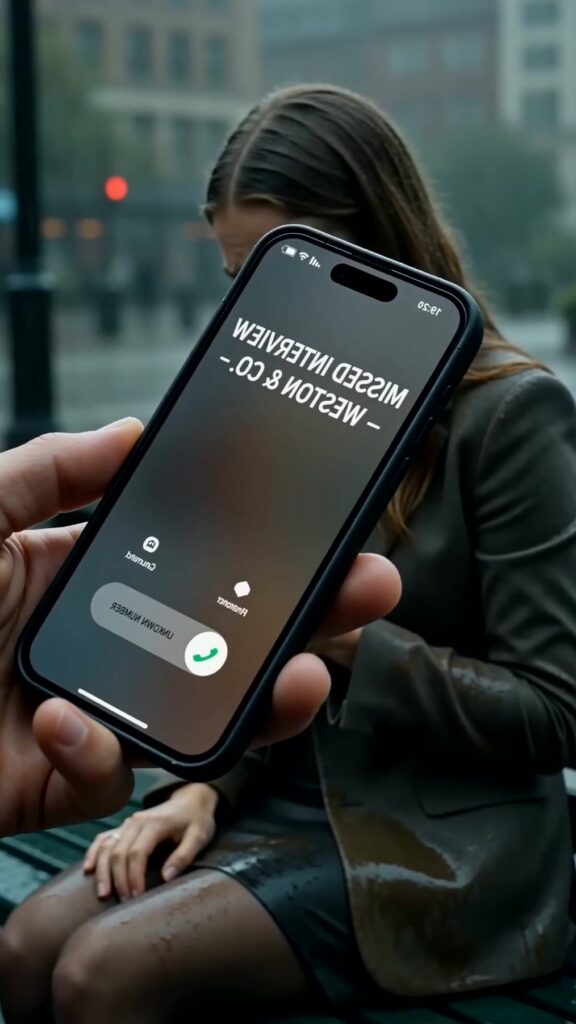
Rain slid from the ends of her hair in steady drops and collected under the bench where she sat downtown, right outside the T stop. The kind of Boston rain that didn’t fall so much as lean on you. Her phone screen was still lit, bright as an accusation in her palm.
He wants to see you tonight.
And then, quieter, as if the caller had leaned away from the receiver to whisper to the room:
Don’t tell her about the daughter.
Emma had asked, “What daughter?” and the line had gone dead. No number. Unknown caller. Like the city itself had phoned her and changed its mind.
It didn’t make sense because none of this made sense. Yesterday she was a shift supervisor at HarborCare Clinic, the kind of job where you memorize insurance codes and learn how to smile at angry people without actually smiling. Today she was apparently tangled up with Richard Weston, billionaire founder of Weston & Co., the guy whose grin floated on magazine covers like it was part of the skyline.
She hadn’t planned to “save his life.” She hadn’t planned anything at all. She’d been leaving a late coffee run near the Seaport when she saw a man stagger out of the back of a black SUV like he’d forgotten how legs worked. He’d tried to wave off help—people always do right before they drop. His face was familiar enough that bystanders froze with their phones half-raised, that weird human reflex to document instead of respond.
Emma had moved before her brain could start arguing. She’d pressed fingers to his neck, felt a pulse doing something chaotic, and snapped at someone to call 911 like she was allowed to give orders to strangers. She’d kept him awake until the paramedics arrived, making him answer questions, making him focus on her voice instead of whatever darkness was pulling him down. When the EMTs wheeled him away, he’d grabbed her wrist with surprising strength and rasped, “Don’t leave.”
She didn’t. She stayed at the hospital long enough for a doctor to confirm it wasn’t a heart attack but something that would have turned into one if she hadn’t been stubborn. She left when the security people arrived and started turning the hallway into a private event.
She figured that was it. A strange story for her coworkers. A “You won’t believe who I saw” dinner anecdote for her best friend, Lia. Then the call came while she was sitting on this bench trying to decide what to do with a coupon for Thai takeout.
He wants to see you tonight.
Don’t tell her about the daughter.
Now a black car idled at the curb outside her apartment like it belonged to the building. She watched it through the streaky window as she pulled on the least wrinkled dress she owned. Her hands shook, so she pinned her hair up anyway, even though it was still damp, because having something neat felt like a tiny lie of control.
When she stepped outside, the driver opened the rear door without a word. He wasn’t wearing a suit the way movies said chauffeurs should; he had a dark rain jacket and the expression of someone who had been trained to be furniture.
Emma slid in and the car smelled like clean leather and something expensive she couldn’t name. The door shut with a soft, final click that made her stomach tighten.
Boston blurred past—brick, neon, puddles catching headlights like coins. Her phone had no service at some point, or maybe it did and she was too afraid to check. She tried not to imagine the worst, which is basically a fancy way of inviting the worst to sit beside you and start humming.
“This is either the biggest opportunity of my life,” she muttered, “or the dumbest way to die.”
The driver didn’t react.
They crossed into an area where the road widened, the houses grew farther apart, and the trees looked groomed, like even nature had to pass a background check. A gate rose out of the foggy rain and opened as if it had been expecting them. Beyond it: a mansion that didn’t feel like a home so much as a private country with its own weather.
Guards stood under overhangs, scanning the car. Security lights cut pale lines through the rain. Everything was quiet in the unsettling way of places where noise is optional because the people inside already control what matters.
Emma was escorted through a hallway that smelled faintly of cedar and lemon polish. Art that probably had guards of its own lined the walls. The staff she passed didn’t look at her directly, which was somehow worse than staring.
They brought her to a glass-walled office facing the ocean. Dark water. Black sky. A strip of angry white surf. The whole view felt like the world’s edge.
Richard Weston stood near the windows. Alive. Calm. He wore a soft sweater and slacks like he’d never been within ten feet of a crisis, like collapse was something that happened to other people in other zip codes. He turned as she entered, and Emma felt the jolt of recognition again—only this time it wasn’t from a magazine cover. It was from the weight of his eyes, the way they landed on her and didn’t slide off.
“Emma Blake,” he said, as if he’d been practicing. “You’re the woman who refused to let me die.”
Her throat tightened. “I just… did what anyone would.”
“No.” He shook his head once, sharp. “Most people filmed it. You acted.”
It should’ve sounded like a compliment. Instead it sounded like a verdict.
He gestured to a chair. Emma sat because her knees were taking votes without her permission. She noticed a chessboard on a table, mid-game, pieces arranged like they were holding their breath. His coffee was untouched. A pen lay perfectly parallel to a stack of documents. Everything arranged to suggest control.
Richard folded his hands. “I owe you my life.”
Emma stared at him, waiting for the catch to walk into the room. People like him didn’t owe. They purchased. They traded. They collected debts and called them favors.
She swallowed. “What did they mean,” she asked, “about your daughter?”
For the first time, something cracked in his face. Not sadness, exactly—more like the expression of someone who hears the sound of a safe clicking open in the next room.
The temperature didn’t actually change, but Emma felt it anyway, a drop that ran straight through her bones. Richard’s jaw flexed as if he were deciding whether truth was safe in his mouth.
“Who called you?” he asked instead.
“Unknown,” Emma said. “They said you wanted to see me tonight and—” She hesitated, because the line had been so strange, so specific. “They told me not to tell her about the daughter.”
Richard’s eyes flicked toward the door. The motion was small, but it carried the weight of panic he was trying not to show.
“You shouldn’t have been contacted directly,” he said. “That wasn’t supposed to happen.”
“Supposed to happen?” Emma echoed. “This is already not supposed to happen.”
He almost smiled, but it didn’t reach anywhere warm. “Fair.”
He stood and walked toward the desk like movement would solve the problem. “I invited you because I wanted to thank you. Because I want to make sure you’re protected. But also because—”
The glass doors behind them swung open without a knock, without warning. A gust of salty, wet air rolled into the room. The security outside didn’t stop whoever it was, and that fact landed hard in Emma’s mind.
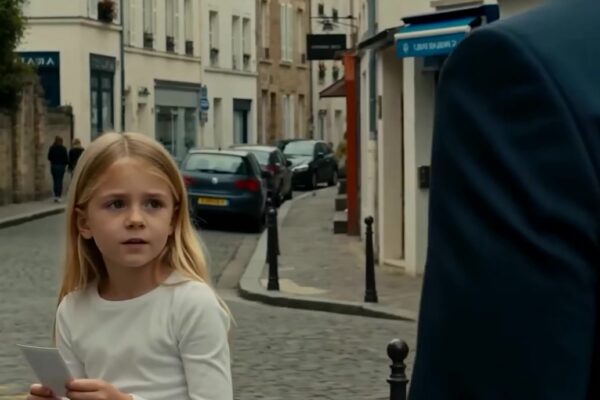
A child stood in the doorway, soaked to the skin, rainwater dripping from the ends of her hair and the hem of her oversized hoodie. She looked about ten. Maybe eleven. Her sneakers left small dark prints on the polished floor, each step a quiet little claim.
She didn’t look scared. That was the strangest part. Her eyes were fixed on Emma with the calm of someone who already knew the rules and was tired of them.
Richard’s entire posture changed—shoulders tightening, hands going still. The billionaire mask slid aside just enough for a father’s alarm to show through.
“Mara,” he said softly, like her name was both a warning and a plea.
The girl—Mara—ignored him. She stared at Emma and spoke in a voice that was too steady for a kid who’d just walked in from a storm.
“You’re not supposed to be here,” she said.
Emma’s mouth went dry. “Hi,” she managed, which sounded ridiculous in the face of everything. “I didn’t… I didn’t know there was—”
“Don’t,” Mara snapped, and then lowered her voice. “Don’t say it. Not out loud. That’s how they find out who knows.”
Emma looked at Richard. “Who?”
Richard didn’t answer. He moved toward Mara carefully, like she might bolt. “How did you get past the east gate?”
Mara shrugged, water dropping from her lashes. “The same way I always do when your people decide I’m an inconvenience. Through the greenhouse. The camera in the corner is still fake. You should really fire someone.”
Richard’s lips pressed together. “Mara—”
“She saved you,” Mara said, nodding at Emma like she was introducing a fact to the room. “So I guess she’s allowed to know. But you weren’t going to tell her, were you?”
Emma’s pulse thudded in her ears. “Know what?”
Mara stepped farther into the office. She was small, but she carried herself like someone who’d learned how to take up space to survive. She reached into her hoodie pocket and pulled out a crumpled envelope, the paper swollen and soft from rain.
“This was taped under my desk at school,” Mara said. “Not my desk. The one next to mine. Like they wanted me to notice but not prove who touched my stuff.”
She held it out to Richard. He took it, his fingers suddenly clumsy. He looked at the front, and Emma watched his face drain of color as if the ink itself had pulled it away.
Emma leaned forward. “What is it?”
Richard’s voice came out flat. “A reminder.”
Mara’s eyes stayed on Emma. “A threat,” she corrected.
Emma’s chest tightened again, that same feeling from the phone call—like breathing was something you had to earn. “Why me?” she asked, more to the room than to either of them. “I’m nobody.”
Richard looked up, and for the first time his calm seemed less like confidence and more like exhaustion. “You’re not nobody,” he said. “You’re the person who saw me weak. You touched the part of my life I keep hidden. That makes you… connected.”
“Congratulations,” Mara said dryly. “You’re in the story now.”
Emma’s hands curled around the edge of the chair. “Okay,” she said, forcing the word out like she could shape it into a shield. “Then tell me what’s happening.”
Richard stared at the rain-streaked glass, the ocean beyond it, like he was trying to read an answer in the dark water. When he spoke, it wasn’t the billionaire voice from interviews. It was quieter, rawer.
“There are people who want Mara erased,” he said. “Not because she exists, but because what her existence proves.”
Emma’s mind scrambled for something sensible. “Proves what?”
Mara stepped closer, close enough that Emma could see a faint bruise on the girl’s wrist like a fingerprint that hadn’t faded. She lifted her chin.
“That my dad lies,” she said. “And that somebody else has been telling lies using his name.”
Richard flinched. “Mara—”
“Don’t,” Mara echoed, softer now, less sharp and more tired. She looked at Emma again, and for a second she looked like any kid—wet, cold, stubborn. “You can leave,” she said. “You should leave. But if you leave, they’ll still know you were here.”
Emma swallowed hard. Outside, the rain hit the glass in uneven taps, like impatient fingers. Her phone was in her pocket, useless in a place built to keep signals out and secrets in.
She thought about her tiny apartment, her clinic job, her carefully small life. She thought about the moment she’d chosen to step forward instead of filming a dying man. She’d acted then, too, without thinking.
Emma looked from Mara to Richard, then back to Mara. “What do you need?” she asked.
Richard’s eyes narrowed, not in anger but in calculation. Mara’s shoulders relaxed a fraction, like she’d been holding a breath she didn’t realize was there.
“Someone who isn’t on his payroll,” Mara said. “Someone they won’t see coming.”
Emma’s chest still felt too tight, but she finally managed a full inhale. It didn’t calm her. It just made room for the next decision.
“Okay,” she said, and heard her voice shake but hold. “Tell me what they’re hiding. And tell me who ‘they’ are.”
Richard opened the soaked envelope with slow, careful hands, like it might bite. He slid a single photograph onto the desk—face down for a beat, as if even the air didn’t deserve to see it yet.
Then he flipped it over.
Emma stared, and the last bit of breath she’d managed to gather left her again, clean and fast, because the picture wasn’t of Richard.
It was of her.
Standing at the clinic. Looking over her shoulder. Taken from far away. And on the back, in neat block letters, were the words:
YOU SAVED THE WRONG MAN.