The first thing the hotel taught you was how to disappear.
The lobby was a cathedral built for money: chandelier light the color of melted coins, marble floors that made your footsteps sound like you were interrupting something sacred, and walls so glossy they reflected your doubts back at you. Guests glided through the corridors in tailored silence, their suitcases rolling like quiet thunder, their conversations tucked into designer scarves and sunglasses.
Helena learned the rules fast. Don’t make eye contact unless spoken to. Don’t be louder than the soft music. Don’t exist in the elevator if a guest is in it. And above all—don’t leave fingerprints on the illusion. Keep everything spotless so people could pretend they’d never spilled wine, never cried on a pillow, never fought with someone they still had to love in the morning.
Six years in, Helena could clean a suite in under twenty minutes and still make it look like nobody had ever slept there. She knew which carpets hid stains and which doormen took bribes. She knew which rooms wanted extra towels for the morning-after hangovers and which ones needed the “privacy sign” replaced because the guest kept tearing it down. She knew the smell of expensive cologne and cheap fear.
She also knew the elevator to the private penthouse had its own button behind the concierge desk—an unmarked bronze circle that required a keycard with a quiet kind of authority. The first time Helena rode it, her hands shook so badly she nearly dropped the cleaning caddy. It wasn’t that she feared heights. She feared the kind of people who rented the sky.
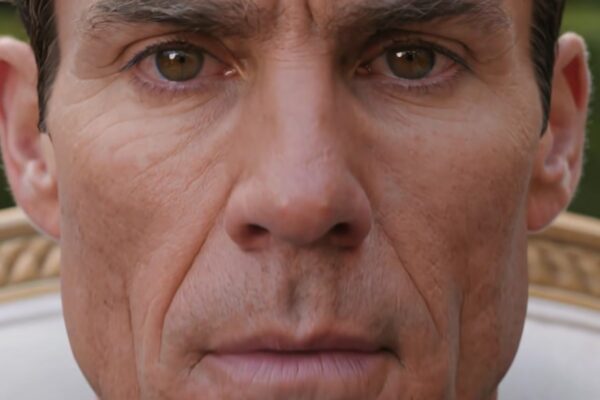
The penthouse belonged to Elias Wren, a man who moved through the hotel like he owned the air ducts. He was always perfectly dressed, always on the phone, always half a heartbeat away from disappearing into a car with tinted windows. No one called him “sir” so much as they tried not to say anything at all. The staff treated his name like a candle you didn’t want to blow out.
And then there were the boys.
Two small lives tucked into the top floor like secrets. Milo was eight, a sharp-edged child who asked questions like he was trying to pick locks. Theo was six, softer, prone to clinging, with a laugh that surprised you because it sounded like something the hotel’s sterile air shouldn’t allow.
Helena was officially assigned to “housekeeping support” for the penthouse. Unofficially, she became the one constant that didn’t come with a contract and a nondisclosure agreement.
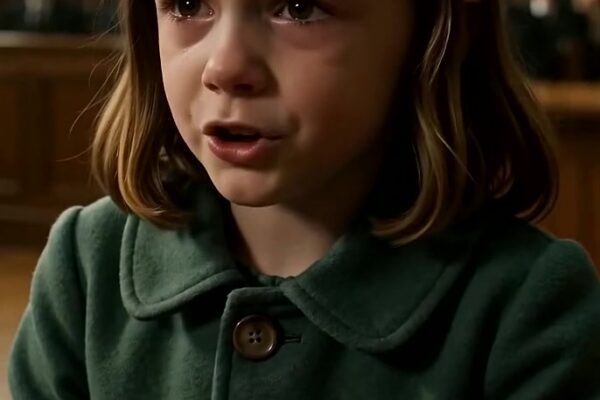
The first time Theo cried, it was in the hallway outside the bedroom. His pajama sleeve was wet where he’d wiped his face. He didn’t notice Helena until she crouched down and offered him a folded tissue like it was a peace treaty.
“Bad dream,” he sniffed.
“The kind with teeth?” Helena asked.
Theo nodded, eyes huge. “It chased me.”
Helena smoothed his hair, careful, because tenderness in a place like this always felt like contraband. “Then we’ll put a chair in front of the closet. Monsters hate furniture. It’s too practical.”
That got him to blink, then smile. She dragged a velvet chair in front of the closet door with dramatic effort, grunting like an exaggerated weightlifter. Theo giggled, and Milo appeared in the doorway, arms crossed, pretending not to watch.
“Monsters can go through chairs,” Milo announced.
“These can’t,” Helena said, tapping the chair leg. “This chair is on our side.”
Milo didn’t smile, not exactly, but his shoulders lowered a fraction. He lingered until Theo climbed back into bed, then asked in a voice too old for him, “Do you think Dad knows about monsters?”
Helena paused. She could have lied. She could have offered a pretty answer. Instead she said, “I think your dad knows about a lot of things. But some things… grown-ups pretend not to see because it hurts.”
Milo’s eyes narrowed, like he’d filed that away as evidence.
After that night, the boys started looking for her in the mornings. She wasn’t supposed to be there before her shift, but they had a way of appearing when she stepped out of the staff elevator—Theo running, Milo walking fast enough to pretend he wasn’t.
She woke them when their father was gone. She patched scrapes from scooter races around the penthouse terrace. She sat with Theo through a fever while Milo watched from the doorway, furious at how helpless he felt. She made toast cut into triangles because Theo decided triangles tasted safer.
And Elias Wren never spoke about her. Not directly. Not ever.
Sometimes he’d pass her in the corridor and his gaze would slide right over her like she was part of the wallpaper. Sometimes he’d stop long enough to say, “Is everything handled?” which meant: Are the boys quiet? Are the sheets changed? Is the world still controlled?
Helena would answer, “Yes, Mr. Wren,” and keep her eyes down. Her job depended on that. So did her rent. So did the fragile little routine she’d built for two kids who didn’t have anyone else willing to sit on the floor and talk about monsters like they were negotiable.
For a while, it worked.
Then came the day the hotel’s shine cracked.
It started like any other afternoon. The corridor outside the ballroom smelled faintly of perfume and polished metal. Helena pushed her cart past mirrored walls, listening to the hush of wealth drifting behind closed doors.
She’d been feeling off all morning—lightheaded, like the world was a little too bright. She blamed it on skipping breakfast. She blamed it on the hotel’s dry air. She blamed it on everything except the truth she’d been avoiding for months: she was tired in a way sleep couldn’t fix.
The boys had insisted on walking with her for a little while, arguing they were “exploring,” even though they were really orbiting her like moons that didn’t trust gravity.
“Helena, look,” Theo said, pointing at a tall vase of white lilies. “They look like paper.”
“Don’t touch,” Milo warned automatically, repeating a rule they’d heard a hundred times.
Helena smiled. “It’s okay to look. Looking is free.”
She took another step—and the marble shifted under her feet. Or maybe it didn’t. Maybe it was her body that moved wrong, like a puppet with a cut string.
Her vision tunneled. The corridor stretched into a long, golden blur. The hotel’s quiet turned into a roaring in her ears.
“Helena?” Milo’s voice sharpened. “Helena!”
She tried to answer, but her tongue wouldn’t cooperate. Her fingers loosened. The mop handle clattered. Bottles of cleaner toppled, rolling like glass marbles across the shining floor.
Then she was falling.
Not gracefully. Not like fainting in movies. More like her bones had decided they were done pretending.
The last thing she saw clearly was Theo’s face folding with panic, his small hand grabbing at her sleeve.
“DAD! HELP HER!” Theo screamed, and his voice bounced off the marble and gilded trim like it was trying to wake the whole building.
People appeared—guests frozen in expensive shock, staff hesitating because emergencies were messy and mess didn’t belong here. Milo dropped to his knees beside her, patting her cheek the way he’d seen in cartoons, eyes wide and furious at the world for letting this happen.
Elias Wren came running.
Helena had never seen him run. He always moved like time waited for him. But now his tie was crooked, his hair slightly undone, his phone abandoned somewhere behind him. The mask cracked right down the center.
He slid onto the floor like he didn’t care who saw him on his knees. His hand went to Helena’s face, trembling in a way that looked impossible on him.
“Helena,” he said, voice raw. “Stay with me. Don’t you dare leave.”
The words weren’t polished. They weren’t controlled. They sounded like something torn out of him.
Helena tried to focus on him, to make sense of that fear. She wanted to tell him not to scare the boys. She wanted to apologize for collapsing in the middle of a hallway that probably cost more than her entire childhood home. She wanted to say a lot of things.
But her chest felt tight. Her breath came in shallow, panicked sips. Her hands were cold.
Then something slipped from beneath the collar of her uniform.
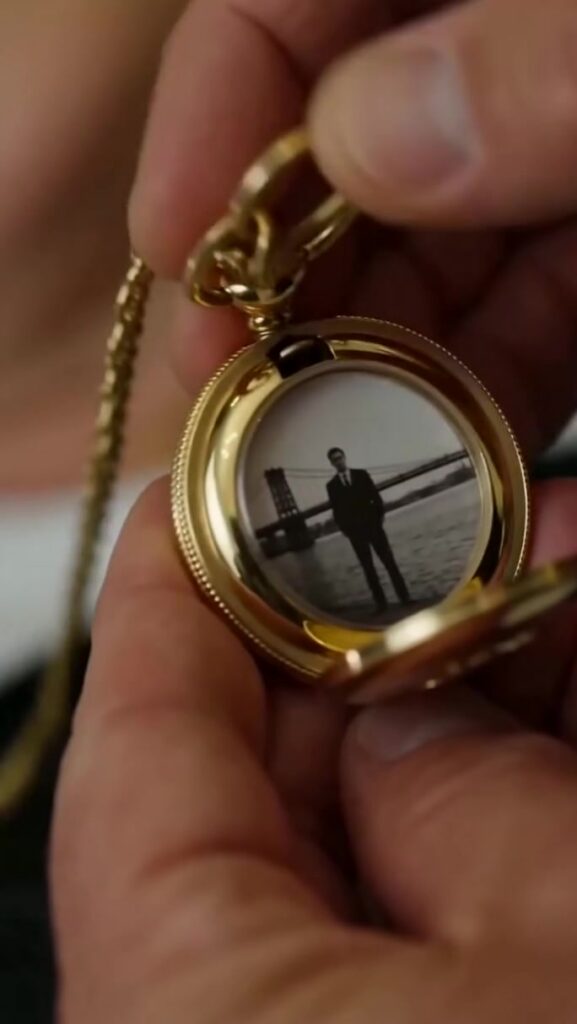
A small golden locket—worn smooth at the edges, its chain thin but stubborn. It slid out as if it had been waiting for this moment, glinting in the chandelier light before landing on the marble with a soft, final click.
Theo, still crying, reached for it instinctively. His fingers closed around the warm metal. “Helena, you dropped—”
“Theo, don’t—” Elias started, and the way he said it wasn’t a command. It was terror.
Milo snatched the locket from Theo, not roughly, but fast. Protective. Suspicious. He held it up between his thumbs, staring as if it might bite him.
“What is this?” Milo demanded, his voice shaking. “Why does she have it?”
Elias’s face went utterly still. He looked at the locket like it was a ghost he’d spent years pretending wasn’t real.
Helena’s eyelids fluttered. In the hazy edges of her vision, she saw Milo’s small fingers pry it open with the determined patience of a child who had spent his whole life unlocking adults.
Inside was a tiny photograph—creased at the corners from being touched too many times. It showed a younger Elias, barely older than Milo was now, standing beside a teenage girl with dark hair and a familiar smile. She had her arm around him like she belonged there. Like she’d always belonged there.
And around the girl’s neck was the same golden locket.
“Dad,” Milo whispered, voice suddenly quiet, like the hotel had swallowed all its sound again. “Who is she?”
Elias stared at Helena, his throat working. His hand tightened around hers, as if letting go would confirm the truth he’d been running from for years.
“That,” he said, barely audible, “is the only person who ever saved me.”
Helena tried to inhale, and the effort scraped through her like sandpaper. Her vision flickered. She heard Theo sobbing. She heard someone calling for an ambulance. She felt Elias’s palm against her knuckles, desperate and warm.
Milo held the open locket like it contained a bomb. His eyes darted from the photo to Helena’s face, searching for a match he hadn’t known to look for.
“Helena,” Milo said, softer now, scared in a brand-new way, “why do you have Dad’s picture?”
Helena’s lips moved. A sound tried to form. A name. A memory. Something she’d locked away behind years of scrubbing other people’s floors and swallowing her own history.
Elias leaned closer, forehead nearly touching hers. “Please,” he said, voice breaking. “Please, Lena. Not like this.”
The nickname hit the air like a crack of lightning.
Milo went rigid. Theo stopped crying for one stunned second. Even the guests seemed to freeze, as if the corridor itself had realized the story wasn’t just about a maid collapsing—it was about something buried under all that marble and gold.
Helena’s fingers twitched around Elias’s hand, a tiny squeeze that might have been an answer or might have been her body clinging to the last thread of consciousness.
And in that bright, untouchable hallway, with her cleaning tools scattered like evidence and her secret locket open in a child’s hands, the hotel finally witnessed what it was built to hide: the truth didn’t care about luxury. It showed up anyway.
Somewhere far below, an elevator dinged. Somewhere nearby, a siren began to wail. And Elias Wren, the man who never let anyone see him unravel, whispered into Helena’s hair, “I’m here. I’m here. Just hold on.”