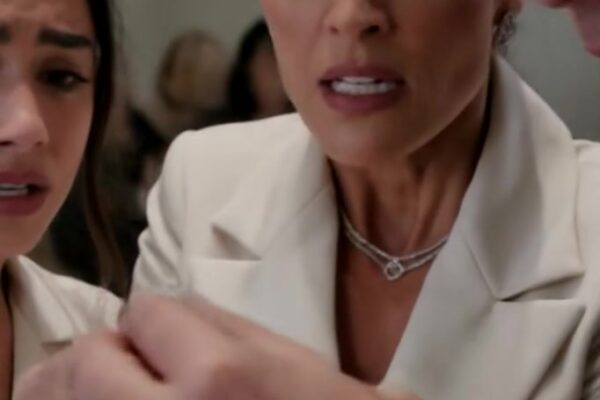
It started as a normal disaster, which is basically how every rehearsal in the old Lyric Theater started.
Gabe Drummond—yes, that Gabe Drummond, the famous director with the scarf and the interviews and the tragic backstory he repeated differently every time—stood center stage like he owned the dust. He did, sort of. The producers had rented the place because it looked “authentic,” which was a polite way of saying it still had its original 1920s wiring and the lingering scent of smoke from a fire nobody wanted to talk about.
Nina Ortiz, sixteen, stagehand, professional gaffer-tape hoarder, stood by the wing holding a costume that wasn’t supposed to be in her arms. The costume in question was a ridiculous little sailor suit with a stiff collar and shiny buttons that reflected the stage lights like tiny warning signals.
The rehearsal was for a revival of Starboy, a show with a child lead, a lot of forced whimsy, and one big flying effect that everyone pretended was “magic” and not “a boy clipped to a harness and prayers.”
“You ruined everything!” Gabe’s voice cut through the theater, bouncing off empty seats like it had an agent.
Nina hadn’t even had time to set the costume down before he was in front of her, yanking it from her hands like she’d stolen it. He flung it onto the floor under the stage lights. The fabric landed with a sad little flop, like it was embarrassed.
Behind the curtain, the kid—Eli something, twelve years old with a face too expressive for his own good—made a noise that was half sob, half hiccup. Nina couldn’t see him fully, just the edge of his sneakers and the trembling shadow of his shoulders.
“I pulled him back,” Nina managed. Her voice sounded too small for the room, like it was swallowed by velvet and old wood.
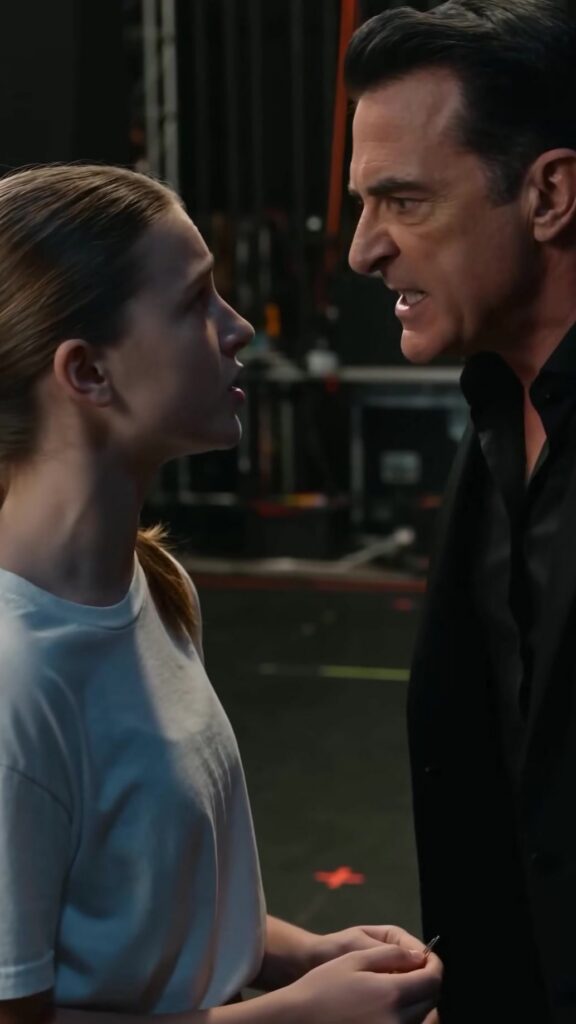
Gabe stepped closer, close enough that Nina could smell his cologne trying to cover up stress sweat. “Liar.”
Nina tightened her grip on the handful of pins she’d been using to adjust Eli’s collar. They trembled between her fingers like nervous little antennae.
Eli wiped his face with both hands and blurted, “She saved me.”
The director snapped toward him with a look that could have curdled milk. “Quiet.”
Nina felt heat rise in her chest—not just anger, but the kind of panic that hits when you realize you’re in trouble with someone who likes being angry. The producers loved Gabe because he was “a visionary.” Mostly he just had a gift for making other people feel small, then calling it “discipline.”
“I told you not to touch the blocking,” Gabe said, turning back to Nina. “You’re a stagehand. You tape cables and fetch props. You don’t think.”
There was a soft sound above them, almost like a sigh. Nina’s eyes flicked up out of reflex. A heavy stage light hung from a pipe overhead—an old fresnel that looked like it had been used in every production since electricity was invented. One of its safety wires, usually an afterthought, was pulled too tight at an odd angle. The main cable looked… wrong. It wasn’t fully frayed, not yet. But it had that stretched, stressed look like a rubber band about to give up.
A tiny spark winked in the shadows. Nina’s stomach dropped.
“The light is loose,” she said, and for a second she forgot about Gabe’s temper because gravity didn’t care who was famous.
Gabe gave a laugh that had no humor in it. “Stop making excuses. Every time someone makes a mistake in my rehearsal, suddenly the building is haunted or the ceiling is falling.”
Nina stared up. The cable gave a faint creak—metal complaining to metal. The light swayed, barely, like it was testing the air.
Eli, still sniffing, followed her gaze. His eyes went wide in the way kids’ eyes do when they spot something adults are determined to ignore. He sucked in a breath and screamed, “LOOK UP!”
The whole stage froze. Even the orchestra pit—empty except for a forgotten violin case—felt like it held its breath.
The stage light dropped one inch.
Just one, but enough to make every person onstage understand what “one inch” meant when it was overhead and full of glass and hot metal.
Gabe’s face turned the color of paper. His scarf fluttered as he jerked his head back.
Nina didn’t wait for anyone’s permission. She grabbed Eli by the harness strap and hauled him forward. It was less a graceful save and more like dragging a very small, very startled cat away from danger.
The cable snapped with a sound that was too clean, like someone clipping a pair of shears.
The light dropped.
It hit the stage with a crash that shook dust from the rafters and sent a burst of shattered glass skittering across the floor. The sound echoed into the empty theater seats, where no one was clapping, no one was saying “bravo,” no one was pretending it was part of the show.
Someone—one of the assistant directors—made a noise like they were about to vomit.
Eli stared at the crater where the light had landed, then at Nina, then at Gabe. His lower lip quivered, but he didn’t cry again. Instead he said, very quietly, “Told you.”
Gabe didn’t answer right away. His mouth opened, closed, then opened again like he was searching for a line that would still make him the main character. The problem with accidents was they didn’t care about your narrative arc.
Nina’s hands were shaking now that the adrenaline had somewhere to go. She let go of Eli slowly, checking him like she’d seen the medics do: shoulders, harness, head. “You okay?”
Eli nodded, still staring at the wreckage. “I thought I was gonna… you know.”
“Yeah,” Nina said. “Me too.”
Gabe finally found his voice. “Why wasn’t that secured?” he demanded, not at Nina this time but at the air, the crew, the universe.
“It was,” Nina said before she could stop herself. “It had a safety wire. But it wasn’t rated for that fixture. And the clamp on the pipe looked ancient.”
He looked at her like she’d spoken in another language. She realized, in that weird bright moment after disaster, that Gabe didn’t know the difference between a safety and a primary. He’d been directing for years and had never bothered to learn what kept people alive above his head.
“We’re shutting this down,” one of the producers called from the aisle, voice suddenly sharp with money-fear. “Everybody offstage.”
As people scrambled, Gabe turned to Nina again. His anger tried to reassemble itself, but it didn’t fit quite right anymore. “You… pulled him back,” he said, and it sounded less like an accusation and more like he was testing the truth.
“Yes,” Nina said. “Because you were yelling and he stepped backward. Straight under that light.”
Eli added, more confidently now, “She grabbed me. I felt it. She yanked me like I was a suitcase.”
Gabe’s jaw worked. For a second, Nina thought he might say sorry, which would’ve been the theater’s biggest miracle of the week. Instead he swallowed and muttered, “Someone should’ve inspected the rigging.”
Nina stared at him. “I did, yesterday. I told Mr. Haskins the clamp was worn.”
Gabe blinked. “And?”
Nina almost laughed, because the answer was so obvious it hurt. “And nobody wanted to spend the money.”
The silence that followed wasn’t theatrical. It was practical. It was the sound of everyone realizing how close they’d come to a headline.
Eli tugged Nina’s sleeve. “Can I go sit somewhere not under stuff?” he asked.
“Absolutely,” Nina said. She guided him toward the wings, away from the shattered light and the puddle of broken glass catching the stage glow like little dangerous stars.
Behind them, Gabe stood frozen for once, staring up at the rigging like he was finally hearing what the theater had been trying to tell him all along: the show could go on, sure, but only if the ceiling agreed.
Nina didn’t look back until she and Eli were safely offstage. When she did, she saw Gabe’s hands—normally so dramatic and controlled—tremble at his sides.
It wasn’t an apology. It wasn’t justice. But it was something.
And for the first time since she’d taken this job, Nina thought: maybe the Lyric Theater wasn’t haunted.
Maybe it was just tired of being ignored.