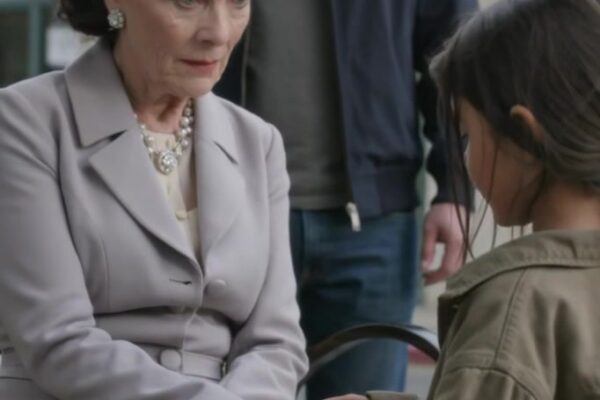
Rain hit the black iron gate like it had personal beef with it, clanging in bursts every time the wind shoved it sideways. The neighborhood behind the gate looked like a different country—warm porch lights, trimmed hedges, a driveway so clean it seemed allergic to mud. Outside the gate stood Mrs. Lita Alvarez in her gray coat that had long ago lost the argument with water. The coat clung to her arms and hung heavy at the hem, dripping steady little rivers onto her worn shoes.
She wasn’t supposed to come today. That had been the plan. She’d told herself she’d wait until Sunday, when the weather might behave and when her son might have a calmer face. But she’d run out of cooking oil, and she’d been stretching rice for days by adding too much water. She’d come because mothers get stubborn in weird ways. They’ll walk through rain for the chance to say, “I’m okay,” even when they’re not.
The gate buzzed when she pressed the intercom. A second later, the front door swung open, and her son appeared under the awning, dry and tense. Mateo looked older than forty in that moment. His shoulders were stiff, his hair combed like he’d done it with anger, and his eyes kept sliding away like they were trying not to touch hers.
He marched out quickly, like if he moved fast enough he could outrun whatever this was. He didn’t hug her. He didn’t say hello. He didn’t say, “Why are you out in this storm?” He pushed a heavy burlap sack into her arms so hard the force made her take a half-step back. The sack thumped against her chest. She grabbed it with both hands, fingers instantly digging into the wet fibers.
“Take the rice and go, Mom,” Mateo said.
His voice was wrong—too rough, too loud for a conversation under rain. Like he was performing cruelty because it was easier than explaining anything else.
Mrs. Alvarez blinked hard. Rain slid off her eyebrows and down her cheeks. “Son…”
Mateo’s jaw jumped. He stared at a spot beside her shoulder, at the wet sidewalk, at anything but her eyes. Behind him, in the doorway, a younger woman stood with her arms crossed. She was pretty in a tidy way—dry hair, soft sweater, slippers that would never meet puddles. Her expression wasn’t exactly mean. It was more like someone watching a scene in a movie and deciding whether to be bored by it.
Mrs. Alvarez hugged the sack closer and gave a small nod. The kind of nod that meant: I understand even if I don’t. The kind that meant: I’m going to swallow my hurt and call it love.
“Okay,” she whispered.
The wind rattled the gate again, and the sound felt like a laugh. Mateo stepped back so fast it was almost a flinch. For a second his face cracked—something like panic, something like grief—then he turned and went inside without another word. The door clicked shut. The younger woman was gone before the latch even caught.
Mrs. Alvarez stood there for one extra heartbeat, because her feet didn’t want to accept it. Then she turned and walked away through the rain, carrying the sack against her chest like it was heavier than rice.
Her little room was across town, tucked behind an auto repair shop that always smelled like oil and warm rubber. The landlord called it a “studio” because calling it a “room” sounded cheaper. It had one window that looked onto a brick wall and a narrow strip of sky. By the time she reached it, her fingers were numb, and the burlap had soaked through so completely it left a damp stain on her coat.
Inside, the room was quiet in the way that makes you hear your own bones creak. A table with wobbly legs. A bed with a blanket she’d repaired so many times the patches had patches. A plastic bucket under the window for the leak she’d reported twice and been ignored about twice.
She set the sack on the table and stared at it, chest rising and falling too quickly. Her thoughts ran in frantic little circles. Why did he sound like that? Was he sick? Did she embarrass him? Did she do something wrong? She tried not to picture him in that big house, dry and distant, like he’d moved into a life where she no longer fit.
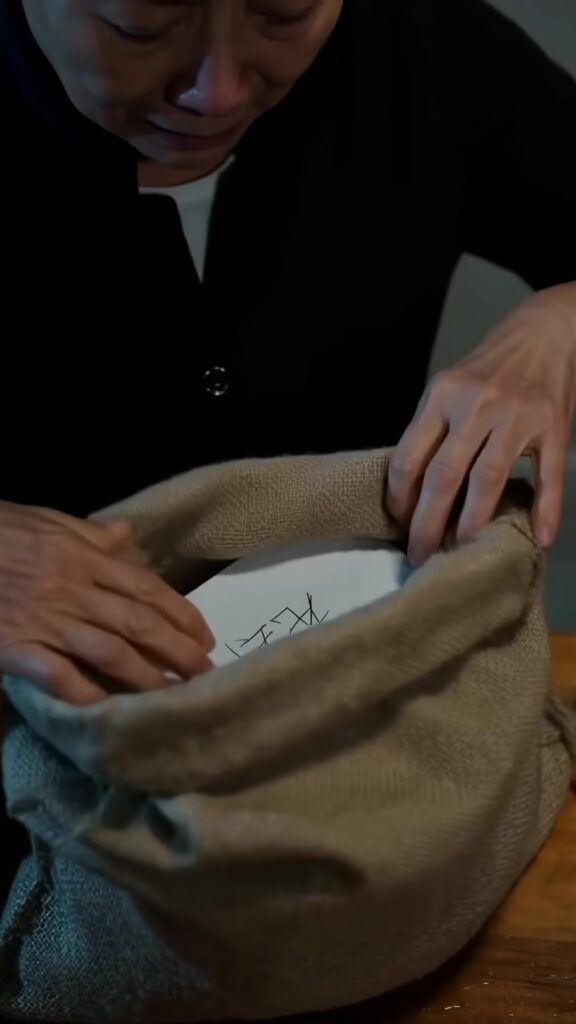
With stiff fingers, she started working at the knot. The rope was swollen with water and dirt, but it loosened easier than she expected, as if it had been tied carefully for someone who might shake. She pulled the opening wide and leaned over.
No rice.
The sack yawned empty except for a white envelope sitting neatly at the bottom like it was waiting for her. Her breath caught. For a second she wondered if her eyes were playing tricks, if the rain had blurred her mind. Then she reached in and pulled it out.
On the front was one word, written in Mateo’s unmistakable handwriting: Mom.
Her fingers trembled as she slid a nail under the flap. It was sealed, but not with glue—just folded tight like he’d been afraid of making any sound. Inside were a few pieces of paper and something thin and plastic.
The thin thing was a bank card with her name on it. Not Mateo’s name. Not his wife’s name. Hers. Mrs. Lita Alvarez. The letters looked official, crisp, almost too fancy for her life.
She unfolded the first page. Mateo had written by hand, the words pressed hard into the paper like he’d been fighting with the pen.
Mom, please read this before you get mad at me.
She made a small, wet sound—half laugh, half sob—because of course he knew her. Of course he knew she’d get mad. She wasn’t the kind of mother who demanded bouquets. But she was the kind who’d slap pride away like a mosquito when it landed too long.
She kept reading.
Mom, I can’t talk to you long at the house. Not because I don’t want to. Because I can’t. She doesn’t understand. If I argue, it gets worse. I don’t want you standing in the rain while I fight inside with a door closed.
There was a pause on the page, like his breathing had gotten heavy between sentences.
I’m sorry I sounded harsh. I needed to make it quick, or I would have— I would have done what I always do when you look at me like that. I would have given in and started explaining and then she would have come outside and said things. You don’t deserve that.
Mrs. Alvarez sat down hard on the edge of the bed. The mattress squeaked. Her eyes burned with tears she’d been pretending not to have since the gate.
Next page.
I opened an account for you. It’s in your name. I’m putting money in every month. It isn’t charity. It’s not you being a burden. It’s me paying back every lunch you skipped so I could have seconds when I was a kid and didn’t even realize.
The card is yours. The PIN is your birthday. You’ll hate that it’s obvious, but I need you to remember it.
I put it in the sack because if I hand you an envelope at the gate, she asks questions. If I tell you to “take the rice,” it sounds like I’m being cheap and mean. She likes that version of me better. A son with boundaries. A son who isn’t… soft.
Mrs. Alvarez pressed a hand to her mouth. Her heart felt too big for the room, like it could knock over the table with one beat. Outside, rain tapped at the window in steady little fingers. The bucket caught a drip. Plink. Plink. Like a clock.
She read the last part slowly, because her eyes were swimming now.
I’m trying, Mom. I’m trying to be the kind of man who can have a home and still take care of you. I’m failing at the parts that matter. But I’m not going to fail at this.
If you need more, use it. If you don’t want to, keep it in the drawer and pretend it doesn’t exist. But please—please don’t go hungry because you think I have to be the one to hand it to you like a king giving crumbs. You raised me better than that.
I love you. I’m sorry about today.
Mateo.
She held the paper in both hands until the edges bent under her grip. For a long time she just listened to the rain and breathed. Her mind replayed his face—how he’d stepped back so fast, the way his eyes had flickered with something trapped. She could almost hear him inside the house, standing behind a closed door, trying to be two people at once: a husband someone approved of and a son who couldn’t stop being a son.
Mrs. Alvarez wiped her cheeks with the back of her hand. Then she laughed softly, not because anything was funny, but because she suddenly saw the entire ridiculous scene for what it was: her grown son, terrified of kindness showing on his face, pretending to throw rice at her like a stray cat.
She placed the card back in the envelope carefully. She folded the letter into neat quarters. Then she opened the top drawer of her little table, the one where she kept a packet of old family photos wrapped in a scarf and the spare buttons she could never bring herself to throw away. She slid the envelope beside them like it belonged there, like it always had.
After that, she stood up, peeled off her wet coat, and hung it by the window. Water dripped from the hem into the bucket. The room smelled like rain and old wood and something warm rising in her chest.
She found her phone—an older model with a cracked corner—and stared at it. Her thumb hovered over Mateo’s name. She imagined calling and pouring all her feelings through the line. She imagined him whispering back and then stopping, listening for footsteps, turning into that rough-voiced stranger again.
So instead, she typed a message.
Mateo. I got the “rice.” Next time you want to be dramatic, pick a sunny day. Also, your handwriting is still awful. Eat properly. Call me when you can.
She paused, then added one more line.
I’m proud of you. Even when you’re acting like a fool.
She hit send.
Outside, the rain kept falling, but the sound had changed. It wasn’t angry now. It was just rain, doing rain things. Mrs. Alvarez went to the stove, lit the burner with a click, and put a pot on top. Not to stretch rice tonight. Not to pretend. She would make soup the way Mateo liked it as a boy, with extra garlic and too much pepper, and she would eat until she was full.
And somewhere across town, behind a black iron gate, her son’s phone would buzz in his pocket like a secret heartbeat, reminding him that his mother was still his mother—soaked through, stubborn as ever, and somehow still standing.