The first thing I noticed was the chandelier: all those crystals hanging over the ballroom like frozen raindrops, catching the light and breaking it into little sharp pieces. The second thing I noticed was how everyone in the room was smiling in the same direction, the way people do when they’ve agreed—without speaking—that tonight’s entertainment would be a public humiliation.
I wasn’t supposed to be here. I’m the person you call when your microphone squeals or your slideshow decides it hates you. Freelance event tech. I blend into black clothes and bad coffee, and I keep my opinions to myself because opinions don’t pay invoices.
But I had opinions about this.
At table seven, under the nicest light in the room, sat Celeste Armand in an emerald dress that made her look like she’d stepped out of a painting. If you didn’t know her, you’d assume she was either very rich or very complicated. If you did know her—like the handful of people who’d worked around her—you’d understand the dress was armor.
Across from her stood Dorian Kline, a man in a black suit that fit like it had been tailored to his ego. He wasn’t officially running the charity gala, but somehow the whole night had arranged itself around his mood. People laughed too hard at his jokes and apologized when he bumped into them. He had that practiced, expensive confidence that made everyone else become furniture.
He tapped a stack of papers against the edge of the table, squared them up, and then—like he was tossing crumbs—he slid them across the glossy wood toward Celeste.
The guests leaned in. Forks paused mid-air. A woman with pearls actually clapped, like this was dessert.
Dorian’s voice carried without him trying. “Sign.”
No one said her name, but everyone knew the story they wanted to watch: the stubborn heiress finally cornered, the last holdout in a deal that would make Dorian’s investors very happy. They’d been whispering all night about “liquidity” and “responsibility” and “the inevitable.” The kind of words people use when they want to call something moral without getting their hands dirty.
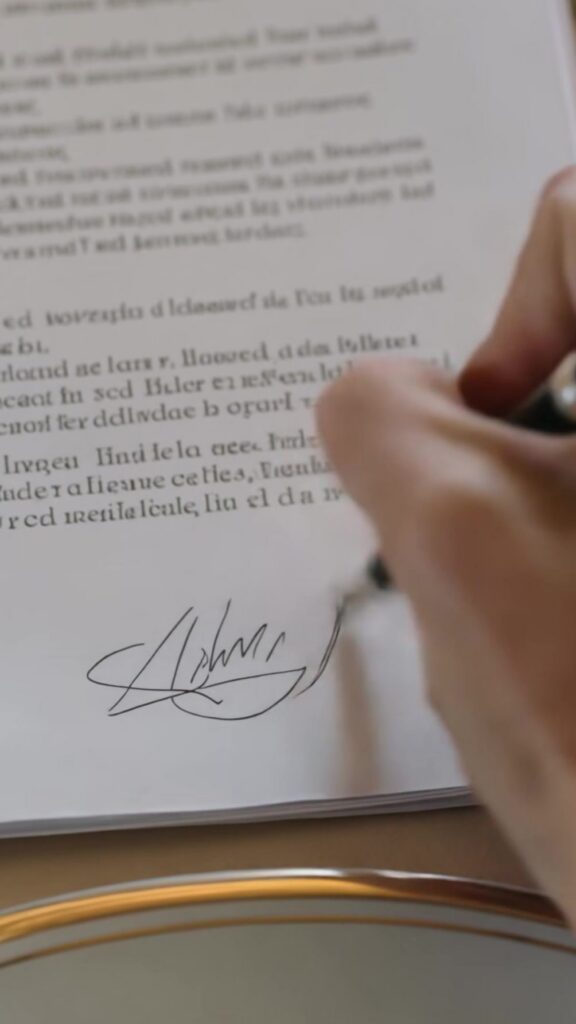
Celeste didn’t ask questions. She didn’t look around for help. She didn’t do the thing the room was craving—no tremble, no gasp, no dramatic refusal. She picked up the pen like she’d been waiting for it, leaned forward, and signed.
Fast. Neat. Like she was signing for a package.
Dorian’s smile flickered, just a little. The room’s smile widened, because they thought they’d won. People love being right more than they love being kind.
I was standing by the AV station near the back, pretending to check the wireless mic batteries. My coworker for the night, a cater-waiter named Rina, drifted by with a tray and whispered, “This is gross.”
“Yep,” I murmured.
Celeste set the pen down carefully, as if it mattered whether it rolled. Then she looked up at Dorian. Not through him. At him. The kind of look that makes a loud room feel suddenly too quiet.
“You really don’t understand what you just did,” she said.
It wasn’t a hiss. It wasn’t a threat meant for the cheap seats. It sounded calm, almost bored, like she’d just read an ingredient label and discovered an allergen.
Dorian laughed, but it came out thin. “Oh, I understand perfectly.” He reached for the papers with the eager, possessive gesture of someone taking a trophy off a shelf.
That’s when I noticed something I shouldn’t have been able to see from where I stood: the stack wasn’t uniform. There was a page that sat slightly off, like it had been folded once and then flattened again. A small imperfection in a room built on perfect surfaces.
Dorian lifted the top pages and froze.
The smile dropped off his face so quickly it looked like gravity had grabbed it. His eyes scanned down, then up again, like his brain refused to accept what his vision was reporting. He turned a page. Then another. A tight swallow moved in his throat.
The room, still hungry for drama, went quiet in that uncomfortable way where you can hear cloth shifting and ice clinking in glasses.
“What is this?” Dorian asked, and for the first time his voice wasn’t performing.
Celeste’s posture didn’t change. “The part you didn’t read.”
He flipped to the signature line. Her name was there, clean and unmistakable. But the heading above it wasn’t the one he’d been bragging about all week. It wasn’t the triumphant transfer of control he’d promised his circle. It was something else, something with a lot of capital letters and an especially unfriendly tone.
“This isn’t—” he started, then stopped, because saying it out loud would mean admitting he hadn’t noticed.
From my angle, I couldn’t read all the fine print, but I caught a few phrases when he tilted it toward the chandelier light: “voluntary assumption,” “full liability,” “pending investigation.” My stomach did a slow, impressed flip.
Rina appeared at my shoulder again, tray forgotten, eyes wide. “Oh my god,” she whispered, like she was watching a magic trick where the rabbit had teeth.
Dorian’s face went pale in stages, as if someone was lowering the saturation on him. “You—” he said, and his voice cracked on the word. “You can’t do this.”
Celeste finally smiled, but it wasn’t friendly. It was the kind of smile you see right before a door locks. “I didn’t ‘do’ anything. I signed exactly what you put in front of me.”
He jabbed a finger at the page. “This wasn’t in the agreement.”
“No,” she said. “It was underneath it.”
A murmur rippled through the guests, confused and offended, like they’d ordered cruelty and been served consequences instead.
Dorian looked around, searching for allies the way a man searches for exits. “This is a setup,” he said loudly, as if volume could rewrite ink. “She’s trying to—”
“Transfer,” Celeste finished for him, voice still calm. “Yes. Transfer. You wanted it all so badly. The holdings, the titles, the mess. Congratulations.”
“What mess?” someone at the table asked—one of Dorian’s friends, the kind with a too-white smile.
Celeste tapped the page with a manicured finger. “The properties you’ve been pressuring me to ‘release’ were flagged months ago. I told my board. I told your attorneys. I even told you.” Her gaze slid back to Dorian. “But you were so busy winning that you didn’t hear me.”
Dorian’s mouth opened, then closed. He read another line, and the color drained completely. His hand shook just enough to flutter the paper.
And that’s when it clicked for me: he thought he’d forced Celeste to accept a loss in front of witnesses. Instead, he’d volunteered—on record, at a table full of donors and cameras and social climbers—to inherit a legal nightmare with his own signature stamped on top of it like a seal.
At the edge of the room, a young woman who’d been filming lowered her phone, not out of respect, but out of shock. A few people started checking their own screens, realizing this wasn’t just gossip anymore. This was a headline.
Dorian’s voice came out small. “You’re lying.”
Celeste’s eyes didn’t blink. “Call your lawyer.”
He looked like he might actually do it, right there, but pride held him still for two extra heartbeats. Then his hand dove into his pocket.
Celeste stood, smoothing her dress like she was about to leave a perfectly normal dinner. “One more thing,” she said, and the room leaned in again, because even when people don’t deserve a sequel, they want one.
She nodded toward the head table, where the charity’s director sat blinking like he’d swallowed a lemon. “You might want to tell everyone why you pushed so hard for these assets in the first place. Because when investigators follow the trail, they’ll find more than bad bookkeeping.”
Silence tightened, the kind that makes your ears ring.
Dorian’s phone was at his ear now. Whatever he heard made him stiffen. His eyes flicked to Celeste, then away, like looking at her hurt.
Celeste picked up her clutch and turned, walking past the pearl-clapping woman, past the approving smiles that had curdled into uncertainty. As she moved, conversations tried to restart and failed, sputtering like damp matches.
When she passed the AV station, she glanced at me. Just a quick look, like she’d noticed I wasn’t smiling earlier. She didn’t wink or anything dramatic. She just gave the smallest nod, as if to say: keep blending in. Keep watching.
And then she was gone, leaving behind a room full of people who’d thought they’d watched a woman lose everything—only to realize they’d been invited to witness something much more dangerous.
They’d come for a spectacle.
They got a verdict.