The first thing I noticed was the sound—this thin, scratchy wheeze that didn’t belong in a place that smelled like peppermint gum and rubbing alcohol. It cut through the beeping register and the soft pop music on the ceiling speakers like someone had torn a hole in the day.
A woman stood at the counter with her wallet open like she’d forgotten how money worked. Beside her, a little girl—maybe five, maybe six—clutched her own shirt with both fists. Her eyes were wide and glassy, and her lips had that wrong kind of pale, the kind that makes every adult in the room suddenly pretend not to notice because noticing means responsibility.
The pharmacist—tall, pressed shirt, name tag straight as a ruler—snatched a box out of the mother’s hands. It slid across the tile when it hit the edge of the counter, skidding away like it wanted to escape.
“Pay first,” he said, loud enough for everyone to hear and calm enough to sound practiced.
The mom’s voice cracked. “She can’t breathe. Please. She’s—she’s having one of her episodes.”
“Ma’am, I can’t release medication without payment.” He held the box with two fingers like it was contagious. “Step back.”
And that’s when the weirdest thing happened: nobody did anything. People shifted their weight. Someone pretended to read a shampoo label. A teenager lowered his phone, then decided he was still bored and raised it again. Even I froze, like my feet were glued down by a thin layer of embarrassment and fear.
There was one person not frozen. In the aisle near the greeting cards, an older cleaning woman paused mid-sweep. Her hair was silver but tied back tight. She wore faded sneakers and a plain uniform that didn’t quite fit, like it had belonged to someone taller.
She stared at the little girl for half a second, then her broom clattered to the floor like an alarm bell.
“Give her space,” the cleaning woman said, and her voice wasn’t loud, but it was the kind of steady that makes people obey without thinking. “She needs air and calm. Move.”
Two customers stepped back automatically. The mom sank toward the floor, one hand reaching for her child like she was afraid the girl might float away.
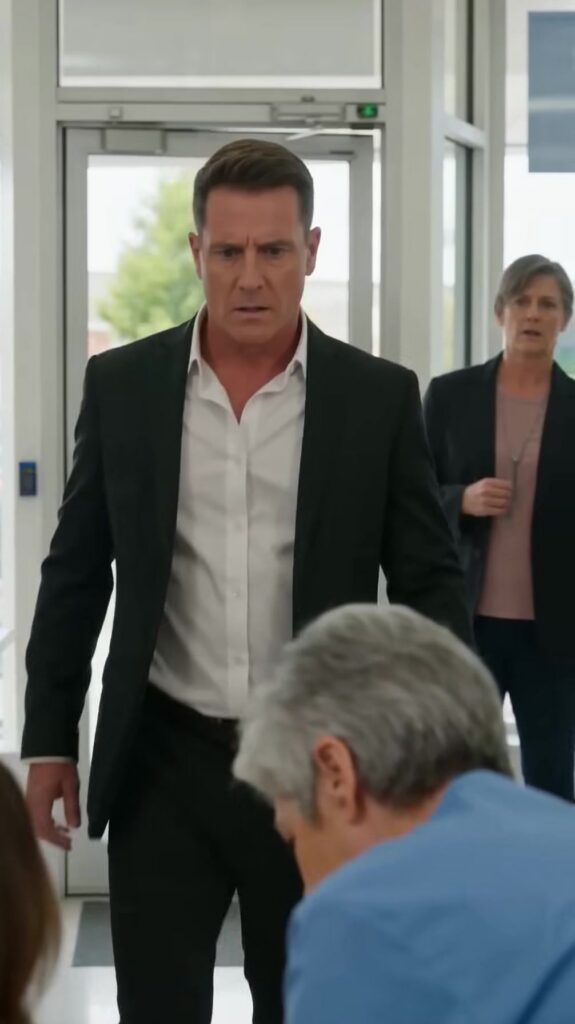
The pharmacist stepped around the counter and grabbed the cleaner’s arm. “Hey. No. You’re not trained. You clean floors.”
The cleaner didn’t yank away. She just turned her head slowly, eyes sharp. “I cleaned floors in hospitals for years,” she said. “And I watched enough people almost die to learn what to do.”
The little girl made a sound that wasn’t even a wheeze now, more like a tiny squeak. Her face was changing, like someone was turning down the color on a screen. Blue was creeping in at the edges.
“Let go,” the cleaner said. Not angry. Just final.
Maybe it was the blue, maybe it was the mom’s sob, but the pharmacist’s grip loosened. The cleaner dropped to her knees like she’d been doing it her whole life. She didn’t shake the child or slap her back. She didn’t panic. She placed one hand on the girl’s shoulder and the other behind her neck, guiding her gently into a position that opened her airway, tilting her chin just so.
“Look at me, sweetheart,” she murmured. “We’re gonna do this together. One small breath. Like you’re sipping hot cocoa.”
The girl’s eyes darted. Her tiny chest fluttered fast like a trapped bird. The cleaner made her own breathing slow and obvious, exaggerating it like a teacher in a kindergarten class. In through the nose. Out through pursed lips. Over and over.
“Good,” she said, even when it wasn’t good yet. “You’re doing it. You’re doing it.”
Someone whispered, “Call 911,” but nobody moved. The pharmacist looked like he wanted to be anywhere else on earth.
The mom was on the floor now too, hands hovering uselessly, tears dripping off her chin. “Baby, please,” she whispered. “Please.”
Then the cleaner did something I’d only seen in CPR videos: she guided the child’s shoulders forward, coached her to cough, not too hard, not forced. A controlled cough. The kind that turns panic into action. The girl’s body jerked once, twice. Her face was still wrong, but her eyes focused for the first time, like she’d found the thread back to her own body.
“That’s it,” the cleaner said. “Again.”
The little girl coughed and suddenly sucked in a breath so loud it sounded like the whole store inhaled with her. Color crept back like sunrise. She blinked, startled, then started crying—big, offended sobs, like she couldn’t believe everyone had let it get that far.
The pharmacy went dead quiet. Even the music seemed to fade into the background, like it was embarrassed.
“She’s breathing,” the cleaner said softly, like she was telling herself as much as anyone else. She eased the girl into her mother’s arms, then sat back on her heels, exhaling long and careful.
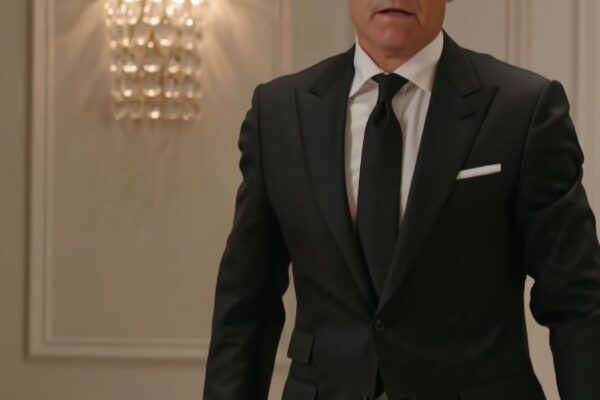
At that exact moment, a door behind the counter opened and a man stepped out, buttoning the cuff of his shirt. He had the polished look of someone who didn’t walk on tile in cheap shoes. Owner energy—confident, tired, impatient.
He froze, taking in the scene: people scattered, a mother on the floor hugging a crying child, a pharmacist standing stiff as a scarecrow, and the cleaning woman kneeling with her hands still held out like she was guarding something invisible.
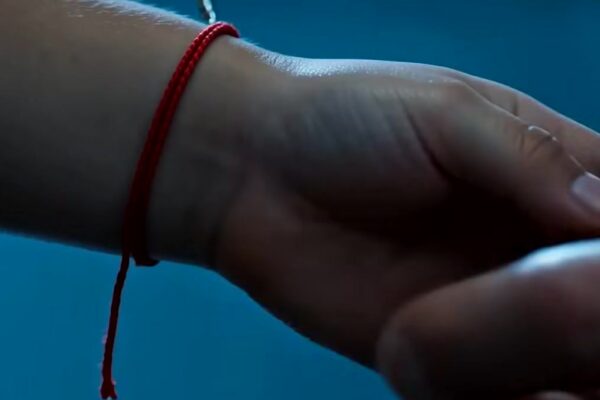
His eyes locked on the cleaner, then dropped to her pocket, where something white peeked out—an old, crinkled hospital bracelet, the plastic kind you’re supposed to throw away but never do if you’ve survived the day it represents.
His face changed so fast it was like a different man stepped into his skin.
“What bracelet is that?” he asked, and his voice cracked on the last word.
The cleaning woman’s whole body went rigid. Her hand flew to her pocket like she’d been caught stealing. “Please don’t,” she whispered. “Don’t ask me that.”
But he was already walking toward her, slow, like he was afraid any sudden movement would break whatever fragile thing was happening. He reached down, not grabbing her, just holding out his hand the way you offer a stray cat food.
She hesitated, then—almost reluctantly—let the bracelet slide into his palm.
He stared at it. I was close enough to see the faded writing: a name, a date, a barcode worn soft by time and worry. His mouth opened, but no sound came out. Then his eyes glistened, and his shoulders—this tall, expensive man’s shoulders—slumped like he’d been carrying a weight for years.
“My daughter wore this,” he said, barely above a whisper. “The day she… the day we lost her.”
The cleaning woman’s face fell apart. Not dramatic, not theatrical—just a collapse. She pressed her fingers to her lips like she could hold herself together that way. “I didn’t take it,” she said quickly, too quickly. “They gave it to me. I was there. I was working that shift.”
His eyes flicked up. “You were at Saint Lila’s?”
She nodded once, hard. “I was the janitor. Night crew.” Her voice shook now, the steadiness finally gone. “I heard the nurses calling for help. I shouldn’t have gone in, but I did. Your daughter was so small.”
The owner swallowed like it hurt. “Why do you have it?”
The cleaner’s hands twisted in her lap. “Because nobody tells you what to do with grief when you mop it up,” she said. “They told me to clean the room after. Like it was just another spill. Her bracelet was on the tray. I… I couldn’t throw it away.”
The pharmacist shifted awkwardly, suddenly fascinated by the ceiling tiles. The mom on the floor watched with red eyes, clutching her now-breathing daughter like she was made of glass.
The owner looked down at the bracelet again, then at the woman who’d saved a stranger’s child with calm hands and an old skill set she wasn’t supposed to have. His voice came out rough. “Why are you here? Why are you cleaning my store?”
The cleaner laughed once, a tiny sound with no humor. “Because after that night, I couldn’t stay in hospitals,” she said. “And because places like this—pharmacies, stores, corners of ordinary life—are where I thought I might finally stop hearing the alarms in my head.”
He stared at her for a long beat. Then, quietly, he crouched down so he was eye level with her, right there on the tile where everyone could see.
“What’s your name?” he asked.
She blinked, as if she hadn’t been asked that kindly in a long time. “Marisol,” she said.
He nodded slowly, like he was filing the name into a space that had been empty. “Marisol,” he repeated. “You just saved that little girl.”
Marisol’s eyes darted toward the child. “I couldn’t watch another one turn blue,” she whispered. “Not again.”
The owner closed his fingers around the bracelet, not hiding it, not pocketing it—just holding it like something sacred. “Then you don’t clean floors here anymore,” he said.
Marisol’s brows pinched. “I don’t want charity.”
“It’s not charity,” he said, and his voice had steel again, but a different kind—protective, not cold. “It’s me finally paying attention. You’re the only person in this room who acted like a human being. Starting today, you’re staff. Properly. Training, benefits, the whole thing.”
The pharmacist sputtered. “Sir—”
The owner didn’t even look at him. “And you,” he said to the pharmacist, voice calm as ice, “are going to ring up that medication without another word. Then you’re going to step into my office and explain why a dying child had to wait for a receipt.”
The mom hugged her daughter tighter, trembling. “Thank you,” she said to Marisol, like the words weren’t big enough for what she meant.
Marisol reached out and gently smoothed the little girl’s hair back from her forehead, the way you do when you’re checking if someone’s fever broke. “Keep her sitting up,” she told the mother softly. “Small sips of water if she can. And when you get home, call her doctor. Don’t let them tell you it’s ‘just anxiety.’ You know your kid.”
The little girl sniffed, still teary, but breathing fine now. She looked at Marisol with the blunt curiosity only kids have. “Are you a doctor?” she asked.
Marisol hesitated. Then she smiled, small and tired. “No,” she said. “I’m just someone who learned the hard way.”
The owner stood, still holding that old bracelet like it was a bridge between then and now. His eyes lingered on Marisol, full of questions he wasn’t ready to ask in front of a room full of strangers.
But the way he looked at her—like he’d just recognized a ghost and a hero in the same person—made me think the story wasn’t ending on the pharmacy floor. It was only starting.