
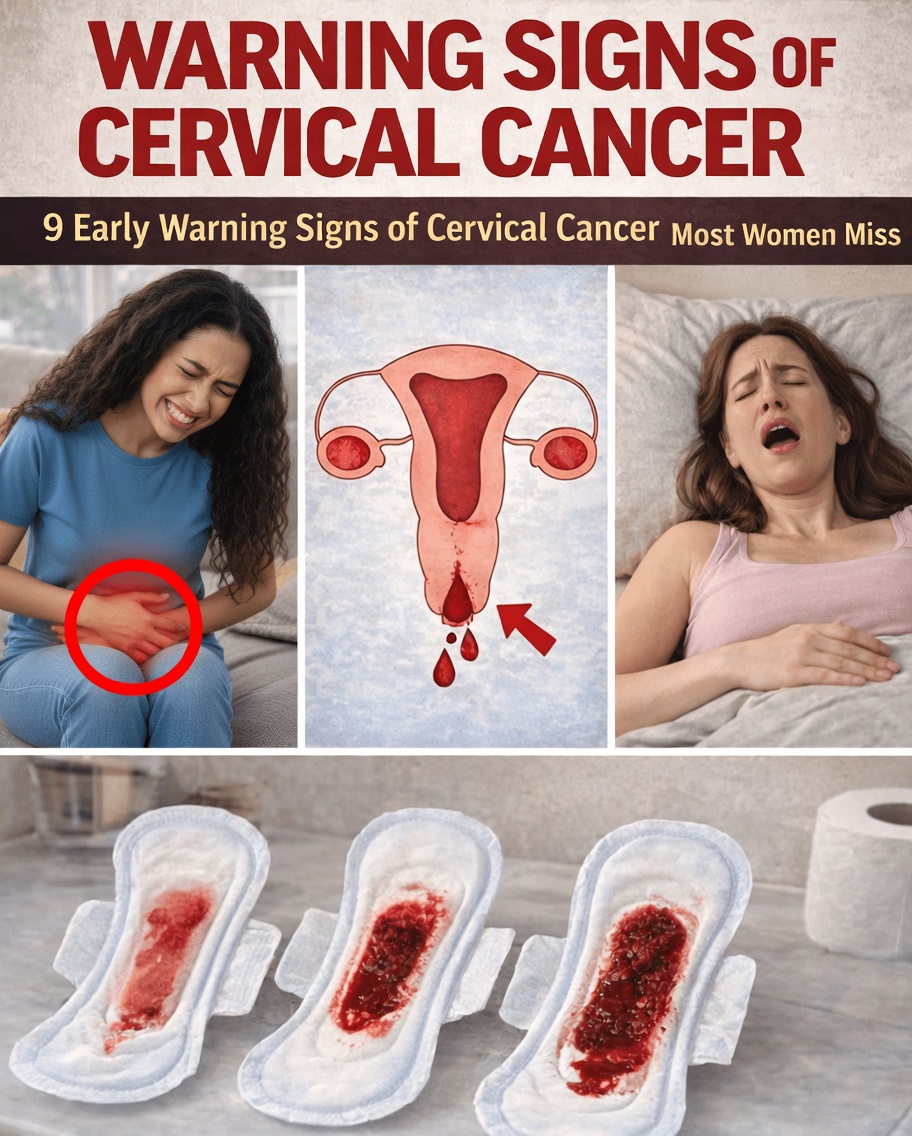
9 Early Cervical Cancer Warning Signs Many Women Overlook
Many women in their 40s and 50s dismiss small body changes as part of a hectic schedule, shifting hormones, or everyday stress. A slight unusual odor, light spotting, or ongoing fatigue may seem harmless at first, especially if life already feels demanding. But when these symptoms keep returning, they may deserve closer attention.
Cervical cancer affects thousands of women every year, and it is often very treatable when found early. Trusted medical organizations such as the American Cancer Society and Mayo Clinic note that early cervical cancer may not cause noticeable symptoms at all. That is why paying attention to lasting body changes can help start an important conversation with a doctor sooner rather than later.
This guide covers nine possible early signs that are often ignored, based on medical guidance and common real-world experiences. At the end, you’ll also find practical steps that can help strengthen your health routine.
Why These Symptoms Are Easy to Miss
Cervical cancer usually develops gradually and is commonly associated with long-term HPV infection. In many cases, the early stages do not create obvious discomfort. The American Cancer Society reports that roughly 13,000 new cervical cancer cases are diagnosed each year in the United States, and many are discovered through routine screening rather than symptoms.
Because of this, when warning signs do show up, they are often mistaken for perimenopause, minor infections, stress, or simple exhaustion. That overlap can make women hesitate, wondering if they are making too much of something small. Still, symptoms that continue or repeat over time matter.
Some of the earliest clues can appear during ordinary daily moments, which makes them even easier to overlook.
Sign 9: Vaginal Discharge That Seems Different Than Usual
One of the most commonly ignored changes is unusual vaginal discharge. It may become more watery, appear pink, brown, or blood-tinged, or develop a strong unpleasant odor that is not typical for you. Many women assume it is just a hormonal fluctuation or mild irritation.
According to reliable medical sources such as Mayo Clinic, unusual discharge, especially when it contains blood or has a foul smell, may be linked to changes in cervical cells. There are many non-serious explanations as well, but if the change lasts more than a week or two, it is worth bringing up with a healthcare professional.
The most helpful approach is to monitor how long it continues and whether it comes with any other unusual symptoms.
Sign 8: Pain or Discomfort During Intimacy
Sex should not suddenly become painful. A new stinging sensation, pelvic aching, or unusual tenderness during or after intercourse can be easy to blame on dryness, emotional stress, or age-related changes.
However, medical guidance, including information from the American Cancer Society, notes that discomfort during intimacy can sometimes be associated with inflammation or tissue changes involving the cervix. While it does not automatically mean cancer, it is one of the symptoms that should not be ignored if it keeps happening.
A simple first step is acknowledging the change instead of pushing it aside.
Sign 7: Bleeding Between Periods or Other Unusual Bleeding
Spotting outside your normal cycle can be confusing and disruptive. Some women also notice periods that are heavier, longer, or less predictable than usual. Stress, birth control, and perimenopause are often the first explanations that come to mind.
The CDC identifies abnormal vaginal bleeding, including bleeding between periods or after menopause, as an important change that should be evaluated. In some cases, it can be associated with HPV-related cervical changes.
When bleeding patterns begin to repeat, keeping a record of dates and severity can help clarify whether something unusual is happening.
Sign 6: Persistent Pelvic Pain or Pressure
A dull ache or pressure in the lower abdomen can easily be mistaken for overexertion, muscle tension, or everyday strain. But when pelvic discomfort continues for weeks or begins interfering with sleep, walking, or normal movement, it deserves attention.
Clinical references, including Mayo Clinic, associate ongoing pelvic pain with possible changes in the cervical area. This sign may be subtle, but its persistence is what makes it important.
The body does not always signal trouble loudly. Sometimes the message appears through changes in energy as well.

Sign 5: Fatigue That Does Not Improve With Rest
Feeling tired is common, especially in busy adult life. But there is a difference between ordinary tiredness and a deeper exhaustion that does not improve even after sleep. If you feel depleted by midday again and again, something more may be going on.
Cancer-related medical research suggests that fatigue can appear as part of the body’s response to underlying illness. The National Cancer Institute includes fatigue among broader symptom patterns that should be considered in context.
When rest no longer seems to help, it may be time to look beyond stress alone.
Sign 4: Unexplained Weight Loss
Losing weight without trying may seem like a welcome change at first. But when pounds drop without changes in eating habits, exercise, or lifestyle, it can signal that the body is out of balance. Some women also notice a decreased appetite or that their clothes suddenly feel looser.
Studies have linked unintentional weight loss to a range of health conditions, including those affecting the cervix. While this symptom can have many causes, it should not be brushed off if it happens unexpectedly.
This is one of those signs that often surprises people because it does not always feel alarming right away.
Sign 3: Ongoing Lower Back Pain
Lower back pain is often blamed on poor posture, sitting too long, physical activity, or aging. But discomfort that becomes chronic, spreads, or worsens with standing or sitting may need more attention.
Research connected to major academic medical centers, including Harvard-related discussions, mentions back pain in relation to cervical cancer patterns, especially as disease progresses. Even so, persistent lower back pain can still be part of the wider symptom picture and should not be ignored when it appears alongside other changes.
No single symptom tells the whole story. The pattern is what matters.
Sign 2: Swelling in the Legs or Ankles
Swollen feet or ankles at the end of the day are often blamed on heat, standing too long, or circulation issues. But swelling that keeps returning or does not improve with rest may point to something more serious.
Clinical symptom lists include leg swelling because it can be associated with lymphatic blockage in more advanced situations. While this is not usually thought of as an early sign, it is still a physical change that deserves medical attention if it becomes ongoing.
If swelling appears without a clear reason, it is worth discussing rather than assuming it will pass.
Sign 1: Changes in Urination Habits
Needing to urinate more often, feeling a burning sensation, or experiencing discomfort during urination can interrupt everyday life. Many women assume caffeine, dehydration, or a mild urinary tract infection is to blame.
However, the World Health Organization and cancer organizations note that bladder pressure or urinary changes can occur when cervical abnormalities affect nearby tissues. Persistence is the key issue here. If symptoms continue despite hydration or treatment for common causes, follow-up is important.
Stories like Karen’s help show why. She was a nurse who ignored frequent urges to urinate until screening finally gave her answers. Because she acted before things worsened, she was able to move from uncertainty to a sense of control.

Everyday Causes vs. Signs That Need Attention
Many of these symptoms overlap with common conditions, which is why they are often dismissed. This quick comparison can help:
-
Unusual discharge
- Common cause: hormonal changes or infection
- Needs attention: ongoing odor, blood-tinged discharge, or unusual color
-
Pain during intimacy
- Common cause: dryness or age-related changes
- Needs attention: new or repeated discomfort
-
Abnormal bleeding
- Common cause: stress, cycle changes, birth control
- Needs attention: spotting between periods or any bleeding after menopause
-
Pelvic pain
- Common cause: exercise strain or muscle tension
- Needs attention: constant pain without a clear reason
-
Fatigue
- Common cause: poor sleep or stress
- Needs attention: severe exhaustion that does not improve
-
Weight loss
- Common cause: diet or activity changes
- Needs attention: unplanned weight loss with reduced appetite
-
Lower back pain
- Common cause: posture or activity
- Needs attention: persistent pain that radiates or worsens
-
Leg swelling
- Common cause: standing too long or warm weather
- Needs attention: swelling that continues despite rest
-
Urinary changes
- Common cause: caffeine or mild infection
- Needs attention: frequent urges, burning, or discomfort that persists
The biggest factors to watch are duration, repetition, and whether multiple symptoms are happening together.
Practical Steps You Can Take Now
You do not need to panic or self-diagnose, but you can take clear and useful action.
-
Track your symptoms
- Use a notebook or phone app to record what you notice, when it starts, and how long it lasts over 2 to 4 weeks.
-
Stay current with screening
- Ask your gynecologist about Pap tests and HPV testing. Screening recommendations depend on age, medical history, and prior results.
-
Support your overall health
- Maintain a healthy weight, avoid smoking, and discuss HPV vaccination with your doctor if you are eligible.
-
Talk to the right people
- Support groups and women’s health communities can be helpful, but medical guidance should always come from qualified professionals.
-
Know when care is urgent
- Heavy bleeding or severe pain should be treated as urgent symptoms that need immediate medical attention.
These steps can increase awareness and support earlier evaluation without causing unnecessary fear.
Key Takeaways
Listening to your body matters. Changes such as unusual discharge, pain during intimacy, irregular bleeding, pelvic discomfort, deep fatigue, and urinary shifts may seem minor on their own, but they should not be ignored if they persist.
Early recognition often leads to earlier medical evaluation, more peace of mind, and better outcomes. Regular cervical screening remains one of the best ways to catch problems before symptoms become more serious.
Even one small action today, such as scheduling a checkup or tracking a symptom, can make a meaningful difference.
FAQ
What are the most common early signs of cervical cancer?
Some of the most frequently reported early warning signs include unusual vaginal bleeding, changes in vaginal discharge, and pain during intercourse. Medical sources such as the American Cancer Society and Mayo Clinic commonly identify these as symptoms that deserve medical attention, especially when they persist or keep returning.