The first time the girl said it, the rain was coming down in straight, relentless lines, turning the hospital’s front steps into a slick gray river. Ethan had been staring at the automatic doors as if they might spit out an answer along with the people—someone in a white coat waving a miracle, a lab result rewritten, a mistake corrected. Instead, a child’s voice cut through the wet air.
“Adopt me.”
Ethan blinked, certain he’d misheard. He hadn’t slept more than an hour at a time since the accident. His thoughts moved like heavy machinery—slow, grinding, ready to seize.
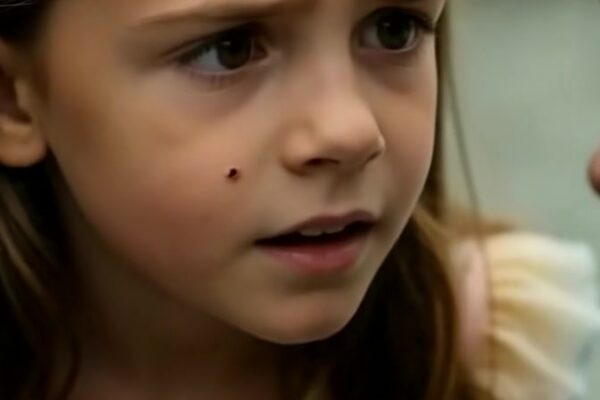
The girl stood under the overhang, too close to the edge of the rain to be comfortable. She was small, maybe twelve or thirteen, wearing a thin hoodie with the sleeves pushed up, as if she’d forgotten cold existed. Her hair was dark and damp at the ends. Her eyes were the unsettling part: not wide and pleading like the kids in those charity commercials, but steady, measuring, older than her face.
Noah, Ethan’s son, sat in his wheelchair beside him. His blanket was folded over his legs with careful precision, the way nurses did it when they wanted to pretend the world was orderly. Noah’s fingers worried the hem of the blanket, twisting it into a rope and then letting it fall.
Ethan cleared his throat. “Where are your parents?”
The girl didn’t answer. She lifted her hand instead, pointing—direct, unafraid—at Noah’s legs.
“I can heal your son.”
For a moment, the hospital’s whole front entrance seemed to go silent. Even the rain sounded farther away. Ethan felt the phrase land inside him like a stone dropped in a well, the echo of it sinking and sinking.
Disbelief came first, then anger, quick and sharp. He’d endured pitying glances and murmured condolences, endured doctors who spoke in probabilities and therapists who offered hope in careful teaspoons. He would not endure this—a child dangling salvation like a toy.
Ethan let his breath out slowly, forcing the air to pass through teeth that wanted to grind. “That’s not something you joke about.”
The girl didn’t flinch. She didn’t retreat into the rain. She didn’t even blink, as if her eyes were anchored to him and Noah, as if leaving would cost her something she couldn’t afford.
“I’m not joking,” she said, quietly, with the flat certainty of someone stating the time.
Then she crouched, lowering herself to Noah’s level. Her gaze softened, but only by a fraction—as if compassion was a language she spoke with an accent. She looked at his legs the way a mechanic looks at a stalled engine, not with pity, but with attention.
“His legs aren’t broken,” she said. “They’re just sleeping.”
Noah leaned forward, drawn in despite himself. Ethan could feel his son’s curiosity like a tug on his sleeve. Noah had learned to distrust hope, but he still wanted it, the way a thirsty person still watches clouds.
“How would you know that?” Noah asked. His voice was careful, the question of someone afraid the answer would hurt.
The girl met his eyes, unmoving. “Because I know what it looks like when something is waiting to wake up.”
Before Ethan could stop her—before his mind could marshal the reasonable objections, before the years of skepticism could form into a shield—she reached out and brushed her fingers against Noah’s knee.
Ethan saw Noah’s legs the way he always did: still, unresponsive, a betrayal wrapped in skin. He’d watched doctors tap tendons with little hammers, watched needles prick, watched Noah bite his lip and stare at the ceiling. Nothing changed. Nothing.
The girl’s touch was gentle, almost absentminded, like she was greeting an animal that might spook. Her fingertips traced a small circle on the fabric of Noah’s pants, just above where the therapists always started their assessments. For a heartbeat, nothing happened.
Then Noah’s knee twitched.
Not the kind of twitch Ethan had trained himself to dismiss—the phantom movement of muscle memory, a trick of fatigue. This was different: a clear, unmistakable jerk, as if something inside had been nudged.
Noah’s eyes went wide. Ethan’s lungs stopped working for a second. The girl didn’t look surprised at all.
“That was just the beginning,” she murmured.
Ethan’s hand shot out, gripping the handles of Noah’s wheelchair as if the chair might bolt. “What did you do?” he demanded, and hated how his voice cracked, hated the desperation he could hear in it. “Who are you?”
The girl straightened slowly. Up close, Ethan noticed details he’d missed: faint scars on her knuckles, a thin line like a healed cut at her hairline. She smelled faintly of antiseptic and smoke, like she’d been near both fire and a hospital bed.
“My name is Mira,” she said. “But it doesn’t matter. You won’t keep it.”
“That’s—what does that even mean?” Ethan asked.
Mira’s gaze flicked to the hospital doors, then back. “Names are easy to lose here,” she said. “They take them from people who don’t belong.”
Ethan tried to place her—pediatric ward, maybe? A runaway? A child from the foster system who’d wandered into the wrong building? But her calm was too precise, her words too sharp-edged.
“You said… adopt you,” Ethan said, hearing the absurdity in his own mouth. “Why?”
Mira’s shoulders lifted in a shrug that didn’t fit her age. “Because you’re leaving,” she said. “And I need to leave more.”
Noah swallowed. “Are you… like a doctor?”
Mira almost smiled. Almost. “Doctors fix what they can see,” she said. “I fix what’s hiding.”
Ethan’s irritation flared again, defensive. “This is a hospital. If you’re a patient, you need to go back inside. If you’re not—”
“If I’m not, you’ll call security,” she finished, unbothered. “And then they’ll put me in the basement unit with the other mistakes.”
The rain shifted, wind pushing it in sideways. Mira didn’t move, letting drops speckle her sleeves. Noah did—his hand rose, hovering uncertainly, then he placed it on his own thigh as if checking for evidence that the twitch had been real.
Ethan watched his son’s face—hope and fear wrestling. Ethan had sworn he’d protect Noah from false hope, from the cruelty of maybes. But the twitch lingered in his mind like a bright scar. It wasn’t a promise. It wasn’t a cure. But it was something that had happened, undeniably, under a stranger’s fingers.
“Do it again,” Noah whispered, as if he might scare it away if he spoke too loudly.
Mira crouched again, but this time she looked up at Ethan first, as if asking permission she didn’t expect to receive. Her eyes held a question that wasn’t about Noah.
“If I help him,” she said, “you take me with you.”
Ethan let out a laugh that wasn’t humor, just disbelief breaking into sound. “You can’t bargain with me like this. You’re a child.”
“So is he,” Mira replied, nodding toward Noah. “And the world already bargained with him. It took his running and left him wheels. You think the world cares what’s fair?”
Ethan’s mouth went dry. The accident came back in flashes: the crunch of metal, the smell of gasoline, Noah’s scream—then later the sterile smell of diagnosis, the quiet way doctors avoided the word permanent. Ethan had fought to keep Noah from drowning in it. He’d forgotten how quickly a child could be made into a lesson.
“If you’re lying,” Ethan said, voice low, “if you’re playing some sick game—”
Mira’s expression hardened. “I don’t play,” she said. “I pay.”
She touched Noah’s knee again. This time she pressed two fingers into the muscle beside it, like she was feeling for a pulse that didn’t belong to blood. Noah sucked in a breath. His foot jerked under the blanket—small, but undeniable. The blanket shifted at the edge, a tremor in cloth.
Noah gasped, tears springing up so fast they seemed to surprise him. “Dad,” he whispered, like the word itself was a rope.
Ethan’s heart slammed against his ribs, furious and terrified. He wanted to fall to his knees. He wanted to grab Mira and shake her until answers fell out. He wanted to run—to the doctors, to someone official, to someone who could explain this without magic and bargains.
But Mira’s face tightened, and Ethan saw the strain in her, the way her fingers trembled when she pulled them back. Whatever she was doing wasn’t effortless. It cost her.
“Not all at once,” she said to Noah, breathing a little harder now. “He’ll hurt if we force it. Waking up is… rough.”
“We?” Ethan echoed.
Mira looked past him at the parking lot, as if listening to a sound only she could hear. “They know I’m here,” she said. “I don’t have time for your disbelief. Decide.”
“Decide what?” Ethan demanded, though he already knew.
Her eyes snapped back to his. “You want your son to walk again,” she said. “And I want a door that locks from the inside. A name on a school roll. A bed that’s mine. Papers that say I belong to someone who won’t trade me back.”
The rain’s rhythm seemed to accelerate, or maybe Ethan’s pulse was just louder than everything else. He imagined calling the police. He imagined a social worker. He imagined the chaos of dragging a mysterious girl into bureaucracy while his son’s legs—sleeping, she’d said—waited on the edge of waking.
Noah reached out, timidly, and took Mira’s sleeve between finger and thumb as if he needed to make sure she stayed real. “Please don’t go,” Noah said, voice cracking. “Please.”
Mira’s throat bobbed. For the first time, she looked like what she was: a child holding herself together with sheer will.
Ethan closed his eyes for a second. He saw the moment at the crash site when he’d realized he couldn’t rewrite time, only choose what came after. He opened them again.
“If you’re in trouble,” he said, “we can get help. Proper help.”
Mira’s lips pressed together. “Help is just a word people use when they mean control,” she said. “I’m not asking you to save me. I’m offering to save him.”
Ethan’s jaw tightened. The automatic doors slid open behind them, releasing a nurse and a gust of warm air that smelled like disinfectant. Mira flinched at the sound, quick as a startled animal.
Time narrowed, sharpened. Ethan looked at Noah—at the wet eyelashes, the trembling hope. Then he looked at Mira, standing in the rain like she’d been waiting for him specifically, like fate had written her into his worst year.
“Adoption doesn’t work like that,” Ethan said, the words heavy. “It takes months. Background checks. Court. It’s—”
“Then start,” Mira said. “Say yes and start.”
Ethan swallowed hard. “And if I say yes,” he asked, “you’ll help him?”
Mira nodded once, solemn as a vow. “I will,” she said. “As long as you don’t hand me back.”
Ethan felt his world tilt on its axis—the familiar rules sliding away, replaced by something raw and impossible. He reached into his pocket for his keys, fingers clumsy. The nurse glanced at them, then kept walking, uninterested in a man, his wheelchair-bound son, and a soaked girl with too-steady eyes.
Ethan bent toward Mira, lowering his voice. “If you’re doing something illegal,” he said, “if someone’s chasing you—”
“They’re not chasing me,” Mira replied. “They’re reclaiming what they think is theirs.”
“And what are you?” Ethan asked.
Mira’s gaze dropped to Noah’s legs, then lifted again. “A mistake that learned how to mend,” she said. “A tool that wants to be a person.”
Noah’s hand tightened on her sleeve. Ethan stared at that small grip—the trust being offered without a contract, without paperwork, without guarantees. It scared him more than any threat.
“Okay,” Ethan said, and the word came out like surrender and like defiance at the same time. “Okay. We’ll… we’ll figure it out. You come with us.”
Mira’s shoulders sagged a fraction, as if she’d been bracing for a blow. For a heartbeat, relief flickered across her face, fragile and fleeting.
“Good,” she whispered. Then, softer, to Noah: “I won’t let them keep you asleep.”
Ethan pushed Noah’s wheelchair toward the car, the rain soaking his jacket, Mira walking close on the other side like she belonged there already. Behind them, the hospital doors slid open and shut with indifferent precision.
In Ethan’s chest, fear and hope braided together until he couldn’t tell which was tighter. He didn’t know who Mira really was. He didn’t know what price her healing demanded. He didn’t know what kind of father he was becoming with a single reckless yes.
But he felt, in the smallest twitch of his son’s foot beneath the blanket, a door creak open in a house he’d thought was condemned.
And somewhere behind the rain, in the bright, sterile building they were leaving, something unseen had noticed them go.