Why Urine Color Matters More Than Most People Realize
At some point, you have probably looked into the toilet and noticed that your urine seemed different from the day before. Most people do not think much about it unless the color suddenly looks unusual. Still, these small shifts can be one of the simplest ways your body signals your hydration status and general health. Paying attention to them can help you make easy daily adjustments that leave you feeling better.
Urine color is largely affected by how much fluid you drink and how your kidneys handle waste. However, one shade in particular may point to more than just not drinking enough water. Knowing how to interpret these color changes can improve the way you manage your hydration every day.
One of the Simplest Hydration Checks You Can Use
Your body needs the right fluid balance to function well. Even mild dehydration can leave you tired, unfocused, or slightly uncomfortable. That is why urine color is such a useful clue: it offers a quick, free way to monitor hydration at any time.
The kidneys constantly filter waste while helping maintain balance in the body. The color of your urine reflects how concentrated that waste has become. Trusted health sources consistently show that noticing these changes early can help people correct their habits before minor dehydration becomes a bigger issue.
Daily routines also play a major role. The amount you drink, the timing of your fluids, your activity level, and even the weather can all influence what you see. Once you understand the pattern, a quick glance becomes practical health information.
The Science Behind Urine Color Changes
Urine gets its yellow color from a pigment called urochrome, which forms as the body breaks down old red blood cells. When you drink more water, this pigment becomes diluted, making urine lighter. When fluid intake is low, the kidneys conserve water, and the urine becomes darker and more concentrated.
This is a normal protective process. Your kidneys adjust automatically, but the result gives you a visible clue about your hydration without any special tools or tests.
Many people notice that their urine changes color during the day. Meals, exercise, temperature, and fluid intake all influence the shade. Understanding these variations can help you identify what is normal for your body.
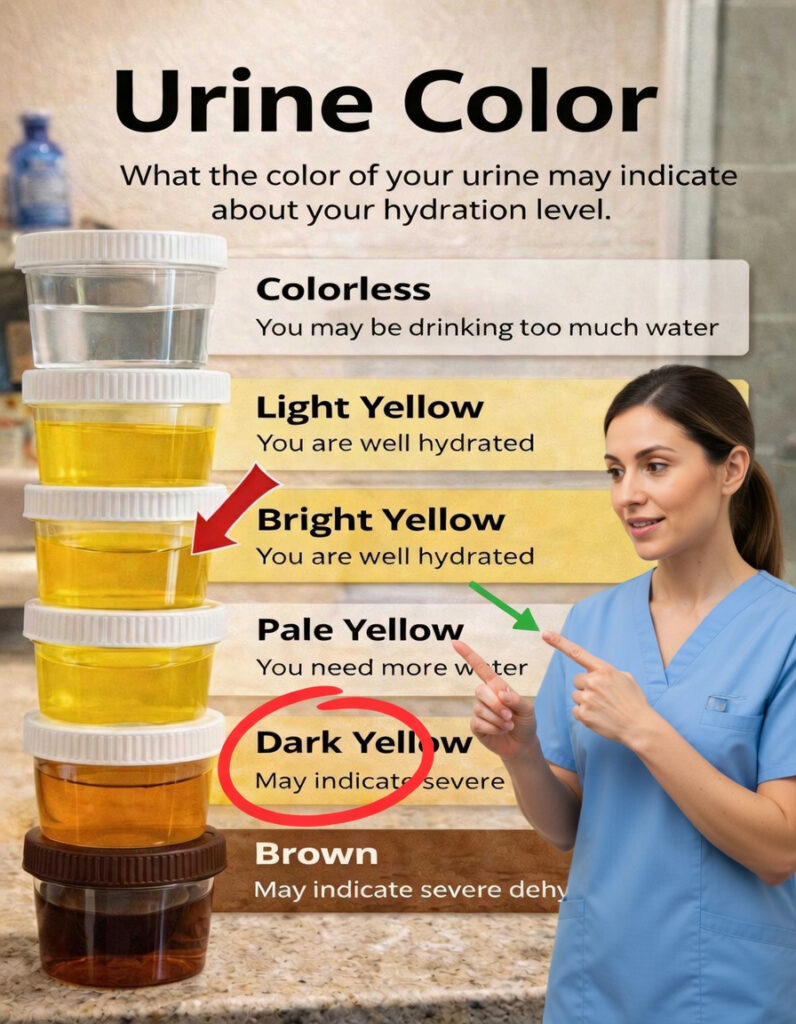
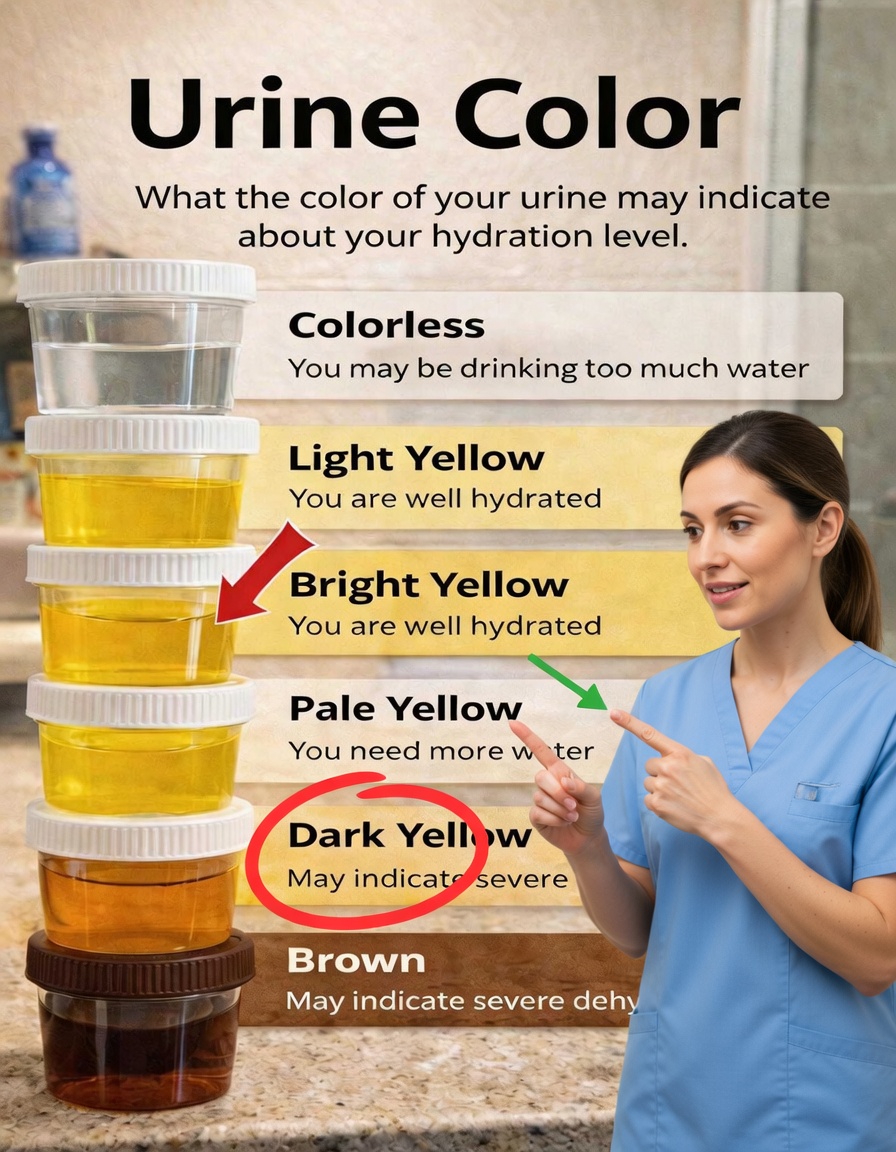
Urine Color Guide: What Each Shade Usually Means
Below is a practical overview of common urine colors. This information is meant to increase awareness and support healthy habits, but it is not a substitute for medical advice.
Clear Urine: Often a Sign of Drinking Too Much Water
Very pale or transparent urine usually means you have consumed more water than your body currently needs. In this case, the kidneys are simply removing the excess fluid.
This is usually not harmful, especially after drinking a large amount of water. Still, if your urine is always clear, you may want to spread your fluid intake more evenly throughout the day instead of drinking too much at once.
Pale Yellow: The Ideal Hydration Zone
Pale yellow is widely considered the best and most balanced urine color. It generally shows that you are properly hydrated and that your kidneys are doing their job well.
This is the shade most health experts associate with optimal fluid intake. It suggests that your body is getting enough water without excess or deficiency. Many people who regularly see this color also report feeling more stable and energized.
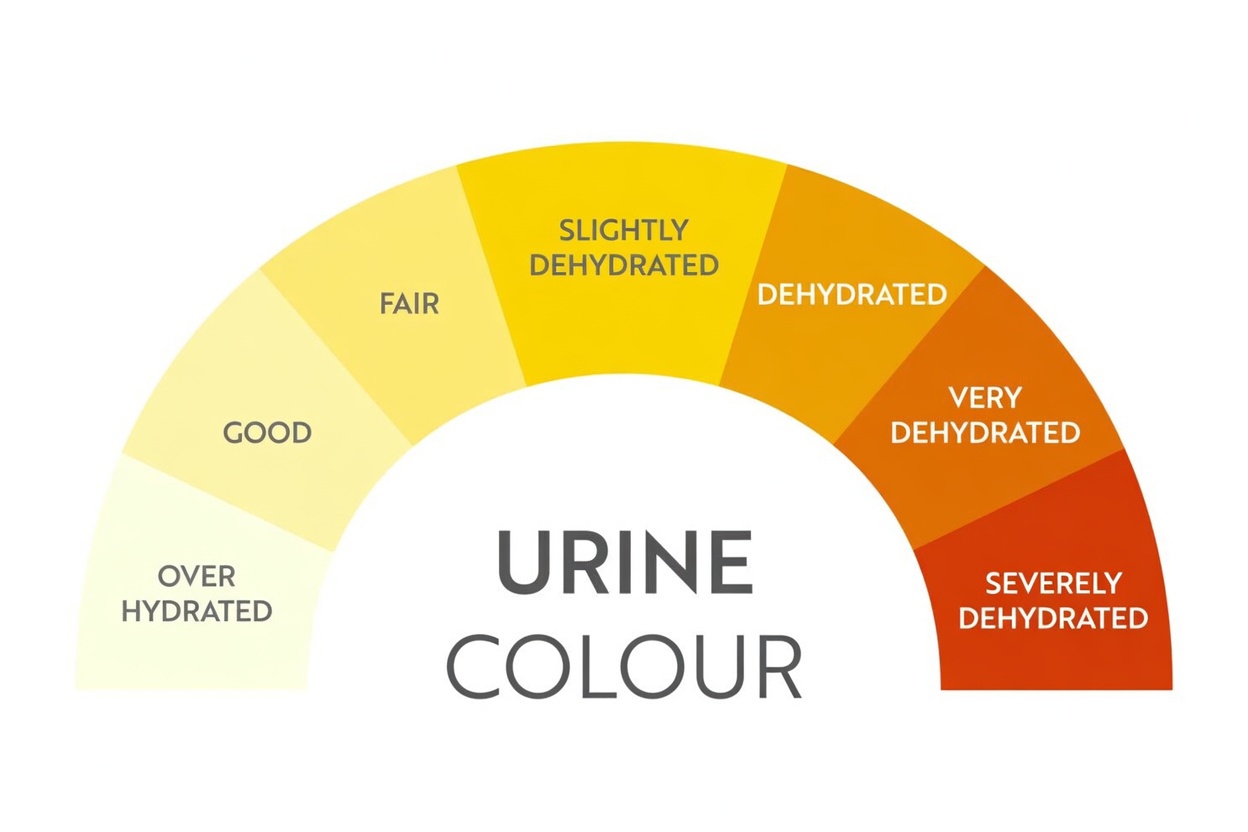
Light Yellow: Still a Healthy Range
A slightly deeper yellow, while still light in tone, typically means your hydration is still in a good place. Your body is using water effectively without making urine overly concentrated.
This is a healthy range. You may not need major changes, although a few extra sips of water could bring you closer to the ideal pale yellow.
Dark Yellow: Time to Drink More
When urine turns a noticeably darker yellow, it usually means your body is conserving water. The waste in your urine becomes more concentrated, making the color stronger.
This shade often appears after a long meeting, a busy morning, or a workout without enough fluid. It is a clear reminder to start drinking water steadily over the next hour.
Amber: A Strong Sign of Dehydration
Amber-colored urine usually points to more significant dehydration. At this stage, the body is trying harder to hold onto water, which increases urine concentration.
This color may appear after intense physical activity, long periods without drinking, or hot weather. The best response is to rehydrate gradually over the next several hours rather than drinking too much all at once.
Brown: A Color That Should Not Be Ignored
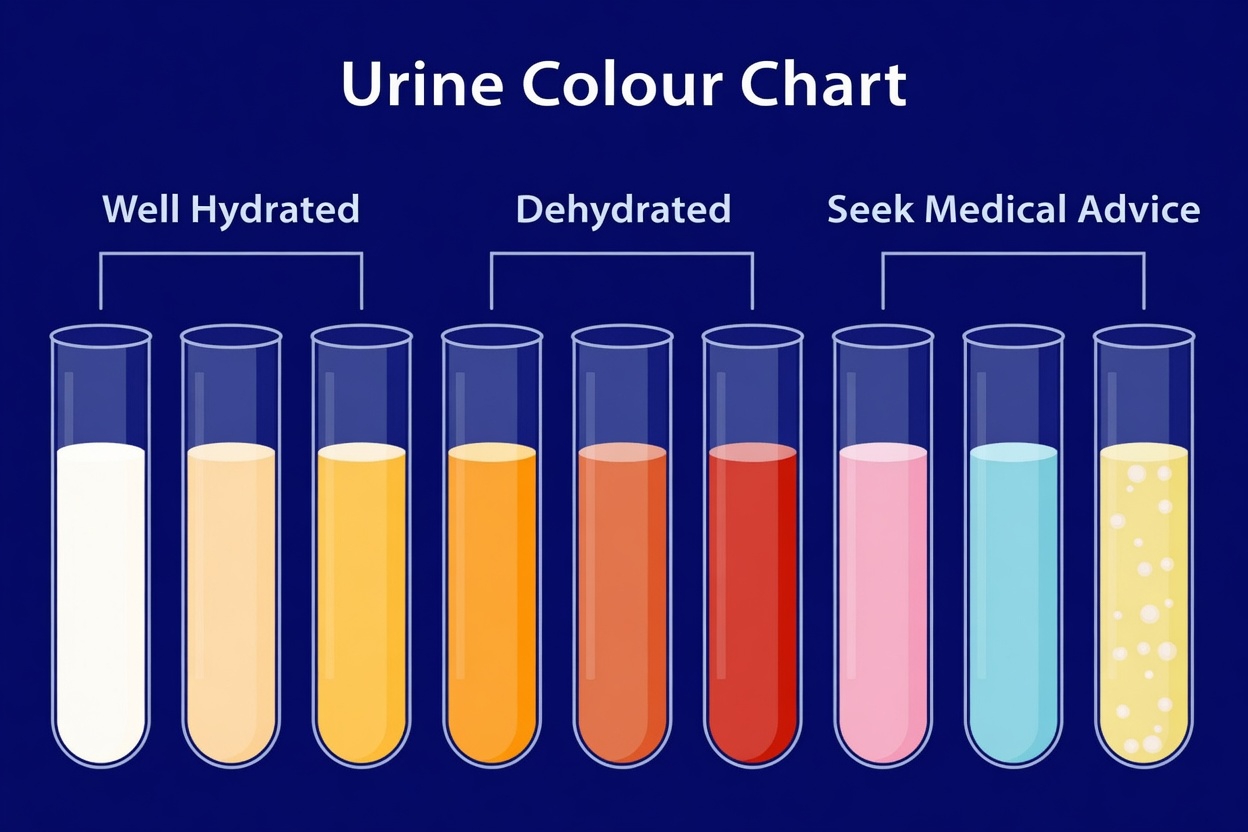
Brown urine can be caused by severe dehydration, but it may also be linked to more serious concerns involving the liver, gallbladder, or even blood in the urine.
This shade deserves prompt attention, especially if it appears along with symptoms such as:
- Fever
- Pain
- Nausea
- Yellowing of the skin
- Unusual fatigue
If brown urine persists or occurs with other symptoms, medical evaluation is important.
Quick Urine Color Comparison Table
| Urine Color | What It Usually Means | Simple Next Step |
|---|---|---|
| Clear | Excess water intake | Spread fluids more evenly |
| Pale Yellow | Ideal hydration | Maintain your current routine |
| Light Yellow | Good hydration | Add a few extra sips |
| Dark Yellow | Mild dehydration | Drink water steadily |
| Amber | Significant dehydration | Increase fluids gradually |
| Brown | Severe dehydration or possible health issue | Monitor symptoms and seek medical advice |
This simple chart can be useful to save on your phone or keep nearby for quick reference.
Practical Ways to Keep Urine in the Healthy Range
If you want to maintain that ideal light or pale yellow color, small habits can make a big difference.
- Drink a full glass of water in the morning before coffee or tea.
- Carry a reusable water bottle and sip regularly every 30 to 60 minutes.
- Include water-rich foods such as cucumber, oranges, and watermelon in your meals.
- Check your urine color once in the late morning and again in the afternoon.
- Increase fluids on hot days or after exercise.
These small actions are easy to follow and can improve hydration more quickly than most people expect.
Top 5 Everyday Habits for Better Hydration
If you want long-term improvement, these simple routines can help:
- Track your fluid intake for one week using a phone app or notes app.
- Add natural flavor to water with lemon, mint, or fruit slices.
- Use gentle reminders on your phone so you remember to sip regularly.
- Link drinking water to habits you already have, like brushing your teeth or checking email.
- Pay attention to thirst and darker urine, since both are clear signs to drink more.
Even adopting just two of these habits can move your average urine color closer to the ideal range.
Common Questions About Urine Color
How often should I check my urine color?
Once or twice a day is usually enough. Mid-morning and afternoon tend to give the clearest picture of your hydration habits.
Can food or supplements affect urine color?
Yes. Certain foods, such as beets, and some vitamins, especially B vitamins, can temporarily change urine color. If the change continues for more than a day or two, it is worth paying closer attention.
When should I speak with a doctor?
You should consider medical advice if unusual colors persist, especially brown urine, or if color changes come with symptoms like pain, fatigue, nausea, or fever.
Final Takeaway
Urine color is one of the easiest ways to check your hydration level. Lighter shades usually indicate good balance, while darker tones suggest that your body needs more fluids. Very dark or brown urine should be treated with caution.
Drinking water consistently, eating a balanced diet, and using medications responsibly all support kidney health. If urine color changes do not improve or come with other symptoms, it is best to talk with a healthcare professional. Small daily checks can lead to better comfort, better hydration, and better overall well-being.