Beyond a Lump: Lesser-Known Breast Cancer Symptoms to Watch For
When people think about breast cancer, they often picture a lump found during a self-exam or a mammogram. That level of awareness is extremely important, but it can also draw attention away from other warning signs that may show up more quietly in daily life. Because these symptoms are less talked about, they may be ignored, misunderstood, or mistaken for something minor.
Learning about these additional changes can help you better understand what to look for and support a more complete approach to breast health. Paying attention to subtle shifts in your body may help you seek guidance sooner and feel more confident about your overall well-being. And near the end, you’ll discover one surprising sign that even many people in healthcare do not immediately think of.
Why Broader Breast Cancer Awareness Matters
Breast cancer continues to be one of the most widely discussed health concerns for women, and that attention is well deserved. Routine screening and body awareness remain essential tools for early detection.
At the same time, symptoms do not look the same for everyone.
According to organizations such as the Centers for Disease Control and Prevention (CDC), breast cancer can appear in different ways from person to person. In some cases, there may be no noticeable signs at all until a regular medical exam or imaging test reveals a problem.
That is why focusing only on lumps can be limiting. Your body may be giving other signals that deserve attention, and understanding them can help you form a clearer picture of your breast health.
The Signs Most People Already Know
Before looking at the less familiar symptoms, it helps to review the warning signs that are most commonly mentioned.
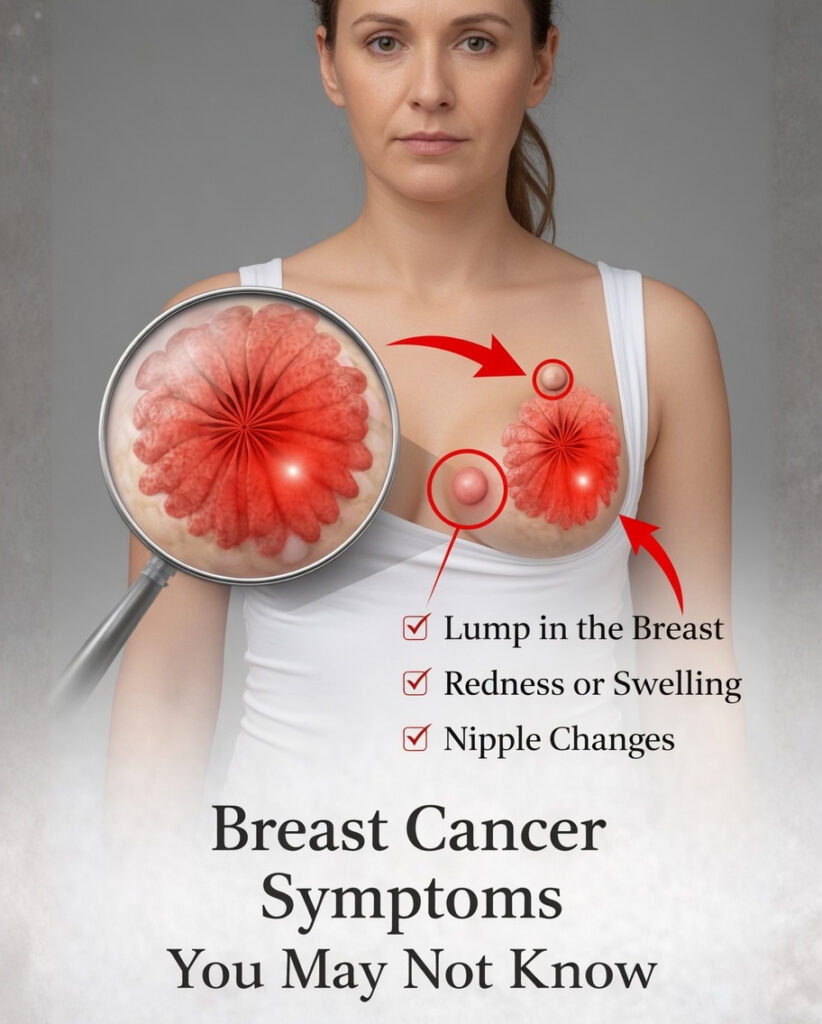
- A new lump or thickened area in the breast
- A lump or swelling in the underarm
- A noticeable change in breast size or shape
- Pain in one specific area that does not go away
These are often highlighted in public health messages, and for good reason. However, breast cancer can also show up in ways that are not as widely recognized.
Skin Changes That Should Not Be Ignored
One of the most overlooked areas of breast cancer awareness involves changes in the skin of the breast.
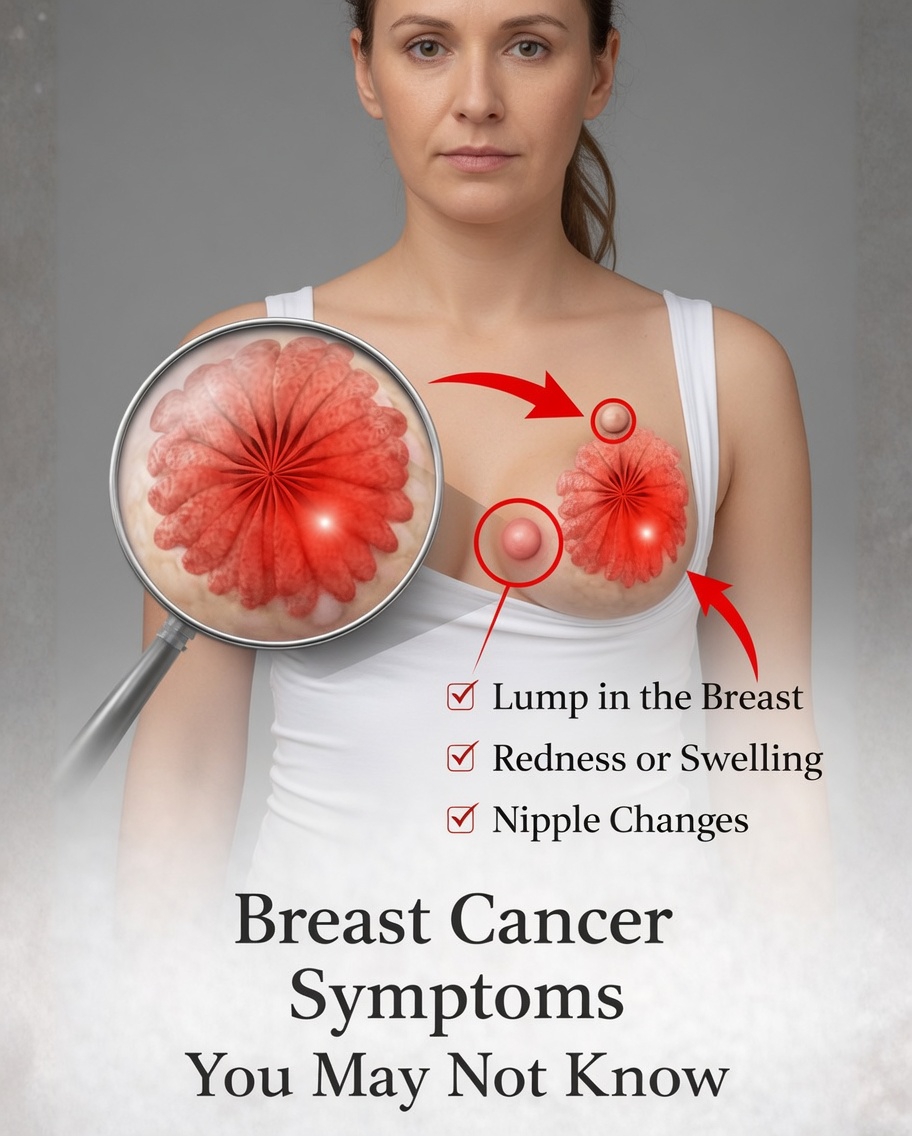
For example, the skin may begin to look dimpled or uneven, similar to the surface of an orange peel. This appearance is called peau d’orange and may happen when underlying tissue changes affect the lymphatic system. It can be subtle at first, which is why many people do not notice it right away.
Skin puckering or dimpling may indicate that something beneath the surface is affecting normal tissue structure. If you notice this kind of change, it is helpful to pay attention to when it began and whether it remains over time.
A simple habit can help: stand in front of a mirror in good lighting, lift your arms, and check for any new unevenness, pulling, or texture changes in the skin. Doing this once a month can make it easier to spot anything unusual.
Redness, Flaking, or Rash Around the Nipple
The nipple and areola can also show changes that are easy to dismiss.
You may notice redness, scaling, flaking, or irritation that looks similar to a rash or eczema. In some cases, people assume it is caused by dry skin, friction from clothing, or a reaction to a soap or detergent.
However, persistent changes in this area can sometimes be linked to Paget’s disease of the breast, a rare type of breast cancer that affects the nipple and surrounding skin. While uncommon, it is still an important symptom to recognize.
Itching, burning, or irritation without a clear reason should also be taken seriously, especially if the symptoms do not improve quickly.
A practical step is to check the nipple area during your normal shower routine. If redness, flaking, or irritation lasts longer than a week, make a note of it so you can describe it clearly to a healthcare professional if needed.
Nipple Changes That May Signal a Problem
Nipple changes are another category of symptoms that can be easy to overlook.
A nipple that suddenly turns inward or appears retracted may be one example. Some people naturally have inverted nipples, and that is not unusual. But if the change is new, it may point to something happening within the breast tissue.
Nipple discharge is another symptom mentioned in medical guidance. Fluid that is clear, bloody, or appears without squeezing should not be ignored, especially if it happens outside of breastfeeding. It may affect one breast or both.
Tracking timing can be useful here. In some cases, hormonal changes linked to the menstrual cycle may explain temporary discharge. Writing down when it happens, what color it is, and how much is present can give helpful context if you decide to speak with a provider.
Swelling, Warmth, or Redness in the Breast
Some breast changes can feel more like an infection than a cancer symptom at first.
A breast may become swollen, red, or warm to the touch. This can resemble mastitis, which is often associated with breastfeeding, but similar symptoms in someone who is not breastfeeding may need closer attention. These signs are sometimes linked with inflammatory breast cancer, a less common but aggressive form of the disease.
If the swelling or warmth does not go away with time, rest, or basic care, it is worth investigating further.
You can compare both breasts for size, shape, and temperature. If one side feels noticeably different, that contrast may be meaningful and should not be dismissed.
Ongoing Pain or Unusual Sensations
Breast cancer is not always painful, but persistent discomfort still matters.
Some people experience ongoing breast or nipple pain that is not connected to their menstrual cycle, an injury, or another obvious cause. It may feel like burning, tenderness, aching, or intermittent discomfort that keeps returning.
Although pain alone does not always indicate cancer, medical research suggests it can appear in some cases, including certain breast cancer types or more advanced stages.
If you notice persistent pain, it may help to rate it daily on a scale from 1 to 10 and note any possible triggers or patterns. This kind of tracking can be useful during a medical appointment.
Swollen Lymph Nodes in Nearby Areas
Breast changes are not the only things to monitor. Areas around the breast can also provide clues.
Tenderness, swelling, or lumps in the armpit or near the collarbone may occur when abnormal cells spread to nearby lymph nodes. In some situations, these swollen nodes are painless, which makes them easier to miss.
Regular checks can help you become familiar with what feels normal for your body.
One easy method is to gently feel around the underarm while applying deodorant or getting dressed. Use your fingertips in a circular motion and notice whether anything feels firm, enlarged, or fixed in place.
Common Symptoms vs. Lesser-Known Symptoms
The comparison below makes it easier to see how familiar signs differ from less recognized ones.
| Symptom Category | Commonly Recognized Signs | Lesser-Known Signs |
|---|---|---|
| Breast tissue | Lump or mass | Heaviness, swelling, asymmetry |
| Skin | Often not emphasized | Dimpling, puckering, orange-peel texture, redness, flaking |
| Nipple | Usually less discussed | Inversion, discharge, rash, scaling |
| Sensation | Pain near a lump | Ongoing unexplained pain, warmth, tenderness |
| Nearby areas | Focus stays on the breast | Swollen lymph nodes in the armpit or collarbone |
This broader view, supported by information from respected medical sources such as UCLA Health and Ohio State Medical Center, highlights why it is important to look beyond a lump alone.

Habits That Can Improve Breast Health Awareness
Awareness becomes far more useful when it turns into a regular habit.
Here are a few simple practices that can help:
- Do monthly self-checks: While lying down, use the pads of your fingers to feel the breast in circular motions, moving from the outer area toward the center.
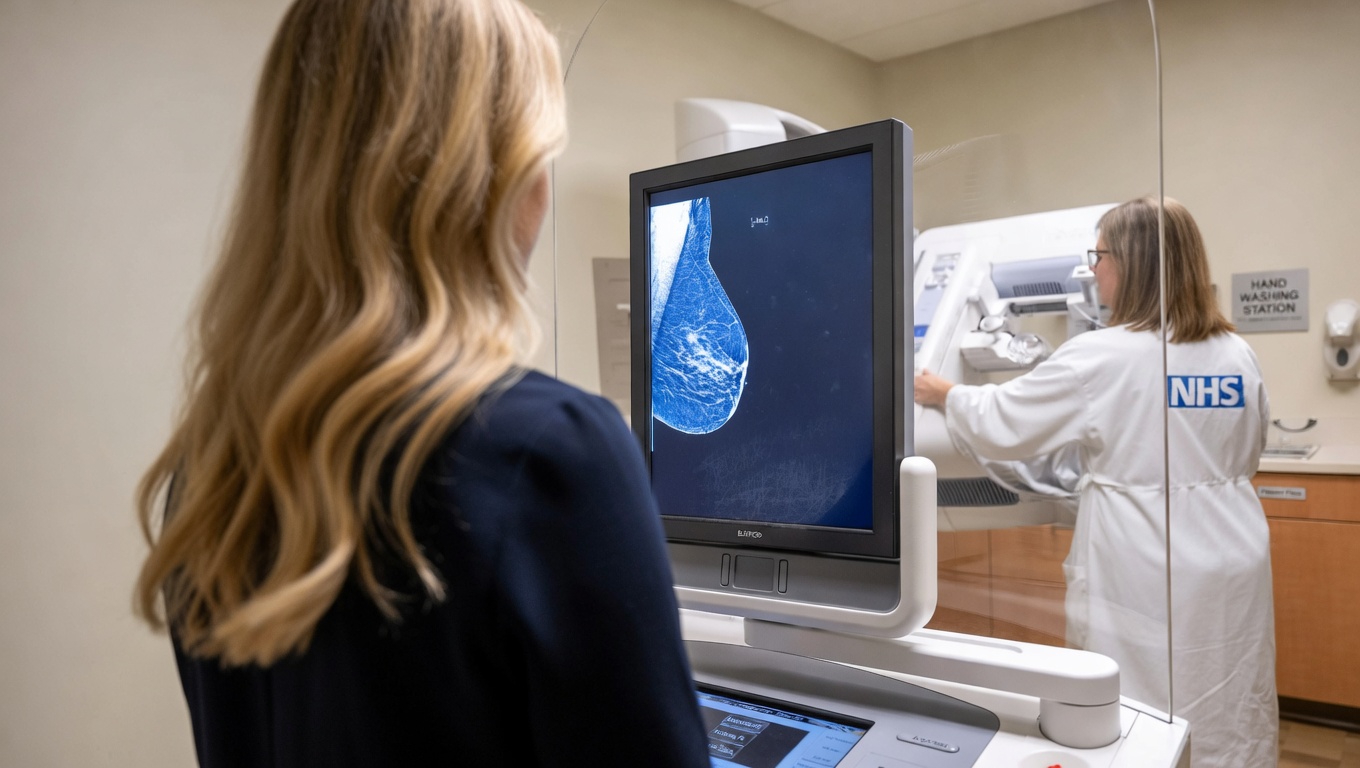
- Keep up with screening appointments: Annual mammograms are commonly recommended starting at age 40, though some people may need earlier screening based on family history or personal risk.
- Write down changes: A health journal can help you notice patterns and remember details such as pain, discharge, skin changes, or swelling.
- Look in the mirror regularly: Visual checks can help you spot skin dimpling, shape changes, or nipple differences.
- Pay attention to nearby areas: Include the underarm and collarbone region in your self-awareness routine.
Consistent observation does not replace professional care, but it can support earlier recognition of changes that deserve medical attention.
Final Thoughts: Stay Alert to Subtle Changes
A lump may be the best-known sign of breast cancer, but it is far from the only one. Skin dimpling, redness around the nipple, sudden nipple inversion, unexplained discharge, breast swelling, ongoing pain, and enlarged lymph nodes are all symptoms worth recognizing.
The more informed you are, the better prepared you will be to notice small but meaningful changes in your body. That awareness can support quicker action, more productive conversations with healthcare providers, and greater peace of mind.
And what is the unexpected sign mentioned earlier? A sudden feeling of heaviness or noticeable asymmetry in one breast, especially when it is unrelated to weight change, can sometimes be an overlooked warning signal. Our bodies do not always communicate in obvious ways, which is why paying attention to subtle differences matters.
Frequently Asked Questions
What should I do if I notice one of these symptoms?
Monitor the change briefly, such as for several days to a week. If it continues, worsens, or feels concerning, schedule an appointment with your healthcare provider for a proper evaluation.
Do these symptoms always mean breast cancer?
No. Many of these signs can also be caused by noncancerous conditions, including infections, hormonal changes, or skin irritation. Still, persistent or unusual symptoms should be assessed by a medical professional.
How often should I check for these symptoms?
It is a good idea to make breast awareness part of your monthly routine. Regular self-checks, along with recommended screenings, can help you notice new or unusual changes more easily.