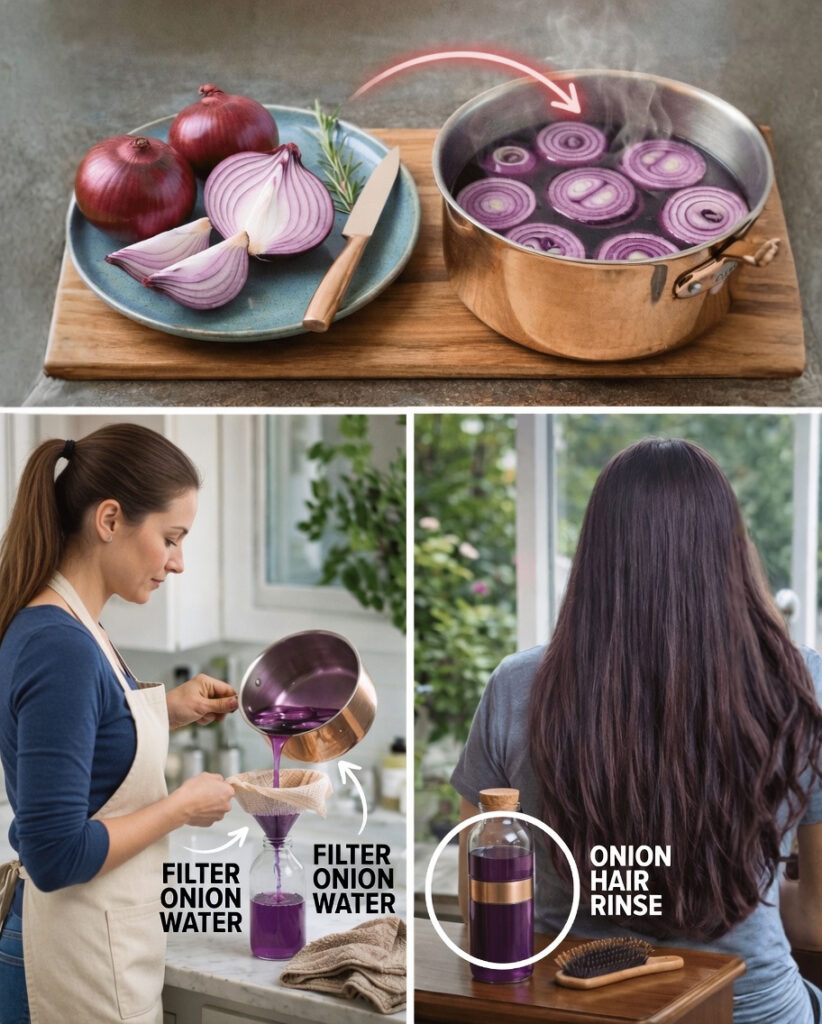
Homemade Onion Hair Oil: A Simple DIY for Healthier-Looking Hair
Over time, many people find that their hair loses some of its shine and vitality. Daily exposure to pollution, frequent heat styling, and even dietary changes can all contribute to dull-looking strands and a scalp that feels difficult to maintain. Because of this, many are drawn to easy, at-home remedies that may support overall hair care.
One surprisingly useful option may already be in your kitchen. Homemade onion hair oil is a traditional, budget-friendly addition to a self-care routine that many people use to support scalp and hair wellness. And if you read to the end, you’ll discover a lesser-known variation that may make the experience even better.
What Is Onion Hair Oil?
Onion hair oil is a blend made by infusing a carrier oil with onion, sometimes alongside herbs or essential oils. It comes from long-standing beauty traditions in which onions have been included in natural hair care practices in different parts of the world.
Preparing it at home offers several advantages:
- You choose the ingredients yourself
- The mixture can be made fresh
- You can avoid unnecessary additives or preservatives
- It is usually more affordable than store-bought products
- You can adjust the scent, texture, and strength to your liking
Another reason people consider onion-based hair care is the composition of onions themselves. They contain sulfur compounds, and sulfur is associated with keratin production. Keratin is the protein that forms the structure of hair.
That connection is what makes onion-infused treatments so interesting. Sulfur is considered one of the building blocks that contributes to hair strength, and some research has looked at how topical applications may affect the scalp environment.
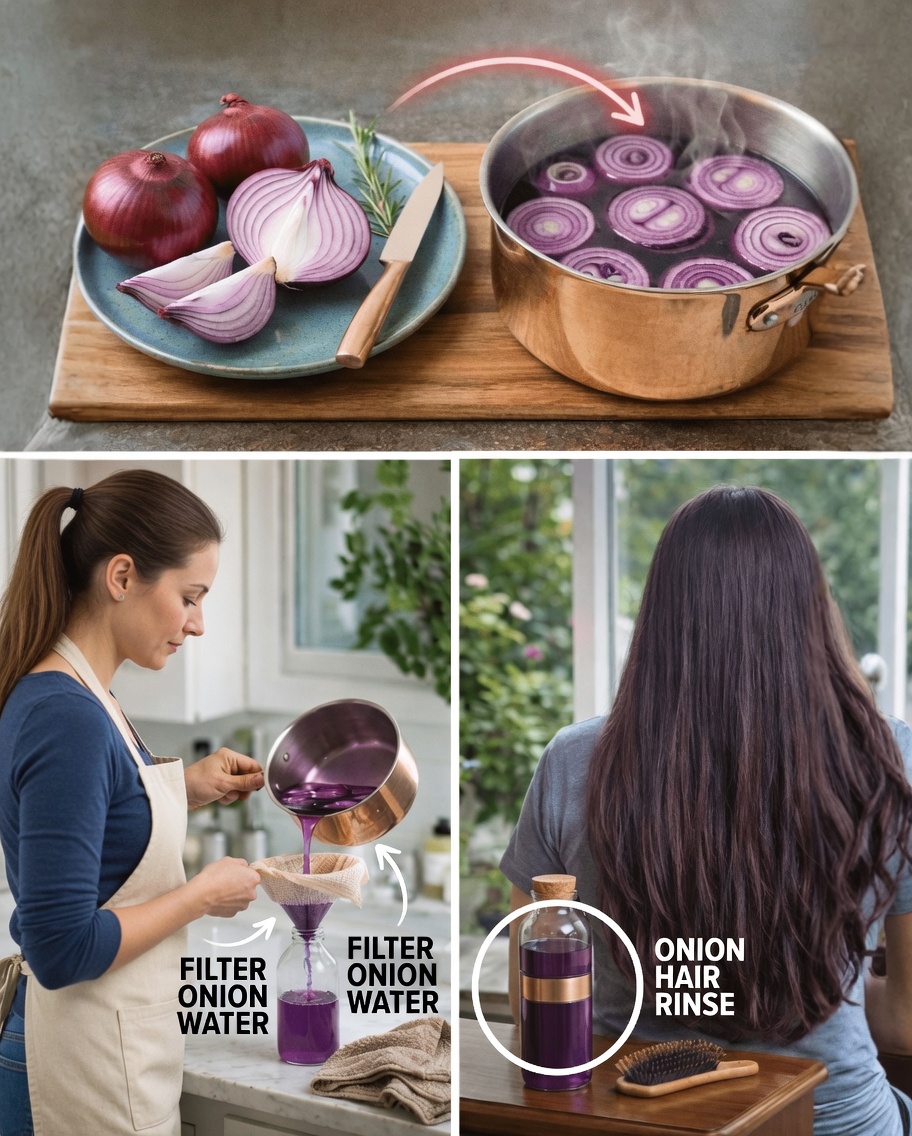
Why Onion Is Popular in Hair Care Routines
Onions contain antioxidants and nutrients that may help support a healthier scalp. One well-known compound found in onions is quercetin, a flavonoid recognized for its anti-inflammatory properties.
Some research has also suggested that onion extract, when applied topically, may help support the scalp by encouraging better circulation around the hair follicles. A 2002 study published in the Journal of Dermatology looked at onion juice applied to the scalp and reported observations related to hair appearance in participants with specific scalp concerns.
There is also another reason onions attract attention in natural hair care: they have antibacterial properties, which may help maintain a cleaner scalp.
In addition, onions provide vitamins such as:
- Vitamin C
- B vitamins
These nutrients may contribute to overall scalp vitality as part of a broader hair care routine.
That said, results can differ from person to person. It is always best to do a patch test before applying any new DIY blend to your scalp.
Ingredients for DIY Onion Hair Oil
To make onion hair oil at home, start with fresh, good-quality ingredients whenever possible.
You will need:
- 2 to 3 medium red onions
- 300 ml carrier oil, such as coconut oil or olive oil
- Optional: a handful of curry leaves
- Optional: 1 to 2 tablespoons fenugreek seeds
- Optional: a few drops of essential oil, such as lavender
Red onions are often chosen because their smell is generally less harsh than white onions.
As for the oil base:
- Coconut oil is widely used because of its moisturizing feel
- Olive oil is another good option if you prefer something slightly lighter
Curry leaves and fenugreek are often added for extra nourishment and aroma, though they are not essential.
How to Make Onion Hair Oil Step by Step
The preparation process is simple and usually takes less than an hour, not counting cooling time.
1. Prepare the onions
Peel the onions and chop them into rough pieces.
2. Blend into a paste
Use a blender or food processor to turn the chopped onions into a coarse paste.
3. Add optional ingredients
If you want to include curry leaves or fenugreek seeds, blend them together with the onions so the mixture becomes more uniform.
4. Heat the carrier oil
Pour your chosen oil into a pan and warm it over low heat.
5. Combine and simmer
Add the onion paste to the warm oil and stir gently. Let the mixture simmer for about 10 to 15 minutes, or until the oil changes color slightly and the onion begins to brown.
Keep the heat low throughout the process so the ingredients do not burn.
6. Strain the oil
Once done, strain the mixture through a fine sieve or cheesecloth into a clean, dry bottle.
7. Cool before storing
Allow the oil to cool fully before sealing the container.
A useful sustainability tip: do not throw away the leftover onion solids. They can be composted to reduce waste.

How to Apply Onion Hair Oil Properly
Using the oil the right way can make it easier to include in your weekly routine.
Follow these steps:
- Start with clean, dry hair
- Warm a small amount of oil between your palms
- Massage it into your scalp using circular motions for 5 to 10 minutes
- Distribute the remaining oil through the lengths of your hair
- Pay extra attention to the ends if they feel dry
- Leave it on for at least 30 minutes
- For deeper conditioning, leave it overnight
- Wash it out with a mild shampoo
For many people, using onion hair oil 2 to 3 times per week works well as part of a self-care routine.
Helpful tip: Wear a shower cap after application to prevent dripping and help the oil stay in place.
How to Reduce the Onion Smell and Keep the Oil Fresh
One of the main reasons people hesitate to try onion hair oil is the smell. Fortunately, there are several ways to make it more pleasant.
- Add essential oils during preparation
- Store the oil in a cool, dark place
- Use a tightly sealed bottle
- Rinse your hair with diluted apple cider vinegar after shampooing if any odor remains
- Try adding aloe vera for a more moisturizing variation
Proper storage helps preserve the oil for about one month in good condition.
And if heating the mixture does not appeal to you, there is another method worth trying.
Homemade vs. Commercial Onion Hair Oil
If you are unsure whether to make your own or buy a ready-made version, this comparison can help.
| Aspect | Homemade Onion Hair Oil | Commercial Onion Hair Oil |
|---|---|---|
| Cost | Low, around $5 for ingredients | Usually $10 to $20 per bottle |
| Customization | Easy to tailor to your needs | Limited formula choices |
| Freshness | Made fresh, usually without preservatives | May include stabilizers |
| Scent Control | You choose the fragrance | Often pre-scented |
| Environmental Impact | Less packaging waste | Commonly sold in plastic containers |
Homemade oil gives you greater control and flexibility, while commercial products may be more convenient if you have a busy schedule.
Other Ways to Customize Onion Hair Oil
If you want to experiment, there are a few simple variations you can try.
No-heat infusion
Instead of simmering the mixture, chop the onions and leave them to steep in oil inside a jar for about one week.
Add ginger
Blending onion with ginger can create a more invigorating formula.
Mix with castor oil
Some people prefer combining onion-infused oil with castor oil for a thicker texture.
Use glass containers
For a more sustainable routine, store your oil in reusable glass bottles or jars.

How to Fit Onion Hair Oil Into Your Weekly Routine
Consistency matters with any hair care habit. Start gradually and see how your scalp and hair respond.
A practical approach may look like this:
- Begin with once a week
- Increase use slowly if it suits your hair
- Observe changes over time
- Take notes or photos to track progress
You can also support your routine with other healthy habits:
- Eat a balanced diet rich in protein and vitamins
- Stay well hydrated
- Maintain a gentle cleansing schedule for your scalp
And here is the promised twist: adding rosemary sprigs while preparing the oil can create a pleasant herbal note that blends well with onion and may make the entire treatment feel even more enjoyable.
Final Thoughts
Making onion hair oil at home is an easy and practical way to explore natural hair care. From choosing fresh ingredients to applying the finished oil, the process is simple, customizable, and suitable for busy lifestyles.
If you decide to try it, remember that patience and consistency are important. Natural routines often take time, and your experience may differ from someone else’s. With regular use and a careful approach, homemade onion hair oil can become a valuable part of your overall hair care habits.
FAQ
What should I do if onion hair oil irritates my scalp?
Always patch test first by applying a small amount to your inner arm. If irritation occurs, try diluting the mixture with more carrier oil or stop using it altogether. If needed, consult a qualified professional.
How long does homemade onion hair oil last?
It generally stays fresh for 2 to 4 weeks when stored in a cool, dark place. Refrigeration may help extend freshness, but let it warm slightly before use.
Can onion hair oil be used on dyed or colored hair?
Yes, in many cases it can. However, it is best to test it on a small section first, since natural ingredients may sometimes interact with hair dye. It is usually considered gentle for most hair types.
Disclaimer
This article is for general informational purposes only and should not be considered medical advice. Always consult a qualified health professional if you have specific concerns about your scalp or hair.