10 Breast Cancer Warning Signs You Should Never Ignore
Breast cancer affects millions of women worldwide, and even small changes in the breasts can trigger worry and uncertainty. A minor shift may seem harmless at first—something caused by hormones, irritation, or a normal monthly change—but ignoring it could delay getting the right advice. That is why paying attention to your body is so important.
This guide explains 10 common breast cancer signs and symptoms to watch for. By the end, you will also learn a simple daily awareness habit that experts say can help you stay informed without feeling overwhelmed.
Why Early Awareness Matters
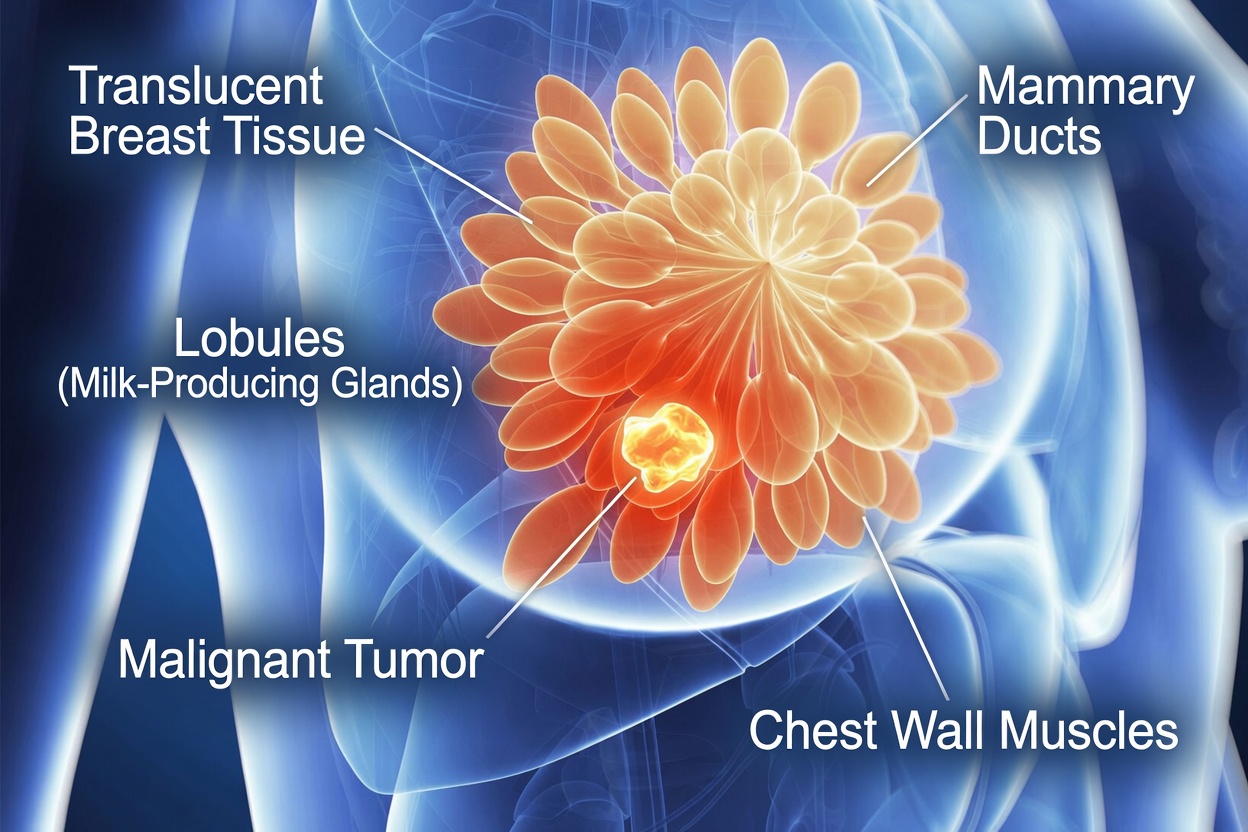
Breast cancer develops when cells in the breast begin growing in an abnormal way. While many factors can influence risk, recognizing possible warning signs early can help you speak with a healthcare professional sooner and make informed decisions.
According to trusted sources such as the American Cancer Society, the Mayo Clinic, and the Centers for Disease Control and Prevention, many breast changes are not cancer. Still, understanding what is normal for your body makes it easier to spot something unusual and seek timely medical guidance.
You do not need medical training to notice a change. A brief visual check or a gentle self-exam during your regular routine can be enough to detect something new. Because these symptoms may appear slowly, regular self-awareness is one of the best tools you have.
10 Common Signs and Symptoms of Breast Cancer
Below are 10 breast cancer warning signs often highlighted by major health organizations. These symptoms do not confirm cancer, but they do deserve attention. Only a doctor can diagnose the cause.
1. A New Lump or Thickened Area in the Breast or Underarm
One of the most recognized signs is a lump or an area that feels firmer or thicker than nearby tissue. It may be painless, sensitive, or gradually become noticeable over time.
Not every lump is cancer. Some are caused by cysts or noncancerous growths such as fibroadenomas. Even so, any new lump or thickening should be checked by a healthcare provider.
2. Swelling in All or Part of the Breast
Sometimes the breast may look or feel swollen even when no distinct lump can be felt. The swelling may affect the entire breast or just one section and can occur with or without discomfort.
Although swelling may also result from infection or other noncancerous issues, persistent swelling is still considered one of the important breast cancer signs and symptoms to monitor.
3. Dimpling or Puckering of the Breast Skin
A change in the skin surface—such as dimpling, puckering, or an indentation—can occur when tissue beneath the skin pulls inward. Some people describe it as looking like an orange peel or a mattress surface.
This change is often easiest to notice in a mirror, especially when raising your arms. It can be subtle, so regular observation helps.
4. Red, Irritated, or Flaky Skin on the Breast or Nipple
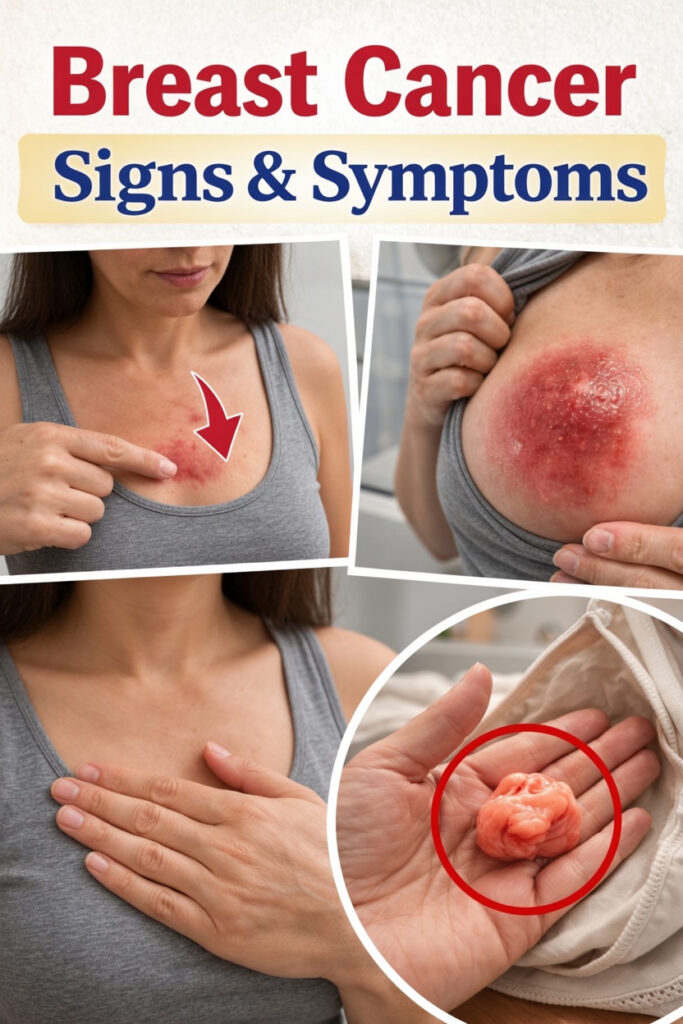
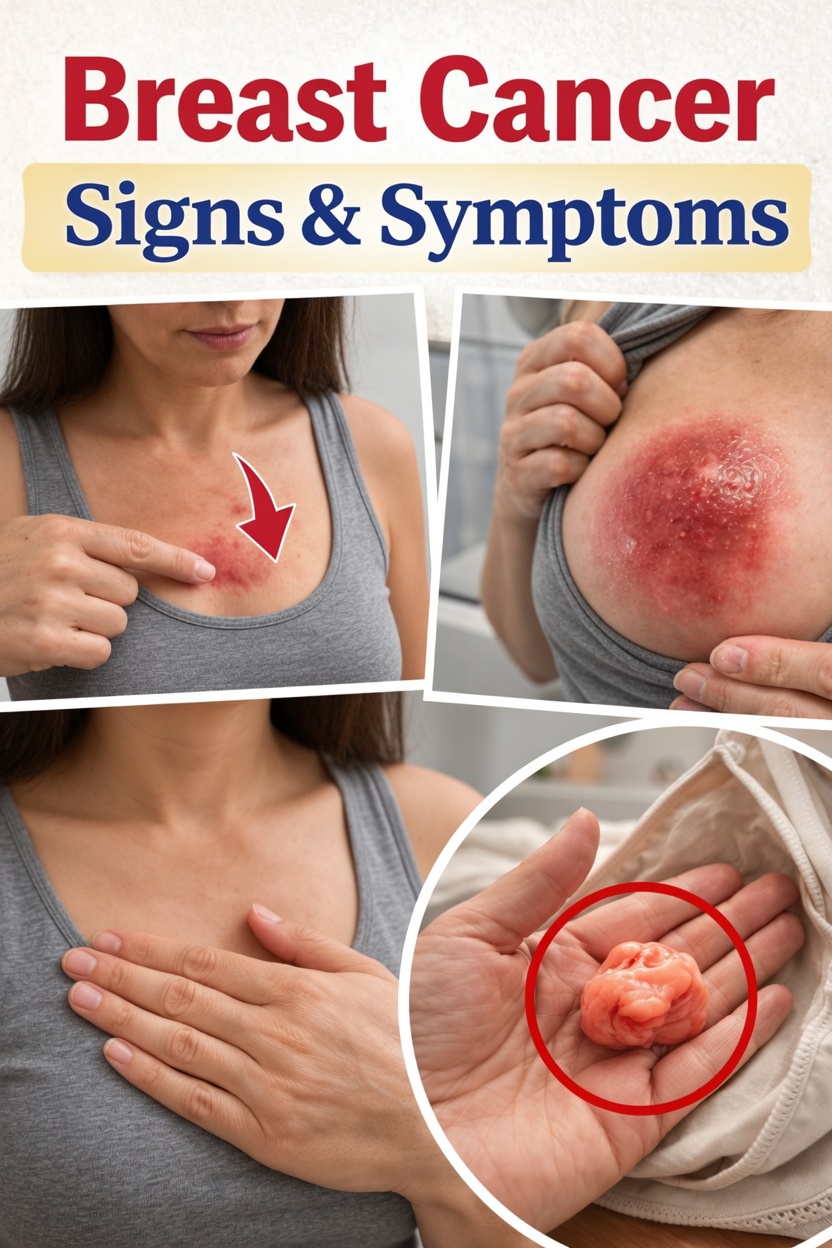
Skin that appears red, inflamed, scaly, or irritated and does not improve may be a warning sign. It can resemble a rash and may also feel warm or tender.
If the redness covers a wider area or behaves differently from typical skin irritation, it is worth mentioning during a medical appointment.
5. Nipple Retraction or Sudden Inversion
If a nipple that normally points outward suddenly turns inward, flattens, or changes position, it should not be ignored. This is especially important when the change affects only one side.
Because it may happen unexpectedly, some women first notice it while showering or getting dressed.
6. Unusual Nipple Discharge
Fluid leaking from the nipple—especially from one breast only—can be a sign that needs medical evaluation. The discharge may be clear, yellowish, or bloody and may occur with or without squeezing.
Nipple discharge can happen for several reasons, many of them noncancerous. Still, a new or unusual discharge should be discussed with a doctor.
7. A Change in Breast Size or Shape
A breast that becomes noticeably larger, smaller, or differently shaped without an obvious reason may signal an underlying issue. Sometimes the change starts subtly and becomes easier to see over time.
Natural asymmetry is common, and breast appearance can change after pregnancy, weight fluctuations, or hormonal shifts. But when the change is new and unexplained, it deserves attention.
8. Ongoing Breast or Nipple Pain
Persistent tenderness, soreness, or pain in the breast or nipple that does not match your usual cycle can feel alarming. The discomfort may be sharp, dull, or localized to one spot.
Most breast pain is not linked to cancer. However, if it continues or appears alongside other changes, it should be evaluated.
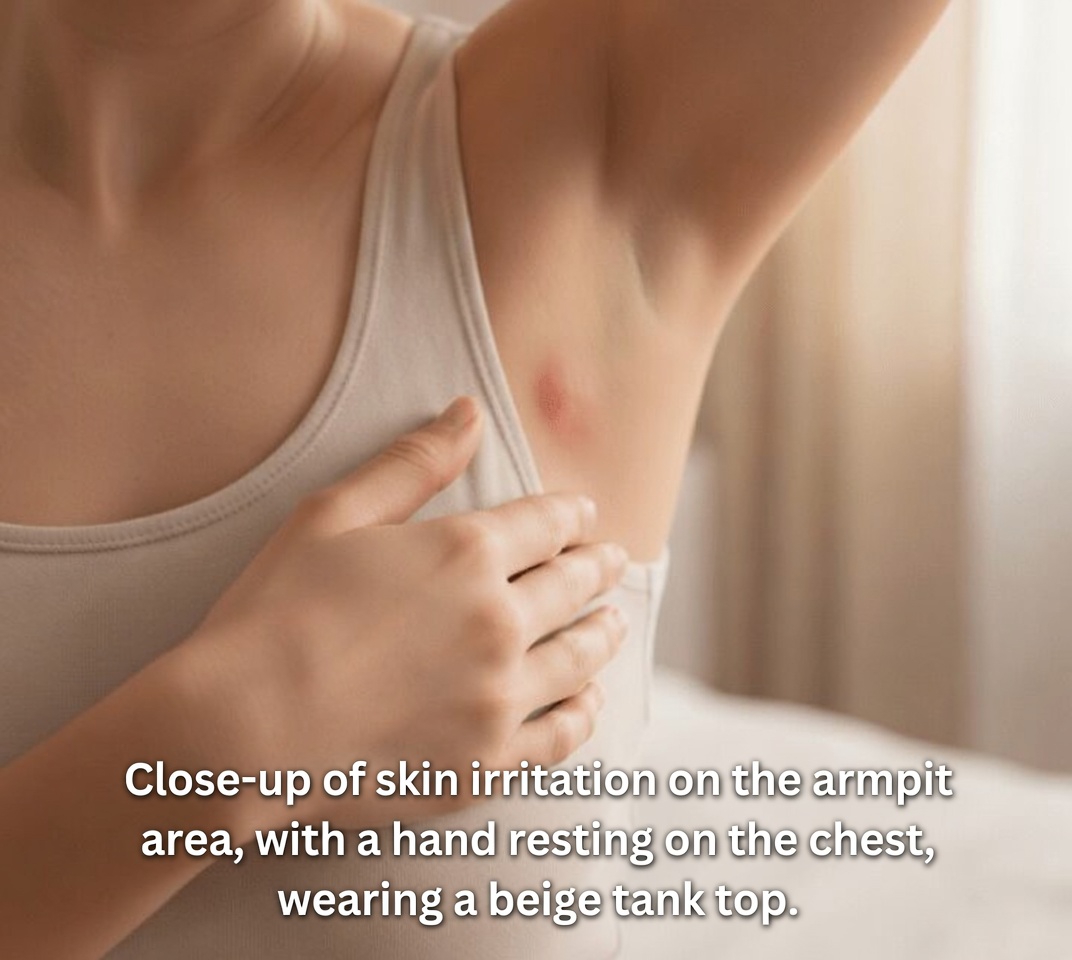
9. Swollen Lymph Nodes Under the Arm or Near the Collarbone
Enlarged or tender lymph nodes in the armpit or near the collarbone may sometimes appear before there are obvious changes in the breast itself.
These lymph nodes are part of the body’s defense system, and their swelling can sometimes be an early clue that something needs medical attention.
10. Orange-Peel Texture or Thickened Skin
A dimpled, pitted appearance known as peau d’orange can make the skin look thick, uneven, and similar to the surface of an orange.
This is one of the more distinctive breast changes and is often emphasized in educational materials because it may be linked to certain serious breast conditions.
Quick Reference: The 10 Warning Signs
- New lump or thickening in the breast or underarm
- Swelling in part or all of the breast
- Skin dimpling or puckering
- Redness, irritation, or flaky skin
- Nipple turning inward
- Unusual nipple discharge
- Changes in breast size or shape
- Persistent breast or nipple pain
- Swollen lymph nodes
- Orange-peel skin texture
How to Do a Simple Breast Self-Exam at Home
Now that you know what to look for, the next step is easy. A breast self-exam takes only a few minutes and can help you become familiar with your normal breast texture and appearance.
Step-by-Step Self-Check
-
Look in the mirror with your arms relaxed at your sides.
Check for visible changes in size, shape, skin texture, or nipple position. -
Raise your arms overhead.
Look again for dimpling, puckering, or any unusual contour changes. -
Lie down and use the pads of your fingers to feel each breast.
Move in small circular motions and cover the entire area, from the underarm to the center of the chest. -
Repeat the exam while sitting or standing.
Many people find it easier to do this in the shower because wet skin allows fingers to glide more smoothly. -
Gently check each nipple for discharge.
Note any fluid, especially if it appears without squeezing.
When Should You Do a Self-Exam?
Try to do a breast self-check once a month. If you menstruate, a few days after your period ends is often the best time because breasts tend to be less tender then.
The key is consistency. The more familiar you are with your usual breast appearance and feel, the easier it becomes to recognize a change.
Self-exams are helpful, but they should not replace regular clinical exams or mammograms. Following your doctor’s screening recommendations gives you a more complete picture of your breast health.
What to Do If You Notice a Change
Discovering something unusual can be frightening, but the best response is to act calmly and promptly. Make an appointment with your healthcare provider as soon as possible.
Your doctor may recommend imaging tests or further evaluation. Keep in mind that many breast changes are not cancerous, so finding a symptom does not automatically mean the worst. Taking action early often leads to faster answers and greater peace of mind.
Final Thoughts
Knowing the common signs and symptoms of breast cancer helps you take an active role in your health. Small habits—such as monthly self-checks, daily awareness, and honest conversations with your doctor—can make breast health monitoring feel manageable rather than stressful.
Staying informed is one of the most powerful steps you can take.