
A Simple Nighttime Eye-Care Ritual for Adults Over 60
As you move into your 60s and beyond, it’s very common to notice your eyes feeling heavy, sore, and tired by the end of the day. Dryness, strain, and general discomfort can leave you waking up with vision that feels less clear and less comfortable than it used to be. Instead of beginning the day refreshed, many people over 60 start their mornings already feeling drained.
For older adults, this ongoing eye fatigue can turn ordinary activities—reading the morning paper, using a smartphone, or driving—into tasks that require extra effort. The good news: building a simple nighttime eye-care ritual can support overnight recovery so you wake up with eyes that feel calmer and more at ease. The real advantage lies in how easy this routine is to follow once you know the steps.

Why Your Night Routine Matters More After 60
Many people in their 60s and older notice a rise in eye fatigue and morning dryness. The start of the day can feel heavy, with eyes that sting, burn, or feel gritty. At this age, a soothing night routine becomes especially valuable because it focuses on letting both your eyes and your body fully unwind after hours of visual work, screens, and bright lights.
Research on sleep and general wellness shows that high-quality rest helps the eyes restore their natural tear film, rebalance moisture, and lower the feeling of strain that builds up during the day. When your sleep is deeper and more consistent, your eyes have a better chance to recover from daily stress.
This nighttime eye-care ritual does more than repeat standard sleep advice. It’s specifically designed to target the dryness and tiredness that so many older adults dread when they first open their eyes in the morning. Good sleep habits combined with targeted eye-friendly choices can support overall visual comfort without demanding major lifestyle changes.

The Three Pillars of an Eye-Friendly Night Ritual
This simple night routine is built around three main pillars that directly address the eye discomfort and unclear morning vision many people over 60 experience:
- Reducing visual strain
- Providing gentle physical care
- Adding basic nutritional support
Together, these elements help your eyes feel more comfortable overnight so the fatigue of one day doesn’t roll over into the next.
Here’s a quick overview of how each part can help and how to make it easy:
| Ritual Element | Potential Eye Benefit | Simple Way to Do It |
|---|---|---|
| Avoid screens before bed | Less eye strain and less dryness | Read a printed book or listen to an audiobook |
| Warm compress | Relaxes eye muscles and supports circulation | 5–10 minutes with a clean, warm towel over closed eyes |
| Calming herbal tea | Supports overall relaxation and better sleep | Caffeine-free chamomile or similar herbal blend |
| Eye-friendly foods | Provides nutrients like lutein and vitamin E | Nuts, carrots, leafy greens with your evening meal |
These small actions form the core of a nighttime routine that fits smoothly into a busy life while easing the tired, dry eyes so common after 60.

Step-by-Step Night Ritual for Tired, Dry Eyes
If you’re over 60 and frequently wake up with sore, dry, or blurry-feeling eyes, this gentle 30–60 minute routine can be started as soon as tonight. Each step is designed to ease the heaviness and irritation that often makes mornings uncomfortable.
1. Disconnect and Unwind (About 10 Minutes)
Begin by turning off televisions, phones, tablets, and computers at least one hour before bed. For older adults who struggle with eye strain and dryness, stepping away from screens and blue light in the evening helps the brain and eyes transition into rest mode, making it easier to wake up with clearer, more comfortable vision.
Sit quietly, close your eyes if comfortable, and take five slow, deep breaths. Focus on releasing tension in your face, forehead, and around the eyes. This simple pause sends your body a strong signal that it’s time to relax.
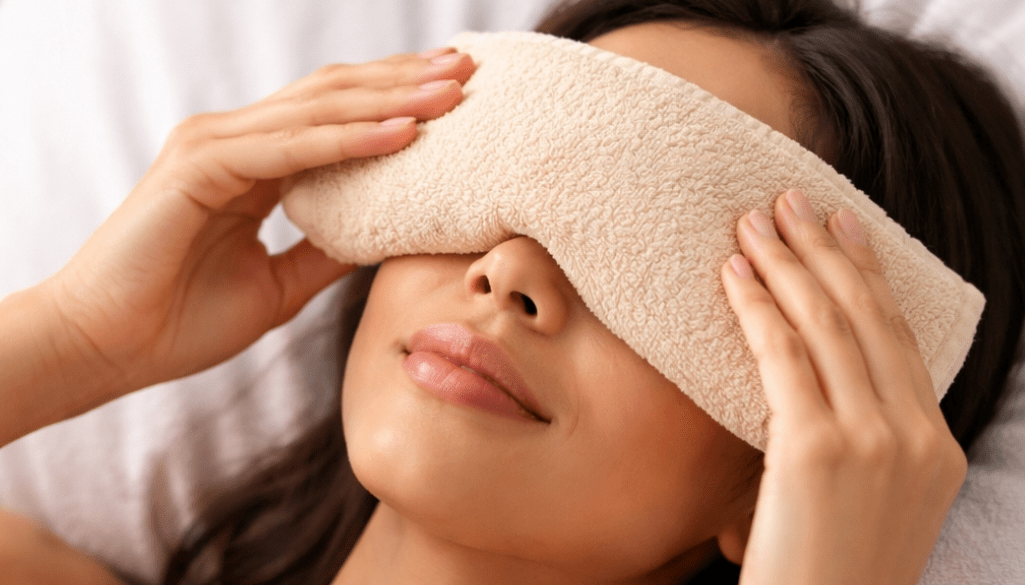
2. Cleanse and Apply a Warm Compress (About 10 Minutes)
Many people over 60 find the warm compress to be the most soothing part of this routine. It can ease tight muscles around the eyes and relieve some of the dryness that makes mornings unpleasant.
- Gently wash your face with lukewarm water and a mild cleanser.
- Soak a clean washcloth in warm (not hot) water, wring it out, and place it over your closed eyes.
- Relax with the compress in place for 5–10 minutes.
The gentle warmth supports circulation around the eyes and can help loosen blocked oils in the eyelids, which play a role in keeping tears from evaporating too quickly. This can reduce the heavy, gritty feeling many seniors experience upon waking.
3. Support Your Eyes with Evening Nutrition
Nutritional choices made earlier in the evening can also support more comfortable vision by morning. You don’t need a complex diet plan—just a few eye-friendly foods included with dinner or as a light snack.
Consider:
- A small handful of walnuts or almonds for vitamin E and healthy fats
- Carrots or sweet potatoes for beta-carotene (a precursor to vitamin A)
- Spinach or other leafy greens for lutein and zeaxanthin
These nutrients are widely associated with overall eye health and may help counteract some of the daily wear and tear that leaves your eyes feeling tired and dry the next day.
To protect your sleep, try to avoid heavy, late dinners. Lighter evening meals make it easier to rest well, which in turn helps your eyes recover overnight.
4. Gentle Eye Relaxation Exercise (About 5 Minutes)
A simple relaxation technique known as “palming” can help ease the sensation of eye strain that often lingers into the morning.
- Rub your hands together briskly until they feel warm.
- Close your eyes and gently cup your palms over them without applying pressure.
- Imagine complete darkness or a calm, peaceful scene.
- Breathe slowly and deeply for 1–2 minutes.
This exercise encourages the muscles around your eyes to relax and can reduce the feeling of tightness or heaviness that many adults over 60 notice when they wake up.
5. Create a Sleep-Friendly Environment
The last step in your nighttime eye-care ritual is to prepare your bedroom so it supports continuous, high-quality sleep.
- Keep the room cool, dark, and quiet.
- Consider using a humidifier if the air in your home is dry, especially in winter or in air-conditioned environments.
- Aim for 7–8 hours of sleep each night whenever possible.
Consistent, restful sleep gives your eyes time to rehydrate, repair, and reset, directly tackling the morning fatigue and discomfort that can otherwise become a daily pattern.

What to Expect When You Start This Nighttime Ritual
When practiced regularly, this straightforward routine can deliver noticeable changes surprisingly quickly. Many adults over 60 who follow similar habits report that within 1–2 weeks:
- Their eyes feel less gritty and irritated upon waking
- Morning vision feels more comfortable and stable
- Overall energy at the start of the day improves
The dryness and fatigue you’ve grown used to do not have to be your permanent “new normal.” Consistency is far more important than perfection. Even if you cannot follow every step every night, repeating most of the routine several times a week can still support better comfort.
A helpful approach is to begin with just a few nights per week, then gradually move toward doing the ritual nightly as it becomes familiar and effortless.

Nightstand Checklist: Make Your Routine Easy to Follow
Preparing in advance keeps your nighttime ritual simple and stress-free. A small nightstand checklist can be a powerful reminder.
Consider keeping these items nearby:
- A clean towel or washcloth for your warm compress
- A box or tin of caffeine-free herbal tea (such as chamomile)
- A small container of nuts and a plan for simple veggies with dinner
- A visible note or reminder to switch off all screens an hour before bed
Having everything within reach reduces the chance you’ll skip steps and helps you stay consistent, which is key for easing chronic eye tiredness in later life.
Frequently Asked Questions
Is this nighttime eye-care ritual safe for everyone over 60?
These steps focus on general relaxation, sleep support, and gentle eye comfort—things that are typically safe for most healthy adults. However, if you have existing eye diseases (such as glaucoma, severe dry eye, macular degeneration, or recent eye surgery), you should talk with your eye care professional before starting any new habit, including warm compresses or eye exercises.
How much time does this routine take each night?
Most people spend about 30–45 minutes total, including screen-free wind-down time. The length is flexible: you can shorten or extend individual steps to match your schedule while still gaining benefits for dry, tired eyes and morning comfort.
Can I combine this routine with lubricating eye drops?
Yes. Many adults use lubricating or artificial tear drops alongside this type of nighttime ritual. These steps are designed to complement, not replace, any treatment or recommendations provided by your optometrist or ophthalmologist. Always follow your specialist’s guidance first.

Final Thoughts
This simple nighttime eye-care ritual offers a practical, low-stress way for adults over 60 to support more comfortable eyes and more pleasant mornings—without drastic lifestyle changes. By combining reduced screen time, gentle physical care, light nutritional support, and a sleep-friendly environment, you give your eyes the best chance to rest and recover overnight.
Try these steps consistently for a couple of weeks and notice how your eyes feel when you wake up. With regular practice, mornings can become clearer, calmer, and more energizing again.