Tavapadon and Parkinson’s Disease: How This Emerging Therapy Targets a New Movement Pathway
Living with Parkinson’s disease can turn ordinary activities into exhausting daily obstacles. Tremors, muscle rigidity, and slowed movement often interfere with independence, making even familiar routines feel difficult. For many people, the search for better symptom control is ongoing. Now, newer research is drawing attention to treatment strategies that approach Parkinson’s motor symptoms in a more targeted way by focusing on specific brain circuits involved in movement.
One of the most talked-about developments is Tavapadon, an investigational once-daily oral medication that is attracting significant interest in the scientific community. What makes it different from more established Parkinson’s treatments, and why are experts watching it so closely? The answer lies in how it works inside the brain and what recent clinical trial results have revealed.
What Is Tavapadon?
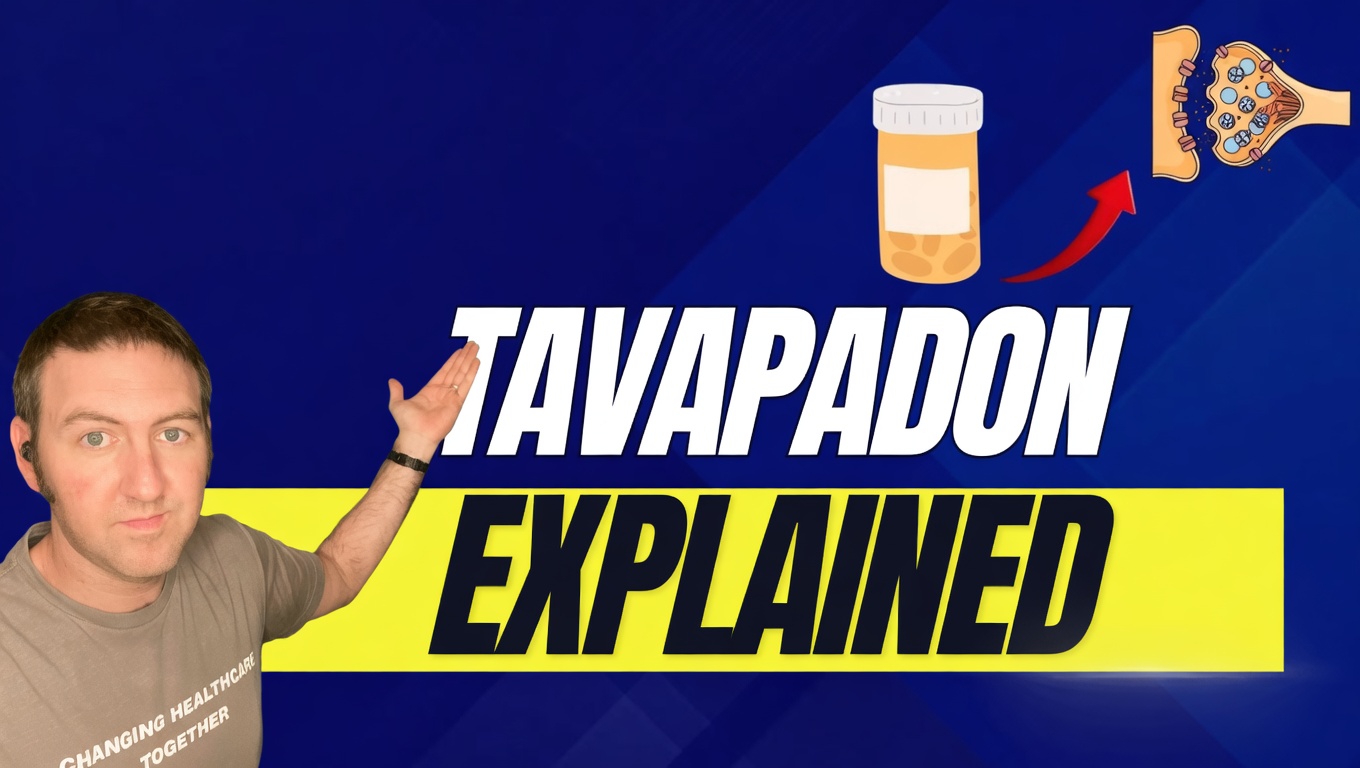
Tavapadon is an investigational oral drug that is being reviewed by the FDA after a New Drug Application submitted in late 2025. It is part of a newer group of compounds called selective dopamine D1/D5 receptor partial agonists. In practical terms, this means the medication is designed to act on very specific dopamine receptors that are closely tied to movement control.
Many current dopamine-based therapies affect several receptor subtypes at once, especially D2 and D3 receptors. Tavapadon takes a narrower approach by targeting D1 and D5 receptors instead. These receptors are linked to the brain’s direct pathway, the signaling route that helps initiate and support smoother, more coordinated motion. Because of this selective action, researchers believe Tavapadon may help improve motor symptoms while possibly avoiding some of the drawbacks seen with less targeted dopamine stimulation.
Clinical studies in the TEMPO program—including TEMPO-1, TEMPO-2, and TEMPO-3—have evaluated Tavapadon both as a standalone treatment in earlier Parkinson’s disease and as an add-on therapy for people already taking levodopa in more advanced stages. Results presented at major neurology meetings have shown improvements in standard motor assessments and increases in daily “on” time without troublesome involuntary movements.
Why Tavapadon Is Considered a “New Pathway” Approach
What sets Tavapadon apart is its focus on a different part of dopamine signaling. Traditional dopamine agonists tend to strongly stimulate D2/D3 receptors, which can be effective but may also be associated with side effects such as:
- Excessive daytime sleepiness
- Impulse-control problems
- Hallucinations in some patients
Tavapadon works differently. As a partial agonist at D1/D5 receptors, it is designed to provide more controlled, sub-maximal stimulation. The goal is to support movement-related signaling without broadly overstimulating other dopamine pathways.

This more selective mechanism may also help explain the side-effect pattern seen in clinical trials. Based on the TEMPO studies:
- The most commonly reported treatment-emergent side effects were nausea, headache, and dizziness, usually described as mild to moderate
- Rates of hallucinations, orthostatic hypotension, and impulse-control disorders were similar to placebo
- When added to levodopa, Tavapadon provided about 1.1 extra hours of daily “on” time without troublesome dyskinesia compared with placebo
These findings come from large global Phase 3 trials involving hundreds of participants across both early and advanced Parkinson’s disease. Long-term follow-up is still important, but the early data have prompted serious discussion about whether a D1/D5-focused treatment could become a valuable addition to current Parkinson’s care.
Tavapadon vs. Traditional Dopamine Agonists
To better understand the difference, here is a simple comparison based on currently available clinical data.
| Aspect | Traditional Dopamine Agonists | Tavapadon |
|---|---|---|
| Main receptor targets | D2 and D3 receptors | D1 and D5 receptors |
| How often it is taken | Often multiple times per day | Once daily |
| Common side-effect concerns | Higher rates of sleepiness and impulse-related issues in some studies | Nausea, headache, and dizziness most commonly reported; lower rates of some D2/D3-related effects |
| Primary trial goals | Broad symptom management | Improvement in motor scores and “on” time without troublesome dyskinesia |
| Development status | Long established | NDA under FDA review as of 2026 |
This is why researchers describe Tavapadon as targeting a new pathway. Rather than broadly stimulating dopamine systems, it appears to act more precisely on the brain circuits that help drive movement.
What the Newest Trial Data Shows
Recent study results have made Tavapadon especially noteworthy. In TEMPO-3, researchers focused on people already using levodopa who still had motor fluctuations. Adding Tavapadon led to statistically significant improvements in good daily “on” time, meaning more time with better symptom control, without an increase in troublesome dyskinesia.
Meanwhile, TEMPO-1 and TEMPO-2 looked at people in earlier stages of Parkinson’s disease who had not yet received prior treatment. In these trials, Tavapadon produced meaningful improvements in combined motor and daily function scores using the MDS-UPDRS scale, a standard tool for measuring Parkinson’s symptoms and their impact.
Importantly, most side effects reported across these studies were mild or moderate, and serious adverse events were uncommon. As with any treatment under investigation, trial outcomes do not guarantee the same results in real-world use, and individual responses can differ.
What You Can Do Right Now
While Tavapadon continues through the regulatory process, there are still practical ways to better manage Parkinson’s symptoms today. These steps can help you stay proactive and support day-to-day movement:
-
Track symptoms consistently
- Record your “on” and “off” periods
- Note medication timing
- Monitor activity levels and any symptom changes
Sharing this information with your neurologist can help guide treatment adjustments.
-
Build movement into your routine
- Take short walks when possible
- Try seated exercise or chair yoga
- Focus on regular activity rather than intensity
Consistency often matters more than doing too much at once.
-
Prepare for medical appointments
- Ask about new research on dopamine pathways
- Discuss whether emerging treatments may fit your stage of Parkinson’s
- Find out if participation in a clinical trial is an option
These simple actions can improve confidence and help you stay engaged in your care while research continues to advance.
Why This Matters in Everyday Life
Managing Parkinson’s disease does not mean giving up on the possibility of better symptom control. Tavapadon is a strong example of how researchers are rethinking dopamine therapy by aiming for precision instead of broader receptor activation. If approved, it may offer some patients a convenient once-daily treatment option, either alongside current therapy or as an alternative in certain situations.
The key takeaway is clear: Parkinson’s research is moving forward, and staying informed can lead to better conversations and better decisions with your healthcare team.
Frequently Asked Questions
Is Tavapadon approved by the FDA?
As of early 2026, Tavapadon is still under FDA review following the 2025 New Drug Application. It has not yet been approved for general use. In some situations, eligible patients may have access through expanded access pathways.
How might Tavapadon differ from older Parkinson’s medications in terms of side effects?
Because Tavapadon selectively targets D1/D5 receptors rather than D2/D3 receptors, researchers are studying whether it may offer a different and potentially more favorable side-effect profile for issues such as excessive sleepiness or impulse-control changes. However, responses vary by individual, and trials have still reported common mild effects such as nausea, headache, and dizziness.
Can Tavapadon replace levodopa?
Not necessarily. Clinical research has tested Tavapadon both as monotherapy in early Parkinson’s disease and as an add-on to levodopa in more advanced cases. It is not currently viewed as a complete replacement for levodopa, but rather as a possible complementary option depending on a patient’s condition and treatment goals.
Final Thoughts
Parkinson’s motor symptoms can create real and frustrating barriers in daily life, but developments like Tavapadon show that treatment research is entering a more targeted era. By focusing on a specific brain pathway tied directly to movement, this investigational therapy represents a promising shift in how scientists are approaching Parkinson’s care.
While more data and regulatory decisions are still ahead, the progress so far offers reason for cautious optimism. For patients and families, staying informed about advances like Tavapadon may help open the door to more personalized and effective treatment discussions in the future.