Sleep Position Matters More Than You Think
Sleep strongly shapes your mood, energy, and focus—but discomfort, heartburn, or low-grade aches can quietly sabotage your nights. When rest is interrupted, it’s common to wake up groggy, short-tempered, and less ready for everyday demands. Sometimes, the hidden culprit isn’t your mattress or bedtime routine—it’s the way you sleep.
A surprisingly effective place to start is simply rethinking which side you sleep on. Even small position changes can influence digestion, breathing, and how your body handles pressure overnight. And there’s one lesser-known research-backed detail about sleeping on your right side—revealed near the end—that may affect how you think about your long-term wellness.
Why Your Sleep Position Can Change How You Feel
Your sleeping posture isn’t only about comfort. It can impact:
- Spinal alignment
- Airflow and snoring
- Pressure distribution across joints and organs
- How fluids shift in the body under gravity
Organizations such as the Sleep Foundation often note that side sleeping tends to support better spine positioning and may reduce snoring compared with sleeping on your back or stomach. However, the specific side—right versus left—can lead to different outcomes because your organs aren’t mirrored evenly. Gravity affects where pressure builds and how certain systems (like digestion) function during the night.
That’s why right-side sleeping has a unique mix of potential advantages and trade-offs.
Potential Benefits of Sleeping on Your Right Side
Right-side sleeping isn’t automatically “bad.” For some people, it may offer specific upsides—especially depending on individual health needs.
1) Possible Support for Certain Heart Conditions
Some research suggests that for people managing particular heart issues, resting on the right side may feel more comfortable and could reduce perceived strain. In some heart failure cases, sleeping on the left side can increase awareness of heartbeat or discomfort, making the right side more tolerable.
This doesn’t mean right-side sleeping is universally “better” for the heart. For many healthy sleepers, the difference may be subtle. As sources like Johns Hopkins Medicine emphasize, personal medical context should guide decisions—especially with cardiovascular concerns.
2) A Potential Boost to the Brain’s Nightly “Cleanup”
A growing area of research connects side sleeping with the brain’s glymphatic system, which helps clear waste products while you sleep. Some findings suggest side positions—including the right side—may support more efficient fluid movement than sleeping face-up or face-down.
Much of the strongest evidence still comes from animal research, and human studies are continuing. Still, it’s an exciting clue about why side sleeping is often considered beneficial beyond comfort alone.

3) Better Alignment and Less Snoring for Many Sleepers
In general, side sleeping makes it easier to keep the spine in a more neutral line than stomach sleeping, which often twists the neck. The right side can provide the same alignment benefit and may also help:
- Reduce back and neck tension for some people
- Keep airways more open than back sleeping, potentially lowering snoring
If you wake up sore, right-side sleeping may also distribute body weight more evenly across the shoulders and hips—especially when supported correctly with pillows.
Possible Downsides of Right-Side Sleeping
Every sleep position involves trade-offs. Understanding the risks can help you choose the best option—or rotate positions more strategically.
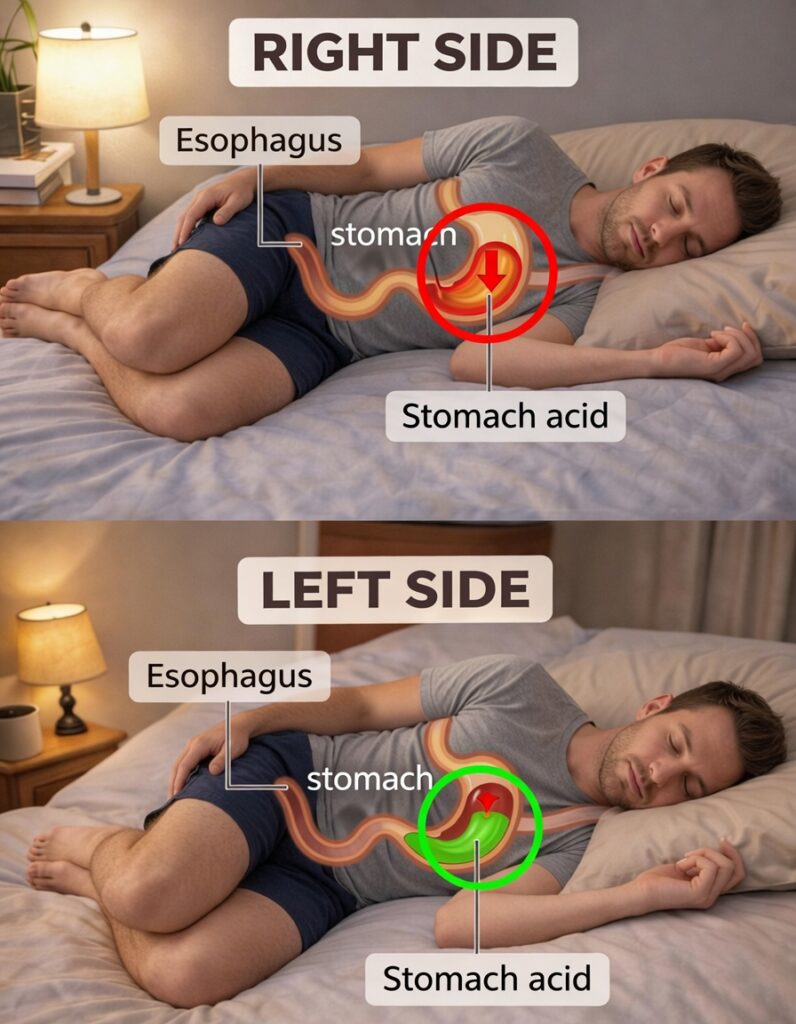
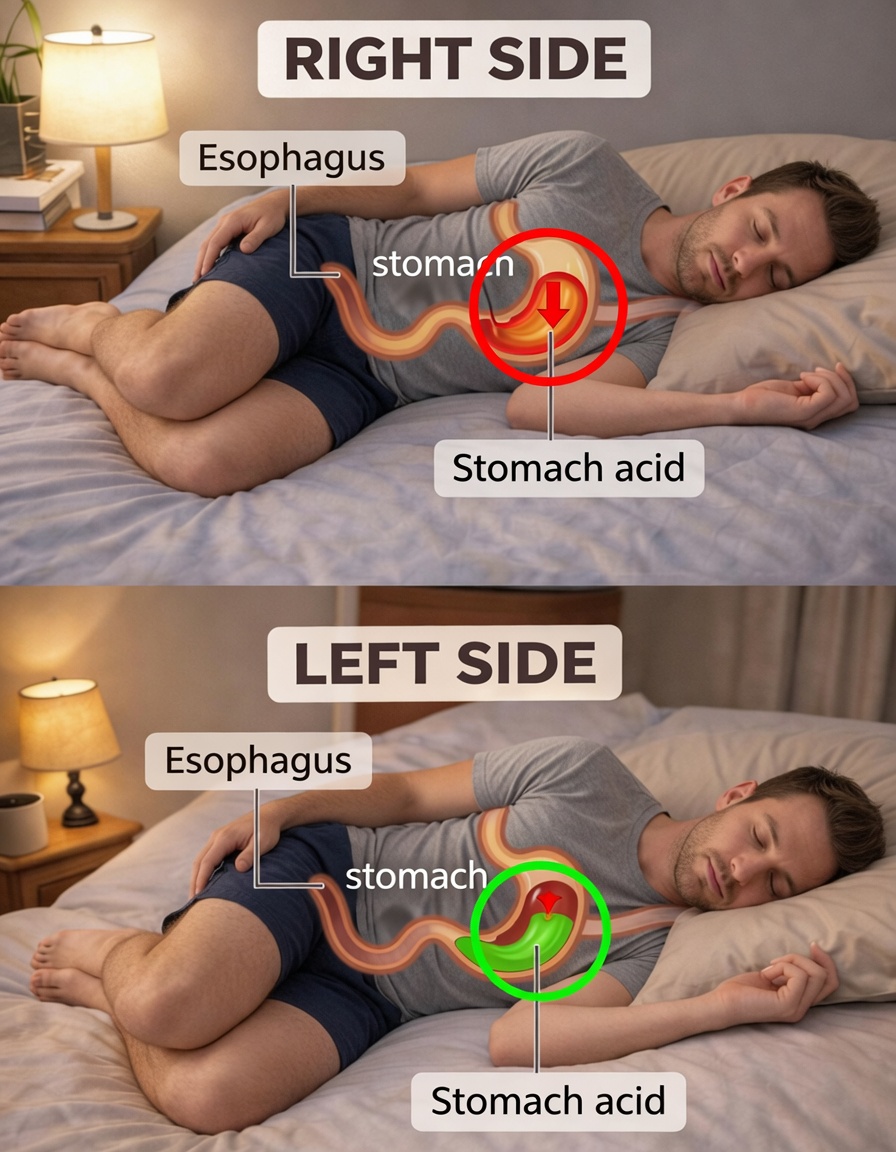
1) Digestion and Acid Reflux Can Worsen
The most frequently discussed downside is acid reflux. When you sleep on your right side, stomach contents may be more likely to move upward into the esophagus due to the stomach’s positioning and gravity—potentially worsening heartburn, especially after late meals.
By contrast, many people find left-side sleeping reduces reflux symptoms because it may keep stomach acid lower relative to the esophagus.
Some sources also suggest right-side sleeping could modestly affect how efficiently food moves through digestion in certain individuals, though experiences vary.
2) Added Pressure on Right-Side Organs
Because the liver sits largely on the right side, this position can increase pressure in that area. For most healthy people, this isn’t a major concern. But if you have liver, gallbladder, or abdominal discomfort issues, you may notice more sensitivity.
If you sleep on the right side every night, consider rotating sides occasionally to reduce consistent pressure on the same tissues.
3) Breathing and Circulation Considerations
For some sleepers—particularly those with asthma, respiratory sensitivity, or sleep apnea—right-side sleeping may feel slightly more restrictive, depending on anatomy and chest expansion. This isn’t universal, but it’s worth monitoring if you notice shortness of breath or nighttime wake-ups.
Circulation effects are also nuanced: right-side sleeping may feel better for some heart-related conditions, while left-side sleeping is often associated with more favorable circulation patterns for many people. Your best guide is comfort, symptom tracking, and medical advice when relevant.
Right-Side vs. Left-Side Sleeping: Key Differences at a Glance
Below is a simplified comparison based on commonly cited findings from health sources such as Harvard Health and Verywell Health. Individual results vary.
| Aspect | Right-Side Sleeping | Left-Side Sleeping |
|---|---|---|
| Digestion | May increase reflux/heartburn risk for some | Often associated with reduced reflux and easier digestion |
| Heart-related comfort | May feel more comfortable for certain heart conditions | Often considered favorable for circulation in many people |
| Brain waste clearance | Side sleeping supports glymphatic activity; right side may help | Similar potential benefits for glymphatic flow |
| Spinal alignment | Generally strong if properly supported | Generally strong if properly supported |
| Breathing | May feel slightly restrictive for some individuals | Often feels more open for many sleepers |
Practical Ways to Improve Side Sleeping Comfort Tonight
If you want to test right-side sleeping (or side sleeping in general), these evidence-informed adjustments can make it noticeably more comfortable.
-
Use pillows strategically
- Place a pillow between your knees to support hips and reduce lower-back strain.
- Choose a head pillow that keeps your neck level with your spine (not tilted up or down).
-
Rotate sides when possible
- You don’t need to stay on one side all night.
- If you naturally wake briefly, use that moment to switch sides to reduce pressure buildup.
-
Time your meals to reduce reflux
- Finish eating 2–3 hours before bed, especially if you prefer right-side sleeping.
- Consider lighter evening meals if heartburn is a recurring issue.
-
Choose a mattress that supports side sleeping
- A mattress with gentle contouring can reduce shoulder/hip pressure points.
- A body pillow can help keep you from rolling into awkward angles.
-
Track symptoms for one week
- Note sleep position, reflux, pain, and morning energy.
- Patterns become clearer quickly and help you decide what works best.
Final Thoughts: Is Right-Side Sleeping a Good Choice?
Sleeping on your right side can offer real advantages—such as improved comfort for some heart conditions, solid spinal support, and potential benefits linked to the brain’s overnight cleaning system. At the same time, it may be a poor fit for people prone to acid reflux, certain digestive issues, or specific breathing concerns.
The most effective approach is simple: listen to your body, consider your health history, and adjust gradually.
The surprising detail mentioned earlier: research suggests that right-side sleeping may uniquely support the brain’s natural detox process through glymphatic activity, which could be relevant for long-term cognitive health. If brain wellness is a key priority, it may be worth discussing sleep positioning with a qualified healthcare professional.
Frequently Asked Questions (FAQ)
What if I have acid reflux—should I avoid sleeping on my right side?
If reflux or heartburn is frequent, left-side sleeping is commonly recommended, since it may help reduce acid moving into the esophagus. For personalized guidance—especially if symptoms are persistent—check with a healthcare provider.
Is right-side sleeping safe during pregnancy?
Many clinicians recommend left-side sleeping during pregnancy, particularly in later stages, to support circulation. However, occasional right-side sleeping is often considered acceptable for many people. Because pregnancy needs vary, it’s best to follow guidance from your prenatal care provider.